Can the government encourage the development of new antibiotics?

http://www.latimes.com/science/sciencenow/la-sci-sn-antibiotic-resistance-government-incentives-20160711-snap-story.html?utm_campaign=KHN%3A+First+Edition&utm_source=hs_email&utm_medium=email&utm_content=31540667&_hsenc=p2ANqtz-8KSOwnDu9wgUrlDN8u_2HnowEpWjJZShjqIFvN-mLC_3gavkn6QZ5XuGYVoKPH71cmkDrEhbc1BXnicLRSAOV4ZkDaTQ&_hsmi=31540667

Antibiotics

It’s been nearly 30 years since scientists have found a new class of antibiotics. But U.S. lawmakers tried to give the drug industry a boost in 2012.

That year, they passed the Food and Drug Administration Safety and Innovation Act. It included provisions — collectively known as Generating Antibiotic Incentives Now, or GAIN — aimed at streamlining the government approval process for new antibiotics. It also boosted financial paybacks to drug companies that develop them.

Bill Gates Calls U.S. Drug Pricing System ‘Better Than Most’

http://www.bloomberg.com/news/articles/2016-06-30/bill-gates-calls-u-s-drug-pricing-system-better-than-most?utm_campaign=KHN%3A+Daily+Health+Policy+Report&utm_source=hs_email&utm_medium=email&utm_content=31344233&_hsenc=p2ANqtz-_IwIHqZOj5Uimtit1dADkgETVDbXoDQwj9rnv-X62TCgc0moUvyuIvvz78lEeOdY3_XlQXobqra8EKSy-AP-8omkHofA&_hsmi=31344233

Billionaire Bill Gates, whose foundation seeks to spread modern medicine through the developing world and wipe out diseases of the poor such as malaria, said he supports the U.S. drug pricing system even as politicians have intensified their criticism of high costs.

“The current system is better than most other systems one can imagine,” Gates said in an interview on Bloomberg Television. “The drug companies are turning out miracles, and we need their R&D budgets to stay strong. They need to see the opportunity.”

An inside look at the world of drug presentations

http://www.scpr.org/news/2016/07/01/62183/an-inside-look-at-the-world-of-drug-presentations/

Critics say the system is flawed because it’s paid for by drug makers with a financial stake in the outcome.

Presentations sponsored by pharmaceutical companies only focus on one drug and do not include all the options available, including generics, says R. Adams Dudley, Director of the Center for Healthcare Value at the University of California San Francisco.

“They’re going to emphasize the education aspect of it but they wouldn’t pay for it if it did not lead to sales,” he says.


ProPublica: For-profit southern hospitals host to most industry payments

http://www.healthcaredive.com/news/propublica-for-profit-southern-hospitals-host-to-most-industry-payments/421832/

Cash in Hand

The subject raises debate due to studies that have identified an association between industry payments and higher rates of brand-name prescribing, ProPublica reported, with some advocates arguing for limits or transparency to allow consumers to make informed decisions about providers who may be weighing outside factors in their care.

Vermont becomes first state to require drug makers justify price hikes

Vermont becomes first state to require drug makers to justify price hikes

Despite opposition from the pharmaceutical industry, Vermont late last week became the first state in the country to require drug makers to justify price hikes for medicines.

‘Value Creation’ And ‘Value Shifting’ In Health Care

http://healthaffairs.org/blog/2016/06/01/value-creation-and-value-shifting-in-health-care/

Reinhardt_Exhibit1


The whole industry seems to be reading from the same playbook: Pair up with a company that makes the same product to become a leading provider, and thus gain more clout to negotiate business with hospitals and health insurers. There is ample empirical research in health economics showing that consolidation on the supply side of the health care sector has served to drive up prices. It is another way of saying that it supports value shifting, rather than value creation.

My gratuitous advice to the drug industry, and to the health care industry in general, is to be very mindful of the distinction between value creation and value shifting in their pricing policies, lest they eventually invoke the wrath of the losers in that game, with dire consequences.

Paying for future success in gene therapy

http://science.sciencemag.org/content/352/6289/1059.full

Gene Therapy

DEVELOPMENT OF GENE THERAPY. Forty-four years have elapsed since an article appeared in Science on the possible therapeutic benefits of gene therapy (1). The early history was marked by poor trial design and a need for greater attention to basic aspects of viral gene transfer and disease biology (2). After some tragic setbacks and years of research to redesign existing vectors and identify safer ones, several trials have recently delivered promising results in regard to both safety and efficacy in several immunodeficiency disorders (3, 4), hemophilia B (5), a form of congenital blindness (6, 7), beta-thalassemia (8), and metachromatic leukodystrophy (9). We presume that gene therapy for at least one disorder currently in clinical trials will be established as safe and efficacious and that will lead to U.S. Food and Drug Administration (FDA) approval in the next 3 years.

Inventing a Machine That Spits Out Drugs in a Whole New Way

http://www.healthleadersmedia.com/technology/inventing-machine-spits-out-drugs-whole-new-way?spMailingID=8976156&spUserID=MTMyMzQyMDQxMTkyS0&spJobID=922552058&spReportId=OTIyNTUyMDU4S0

The Defense Department is funding a device that produces 1,000 pills in 24 hours and raises the possibility that hospitals and pharmacies could make their own pills as needed.

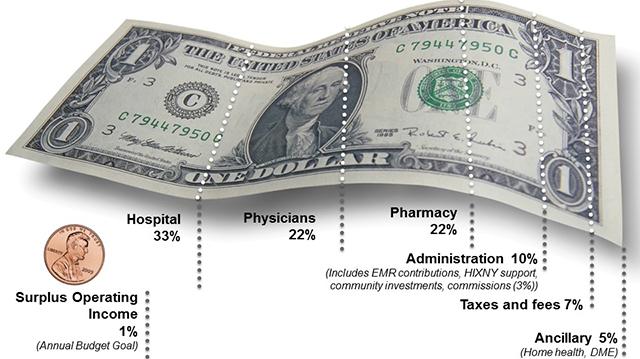
Health insurers not responsible for rising premiums, exec says

http://www.fiercehealthpayer.com/story/health-insurers-not-responsible-rising-premiums-exec-says/2016-05-24?utm_medium=nl&utm_source=internal&mkt_tok=eyJpIjoiTkdWa01HVmtOREV3T0RjMiIsInQiOiJVbXRHeEQ4RW5YakFSN1YrWFdiNldSSGhSMDJFRGxVSU9veUcyV3RcL080Y3FMbGZ6RjFzajVPTmgzbnpWXC9yQ1g5ZWpcL09tWVdoT2xBTFpKY29Qd3RHTnVkOEYwdXdLdFwvZHFFbnZ6M1drMnc9In0%3D

Premium Dollar Distribution

http://www.bizjournals.com/albany/news/2016/05/23/insurance-industry-not-to-blame-for-medical-costs.html