DOCS GENERATE AN AVERAGE $2.4M A YEAR PER HOSPITAL

https://www.healthleadersmedia.com/finance/docs-generate-average-24m-year-hospital

Family physicians provide an excellent ROI, earning an average $241,000 as a starting salary but generating nine times that amount in hospital revenues.


KEY TAKEAWAYS

Invasive cardiologists were No. 2 on the list of money makers for hospitals, generating an average of $3.5 million, followed by neurosurgeons at $3.4 million, and orthopedic surgeons at $3.3 million.

The average net revenue generated by all physicians in the survey, $2,378,727, is up 52% from 2016.

The increase in net revenues was attributed to more outpatient visits, higher costs per hospital stay, and sicker patients as the population ages.

Physicians each generate an average of nearly $2.4 million in revenues annually for their hospitals, a new survey finds.

Cardiovascular surgeons, on average, generated $3.7 million for their hospitals, topping the list of money makers among the 18 specialties examined in the survey of hospital chief financial officers, which was conducted by Dallas-based physician recruiters Merritt Hawkins.

The money includes net inpatient and outpatient revenue derived from patient hospital admissions, tests, treatments, prescriptions, and procedures performed or ordered by physicians.

“The value of physician care is not only related to the quality of patient outcomes,” said Travis Singleton, Merritt Hawkins’ executive vice president.

“Physicians continue to drive the financial health and viability of hospitals, even in a healthcare system that is evolving towards value-based payments,” Singleton said.

Invasive cardiologists were No. 2 on the list of money makers for hospitals, generating an average of $3.5 million, followed by neurosurgeons at $3.4 million, and orthopedic surgeons at $3.3 million.

Primary care physicians pulled their weight too, according to the survey.  Family physicians generate an average of $2.1 million in net revenue, while general internists generate an average of almost $2.7 million.

The average net revenue generated by all physicians in the survey, $2,378,727, is up 52% from 2016, the last year Merritt Hawkins conducted the survey.

Average revenue generated by each of the 18 medical specialties included in the survey increased compared to 2016, in most cases significantly.

Even though inpatient stays declined or flat-lined in recent years, Singleton attributed the increase in net revenues to more outpatient visits, which have more than tripled since 1975,   higher costs per hospital stay, and sicker patients as the population ages.

“Demographics are our destiny,” Singleton said. “New delivery models that promote prevention, population health and fee-for-value are laudable innovations but they don’t change the basic facts.  People get older and require more medical care, with much of it ordered by or directly provided by physicians.”

While primary care physicians are not the top revenue generators for their hospitals, Singleton says they represent an excellent return on investment.

Family physicians average $241,000 as a starting salary, according to Merritt Hawkins’ data, but they generate nine times that amount in hospital revenues. Orthopedic surgeons, with an average starting salary of $533,000, generate six times that amount for their hospitals.

“PHYSICIANS CONTINUE TO DRIVE THE FINANCIAL HEALTH AND VIABILITY OF HOSPITALS, EVEN IN A HEALTHCARE SYSTEM THAT IS EVOLVING TOWARDS VALUE-BASED PAYMENTS.”


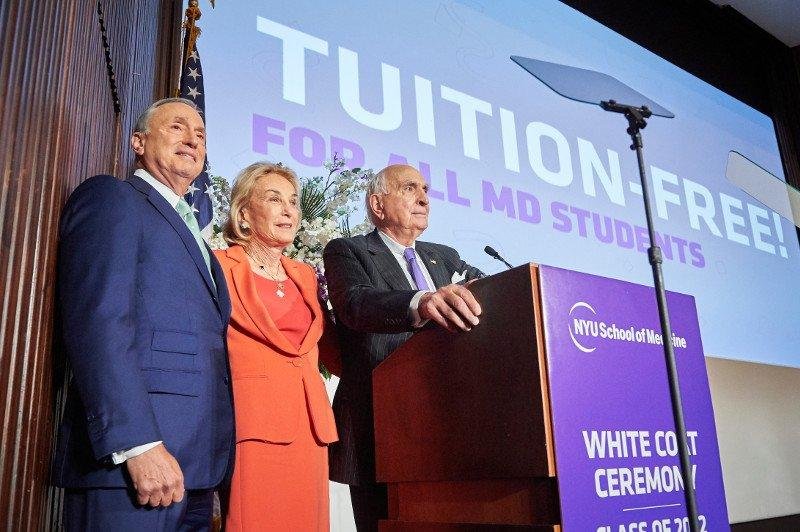
WILL NYU’S TUITION-FREE MED SCHOOL REALLY BOOST PRIMARY CARE?

https://www.healthleadersmedia.com/finance/will-nyus-tuition-free-med-school-really-boost-primary-care

Image result for NYU medical school

The factors at play may be a bit more complicated that some expect.

New York University made waves last week when it announced it will cover all tuition expenses for all its medical students in perpetuity.

While the news left some NYU alumni wishing they had waited just a few years longer to enroll, it also reanimated debate over the problems high educational debt levels can cause for doctors and the healthcare delivery system at large.

In an op-ed for Stat News, fourth-year NYU medical student Eli Cahan noted that researchers have identified debt burden as one of the factors propelling doctors into more lucrative specialty areas, leaving a shortage of primary care physicians.

“Eliminating medical school tuition, and thus medical school debt, could help nudge more students to choose much-needed careers in primary care,” Cahan wrote.

But research suggests the burden of educational debt is one factor among several in a complex relationship affecting the likelihood of new doctors to choose primary care.

A study published in 2014 by the Annals of Family Medicine, for example, concluded that reducing debt for medical students could help to enlarge the primary care physician workforce but that the positive effects of such an initiative would vary depending on which types of students benefited from the debt reduction.

“Students from lower-income families, in general, tend to have more interest in primary care careers, and students from disadvantaged backgrounds tend to have more interest in primary care careers,” lead researcher Julie Phillips, MD, MPH, an associate professor of family medicine at Michigan State University College of Human Medicine, tells HealthLeaders.

“Those same students also tend to have more debt because students from lower-income families don’t have the parents’ resources to help them with medical school costs,” Phillips adds.

The study, which analyzed data from more than 136,000 physicians, found that students from higher-income families were significantly less influenced by educational debt in their specialization decisions. What’s more, although the researchers found that educational debt deterred graduates of public medical schools from choosing primary care, the same could not be said of graduates of private medical schools.

This research suggests that the benefits of tuition-free medical school on primary care could be diminished by the fact that NYU is a private institution. That’s not to say, of course, that the decision to go tuition-free comes without benefits.

“I think it will make a difference. It’s hard to know if it will make a big difference,” Phillips says, calling NYU’s announcement “a great step in the right direction.”

“It would be really wonderful if public schools were able to implement this,” she adds, “but I just think they don’t typically have those resources.”

“The income disparity between primary care doctors and specialists in the United States is concerning, and there’s pretty good evidence that if you change that, the whole game changes,” Phillips says.

“As a culture, we tend to look on people who make money as being more valuable,” she adds, “so the income disparity between primary care doctors and specialists sort of creates a culture or contributes to a culture where primary care is not as well-respected, and that’s a really big problem.”


Trump Administration Seeks a Big Change in How Medicare Pays Doctors

http://www.thefiscaltimes.com/2018/07/23/Trump-Administration-Seeks-Big-Change-How-Medicare-Pays-Doctors

The Trump administration wants to change the way Medicare pays doctors for office visits by creating a flat payment of about $135 for all appointments. The change is intended to reduce paperwork significantly but is meeting resistance from specialists who say they will be underpaid for their services, which could result in more doctors refusing to see Medicare patients.

Currently, there are five levels of Medicare office visits, each with its own payment amount, ranging from a short visit with a nurse (level 1) to an in-depth evaluation from a specialist (level 5). Visits with doctors typically start at level 2, with a current billing rate for new patients of $76, and move up in complexity to level 5, with a billing rate of $211.

Not all doctors would lose out, since less complex visits would be billed at a higher rate under the proposal, but the specialists currently billing at the top level would see a reduction in fees. “This proposal is likely to penalize physicians who treat sicker patients, even though they spend more time and effort and more resources managing those patients,” Deborah J. Grider, an expert on the subject, told The New York Times.

On the other hand, the proposal would reduce the time-intensive requirement to document the different levels of services, particularly at the upper end. “The differences between Levels 2 to 5 are often really difficult to discern and time-consuming to document,” Dr. Kate Goodrich, Medicare’s chief medical officer, toldthe Times.

One thing the proposed billing system won’t change is the overall cost of spending on physician services under Medicare. While the proposal would redirect some of the fees from one set of doctors to another, spending would remain at roughly $70 billion a year.


Physician Workforce Trends And Their Implications For Spending Growth

http://healthaffairs.org/blog/2017/07/28/physician-workforce-trends-and-their-implications-for-spending-growth/


Controlling the growth rate of health care spending is central to the success of the Affordable Care Act or any subsequent reform. Because labor represents more than 50 percent of health care costs and the clinical workforce drives use and prices, the size and composition of the health care workforce has important ramifications for spending growth. We set out to understand the trends underlying the growth in the clinical workforce and their potential implications for health care spending, health policy, and health system design.

A large literature establishes a link between primary care–oriented health systems and lower spending. Areas with a higher concentration of primary care physicians have much lower spending per beneficiary, higher-quality care, better patient satisfaction, and lower mortality rates. Given this, many existing payment reform strategies prioritize primary care, and the success of these reforms will require a vibrant—and likely growing—primary care workforce.

How The Physician Workforce Has Changed

To observe the evolution of the clinical workforce, we used the Bureau of Labor Statistics’ Occupational Employment Statistics files between 2005 and 2015. This data set is released in May of each year and records the number of jobs (not the number of full-time–equivalent employees) by industry, occupational type, and geography. Using the North American Industry Classification System (NAICS), we limited our analysis to NAICS 621 (ambulatory health care services), 622 (hospitals), and 623 (nursing and residential care facilities). We defined “primary care physicians” as family and general practitioners, general internists, obstetricians and gynecologists, and general pediatricians, and categorized all other physician categories as “specialists” (Note 1).

Overall, there was a net increase of 2.6 million jobs in the health care sector between 2005 and 2015, accounting for 35 percent of total job growth in the United States during that period. Six percent of these jobs were for physicians. The number of primary care physician jobs grew by approximately 8 percent, while the number of jobs for specialists grew about six times faster (see Exhibit 1). In an era when we might have expected (and hoped for) rapid primary care physician growth, the share of the physician workforce devoted to primary care actually decreased from 44 percent to 37 percent, and the number of primary care physicians per capita has remained roughly flat.


What The Workforce Trends Mean

Given the aging of the population and expanded coverage, these findings raise concerns about access to care. Many have suggested expanding the role of non-physician primary care providers to fill the gap between the need for primary care and the supply of primary care physicians. When we broadened our definition of primary care to include the physician assistants and nurse practitioners working in primary care, the total primary care workforce grew considerably faster (17 percent between 2005 and 2015), although still much slower than specialists (Note 2). It seems we are addressing our increasing primary care needs with non-physician labor, but more research is needed to understand the clinical and economic ramifications of that trend.

Under the right conditions, the rapid growth in specialists would not necessarily be negative for health care spending. If health care markets were competitive, one might expect a greater supply of specialists to lead to lower prices for specialist care and greater competition for referrals. With the right incentives in place, this increased competition could lead to lower spending and better outcomes.

Yet, there are reasons to be skeptical of this competitive model. Fees from public payers are set administratively and unlikely to be responsive to competitive pressures. Integration between hospitals and physicians, strong patient preferences for particular specialty groups or affiliated hospitals, and the numerous information problems in health care may dampen the ability of competition to drive down specialist prices.

Moreover, it is likely that the greater number of specialists working within health systems that charge facilities fees on top of expensive specialty care will lead to more expensive care. Furthermore, specialists are paid a larger salary; a recent salary survey found the four highest-paying occupations in the United States were physician specialists. These factors will work in opposition to efforts to control health care spending growth.

Possible Policy Responses

The data raise concerns in light of the belief that we need to increase the share of primary care providers (both physicians and non-physicians) to reduce the rate of growth in health care spending. They also add urgency to recommendations made by the Medicare Payment Advisory Commission (MedPAC), the Health Resources and Service Administration (HRSA), and the Association of American Medical Colleges (AAMC) to support the growth of primary care.

MedPAC suggested in both its 2016 and 2017 reports that the disparities in physician payment resulting from the Medicare fee schedule undervalue primary care and over-compensate certain specialists, and that the fee schedule ought to be amended to reflect the value generated by primary care physicians. In 2013, the HRSA recommended that graduate medical education funding be directed more toward students who will work in family medicine, geriatrics, general internal medicine, general surgery, pediatrics, and psychiatry. In 2012, the AAMC recommended that half of newly created residency positions should be for primary care and generalist disciplines.

While these recommendations are consistent with the goal of reorienting the health care system toward primary care, efforts to expand the primary care workforce are not new. As our data suggest, past initiatives such as low interest loan programs, training grants, or service programs such as the National Health Service Corps, which provides students with loan forgiveness in exchange for a commitment to practice primary care in underserved areas, have met limited success. The workforce continues to shift toward specialists. If we are to bend the cost curve, we likely need to move more aggressively on fee schedule changes, payment reform, and workforce policies.

Note 1

This included anesthesiologists, psychiatrists, surgeons, and the Bureau of Labor Statistics (BLS) group physicians, all other. This final group accounts for “all physicians not listed separately.” Ophthalmologists, dermatologists, gastroenterologists, and cardiologists are given by the BLS as representative occupations. The Occupational Information Network includes a few more detailed occupations under this heading: allergists and immunologists, dermatologists, neurologists, nuclear medicine physicians, ophthalmologists, pathologists, radiologists, preventative medicine physicians, sports medicine physicians, urologists, and preventive medicine physicians.

Note 2

The Bureau of Labor Statistics did not track nurse practitioners separately before 2012. We constructed this statistic using published numbers from the American Association of Nurse Practitioners, the Government Accountability Office, and the Agency for Healthcare Research and Quality.

For New Medicaid Patients, The Doctor Is In (Generally). But You May Have To Wait.

http://khn.org/news/for-new-medicaid-patients-the-doctor-is-in-generally-but-you-may-have-to-wait/

Image result for primary care provider shortage

More than 14 million adults have enrolled in Medicaid since the health law passed, and that has caused some hand-wringing over whether there would be enough primary care providers to meet the demand. But a study out this week suggests that the newly insured people are generally able to get timely appointments for primary care.

For the study, which was published online in JAMA Internal Medicine, trained field workers posing as new Medicaid or privately insured patients called physician practices in 10 states and requested a new-patient appointment for either a checkup or newly diagnosed high blood pressure. They recorded whether they were able to get an appointment and how soon it could be scheduled.

The states in the study — Arkansas, Georgia, Illinois, Iowa, Massachusetts, Montana, New Jersey, Oregon, Pennsylvania and Texas — represented a mix of states that expanded Medicaid coverage to adults with incomes up to 138 percent of the federal poverty level (about $16,600) and those that haven’t done so. An initial round of fieldworker calls to more than 9,700 practices was made in 2012 and 2013, before most states had expanded Medicaid coverage, followed by a second round of calls to more than 7,300 practices in 2016.

Over the time periods studied, appointment availability improved for Medicaid callers by 5.4 percentage points, while it stayed stable for privately insured callers (though Medicaid callers still had a tougher time getting appointments in general).

But, during the second study period, callers from both groups were less likely to be able to schedule an appointment within a week. The proportion of Medicaid callers who waited a week or less decreased by 6.7 percentage points, to 49.1 percent; the share of those who said they were privately insured who waited a week or less declined by 4.1 percentage points, to 52.7 percent.

“Some of these offices were getting a little more full,” said Daniel Polskyexecutive director of the Leonard Davis Institute of Health Economics at the University of Pennsylvania and the study’s lead author. “One way doctors were making room for more patients was that instead of making an appointment in a week’s time, some were making it in two weeks.”

There are many factors that may have contributed to the ability of primary care providers to absorb more patients, including increased funding for federally qualified health centers and the growth of retail clinics, among others.

The study should ease concerns that the health law will exacerbate the shortage of primary care providers, Polsky said, though there may still be regional challenges accessing care.

“It’s still true that fewer doctors are willing to see Medicaid patients than are willing to see commercial patients,” he said. “But if you have Medicaid, your access to doctors is still good.”


CMS needs to halt the march to health care gigantism

CMS needs to halt the march to health care gigantism

From a major speech by Sen. Elizabeth Warren to a recent report from the President’s Council of Economic Advisers, there has been a renewed interest by Democrats in monopolies and market consolidation. From tech to airlines, they argue, too many sectors of the economy are being dominated by a few big players.

In American health care, this is not only the case, but has been the default preferred stance. In health care, there is an almost Darwinian belief that the evolution to bigger is better. This is why last year saw 112 hospital mergers (up 18 percent from 2014), and the percentage of physician practices owned by hospitals doubled between 2004 and 2011.
Yet, there is no evidence that consolidation of hospitals and physician practices leads to better clinical outcomes or cost reductions. In fact, recent studies suggest that small, physician-owned practices have a lower average cost per patient, fewer preventable hospital admissions, and lower readmission rates than hospital-owned practices.
That is why it is so unfortunate that, as part of the largest rewriting of doctor payment rules in a generation, the Centers for Medicare and Medicaid Services (CMS) unwittingly has drafted regulations that—as currently proposed—further neglect the power of physician independence and create strong incentives for further consolidation in health care.

High demand fuels spike in starting salaries for physicians, report shows

http://www.healthcarefinancenews.com/news/high-demand-fuels-spike-starting-salaries-physicians-report-shows

Report says starting salaries for primary care physicians, as well as in 19 different specialties saw double digit increases.

Diabetes management moves the dial on value-based care

http://managedhealthcareexecutive.modernmedicine.com/managed-healthcare-executive/news/diabetes-management-moves-dial-value-based-care