Why the Theranos saga and Holmes’ trial is good for innovation

Why the Theranos saga and Holmes’ trial is good for innovation

The criminal trial of Theranos CEO Elizabeth Holmes will help entrepreneurs see the legal ramifications of hyping and under-delivering presumed medical advances and be ultimately be good for innovation.

“Fake it until you make it” is an oft-repeated phrase among entrepreneurs promising to revolutionize, disrupt or transform.  It can, however, have severe consequences for the healthcare sector when doctors and patients place their trust in the new or evolving venture.  The criminal trial of Elizabeth Holmes, who faces a 20-year prison sentence, will help healthcare entrepreneurs see the legal ramifications of over-promising and under-delivering presumed medical advances.

This trial will generate headlines. More importantly, it will be a teachable moment for all of us trying to innovate our way through a deeply complicated and entrenched healthcare system – especially regarding patient-empowering technology. Holmes, and the company she founded, Theranos, marketed a means to disrupt traditional diagnostic business models where two large companies dominate a $54 billion market.  The idea was to put patients in control of blood testing, using less amounts and creating a faster, lower-cost alternative.   The business model envisioned consumers using Theranos equipment at retail locations including drug stores and supermarkets.  As the marketing phrase goes, that was the “steak,” or substance to her pitch, but there was also “sizzle.”

The young, telegenic, and articulate Holmes became the widely-known public face of the company. Wearing black turtlenecks to draw comparisons to Steve Jobs and calling one of her blood-test devices “Edison” to align herself with the famous inventor, the media could not resist the story.  That part worked: Theranos at one point was valued at $9 billion.  Holmes declared her lab-test device was “the most important thing humanity ever built.”  Much of the narrative she created about Theranos will now be used as evidence in her criminal trial just as it was in a separate Securities and Exchange civil fraud case in March.

Here is something we already know from the federal indictment handed down last month: prosecutors will cite Theranos press releases, media interviews, and promotional materials to support allegations that Holmes knowingly committed criminal fraud.  In one example, the U.S. Attorney’s office for the Northern District of California cites a specific interview in which Holmes told a media outlet that Theranos could run “any combination of tests” from a single small blood sample.  The indictment goes on to list public statements such as one on the company’s website that, “one tiny drop changes everything.”

In the Securities and Exchange Commission civil case, which Holmes settled, media interviews with the business press, which in turn were said to solicit investors, are likewise cited as evidence of financial fraud.  The SEC’s civil complaint states that in 2013, “Holmes and Theranos began publicly touting Theranos’ proprietary analyzers in interviews with the media, notwithstanding Theranos’ use of commercially-available analyzers for patient testing.”  Here too, several interviews with financial media outlets were used as examples including an e-mail exchange between Holmes and a reporter in which she tried to shape the story.   As is widely known, the generally favorable media coverage that accelerated in 2013 abruptly ended.

Her company came under the scrutiny of The Wall Street Journal in 2015 when company whistleblowers went public raising questions about the underlying technology.  This put Holmes and her company on the government’s radar.   The narrative soon changed to actions intended to correct the company’s mistakes. Most notably, Theranos voided or corrected nearly a million blood-test results, calling into question untold numbers of health decisions made between doctors and patients.

Judges and juries take an especially harsh view of potentially harmful impacts on consumers.  The FBI agent who investigated the case described charges of misleading consumers and doctors as endangering “health and lives.”  Likely the most serious charge among the 11 counts Holmes faces is being unable to produce accurate and reliable results for numerous blood tests, including the detection of HIV, despite assertions to the contrary.

Yet Holmes is only the most recent and well-known among many healthcare practitioners who face charges or convictions of fraud.  We can go back to the patent medicine movement in the early 1900’s, where a popular advertising slogan at the time was “a cure for what ails you.”  In the late 1800’s there was actually a real-life snake oil salesman who traveled the country and gave demonstrations with live reptiles on how he made his product.  Such antics with fake medicine led to the passage of the Pure Food and Drug Act in 1906.  So, a century later, why does this keep happening?

One recurring theme leading to healthcare fraud is what medical scholars have labeled “eminence-based” medicine.  Simply put, this is an over-reliance on personality and stature from the individual believed to have authority on a particular medical subject.  The term is a play on the words “evidence-based” medicine, where facts are supposed to be used to evaluate medical advances.

Some lessons are already being learned. Early stage and start-up blood-testing companies are emphasizing peer-reviewed data and clinical trials.  One telling insight from an entrepreneur, as reported in Marketwatch, describes Theranos as a “big crater in the industry.”  The founder of privately-held Athelas, a blood-testing firm, said Theranos, if executed correctly, “would make a massive impact in a really old, archaic industry.”

Faking it until you make it may work to a certain point and allow entrepreneurs a limited degree of latitude among investors as they develop technical approaches to support business models.  As an entrepreneur myself, I am well aware of the need to convincingly show the promise of an invention – even before it is fully finished. However, it becomes financial fraud — potentially criminal activity — when you are not honest about the risk.  Medical and consumer fraud, when patients are sucked into the hype and subsequently misled, becomes exponentially more serious. Neither is acceptable. The bottom line: Holmes’ trial will offer insight leading to less hype and more high-quality innovation.


Caught in the Theranos Wreckage

The high-profile investors, including Ms. DeVos and Mr. Murdoch, collectively invested about $600 million in the company Theranos

Even some of the world’s richest people may get duped, according to newly unsealed documents in a lawsuit filed on behalf of investors in the failing blood-testing company Theranos.

High-profile investors who collectively lost hundreds of millions of dollars included Walmart’s Walton family, the media mogul Rupert Murdoch, as well as Betsy DeVos, the secretary of education and her relatives.

The list of investors, which was first reported by The Wall Street Journal, came to light as part of a class-action lawsuit brought in 2016 by Robert Colman, a retired Silicon Valley investment banker, who claims that Theranos misled investors about its business and technology.

Theranos, founded by Elizabeth Holmes when she was a 19-year-old Stanford University dropout, promised to revolutionize the lab industry using a few drops of blood from a simple finger-prick to look for everything from diabetes to cancer, at a fraction of the cost of a traditional blood test.

The company became a Silicon Valley fairy tale, with investors awarding the privately held company a valuation of around $9 billion. But the story began to unravel in October 2015 after The Wall Street Journal, owned by Mr. Murdoch’s News Corp., began questioning whether the tests worked. Theranos became the subject of federal investigations into its testing and claims of proprietary technology, which were called “nanotainers.” Much of the time the company had to resort to using conventional blood testing methods, unable to get federal approval for any test but one for Herpes.

Theranos and its founder also became embroiled in a series of lawsuits, involving investors as well as one of its key partners, Walgreens, a large drugstore chain, where it offered its tests. The company reached a settlement with Walgreens last August.

In March, the Securities and Exchange Commission charged Ms. Holmes with fraud, accusing her of exaggerating and lying about her technology to attract investors. As part of the S.E.C. action, Ms. Holmes agreed to pay $500,000, give up control of her company, and is barred from serving as an officer or director of any public company for 10 years. She and Theranos did not admit nor deny the allegations.

Theranos still faces the class-action lawsuit, and may still be subject to a criminal investigation by the United States attorney in San Francisco. The company’s future is unclear. The company did not respond to requests for comment.

Theranos had always boasted a star-studded list of investors and directors — its board included the former secretaries of state George P. Shultz and Henry A. Kissinger, two former United States senators, and Gen. Jim Mattis, the current secretary of defense. But while some high-profile investors’ links to Theranos had been previously known, the new documents provide a detailed list of financial amounts.

The Walton family invested about $150 million in 2014 through two separate entities, according to the investor list. Mr. Murdoch put in about $125 million, and the extended family of Ms. DeVos invested about $100 million.

“It’s obvious that they are highly disappointed in them as a company and as an investment,” said Greg McNeilly, the chief operating officer of The Windquest Group, the holding company of Ms. DeVos and her husband. Mr. McNeilly said the $100 million was a joint investment across multiple generations and branches of her family, and described the share held by Ms. DeVos and her husband as “minor.”

Other prominent investors, according to the list, included the Cox family; the Atlanta billionaires who own the media conglomerate Cox Enterprises and who invested $100 million; and a company affiliated with Mexican billionaire Carlos Slim that put in about $30 million. Robert K. Kraft, the owner of the New England Patriots, invested $1 million.

Representatives for Mr. Kraft, the Walton family, Cox Enterprises and News Corp. declined to comment.


Theranos, founder Elizabeth Holmes and former president charged with ‘massive fraud’

https://www.bizjournals.com/sanfrancisco/news/2018/03/14/theranos-elizabeth-holmes-sunny-balwani-fraud.html?ana=e_sfbt_bn_breakingnews&u=FAuoHGaGEPdmk4X6khnaiw045b16af&t=1521046882&j=80495961

Image result for elizabeth holmes

Theranos Inc., founder Elizabeth Holmes and former President Ramesh “Sunny” Balwani were charged Wednesday by the Securities and Exchange Commission with conducting “an elaborate, years-long fraud” that raised $700 million around their needles-less blood diagnostics company.

Theranos and Holmes have agreed to “resolve” the charges against them, the agency said in a statement, which includes Holmes giving up a majority of voting control and a reduced equity stake in the company. That latter part is significant since critics of the company said change couldn’t come to the company until Holmes gave up control.


Chinese billionaire Tianqiao Chen makes big stock buy in CHS, brings stake to 22.1%

http://www.healthcarefinancenews.com/news/chinese-billionaire-tianquo-chen-makes-big-stock-buy-chs-brings-stake-221?mkt_tok=eyJpIjoiWlRsaE56QTFZMk00WVdVdyIsInQiOiJPV2NZVXpmSXoxY2s2blNFdG9DYmt0UHh1bnkzc0NcL0R3YnpCcEhqdm5lWVwvNlJrN2xDVlwvUFZ5ZFBzOElGY253OGFMZWVKVnh5a3dTSDM1RFwvdFN3cklQTGd0NmN0YzFrQjIrK21WUW5UTWhaUXVUdUhZZU41dGNwcUtvYmZUaEMifQ%3D%3D

Image result for Chinese billionaire Tianqiao Chen

The purchases were made through Chen’s various Shanda affiliates, documents showed.

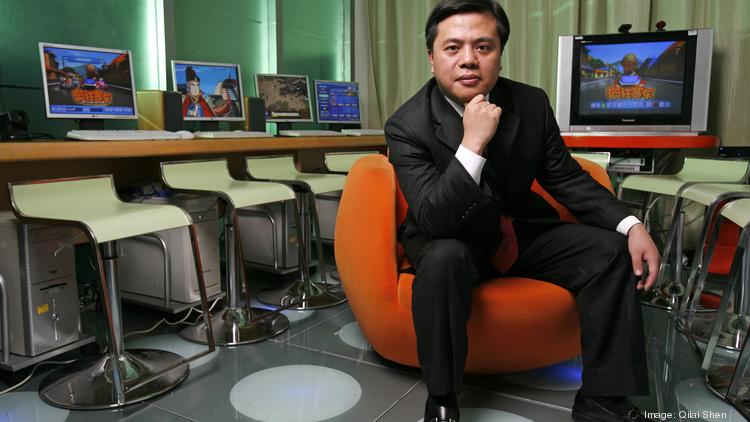
Chinese billionaire Tianqiao Chen is once again raising eyebrows in the healthcare sector, after significantly increasing his stake in struggling healthcare organization Community Health Systems, which is based in Franklin, Tennessee.

According to a filing with the Securities and Exchange Commission, now owns 22.1 percent of CHS‘ outstanding shares of common stock after buying up roughly 9.8 million additional shares over the last week. The price per share varied from $6.1 to $8 per share.

The purchases were made through Chen’s various Shanda affiliates, documents showed.

The big stock buy will inevitably be viewed by at least some as a move to take a bigger interest in the struggling company, something that has been speculated about in the past when Chen first came on the scene and bought a large block of stock in the company last year.

A spokesperson for Shanda Group issued the following statement. “Shanda maintains a good relationship with the CYH management team and intends to engage with them regarding business and operations, and the status of CYH’s ongoing turnaround strategy.”

CHS has been in the news lately as it forges ahead with its ambitious divestiture plan to offload 30 hospitals in hopes of alleviating its billions-large debt load and tightening up its operations. So far the company has sold 20 of those hospitals and has plans in the works to unload the remaining ten. It has also said in a recent earnings call that they are entertaining plans to sell even more, but no definitive details have been released.

Can Patrick Soon-Shiong silence his many critics?

Can Patrick Soon-Shiong silence his many critics?

LOS ANGELES, CA - MARCH 22: CEO of Abraxis Health Institute Patrick Soon-Shiong during a Urban Economic Forum co-hosted by White House Business Council and U.S. Small Business Administration at Loyola Marymount University on March 22, 2012 in Los Angeles, California. Topics discussed at the forum included the Obama administration's support for policies that create private sector-jobs and future entrepreneurs. (Photo by Kevork Djansezian/Getty Images)

On the phone, Patrick Soon-Shiong speaks slowly and deliberately. He clearly trusts himself, but he doesn’t trust journalists anymore.

A series of scathing articles by STAT News and Politico sent stocks in his publicly-traded companies tumbling earlier this year. On Monday, he has an opportunity to change that narrative somewhat, with the unveiling of data from human trials of his cancer vaccine at a major oncology conference.

The stories allege that despite his bold claims, Soon-Shiong’s NantWorks subsidiaries are underperforming and reliant on contracts from other companies in the group. Reporters have also claimed that one of his companies, NantHealth, has received contracts from institutions that had received donations from his nonprofit foundation — a major conflict of interest. This was not adequately disclosed prior to the massive initial public offering of NantHealth, they argue, which may violate SEC laws.

For his part, Soon-Shiong, dismisses the allegations noting that part of the motivation behind those stories was political: “They had never written about me until they saw this picture of me with Trump.”

Speaking to MedCity on Wednesday after his recent appointment to a national health IT advisory committee, Soon-Shiong detailed how the various threads of his career are converging toward a pivotal moment. A solution for healthcare is almost within reach and he’s poised to unveil what he believes is a disruptive cancer therapy – the Nant vaccine – at the annual meeting of the American Society of Clinical Oncology (ASCO) in Chicago on Monday.

This story clearly clashes with many other viewpoints in the industry.

Theranos agrees not to operate labs for two years

http://www.sfgate.com/business/article/Theranos-agrees-not-to-operate-labs-for-two-years-11079274.php

The Theranos lab in Newark Calif., seen on April 12, 2015. The company announced a settlement Monday with the Centers for Medicare and Medicaid Services that resolves all legal and regulatory proceedings between the federal agency and the embattled Palo Alto blood diagnostics firm. Photo: CARLOS CHAVARRIA, NYT

Theranos has reached a settlement with the Centers for Medicare and Medicaid Services that resolves all legal and regulatory proceedings between the federal agency and the embattled Palo Alto blood diagnostics firm, the company announced Monday.

Theranos has agreed to pay a penalty of $30,000 and cannot operate a clinical laboratory for the next two years.

As part of the settlement, the federal agency, which regulates blood testing labs, has withdrawn its revocation of Theranos’ lab operating certification.

Theranos, founded in 2003 by CEO Elizabeth Holmes, had been a high-flying startup that promised to revolutionize blood testing before a Wall Street Journal investigation alleged that the company misled people about the accuracy of its blood testing technology.

It is unclear whether the settlement has any bearing on investigations into the company by the Department of Justice and U.S. Securities and Exchange Commission. The company faces lawsuits from investors and Walgreens, its ex-partner that had been using Theranos blood-testing technology in dozens of stores before terminating the relationship.

Soon-Shiong made ‘implicit threat’ to spur investment in NantHealth, media company says

Soon-Shiong made ‘implicit threat’ to spur investment in NantHealth, media company says

When Dr. Patrick Soon-Shiong invested in the troubled media company Tronc, he was greeted as a white knight. But a lawyer for Tronc is now accusing Soon-Shiong of making an “implicit threat” that he would abandon the company unless Tronc invested in his own medical diagnostics startup, NantHealth.

Soon-Shiong helped rescue Tronc from a hostile takeover attempt last May with an investment of more than $70 million. But he first tried to convince the publishing company to invest in the initial public offering of NantHealth, according to a letter from Tronc’s attorneys filed with the Securities and Exchange Commission.

“Tronc properly declined to invest in that company, since such an investment would have had no logical connection to its business operations in the publishing industry,” the attorneys wrote.

When the company declined, Soon-Shiong insisted that Michael Ferro, Tronc’s chairman, invest in NantHealth, either personally or through his private equity firm, Merrick Ventures, the attorneys wrote.

“The implicit threat was that, if Merrick did not invest in NantHealth, Dr. Soon-Shiong would not invest in Tronc,” the Tronc legal team wrote.

Ferro bought a $10 million stake in NantHealth “so that Tronc did not have to,” according to the attorneys. NantHealth went public last June, to considerable fanfare, but its stock price has since fallen by more than 60 percent.

NantHealth did not respond to a request for comment.

With NantHealth, Soon-Shiong has promised to revolutionize cancer diagnostics through a proprietary technology called GPS Cancer. But the company has struggled to gain traction, posting disappointing sales numbers and losing $184 million in 2016.

And Soon-Shiong’s management of the company has come under increasing scrutiny. Last month, a STAT investigation found that he used his highly promoted cancer moonshot initiative as a marketing vehicle for GPS Cancer. A second investigation described how Soon-Shiong used a $12 million charitable gift to funnel business into NantHealth.

The company’s stock price declined after each report, and NantHealth is now facing lawsuits from investors claiming Soon-Shiong misrepresented facts and violated securities law.

Biggest healthcare frauds in 2016: Running list

http://www.healthcarefinancenews.com/slideshow/biggest-healthcare-frauds-2016-running-list?mkt_tok=eyJpIjoiWVRrMVl6UmtNek5qTURkaSIsInQiOiJ0Q2t5WUwzMm1TMDZaM0NrVU53eWtLWXIrb2tNUDBRZWhpNHRBb3VqWWh0blIzNUR2S1BlSVwveGFCTG9EYStDTFNTWjIrXC9LMmR4YU1DYXU3NVY1QUNoNUxDOW5zWVJVcjdvcFU2TW9vOU04PSJ9

Lazy Image


Chinese billionaire ups stake in CHS for $31.9M

http://www.beckershospitalreview.com/finance/chinese-billionaire-ups-stake-in-chs-for-31-9m.html

Image result for Chinese billionaire Tianqiao Chen

Chinese billionaire Tianqiao Chen has a more than 12.9 percent stake in Community Health Systems after recently buying nearly 3.5 million more shares of the Franklin, Tenn.-based for-profit hospital operator, according to a recent Securities and Exchange Commission filing.

Mr. Chen and his group of companies paid just over $9 on average per share, bringing the total price of the transaction to $31.94 million.

A pioneer in China’s online gaming industry, Mr. Chen’s net worth is estimated by Forbes to be at more than $1 billion.

Mr. Chen, who began buying CHS at the end of the second quarter, upped his stake in the company as it is exploring options with financial sponsors. Private equity firm Apollo Global Management is reportedly in discussions to acquire CHS’ assets. Some real estate investment trusts are also interested in the company’s assets, people familiar with the matter told Reuters.

Troubled hospital giant CHS looking to sell its business

http://www.modernhealthcare.com/article/20160916/NEWS/160919916/troubled-hospital-giant-chs-looking-to-sell-its-business

Image result for community health systems

Earlier this month, Modern Healthcare reported that CHS plans to sell more than the 12 hospitals it has for sale, quoting CFO Larry Cash speaking at the Wells Fargo Securities Healthcare Conference in Boston.

Cash said they are getting interest in additional hospitals. And after examining its portfolio of 159 hospitals, it likely will see “other transactions” before the end of the year, he said.

The hospitals previously up for sale will likely be sold as part of five transactions. Not-for-profit hospital systems are among the prospective buyers, he said.

CHS is not disclosing which hospitals it is negotiating to sell. But the company said that combined, they generate annual revenue of about $1.45 billion and expect to yield net proceeds of $850 million. The proceeds will be used to reduce overall indebtedness, Cash said.

In April, CHS completed the spinoff of 38 mostly small and rural hospitals into a new public company, Quorum Health Corp. That divestiture brought about $1.2 billion in net proceeds, money that also was used to reduce debt.

Plunging earnings complicated by continued low margins at Health Management Associates hospitals that CHS purchased for $3.9 billion in 2014 has caused CHS’ stock price to plummet.

The stock traded at $60 a share a year ago.