Industry Voices—This is the real issue that should be driving the national healthcare conversation

https://www.fiercehealthcare.com/hospitals-health-systems/industry-voices-real-issue-should-be-driving-healthcare-conversation?mkt_tok=eyJpIjoiTUdFNU9UQTFaV1U1TWpsayIsInQiOiJuOXFyQVwvWGx0NUFJdnhjK0ZEZ0ZwamdmMU8wXC9ZWkNPZkMydnJIOHR4eW9mT0RJVmphWGd5b3F4aFB6RTZaOG8yU21uZm91UVJFUGU4UWxBXC9DdXdoaWIwTFRFYW53dTlRWVwvRUs1dUN4WWtONjF1ZEJJemVCM2ZnQURGWnB1Z1EifQ%3D%3D&mrkid=959610&utm_medium=nl&utm_source=internal

Healthcare is traditionally one of the top issues voters say they want Congress to address. This year, the sentiment has intensified. From presidential town hall meetings to congressional hearings to recent public opinion polling, an overwhelming majority of Republican and Democratic voters want Congress to address rising healthcare costs.

But employers and their employees have more at stake than just the cost of utilizing a drug or service, the narrative that is driving today’s healthcare discussion in Congress.

Indeed, employers are at a crossroads in addressing the critical issue of healthcare costs. The fact of the matter is that most employers have no idea how their benefit programs affect employee health outcomes. While it sounds logical that employers understand the link between the benefits they purchase and their employees’ long-term health status, they don’t. Most employers manage their benefits program in separate silos with a single-minded focus only on short-term costs.

When employers focus only on unit costs and transactions in healthcare, employees are undertreated and employers overpay.

Instead of a short-term cost approach, designing healthcare benefits that align the interests of employees and employers around health, and focus on connecting employee health status, care options and outcomes will help employers attain the ultimate goal of a healthy, productive workforce that drives business value for the company.

Employers are recognizing the urgency of this choice but aren’t yet doing enough to address it. If employers don’t start doing a better job of purchasing benefits that help keep employees healthy and productively at work, in part through effective treatment of manageable diseases, our future global competitiveness will be greatly challenged.

For example, better use of medicines can improve health and overall quality of life, which can lead to improved productivity from lower disability and fewer missed days of work. A study found adults with multiple sclerosis that improved medication adherence by 10 percentage points decreased the likelihood of an inpatient or emergency room visit by 9% to 19% and days of work lost by 3% to 8%. Another study found that for workers with asthma or chronic obstructive pulmonary disease, better medication adherence resulted in less time out of work and more than $3,100 in savings on average per worker annually.

Yet, time and again when it comes time to decide on benefits coverage, the choice offered to employers by payers centers on the cost of therapy and not the value it delivers.

What should employers do to define the best path ahead? We believe that when it’s time to negotiate benefits packages with payers, employers must take a more holistic approach to foster key components of healthy, productive workers by addressing the following guiding principles:

  • The health and well-being of a workforce is a long-term investment for employers.
     
  • Tangible outcomes for both employers and employees should be clearly defined and include input from both stakeholder communities.
     
  • Benefits should be designed to optimize positive outcomes (both health-related and readiness for work) for the heterogenous population of covered lives.
     
  • Employers should be able to access data to see both unit cost and total cost of care for any given mix of interventions. Employers should evaluate currently available data to define gaps and call on vendors to aid in bridging those information voids.

As price and upfront cost continue to dominate the headlines, a substantive policy conversation among all different healthcare stakeholders about what constitutes value is needed. Without such inclusive dialogue, the value narrative will continue to revolve solely around “whether to pay or not to pay” for a particular intervention. For employers at the crossroads who know that determining value isn’t a binary exercise, the correct path forward is focusing on a definition of value that includes broader outcomes and recognizes the heterogeneity of covered lives.

Our employees depend upon it.
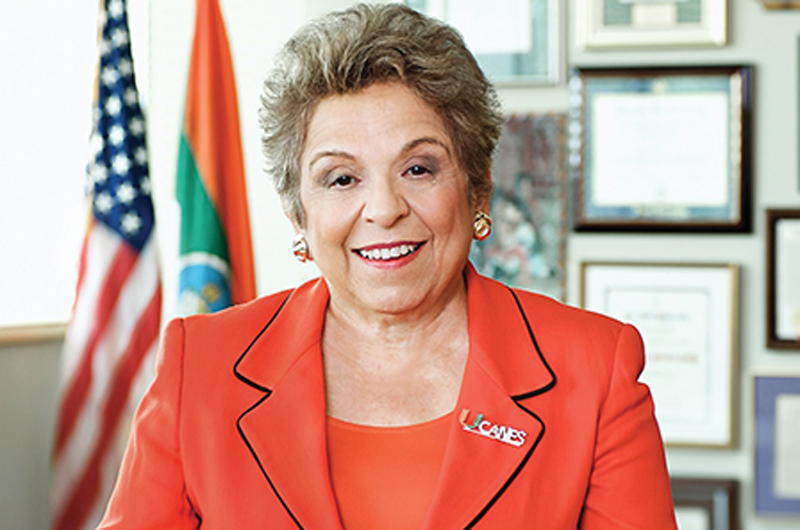


Shalala: What I Learned About How Hard It Is to Reform Health Care

http://www.chcf.org/articles/2017/04/shalala-what-i-learned

Image result for donna shalala

J. Duncan Moore Jr.

Independent journalist J. Duncan Moore, Jr., has been writing about health policy for more than 20 years. Recently he attended a health policy conference at the University of Miami where former Health and Human Services Secretary Donna Shalala reflected on lessons learned from her career in health policy and politics. Here is his report.

President Trump and Republican members of Congress continue to struggle with their many different plans to repeal and replace the Affordable Care Act (ACA). This is a high-risk venture on two levels. If they get their way, it could reduce the number of Americans with health insurance by more than 24 million, do away with essential health benefit rules, allow insurance companies to exclude customers with pre-existing conditions, and more.

Beyond those serious human impacts on Americans’ health and household finances, the political effects could be significant for the Republicans who control the legislative and executive branches. Polling shows dismal support for the GOP’s health care goals, and Republicans have been greeted by angry crowds at many town halls during the current congressional recess. This is all turning out to be much harder than they apparently believed during Barack Obama’s eight-year administration, when they tried more than 60 times to repeal the ACA but always knew their actions would be vetoed.

The political strife surrounding the proposed ACA repeal is not surprising to those who chased health care reform plans that went down to dust. Donna Shalala, who was secretary of Health and Human Services during the Clinton administration’s ill-fated health care initiative in 1993, recently recounted how difficult it can be to push a major domestic legislative overhaul. The graveyard of doomed health care initiatives is crowded, she pointed out, with tombstones memorializing efforts by Franklin D. Roosevelt, Harry Truman, John F. Kennedy and Sen. Edward Kennedy, Jimmy Carter, and Bill Clinton. Even Richard Nixon made a proposal that withered in Congress. “Sen. Kennedy said, toward the end of his life, ‘I wish I had signed on to the Nixon bill,’ ” Shalala recalled. Now it’s Trump’s turn to tempt fate.

“Taking giant steps in health policy takes a certain number of characteristics,” Shalala told an audience of 800 health care executives and policy experts in March at the University of Miami, where she formerly served as president. “Over the years we have learned what the elements have to be to do that. We have learned through the failures.”

Here are the lessons Shalala learned about major health policy legislation:

  • The president must have passion for pushing the bill through to completion. Presidents need to be prepared to use up a lot of political capital along the way. President Obama overruled the naysayers in his own White House because of the searing memory of his mother arguing with her health insurance company as she lay dying of cancer.
  • Move fast. Time is not on your side. “Presidents lose power every day. The height of their power is the beginning of the administration. In the Clinton Administration, we delayed. Clinton was distracted by other things.”
  • You must have a plan. President Obama had the advantage of being cornered during the 2008 primary season by Hillary Clinton, who released her own health reform plan. He was forced to think about his plan during the campaign.
    • Presidents must stay out of the weeds. Just keep trumpeting the big themes. “Carter loved the details. Clinton loved to get into the weeds.” It didn’t help them any.
    • You won’t get anywhere without congressional buy-in. “Just sending them up a bill was unsuccessful for any president.”
    • You must win the support of the stakeholders. “Every unsuccessful effort has been stopped by stakeholders: the American Medical Association, the hospitals, or the pharmaceutical industry.” In political science, she said, “we talk about negative coalitions. Every stakeholder decides there is something they don’t like. You have to put a positive coalition together. Lyndon Johnson tricked the AMA into supporting Medicare. Everybody knows the Obama story: with pharma, the nurses, the insurance companies, he learned from the previous experiences and lined up the stakeholders.”
    • Don’t mix the coverage issue with the cost issue. The successful reformers have not made holding the line on medical costs a major goal. “The politics of coverage is very different from bending the cost curve. The stakeholders line up in different ways. I have always thought the politics of coverage is much easier than the politics of cost control. If what they are talking about is pulling money out of the system, that is very different from putting a trillion dollars into the system and expanding the coverage.”
    • Finally: “You have to explain and explain and explain. You cannot let those in opposition capture the moment and capture the opposition. In the Clinton administration, the “Harry and Louise” ads killed us, even though they were only shown in Washington, DC. . . . Hillary made the mistake of talking about them; then they were all over network TV. We lost control of the story.”

      Shalala made these remarks in the context of a public one-on-one dialogue with Kathleen Sebelius, who was Obama’s HHS secretary during and after passage of the only successful major health reform since the 1960s. Toward the end, she said to Sebelius: “No one ever gets their legislation perfect. What would you have done differently?” Sebelius ticked off a list of regrets: They should have reduced administrative paperwork, Congress should have funded the insurance risk corridors, HHS needed more outreach and education money, Medicaid should have been expanded to every state.

      For Democrats, the political costs of passing this comprehensive legislation have been steep. Largely because of united Republican opposition to their reform law, they first lost control of the House of Representatives, then the Senate. They lost control of many houses in state legislatures, 10 governor’s offices, and finally, the White House.

      Speaking of regrets, I asked them in the question period, “Was what you gained worth the enormously consequential price you paid?”

      Shalala cut me off: “We got 20 million people covered with health insurance,” she said. A huge wave of applause rewarded her statement.

      For Shalala, that’s the bottom line. Everything else is secondary.


Five Lessons From The AHCA’s Demise

http://healthaffairs.org/blog/2017/03/27/five-lessons-from-the-ahcas-demise/

Image result for lessons to learn

While the keyhole of history has had insufficient time to bring the failed launch of the American Health Care Act (AHCA) into focus, it’s not too soon to begin learning some of the lessons it can teach us. Legislative efforts have a lifespan but our health care system does not. So whether we are still rejoicing or recriminating, let’s take a look at some timeless principles we can apply to the ongoing effort to improve health care in the United States.

How leaders create great companies with stakeholders

How leaders create great companies with stakeholders

Stakeholder-great-things


Ellen Auster and Lisa Hillenbrand on “Stragility”: An interview by Bob Morris

https://ffbsccn.wordpress.com/2016/05/01/ellen-auster-and-lisa-hillenbrand-on-stragility-an-interview-by-bob-morris/

Stragility