


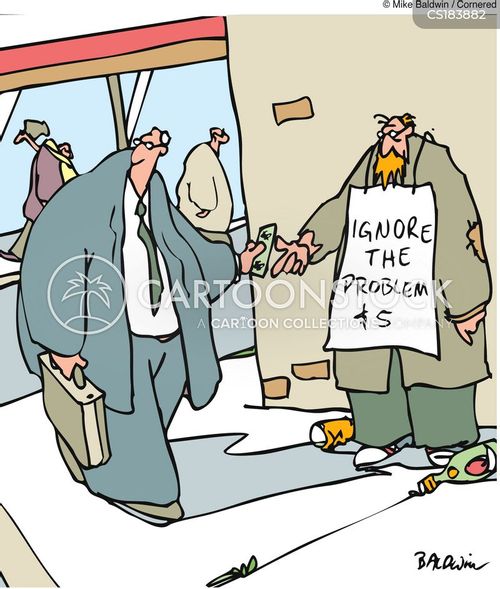
Cartoon – Faith-Based Consumerism




Knowledge is power. Yet Congress has limited its own access to facts vital to understanding the nation’s gun violence pandemic. That’s because, since 1996, Congress has effectively prevented the Centers for Disease Control and Prevention from continuing public health research into the consequences of gun violence.
At the same time, while Congress forever proclaims its support of the men and women in blue, lawmakers have fettered law enforcement around the country in understanding gun-crime trends by restricting how the Bureau of Alcohol, Tobacco, Firearms and Explosives can share its gun-trace data.
Assuming Ohio’s congressional delegation doesn’t confuse talk with action, Ohio’s two senators and 16 U.S. House members — three of whom represent portions of Cuyahoga County, thanks to gerrymandering — should work together to eliminate these grotesque and paradoxical restrictions.
They blind congressional decision-making about gun policy – and about the extent and results of illegal gun trafficking.
The United States is awash in weapons, with more guns per 100 residents (89) than any other nation, reports CNN, citing the Swiss-based Small Arms Survey. The next closest is war-torn Yemen, with 55 guns per 100 inhabitants.
With crime guns relatively easy and cheap to obtain, cities like Cleveland are seeing steadily rising rates of gun violence. In Cuyahoga County, gun deaths as a percentage of overall homicides rose more than 14 percent in the last 25 years, according to data from the county medical examiner’s office.
Why would Congress tie the hands of police and policymakers to address this scourge? It makes no sense.
Even the late sponsor of the congressional amendment that precipitated the prohibition on CDC gun research, then-Rep. Jay W. Dickey Jr., an Arkansas Republican, later regretted it publicly.
“I wish we had started the proper research and kept it going all this time,” Dickey, who died last year, told the Huffington Post in 2015, in a story updated last year. “I have regrets.”
Dickey said such gun violence research might have developed safety measures or mechanisms for guns, as highway safety research has made roads safer: “If we had somehow gotten the research going, we could have somehow found a solution to the gun violence without there being any restrictions on the Second Amendment,” he said. “We could have used that all these years to develop the equivalent of that little small [highway barrier] fence.”
It’s not too late to restart this important research effort.
After accomplishing that, Ohio’s delegation should next work to repeal the Tiahrt amendment, named for then-Rep. Todd Tiahrt, a Kansas Republican. As modified, the 2003 amendment has added to the budget a nondisclosure requirement for ATF’s gun-trace efforts.
ATF says this doesn’t bar it from sharing gun-trace data with a law enforcement agency engaged in a “bona fide” criminal investigation, or from doing jurisdictional-specific gun trend investigations, but the amendment limits broadly how ATF can share its gun-trace data. That in turn creates critical knowledge barriers on crime-gun trends for officials in Ohio and every other state.
Repealing the Dickey and Tiahrt amendments wouldn’t crimp the rights of law-abiding gun owners. Instead, unlocking those congressional handcuffs would empower Congress by providing accurate information on which to fashion fair and practical legislation.
That assumes, of course, good faith rather than bombast on the part of Congress and the men and women Ohio sends to the U.S. House and Senate.
Twelve of Ohio’s 16 U.S. representatives, plus Sen. Rob Portman, of suburban Cincinnati, are Republicans, the congressional majority party.
That gives them leverage on eliminating these gun-ignorance amendments. They need to use that leverage. If they don’t, Ohio voters may remind them sooner rather than later that they want their lawmakers armed — with knowledge, not ignorance.
https://www.bloomberg.com/view/articles/2018-02-27/prescription-drug-costs-in-the-u-s-are-a-crime

And just tweaking the system won’t solve the problem.
President Donald Trump has complained that U.S. drug companies are “getting away with murder.” For once the hyperbole is forgivable: It suggests he takes the problem of drug costs seriously and might be willing to do something about it. Unfortunately, his administration’s efforts up to now suggest the opposite.
The White House has proposed tweaks to government health-care programs. Some of these measures are worth trying — they could help at the margin — but tweaks aren’t enough. The underlying problem is drug prices that are indeed murderous: Americans and their insurers often pay many times what people in other developed countries pay for the same medicines. That’s what policy needs to confront.
The administration wants insurers participating in Medicare’s prescription-drug program, for instance, to share more directly with beneficiaries the discounts they arrange with drug companies. Out-of-pocket drug costs for some people on Medicare would be capped, and reimbursement for medicines administered by doctors would be trimmed. In Medicaid, a handful of states would be allowed to decline coverage for certain drugs, increasing their leverage in negotiating discounts.
Such changes could lower drug spending for some Medicare and Medicaid beneficiaries. But they miss the main point by shifting costs within the health-care system rather pressing down on the costs themselves. Unless this changes, the U.S. will continue to be overcharged for its drugs.
The companies often say that high U.S. prices pay for research into new lifesaving products. Leaving aside why U.S. patients should be asked to shoulder that burden for the entire world, the evidence shows that the argument is false: The premium companies collect in the U.S. market is substantially greater than the amount they spend on research and development.
State legislatures have aimed closer to the mark with efforts to expose the math behind price increases. Vermont, Nevada and California have new lawsrequiring that drug companies provide cost breakdowns to justify big price hikes on popular drugs (including, in Nevada’s case, drugs for diabetes). Several other states are considering doing the same.
Even if these laws stand — they’re being challenged in court — transparency gets you only so far. Pushing prices down will take stronger efforts from the federal government to increase competition.
One good way to do that is to speed the uptake of generics. Scott Gottlieb, commissioner of the Food and Drug Administration, has been pressuring drug makers to stop trying to extend the monopolies they’ve been granted (via FDA approval and patents) for brand-name drugs. But only Congress can forbid those practices, and it has yet to act on bipartisan legislation that would do the job. Trump could show he’s serious about lowering drug prices by urging Congress to pass the law.
Another way to boost competition would be to let people and pharmacies import some drugs from other countries with sound pharmaceutical regulation, such as Canada. Almost one in 10 Americans say they already do, despite the official prohibition.
The U.S. should also do what so many other countries do: negotiate. The Centers for Medicare and Medicaid Services ought to use its enormous purchasing power on behalf of the 42 million Americans in the Medicare drug-benefit program, ensuring that prices better reflect the drugs’ actual medical value. Again, for this to happen, Congress would need to change the law. Incredible as this will seem elsewhere in the world, the U.S. government has denied itself permission to apply pharmaceutical cost-benefit analysis and negotiate prices.
Trump is right to deplore the cost of drugs in the U.S. There’s no great mystery about the causes — and no doubt that much bolder measures than the administration has in mind will be needed to bring prices down.

As consumers face rapidly rising drug costs, states across the country are moving to block “gag clauses” that prohibit pharmacists from telling customers that they could save money by paying cash for prescription drugs rather than using their health insurance.
Many pharmacists have expressed frustration about such provisions in their contracts with the powerful companies that manage drug benefits for insurers and employers. The clauses force the pharmacists to remain silent as, for example, a consumer pays $125 under her insurance plan for an influenza drug that would have cost $100 if purchased with cash.
Much of the difference often goes to the drug benefit managers.
Federal and state officials say they share the pharmacists’ concerns, and they have started taking action. At least five states have adopted laws to make sure pharmacists can inform patients about less costly ways to obtain their medicines, and at least a dozen others are considering legislation to prohibit gag clauses, according to the National Conference of State Legislatures.
Senator Susan Collins, Republican of Maine, said that after meeting recently with a group of pharmacists in her state, she was “outraged” to learn about the gag orders.
“I can’t tell you how frustrated these pharmacists were that they were unable to give that information to their customers, who they knew were struggling to pay a high co-pay,” Ms. Collins said.
Alex M. Azar II, the new secretary of health and human services, who was a top executive at the drugmaker Eli Lilly for nearly 10 years, echoed that concern. “That shouldn’t be happening,” he said.
Pharmacy benefit managers say they hold down costs for consumers by negotiating prices with drug manufacturers and retail drugstores, but their practices have come under intense scrutiny.
The White House Council of Economic Advisers said in a report this month that large pharmacy benefit managers “exercise undue market power” and generate “outsized profits for themselves.”
Steven F. Moore, whose family owns Condo Pharmacy in Plattsburgh, N.Y., said the restrictions on pharmacists’ ability to discuss prices with patients were “incredibly frustrating.”
Mr. Moore offered this example of how the pricing works: A consumer filling a prescription for a drug to treat diabetes or high blood pressure may owe $20 if he uses insurance coverage. By contrast, a consumer paying cash might have to pay $8 to $15.
Mark Merritt, the president and chief executive of the Pharmaceutical Care Management Association, which represents benefit managers, said he agreed that consumers should pay the lower amount.
As for the use of gag clauses, he said: “It’s not condoned by the industry. We don’t defend it. It has occurred on rare occasions, but it’s an outlier practice that we oppose.”
However, Thomas E. Menighan, the chief executive of the American Pharmacists Association, said that such clauses were “not an outlier,” but instead a relatively common practice. Under many contracts, he said, “the pharmacist cannot volunteer the fact that a medicine is less expensive if you pay the cash price and we don’t run it through your health plan.”
A bipartisan measure that took effect in Connecticut this year prohibits the gag clauses. It was introduced by the top Democrat in the Connecticut Senate, Martin M. Looney, and the top Republican, Len Fasano.
“This is information that consumers should have,” Mr. Looney said in an interview, “but that they were denied under the somewhat arbitrary and capricious contracts that pharmacists were required to abide by.”
Mr. Fasano said that consumers were sometimes paying three or four times as much when they used their insurance as they would have paid without it. “That’s price gouging,” he said in an interview.
The legislation, Mr. Fasano said, encountered “a lot of resistance” from large pharmacy benefit managers and some insurance companies.
In North Carolina, a new law says that pharmacists “shall have the right” to provide insured customers with information about their insurance co-payments and less costly alternatives.
A new Georgia law says that a pharmacist may not be penalized for disclosing such information to a customer. Maine has adopted a similar law.
In North Dakota, a new law explicitly bans gag orders. It says that a pharmacy or pharmacist may provide information that “may include the cost and clinical efficacy of a more affordable alternative drug if one is available.”
The North Dakota law also says that a pharmacy benefit manager or insurer may not charge a co-payment that exceeds the actual cost of a medication.
The lobby for drug benefit companies, the Pharmaceutical Care Management Association, has filed suit in federal court to block the North Dakota law, saying it imposes “onerous new restrictions on pharmacy benefit managers.”
Specifically, it says, the North Dakota law could require the disclosure of “proprietary trade secrets,” including information about how drug prices are set. “P.B.M.–pharmacy contracts typically preclude a pharmacy from disclosing to the patient the amount of a reimbursement,” the lawsuit says.
Gov. Asa Hutchinson of Arkansas, a Republican, said this past week that he would call a special session of the State Legislature to authorize the regulation of pharmacy benefit managers by the state’s Insurance Department.
He said he feared that some independent pharmacists receiving “inadequate reimbursement” from the benefit managers might go out of business, reducing patients’ access to care, especially in rural areas.
http://www.latimes.com/politics/la-na-pol-democrats-healthcare-agenda-20180227-story.html

After spending most of 2017 defending the Affordable Care Act from GOP attacks, a growing number of Democrats believe the law’s reliance on private insurance markets won’t be enough and the party should focus instead on expanding popular government programs like Medicare and Medicaid.
The emerging strategy — which is gaining traction among liberal policy experts, activists and Democratic politicians — is less sweeping than the “single-payer” government-run system that Sen. Bernie Sanders (I-Vt.) made a cornerstone of his 2016 presidential campaign.
Many Democrats still fear such a dramatic change would disrupt coverage for too many Americans, but they have also concluded that the current law’s middle-ground approach to build on the private insurance market — originally a Republican idea — isn’t providing enough Americans with adequate, affordable health coverage.
These Democrats see the expansion of existing public programs as a more pragmatic and politically viable way to help Americans struggling with rising costs and correct the shortcomings of the 2010 law, often called Obamacare.
“But there is a recognition that you can’t just snap your fingers and have political consensus. … And one of the lessons learned from 2017 is that you better do your homework.”
Democrats are eager to avoid mistakes made by Republicans, who proved unprepared last year as they struggled unsuccessfully to fulfill their years-long promise to repeal the current health law.
Developing a new healthcare agenda doesn’t promise to be easy, as liberal activists and others in the progressive wing of the Democratic Party remain committed to the single-payer solution championed by Sanders and may resist more incremental steps.
At the same time, even more modest moves to build on Medicare or Medicaid will face opposition from hospitals, drugmakers and others in the industry who fear that government health plans would pressure them to accept lower prices.
And no one expects any Democratic plan to go anywhere as long as Congress remains in Republicans’ hands and Trump holds a veto pen.
But in the wake of widespread public rejection of GOP healthcare proposals last year, Democrats see an opportunity to seize the initiative and advance the party’s long-held dream of universal health coverage.
“We’re on offense on healthcare,” said Brad Woodhouse, campaign director for Protect Our Care, an advocacy group formed last year to fight the GOP effort to roll back the 2010 health law. “We need to make healthcare the No. 1 issue.”
Speaking to a recent conference organized by Families USA, a leading national patients’ rights group, Woodhouse cautioned, however, that Democrats must offer voters more than just a defense of the current law.
In recent months, Democratic lawmakers on Capitol Hill have filed a growing number of bills that would expand eligibility for Medicare or Medicaid, which currently limit coverage to qualifying elderly, disabled or poor Americans. The two mammoth government programs are much cheaper than commercial insurance, in large part because they pay hospitals and other medical providers less.
In January, a group of influential liberal health policy experts gathered in Washington to explore these proposals, which typically would allow younger, wealthier consumers to “buy into” one of the two programs.
At the same time, Democratic leaders in several states, including California, New York and New Mexico are exploring state-based initiatives to expand government health plans.
And last week, the Center for American Progress, a leading liberal think tank, released a plan to open up Medicare to all Americans, while still giving workers the option to stick with coverage offered through an employer.
“Democrats have mostly been trying to keep Republicans from repealing the current law,” said Sen. Tim Kaine (D-Va.). “Now we need to come up with the next set of ideas about how to improve coverage and affordability.”
Kaine and Sen. Michael Bennet (D-Colo.) are cosponsoring yet another proposal — which they call Medicare X — for a new government program based on Medicare, particularly for consumers in parts of the country with limited commercial options.
The renewed interest among Democrats in government health insurance has buoyed the hopes of those who support a more ambitious push to create a single public health plan for everyone.
“What has been happening in the last few years is that millions of working people and young people are getting involved in the party … and the grassroots movement is overwhelmingly clear about what it wants from healthcare,” Sanders said in an interview.
“That means that the debate over Medicare-for-all changes, and I think that is what is happening now.”
Indeed, Sanders’ Medicare-for-all bill, which would create a new government plan like Medicare for everyone, has drawn support from nearly every major Democrat in the Senate who is expected to seek the 2020 presidential nomination.
But many Democrats who aspire to something like Sanders’ proposal still worry about the cost and disruptions that would likely be necessary to create a large new government plan for everyone.
“I share the desire for universal coverage,” said Bennet. “The question is what approach is more practical to achieving that objective.”
Nearly a decade ago, Democratic leaders, concerned about the politics of expanding government health plans too aggressively, created the Obamacare insurance marketplaces, which rely on private insurers to provide coverage for Americans who don’t get health benefits through an employer or through a government program.
Democrats even rejected a proposal for a limited government plan to be sold on the marketplaces as a “public option.”
But the ceaseless GOP attacks on the marketplaces, which had been a conservative idea, and the failure of private health insurers to make more affordable plans available — even before Trump took office — has caused more Democrats to back a bigger role for government.
“That is a huge shift,” said Jacob Hacker, a Yale political scientist who helped develop the public option proposal.
Further emboldening Democrats is growing evidence that the public overwhelmingly supports existing government health plans, especially in the face of GOP threats to scale them back.
Eight in 10 Americans held a positive view of Medicare in a recent nationwide poll by the nonprofit Kaiser Family Foundation.
And majorities of both parties favor allowing more people to buy into the program, the survey found.
Medicaid enjoys similarly broad support, with three-quarters of Americans expressing a favorable view.
By contrast, the GOP proposals to roll back the 2010 health law and slash funding for Medicaid were overwhelmingly unpopular, drawing support from just one in five Americans in several nationwide polls.
Even supporters of this emerging Democratic healthcare agenda acknowledge it will take years to develop and may not be fully debated until the campaign for the 2020 Democratic presidential nomination gets underway next year.
But many say it is not too early to begin planning.
“We saw support for Medicaid [during the 2017 GOP repeal push] that took even many longtime Medicaid advocates by surprise,” said Rep. Ben Ray Lujan (D-N.M.), who is sponsoring a proposal with Sen. Brian Schatz (D-Hawaii) to allow people to buy into the Medicaid program.
“There is an opportunity now to build on that momentum,” Lujan said.

Little by little, the Trump administration is dismantling elements of the Affordable Care Act and creating a health care system that looks more like the one that preceded it. But some states don’t want to go back and are working to build it back up.
Congress and the Trump administration have reduced Obamacare outreach, weakened benefit requirements, repealed the unpopular individual insurance mandate and broadened opportunities for insurers to offer inexpensive but skimpy plans to more customers.
Last week, the administration released its latest proposal along these lines, by changing the definition of so-called short-term plans. These plans don’t need to follow any of the Obamacare requirements, including popular rules that plans include a standard set of benefits, or cover people with pre-existing conditions. If the rule becomes final, these plans could go from short term to lasting nearly a year or longer.
Taken together, experts say, the administration’s actions will tend to increase the price of health insurance that follows all the Affordable Care Act’s rules and increase the popularity of health plans that cover fewer services. The resultcould be divided markets, where healthier people buy lightly regulated plans that don’t cover much health care, lower earners get highly subsidized Obamacare — and sicker middle-class peopleface escalating costs for insurance with comprehensive benefits.
But not everywhere. Several states are considering whether to adopt their own versions of the individual mandate, Obamacare’s rule that people who can afford insurance should pay a fine if they don’t obtain it. A few are looking to tighten rules for short-term health plans. Some states are investing heavily on Obamacare outreach and marketing, even as the federal government cuts back.
The result is likely to be big differences in health insurance options and coverage, depending on where you live. States that lean into the changes might have more health insurance offerings with small price tags, but ones that are inaccessible to people with health problems and don’t cover major health services, like prescription drugs. States pushing back may see more robust Obamacare markets of highly regulated plans, but the price of those plans is likely to remain higher.
“Clearly, I think the federal administration and Congress are moving in one direction,” said Brian Feldman, a Maryland state senator who leads the state health subcommittee and was the primary sponsor of mandate legislation there. “And I think states like Maryland would like to move in a different direction.”
Mr. Feldman and his colleagues aren’t planning simply to replicate the federal individual mandate. Instead, they are trying a new strategy. People who fail to obtain insurance would still be charged a fine, but they would be allowed to use that money as a “down payment” on a health plan if they wished. Legislators estimate that many people subject to the penalty would not owe anything more to buy health insurance, after federal tax credits are applied.
Other states are hoping to mimic the expiring federal policy more closely. The board governing the insurance marketplace for the District of Columbia voted last week to recommend the adoption of an individual mandate replacement. Connecticut’s governor, Dannel Malloy, is considering a proposal by a Yale health economist.
Those plans are more similar to the Affordable Care Act’s approach, in part for expedience. The federal mandate is set to expire next year, and insurance companies need to develop their health plans and submit 2019 prices by this summer.
“The idea that a state would be able to stand up something, and put out any guidance, and advise stakeholders, and be able to do it by 2019, is pretty infeasible,” said Jason Levitis, a former Obama administration Treasury Department official who has developed legislation to help states draft mandate replacement bills.
Imposing state-level versions of the mandate may be a political challenge even in blue states. But other strategies are in play, too. California is one of a handful of states considering a bill that would effectively ban the short-term insurance plans proposed by the Trump administration. (New York, New Jersey and Rhode Island already effectively block them.)
A number of states across the political spectrum are also considering policies that would provide so-called reinsurance funds, to help protect health insurers from rare, very expensive patients, and help them lower the prices for everyone else.
Alaska, Minnesota and Oregon have already adopted such plans. Washington, New Jersey, Maine, Colorado, Wisconsin and Maryland are working on proposals. Heather Howard, who directs the state health and values strategies program at Princeton University, said that reinsurance plans operated more like a “carrot” in stabilizing insurance markets. They may prove appealing to a broader array of states, while the mandate, a “stick,” may interest politicians only in the most liberal places.
Some Obamacare-averse states are pursuing policies meant to circumvent the health law’s rules for insurance, and broaden options for cheaper, lightly regulated health plans. Idaho has announced a plan to allow insurers to offer health plans that don’t comply with many of Obamacare’s core rules, and one insurer, Blue Cross of Idaho, has said it will begin selling such plans next month.
Alex Azar, the Health and Human Services secretary, has been cagey about whether he will step in to enforce federal law forbidding such products. Meanwhile, the Iowa legislature is considering a bill that would allow a different type of health plan to circumvent Obamacare rules, as The Des Moines Register recently reported. Medica, the only insurer currently offering Obamacare plans, said it might depart the Iowa market if the plan were approved.
The Affordable Care Act was drafted with room for state customization, but one of its primary goals was to make health insurance around the country more uniform. Thanks to state resistance to the health law, varying local conditions and a Supreme Court decision that made the Medicaid expansion optional, results have been much more uneven. Some states have seen much bigger reductions in the share of the uninsured than others. Only some states have seen insurance premiums stabilize.
“Without question I think we’re going to see a natural experiment in the states and a growing divergence in outcomes,” said Sabrina Corlette, a research professor at Georgetown University’s Health Policy Institute.
Evidence of that divergence is already here. This year, signups for Affordable Care Act health plans were nearly flat compared with last year, despite huge cuts in federal outreach and advertisement. But states that ran their marketplaces and spent heavily on advertising saw stronger signups, while states that were more resistant to the health law experienced drops. The loss of the mandate, and the proliferation of health plans that don’t follow Obamacare’s rules, are likely to widen those gulfs.
 HENRY KOTULA