Moody’s: Aggressive insurer growth strategies threaten nonprofit hospitals

https://www.healthcaredive.com/news/moodys-aggressive-insurer-growth-strategies-threaten-nonprofit-hospitals/517691/

Dive Brief:

  • Disruptive growth strategies among health insurers threaten the future margins and volumes of nonprofit hospitals, a new Moody’s Investor Services report maintains.
  • Vertical integrations — such as the proposed CVS Health-Aetna merger and UnitedHealth/Optum-DaVita deal — put insurers “in direct competition” with hospitals for outpatient volume and revenue and could allow payers to carve out hospitals or specific services from their contracts, according to the report.
  • Moody’s warns that the embrace of value-based payment models by insurers is also a threat, as it shifts patients from high-cost inpatient care to cheaper outpatient settings.

Dive Insight:

Hospitals are already feeling the squeeze from cuts in Medicare reimbursements, which are driving patients with less serious ailments to urgent care and other outpatient treatment facilities. Depressed patient admissions and payments have providers searching for cost savings. The result has been a near constant stream of divestitures, mergers and layoffs that shows no signs of abating. At the same time, hospitals have been acquiring physician practice and outpatient care sites to diversify their revenue streams as demand shifts.

Those efforts could be undermined as insurers move into the provider space by buying up professional practices, for example.

“As the insurer owns more non-acute healthcare providers — particularly physician groups — it would be better able to carve out hospitals or certain services from its contracts, which would translate into lower volume and revenue for hospitals,” the report said.

Vertically integrated private payers will cut into hospital revenues by offering similar outpatient and post-acute care to members at lower costs than hospitals can afford, Moody’s says. With enough integration, they could siphon more patients and revenue from struggling hospitals.

Optum’s physician acquisitions and similar deals will also cut into hospitals’ referral volumes. “The acquisition of relatively large physician groups is noteworthy because these providers are the key decision makers in determining what type of treatment the patient will receive and where the care is provided,” the report said.

Increasing scale fueled by more Medicare and Medicaid managed care members, coupled with market concentration, will also give insurers the edge in price negotiations, according to the report. Meanwhile, reduced government payments will make hospitals more dependent on private insurance to cover their costs.

“Insurers flexing their negotiating power by offering lower rate increases will likely result in more standoffs and terminations of contracts between insurers and hospitals,” Diana Lee, a vice president at Moody’s, said in the report. “To gain leverage, we expect hospitals to continue M&A and consolidation.”


UPDATE: CMS seeks expansion of short-term plans to sidestep ACA

https://www.healthcaredive.com/news/cms-seeks-expansion-of-aca-skirting-short-term-plans/517399/

Image result for Out of Pocket expenses

Dive Brief:

  • HHS issued a proposed rule on Tuesday that expands the availability of short-term health insurance by allowing the purchase of plans providing coverage for up to 12 months, the latest in the Trump administration’s plans to weaken the Affordable Care Act. The action builds off a request for information by HHS last June on ways to increase affordability of health insurance.
  • The current maximum period for such plans is less than three months, a change made by the Obama administration in 2016. The proposed rule would mark a return to the pre-2016 era, but CMS noted that it is seeking comment on offering short-term plans for periods longer than 12 months.
  • Short-term plans are not required to comply with federal rules for individual health insurance under the ACA, so the plans could charge more for those with preexisting conditions and not provide what the ACA deemed essential health benefits like maternity care.

Dive Insight:

The proposed rule builds off of an executive order President Donald Trump signed in October, which instructed the federal government to explore more access to association health plans, expanding short-term limited duration plans and changes to health reimbursement arrangements or HRAs.

Consumers buying these short-terms plans could lose access to certain healthcare services and providers and experience an increase in out-of-pocket expenditures for some patients, according to the proposal.

The short-term plans “would be unlikely to include all the elements of ACA-compliant plans, such as the preexisting condition exclusion prohibition, coverage of essential health benefits without annual or lifetime dollar limits, preventive care, maternity and prescription drug coverage, rating restrictions and guaranteed renewability,” according to the proposed rule.

The Trump administration argues that expanding access to short-term plans is increasingly important due to rising premiums in the individual markets.

But if young and healthy people leave the individual market for short-term plans, it could contribute to an unbalanced risk pool. HHS itself states that the exodus of young and healthy exchange members could contribute to rising premiums within the ACA exchange markets.

“If individual market single risk pools change as a result, it would result in an increase in premiums for the individuals remaining in those risk pools,” the proposed rule stated.

But when asked about concerns that the idea might hurt the stability of the ACA marketplaces by siphoning healthy people away, CMS Administrator Seema Verma argued there would be little impact.

“No, we don’t think there’s any validity to that — based on our projections only a very small number of healthy people will shift from the individual market to these short-term limited duration plans. Specifically, we estimate that only 100,000 to 200,000 people will shift. And this shift will have will have virtually no impact on the individual market premiums,” Verma said on a press call.

But the insurance lobby cautioned that the action could increase insurance prices for the most vulnerable.

The American Hospital Association and Association for Community Affiliated Plans also slammed the short-term plans, saying they would increase the cost of comprehensive coverage.

“Short-term, limited-duration health plans have a role for consumers who experience gaps in coverage. They are not unlike the small spare tire in a car: they get the job done for short periods of time, but they have severe limitations and you’ll get in trouble if you drive too fast on them,” ACAP CEO Margaret Murray said in a statement.

“While we are reviewing the proposed rule to understand its impact on the people we serve, we remain concerned that expanded use of short-term policies could further fragment the individual market, which would lead to higher premiums for many consumers, particularly those with pre-existing conditions,” said Kristine Grow, SVP of communications at America’s Health Insurance Plans.

HHS anticipates most individuals switching from individual market plans to short-term coverage plans would be relatively young or healthy and not eligible to receive ACA’s premium tax credits.

CMS said the proposal is one to help the 28 million Americans without health insurance, pointing to the 6.7 million who chose to pay the individual mandate penalty in 2015 as evidence that ACA-compliant plans are too expensive.

“In a market that is experiencing double-digit rate increases, allowing short-term, limited-duration insurance to cover longer periods gives Americans options and could be the difference between someone getting coverage or going without coverage at all,” Verma said in a statement.

Senate HELP Committee Chair Lamar Alexander, R-Tenn., praised the action, but cautioned that states still have a responsibility to protect consumers.

“Millions of Americans who are between jobs and who pay for their own insurance will welcome this extended option for lower-cost, short-term policies. States will have the responsibility for making sure these policies benefit consumers,” Alexander said in a statement.

Democrats largely oppose the move, arguing it will further destabilize the market for millions of Americans in the ACA exchanges. “Widespread marketing of these bare bones, junk plans will further destabilize health insurance markets, and will lead to higher premiums for everyone,” a group of House Democrats said in a joint statement.

As Republicans are not likely to take up ACA repeal again any time soon, the Trump administration has been working to pare back the law in the past several months. It halved the enrollment period and stopped paying cost-sharing reduction payments to insurers. Also, the recent tax overhaul included a repeal of the law’s requirement that most people have coverage.

USA Today editorial board: Amazon, Berkshire Hathaway, JPMorgan can’t ‘fix our nonsensical health care system’

https://www.beckershospitalreview.com/hospital-management-administration/usa-today-editorial-board-amazon-berkshire-hathaway-jpmorgan-can-t-fix-our-nonsensical-health-care-system.html

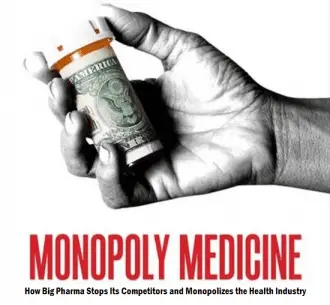
Monopoly Medicine - How Big Pharma Stops Competitors Monopolizes Health Industry 1

While health insurers and benefit managers saw stocks tumble on news Amazon, Berkshire Hathaway and JPMorgan Chase & Co. will enter the healthcare arena, the editorial board at USA Today isn’t convinced the move will be as disruptive as some think.

In an opinion piece published Feb. 20, USA Today editors wrote, “To BBD [Jeff Bezos, Warren Buffett and Jamie Dimon] we say: Go for it. If you can come up with ways to provide your employees with better health care for less money, more power to you. To the rest of the country we would say this: Don’t get too excited. Not even a company as crafty as Amazon, or a bot as all-knowing as Alexa, can fix our nonsensical health care system.”

USA Today said the reason an Amazon-Berkshire-JPMorgan company won’t create overarching change is because U.S. healthcare is built upon an “upside-down” architecture. They wrote providers and drug companies “have monopoly or near-monopoly powers” to set prices, while employers and payers are much more fragmented.

“The three companies — particularly Amazon — are known for their ability to disrupt industries. But in health care, they aren’t up against an old-school industry fallen behind the times; they’re facing powerful monopolies or near-monopolies brimming with technology of their own,” according to the report.

To view the full opinion piece, click here.

https://www.usatoday.com/story/opinion/2018/02/20/amazon-berkshire-hathaway-jpmorgan-chase-cure-editorials-debates/301127002/

Monopoly Medicine: How Big Pharma Stops Its Competitors and Monopolizes the Health Industry


Moody’s: Nonprofit hospitals face volume, margin declines as insurers acquire physicians

https://www.beckershospitalreview.com/finance/moody-s-nonprofit-hospitals-face-volume-margin-declines-as-insurers-acquire-physicians.html

Image result for downward pressure on profits

As commercial payers swallow up more physician groups and nonacute care services, nonprofit hospitals will see greater pressure on their volumes and margins, according to Moody’s Investors Service.

Moody’s analysts predict insurers will be able to provide preventive, outpatient and post-acute care to their members through acquired providers at a lower cost than hospitals. As a result, insurers will begin carving out hospitals and select services from their contracts, leaving nonprofit hospitals with fewer patients and less revenue.

CVS Health’s $69 billion bid for Aetna and Optum’s takeover of Surgical Care Affiliates are examples of integrations that could threaten nonprofit hospitals’ bottom lines, Moody’s said.

On another front, nonprofit hospitals face increasing pressure from insurers moving quickly to value-based payment programs. Payers will also leverage their growing scale, driven by Medicare and managed Medicaid expansions, in rate negotiations.

“Insurers flexing their negotiating power by offering lower rate increases will likely result in more standoffs and terminations of contracts between insurers and hospitals,” according to Diana Lee, a Moody’s vice president. “To regain leverage, we expect hospitals to continue [merger and acquisition] and consolidation.”


UNC Health Care, Atrium execs reportedly frustrated by issue of control over merged entity

https://www.beckershospitalreview.com/hospital-transactions-and-valuation/unc-health-care-atrium-execs-reportedly-frustrated-by-issue-of-control-over-merged-entity.html

Image result for who's driving the bus


Executives at Chapel Hill, N.C.-based UNC Health Care and Charlotte, N.C.-based Atrium Health have reportedly addressed a number of shared concerns regarding their proposed merger. However, the issue of control over the merged organization has yet to be decided — a decision that will have ramifications for both institutions, according to The News & Observer.

William L. Roper, MD, CEO of UNC Health Care and dean of the UNC School of Medicine, provided an update about the organizations’ negotiations Feb. 20 following a closed-door session with a special committee of the UNC System’s board of directors earlier that same day.

“I had a lengthy conversation with our Charlotte friends this morning, and I think we are making some progress in narrowing the differences but we have not yet reached agreement,” Dr. Roper told The News & Observer. “Both sides are interested in the key questions of who’s in charge, how are decisions going to be made, how can we balance the interests so that both sides feel fairly represented in the decision-making process. Those are the big questions and we’re still working on them.”

The decision of who maintains control over the merged entity, which would comprise 60 hospitals and at least 90,000 employees, would have significant effects on UNC’s medical research and the UNC School of Medicine, a state-owned entity belonging to the UNC System.

The organizations entered into negotiations regarding a potential merger last August. At that time, officials selected Atrium Health CEO Gene Woods to serve as CEO and Dr. Roper as chair of the combined system’s board of directors. Dr. Roper said Feb. 20 that following the completion of his term as chairman, Atrium Health’s board chairman would assume the role. After that, UNC Health Care and Atrium Health would alternate appointing leaders to the role.

Dr. Roper’s update comes after multiple organizations, including the state’s largest insurer, Blue Cross Blue Shield of North Carolina, said they could not support the proposed merger. North Carolina Attorney General Josh Stein wrote a letter Feb. 15 to the chief executives of both health systems demanding additional information regarding the proposed deal, stating the systems had not provided enough information about how the transaction would affect healthcare costs for consumers.

Dr. Roper’s announcement Tuesday also reportedly did not satisfy concerns voiced by North Carolina Treasurer Dale Folwell, who last week called on UNC Health Care to issue a $1 billion performance bond to guarantee cost savings from the proposed deal.

Mr. Folwell said Tuesday Dr. Roper’s update did not provide assurance healthcare costs would decrease and that the update underscores the huge stakes involved in the negotiations, according to the report.