Why health care probably didn’t decide the Pennsylvania election

https://www.axios.com/health-care-pennsylvania-election-conor-lamb-b9731a9f-d7b1-4db7-8483-bee9a29d48fa.html

Image result for Why health care probably didn't decide the Pennsylvania election

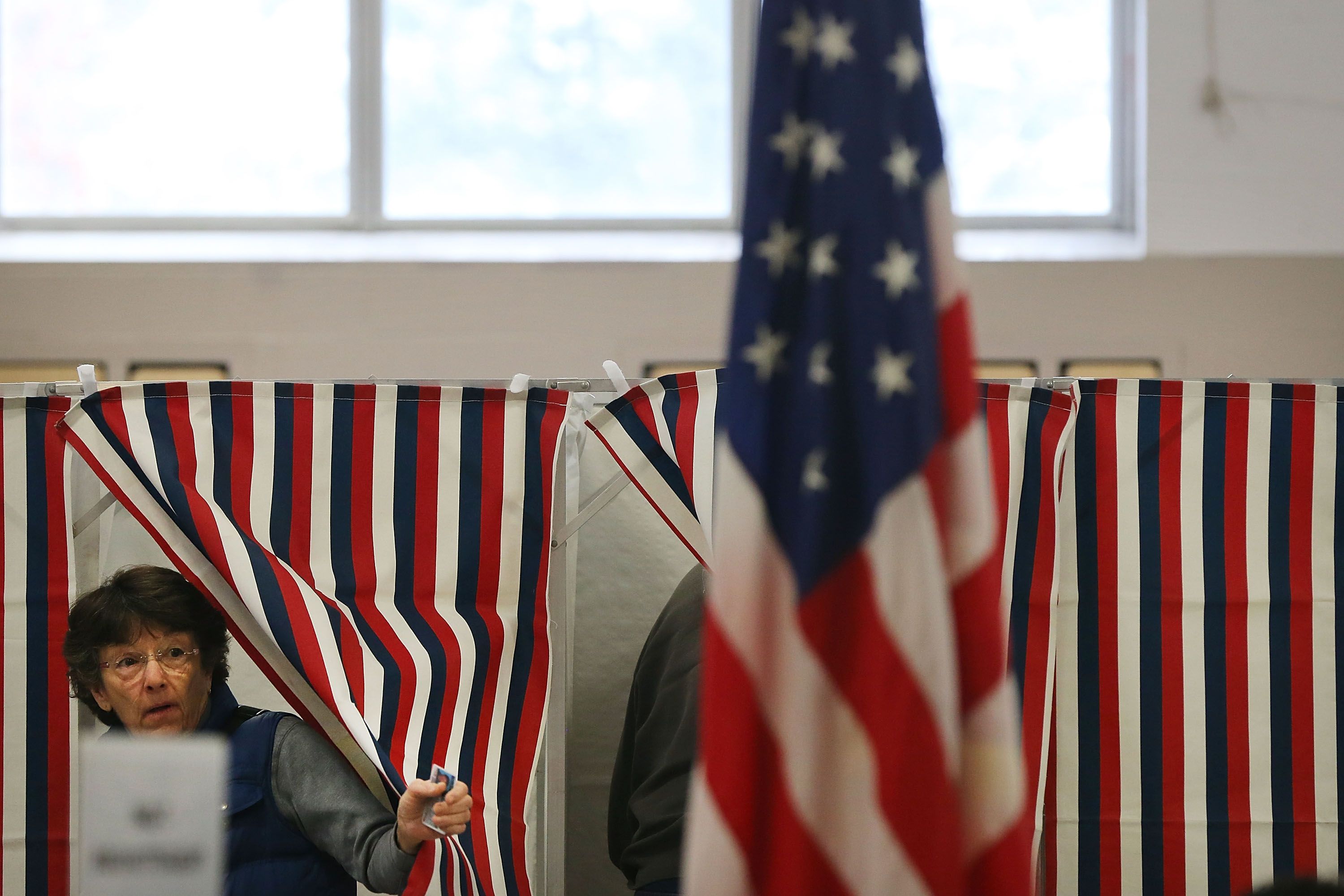
The buzz is that health care played a leading role in Conor Lamb’s upset win in last week’s special House election in Pennsylvania. But in reality, we can’t say that health care was a decisive factor in Lamb’s win, at least not based on the one poll that is being used as a basis for that claim.

Between the lines: The poll, conducted by Public Policy Polling and funded by advocacy groups, found that 15% of self-reported voters said health care was the “most important issue” in the election, and an additional 37% said it was a “very important issue.” However, and notably, the poll didn’t ask about any other issue, making it impossible to determine whether health care was more important than other issues for voters.

The big picture: Yes, the Affordable Care Act is becoming more popular. And yes, the energy has flipped from Republicans to Democrats on health care, and health care will be a rallying cry for Democrats in upcoming races. But that doesn’t mean it’s the only issue that matters.

Our own polling shows that health care is among the top issues that registered voters want 2018 candidates to talk about. But other issues like the economy and jobs and immigration are high on voters’ minds as well.

In interpreting the PPP poll, some have combined the “very important” responses with the “most important” responses. When you do that, more than 50% of voters say health care was important to their vote. That sounds impressive, but the same is true for many other issues, including the economy and jobs, immigration, North Korea, and some others.

A few things to keep in mind:

  • Voters who said health care is their most important issue tend to be more liberal and Democratic, and that’s exactly who turned out in the special election in Pennsylvania (according to Cook Political Report). So it is unsurprising that they said health care was important to their vote, as it has historically been among the top issues with this group of voters.
  • This was also an interactive voice response (IVR) poll (sometimes referred to as a “robo-poll”), in which pollsters only interview households with landline phones. More than half of U.S. homes do not have a landline telephone. While these polls are widely used, polls that rely on landline-only interviews disproportionately miss younger, more diverse, and lower-income populations.
  • These groups tend to be less likely to be vote, but the past several months have demonstrated that we may need to reassess our assumptions about who will be showing up to vote this November.

The bottom line: As the head of a leading health policy organization, of course I always root for health care to be as important as possible. But we cannot be sure that it was the top issue in Lamb’s victory, or that it will be one in the coming elections, which will turn not just on issues but on other factors — including the public’s views of President Trump.

And how important health care is will depend on how much, and how effectively, candidates campaign on the issue.


Traditional Medicare Doesn’t Cover Dental Care. That Can Be a Big Problem.

Traditional Medicare Doesn’t Cover Dental Care. That Can Be a Big Problem.

Image result for Medicare

Many people view Medicare as the gold standard of United States health coverage, and any attempt to cut it incurs the wrath of older Americans, a politically powerful group.

But there are substantial coverage gaps in traditional Medicare. One of them is care for your teeth.

Almost one in five adults of Medicare eligibility age (65 years old and older) have untreated cavities. The same proportion have lost all their teeth. Half of Medicare beneficiaries have some periodontal disease, or infection of structures around teeth, including the gums.

Bacteria from such infections can circulate elsewhere in the body, contributing to other health problems such as heart disease and strokes.

And yet traditional Medicare does not cover routine dental care, like checkups, cleanings, fillings, dentures and tooth extraction.

After I wrote a recent article about the lack of coverage for dental care in many state Medicaid programs, I received a lot of feedback from readers saying Medicare was no better.

I have not had dental coverage since I retired 25 years ago. Any problems and I have to go to a foreign country to get treatment that I can afford. It is incredible that there is no coverage available in America for one of the most important aspects of health and wellness care for seniors. — Tom, La Jolla

Several of my elderly relatives have just let teeth fall out without being cared for or replaced because of expense. This is no way to care for our senior citizens. — Bronxbee, Bronx

Paying for dental care out of pocket is hard for many Medicare beneficiaries. Half have annual incomes below $23,000 per year. Those who have the means, but are looking for a deal, might travel abroad for cheaper dental care. Tens of thousands of Americans go to Mexico every year for dental work at lower prices. Many others travel the globe for care.

Although low-income Medicare beneficiaries can also qualify for Medicaid, that’s of little help for those living in states with gaps in Medicaid dental coverage.

According to a study published in Health Affairs, in a given year, three-quarters of low-income Medicare beneficiaries do not receive any dental care at all. Among higher-income beneficiaries, the figure is about one-quarter.

“The separation of coverage for dental care from the rest of our health care has had dramatic effects on both,” said Amber Willink, the lead author of the study and a researcher at Johns Hopkins Bloomberg School of Public Health. “As a consequence of avoidable dental problems, the Medicare program bears the cost of expensive emergency department visits and avoidable hospitalizations. It’s lose-lose.”

Traditional Medicare will cover dental procedures that are integral to other covered services. So if your Medicare-covered hospital procedure involved dental structures in some way, important related dental care would be covered. But paying for any other care is up to the patient.

Lack of dental coverage by Medicare is among the top concerns of beneficiaries. The program also lacks coverage for hearing, vision or long-term care services. However, many Medicare Advantage plans — private alternatives to the traditional program — cover these services.

For example, 58 percent of Medicare Advantage enrollees have coverage for dental exams. In receiving these benefits through private plans, enrollees are also subject to plans’ efforts to limit use by, for example, requiring prior authorization or offering narrow networks of providers. These restrictions can be problematic for some beneficiaries, and about two-thirds of Medicare beneficiaries opt for the traditional program, not a private plan.

Adding a dental benefit to Medicare is popular. A Families USA survey of likely voters found that the vast majority (86 percent) of likely voters support doing so. The survey also found that when people do not see a dentist, the top reason is cost.

Ms. Willink’s study estimated that a Medicare dental benefit that covered three-quarters of the cost of care would increase Medicare premiums by $7 per month, or about 5 percent. The rest would need to be financed by taxes.

The cost of such a benefit might be offset — or partly offset — by reductions in other health care spending, reflecting the fact that poor oral health contributes to other health problems.

Making a case for this in the political arena would not be easy, though. The initial cost would be an inviting target for politicians who express concern about fiscal prudence, regardless of any potential long-term gain. But expanding Medicare has been done before.

In 2006, a prescription drug benefit was added to the program. The law for that program was enacted in 2003, and in that same year, the surgeon general released a report calling for dental care to be treated and covered like other health care. Whether by Medicaid or Medicare, that wish is still unfulfilled.


How Did State-Run Health Insurance Marketplaces Fare in 2017?

http://www.commonwealthfund.org/publications/issue-briefs/2018/mar/how-did-state-run-marketplaces-fare-in-2017?

Image result for How Did State-Run Health Insurance Marketplaces Fare in 2017?

Abstract

  • Issue: Sixteen states and the District of Columbia manage their own health insurance marketplaces under the Affordable Care Act. These states, which were broadly supportive of health reform, chose to run their marketplaces to exert greater control over their insurance markets and tailor the portals to suit local needs. Though federal policy changes and political uncertainty around the ACA in 2017 have posed challenges across the country, states that operate their own marketplaces had greater flexibility than others to respond.
  • Goal: To understand how states on the forefront of health reform perceived and responded to federal policy changes and political uncertainty in 2017.
  • Methods: Structured interviews with the leadership staff of 15 of the 17 state-run marketplaces.
  • Findings and Conclusions: Respondents unanimously suggested that federal administrative actions and repeal efforts have created confusion and uncertainty that have negatively affected their markets. The state-run marketplaces used their broader authority to reduce consumer confusion and promote stable insurer participation. However, their capacity to deal with federal uncertainty has limits and respondents stated that long-term stability requires a reliable federal partner.

Background

The Affordable Care Act created health insurance marketplaces, also known as exchanges, in each state to help people who don’t have access to insurance through an employer or public program. The marketplaces act as a gateway to coverage for residents, providing a platform through which they can compare and purchase plans. Sixteen states and the District of Columbia are responsible for managing their own marketplaces; 34 states rely on the federal government to operate their exchange.

States that decided to manage their marketplaces wanted to retain control over their insurance markets and have the authority to tailor the portal to meet local needs.2 Compared with states using the federally run marketplace, nearly all these states have expanded their Medicaid programs and have been much more likely to adopt the ACA’s consumer protections into state law — potentially making it easier to enforce these reforms.3

Since President Trump’s election, the ACA and marketplaces have faced an uncertain future. The president has been openly hostile to the ACA and sought its repeal.4 At the same time, the administration has made regulatory and other implementation changes and reduced the funding that supports the marketplaces. These decisions have all affected how the law operates in practice and have had serious repercussions across the country.5 However, the impact has not been uniform. It has varied, in part, based on the choices state policymakers have made in implementing the ACA — including whether to run their own exchange.

We sought to understand how states that have been more actively engaged in reform have perceived federal policy changes and political uncertainty in 2017, and to explore whether these states were better able to promote stability within their markets. To do so, we interviewed the leadership staff of 15 of the 17 state-run marketplaces in September and October 2017.6 This brief explores key themes that emerged from those interviews. It identifies the major challenges facing the marketplaces as they went into the fifth open enrollment period, how states responded to those challenges, and the limits on states’ capacities to act.

Key Findings

Federal Actions Made It Harder for States to Manage Their Own Marketplaces

Marketplace respondents were unanimous in suggesting that actions taken by the Trump administration and ongoing efforts to repeal the ACA have created confusion and uncertainty that have negatively affected their markets. While these marketplaces had experienced ups and downs during their first three years of operation, many respondents were relatively optimistic in the fall of 2016 about future enrollment growth and stability in terms of plan participation and premiums — a view supported by independent analyses.7 But federal developments in 2017 made the challenges of the previous year “pale in comparison,” and respondents described a far more uncertain future.

Officials highlighted four federal-level developments during 2017 that jeopardized stability. First, respondents said that the administration’s repeated threats to end federal payments supporting the ACA’s cost-sharing reduction (CSR) plans caused protracted confusion and disruption and placed states in a “real jam.” These threats were eventually carried out, after months of uncertainty, in October 2017. But as deadlines for marketplace participation and rate setting for the upcoming year (2018) came and went with no clarity on whether the administration would continue to reimburse insurers for the cost of the CSR subsidies, marketplaces struggled to get insurers to commit to participate and to develop responses to the significantly higher premiums the insurers sought to offset the lost payments.8

Second, most respondents noted that actions taken by the administration to undermine the ACA’s individual mandate had the effect of undermining their marketplaces, as well. The requirement to maintain coverage, ultimately repealed on a prospective basis in December, was the law of the land throughout 2017 (and remains so in 2018). However, officials noted that an executive order, signed by the president on Inauguration Day, cast doubt on the enforcement of the mandate and caused insurers to be more cautious when setting rates.9 Many priced higher than they would have otherwise, fearing that a weakened mandate would lead to a sicker and more expensive risk pool.10 The president’s actions and words were also perceived to have caused widespread confusion among consumers about whether the requirement to maintain coverage was still the law.

In a related vein, officials repeatedly expressed frustration at “federal noise”: ongoing but thus far inconclusive discussions about repealing and replacing the ACA, and related rhetoric by administration officials and congressional allies asserting that the health law was “dead” or “collapsing.” Respondents said it was a challenge to ensure residents had accurate information. They reported many instances of consumer confusion about the marketplaces, the mandate, coverage options, and the status of the health law, in general.

Fourth, a majority of respondents predicted that the administration’s decision to reduce advertising spending for the federal marketplace by 90 percent would have negative side effects for the state-run exchanges. Officials in both big and small states explained that because the federal marketing campaign was national in scope and used television advertising — a medium too expensive for several state marketplaces — it was effective in reaching their residents and had complemented state messaging efforts in prior years. Several respondents also lamented the perceived political ramifications of the funding cut, suggesting that the administration’s action would cause enrollment through the federal exchange to diminish, putting the entire program at greater risk of repeal.


Numbers Don’t Drive Businesses, People Do

http://theamericanceo.com/2018/03/21/numbers-dont-drive-businesses/

Numbers

Business is a numbers game: That’s what I would have told you when I started my first business over 25 years ago. As a degreed engineer whose father was a college professor, I was exposed to many mathematical concepts and analytical approaches. I thought all you had to do in business was gather the data, apply the math, and voila! – there was the answer.

After 25 years of running companies, I will tell you that numbers are mostly just the result of a bunch of little actions people take every day in your company. Business is about people. Improving a business is accomplished not by looking at numbers but by changing the behavior of people. And that is very hard. My wife moved the drawer where we keep the utensils in our kitchen over a year ago, and I still sometimes reach in the wrong drawer.

I found this article from Matt Blumberg to be a great explanation of how knowing the numbers is a small part of running a business, just like reading a map (or using a GPS) is a small part of driving a car: You Don’t Know How to Drive a Car Because You Know How to Read a Map

Being “Master of the Spreadsheet” has its merits, he says, but: “It is not the same as actually getting yourself from Point A to Point B. Driving a car in and of itself is a skill that requires a lot of learning and practice. And it certainly doesn’t forecast traffic or road hazards that require a last minute detour. Being right about what roads to take is a lot less important than actually getting yourself to the destination safely and in a timely manner.  The value of having experienced executives operating a business is those things – the actual driving of the car.  The knowing of the customers or the employees.  The skill of managing change and emotions.”