


Cartoon – Remember the Good Old Days




https://www.beckershospitalreview.com/finance/6-hospital-verity-health-files-for-bankruptcy.html

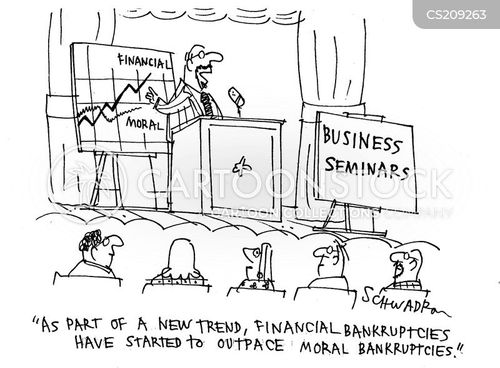
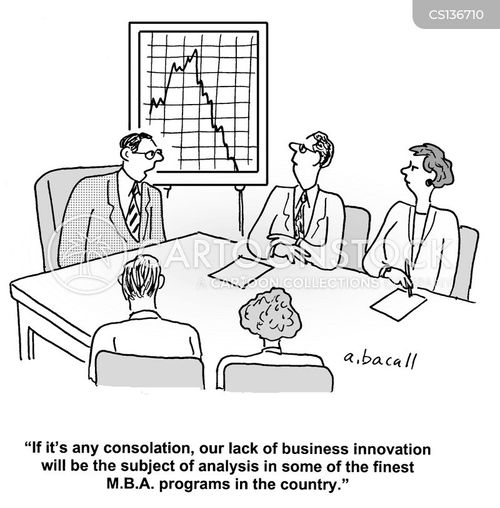
El Segundo, Calif.-based Verity Health, which operates six hospitals in Northern and Southern California and maintains ties to billionaire former surgeon Patrick Soon-Shiong, MD, filed for bankruptcy Aug. 31, Reuters reports.
Verity Health CEO Richard Adcock told Reuters he expects the system to remain in bankruptcy protection for at least a few years as it restructures and continues working with potential buyers.
The bankruptcy announcement comes on the heels of several deals that left the system with more than $1 billion in pension liabilities and bond debt. Verity Health reportedly secured a $185 million loan to remain operational.
Mr. Adcock added the system has been losing nearly $175 million per year on a cash flow basis.
In July, Verity Health revealed it is examining all strategic options, including a sale, of some or all of its hospitals. Mr. Adcock told Reuters the system has received a number of offers, including from several large national hospital operators.
Dr. Soon-Shiong, who has founded and sold several biotech companies and recently purchased the Los Angeles Times and other newspapers for $500 million, acquired Verity Health’s management company in 2017. At the time, he said his goal was to revitalize the health system, which has come to employ 6,000-plus people as of 2017.
Mr. Adcock said the health system is re-examining all of its contracts, including the management deal with Dr. Soon-Shiong, Reuters reports.

The health care system in the United States costs nearly double that of its peer countries, without much better outcomes. Many scholars and policymakers have looked at this state of affairs and dreamed big. Maybe there’s some broad fix — high deductibles, improvements in end-of-life care, a single-payer system — that can make United States health care less expensive.
But what if the most workable answer isn’t something big, but hosts of small tweaks? A group of about a dozen health economists has begun trying to identify policy adjustments, sometimes in tiny slices of the health care system, that could produce savings worth around 1 percent of the country’s $3.3 trillion annual health spending. If you put together enough such fixes, the group points out, they could add up to something more substantial.
This is a shift from the kind of research that is typically rewarded by big journal editors and tenure committees, but it could turn out to have a crucial role in understanding why our health care system is so expensive, and so unusual.
“I think focusing on the forest misses the fact that there are trees encroaching out of the forest,” said Fiona Scott Morton, a health economist at the Yale School of Management. “And we need to start cutting them down.”
A working paper published Monday proposes one possible fix. In the 1980s, Congress carved out a small group of hospitals from its normal rules for payment. These “long-term care hospitals,” which treated patients with tuberculosis and chronic diseases, could earn far more money than traditional hospitals and nursing homes if they cared for patients who stayed with them for an average of 25 days. Since then, the number of these hospitals has mushroomed, from a few dozen to more than 400, most run by two for-profit chains.
For years, analysts and policymakers have wondered about the value of these hospitals, which tend to treat very sick patients who need a lot of care, such as mechanical ventilation or dialysis. Several analyses have suggested that Medicare may be overpaying for their services. And Congress has made some small changes to limit the number of patients who are eligible for such care.
The new paper, from researchers at the Massachusetts Institute of Technology, Stanford University, and the University of Chicago, took a close look at what happened to patients as new long-term care hospitals opened around the country in places that had none.
The study, covering 1990 to 2014, found that when such a hospital opened, the odds increased that very sick patients leaving a normal hospital would end up going next to a long-term care hospital, generating a growing bill for both Medicare and the patients themselves. But the researchers found no benefit when it came to patients’ chances of dying or going home within 90 days.
The researchers concluded that the health care system could probably save a lot of money — around $5 billion a year — by paying the long-term care hospitals the same prices that are paid to skilled nursing facilities, the places that most long-term patients end up in when there is no long-term care hospital nearby.
The hospital industry disagrees with the paper’s conclusion and disputes the notion that the extra money they get is wasteful. The American Hospital Association noted that since the study ended, Congress has changed the rules for long-term care hospitals so that fewer of their patients qualify for the highest payment rates. That means that the study results might be different if they looked at long-term hospital care in more recent years.
Select Medical, one of the large chains of long-term care hospitals, said in a statement that measuring only whether the long-term care patients died or went home did not capture other, more subtle health benefits that the hospitals provided compared with other options. But the industry does not collect such measures of quality in a standardized way, making that theory hard to test.
The National Association of Long Term Hospitals, a trade group, also noted that the paper’s policy proposals were more extreme than those from other critics, who had suggested more minor changes to how the hospitals should be paid.
Neale Mahoney, a health economist at the University of Chicago Booth School of Business, who was one of the working paper’s co-authors, said the history of long-term care hospitals fit together with the economic analysis to suggest that the special hospital payment probably wasn’t appropriate.
“What’s convinced me that these institutions are a source of waste is a constellation of evidence rather than one piece of evidence,” he said.
Dr. Jeremy Kahn, a critical care physician and professor of health policy at the University of Pittsburgh, who has studied long-term care hospitals extensively, said there are some patients with particular ailments who benefit from the setting, but agreed with the economists that the hospitals are a historical accident, defined more by payment rules than patient needs.
“Long-term care hospitals aren’t to blame here,” he said. “If you see a dollar on the ground, you will pick it up, and that’s what’s going on here.”
Mr. Mahoney said the economics profession is fond of broad conclusions. The typical paper takes a narrow case and tries to draw a broader conclusion about how the world works. But he increasingly thinks that there may be value in thinking small, doing more of what he calls “forensic economics.”
One of his co-authors, Amy Finkelstein, says she has been inspired by a colleague who works in development economics, Esther Duflo, who recently delivered a speech titled “The Economist as Plumber,” arguing that her colleagues should not look down on tinkering as unworthy of the profession.
“We may need to do more health care plumbing rather than health care big theories,” said Ms. Finkelstein, a health economist at M.I.T. “The history of long-term care hospitals suggests the industry will always innovate ahead of you, and you may actually have to roll up your sleeves and find these pockets of waste.”
The researchers have begun to chat during coffee breaks at conferences and in long phone conversations. Small possible sources of inefficiency, like drug co-payment coupons for generic drugs or high out-of-network payments for emergency room care, could start to add up.
The scholars involved in the project know that they are not the first group to think small. The sort of deep and narrow investigations they are undertaking have long been the focus of groups like the Medicare Payment Advisory Commission, a group that recommends changes to Congress and that had even flagged long-term care hospitals for overhaul years ago. Washington policymakers and think tanks have long assembled briefing books of options to help them nip and tuck dollars out of government health programs.
But the new effort by academics may expand the impact of such suggestions. New data about not just government spending but also private insurance has enabled researchers to examine spending and inefficiency in the health care system more broadly than ever before. After all, the health care system is much bigger than just Medicare.
“I think people say that’s too small — it’s not going to change the trajectory — therefore we shouldn’t spend time on it,” said Ms. Morton, the Yale economist. “And they are forgetting how many dollars there are.”
https://www.healthcaredive.com/news/nonprofit-hospitals-on-an-unsustainable-path-moodys-says/531245/

Hospitals, especially nonprofit facilities, are facing difficult times. Morgan Stanley recently reported that about 18% of more than 6,000 hospitals studied were at a risk of closure or are performing weakly. About 8% of studied hospitals were at risk of closing and 10% were called “weak,” according to that report.
For perspective, just 2.5% of hospitals closed over the past five years.
What’s in store for hospitals in the near term depends on the specific outlook. Moody’s this year revised its outlook for the sector from stable to negative. That move followed nonprofit hospitals seeing more credit downgrades in 2017.
On the other hand, Fitch Ratings recently called off its “Rating Watch” for U.S. nonprofit hospitals and health systems after the organizations showed improved or stable results this year.
So, there are signs of improvement in the sector, but challenges with revenues, sagging reimbursements and lower admissions will continue to plague hospitals.
The reasons Moody’s gave for lower revenue growth came from lower reimbursements, the shift to outpatient care, increased M&A activity and additional ambulatory competition. It said the move away from inpatient to outpatient moved into its fifth year.
“Reversing sluggish volume trends and growing profitable service lines will be critical to improving the sector’s financial trajectory over the near-term as most hospitals continue to operate in a fee-for-service environment,” Sverdlik said.
Moody’s added that more hospitals reported operating deficits in 2017. That coincided with lower absolute operating cash flow. It said 28.4% of nonprofit hospital experienced operating losses, an increase from 16.5% in 2016. Also, 59% of providers reported lower absolute operating cash flow, which was more than double the 24% noted in 2015. The 2017 figure was the highest percentage in five years.
Don’t expect times to get better any time soon. Moody’s said nonprofit hospital margins will continue to remain thin through this year. Margins have fallen to an all-time low of 1.6% operating and 8.1% of operating cash flow.
“Margin pressures led to softened debt coverage ratios, though the median growth rate of total debt has been negative over the last five years,” Sverdlik said. “Ongoing operating pressures will constrain the ability to reverse these trends, especially if providers turn to debt to fund capital needs.”
However, it’s not all bad news. Moody’s said the medians have shown positive signs. For instance, median unrestricted cash and investments growth rate improved to 8.9% thanks to strong market returns and steady capital spending. Also, absolute cash growth exceeded expenses growth, which caused improved median cash on hand. That trend isn’t expected to continue if hospitals spend more cash flow on capital or if equity markets fall.
 HENRY KOTULA