


Cartoon – At the Heart of Change Resistance


https://www.sacbee.com/news/local/health-and-medicine/article238378533.html

Kaiser Permanente’s behavioral health clinicians will be picketing Monday outside the health care giant’s Sacramento Medical Center on Morse Avenue, joining in a weeklong labor strike that will affect services at more than 100 facilities around California.
Roughly 4,000 psychologists, psychiatric nurses and other behavioral health workers — members of the National Union of Healthcare Workers — say they want the company to shorten wait times for return appointments and reduce therapist caseloads.
“I know of nowhere else but in the Kaiser system that there is literally no definition of a caseload or maximum number of patients for which one is responsible,” said Susan Whitney, a Kaiser therapist in Kern County. “There are about 35 therapists and social workers that serve Kaiser’s Kern County population of 109,000 members, only one mental health worker for every 3,000 members. In contrast, Kaiser primary care physicians have a panel, or caseload, of 1,500 patients, and also have staff such as nurses and medical assistants that support them.”
Kaiser executive Michelle J. Gaskill-Hames said that proposals made to the union would keep Kaiser therapists among the highest paid in California, with excellent benefits, as well as offering them more time in their schedules for patient appointments and to take care of administrative tasks. Rather than strike, she said, the company has asked the union’s leadership continue to work with a mediator and Kaiser Permanente.
“Like every other health care provider, we are seeing a significant demand for mental health care in the face of a national shortage of qualified professionals,” said Gaskill-Hames, Kaiser’s senior vice president for Northern California hospital and health plan operations. “Despite this shortage, we have hired nearly 500 new therapists in California this year alone.”
The clinicians had initially planned the strike for mid-November but postponed it out of respect for the family of the late Kaiser CEO Bernard Tyson, who died unexpectedly last month.
The strike is to compel Kaiser to make mental health care as much of a priority as physical health care, Whitney said. Treating mental health issues also improves physical health, she said, as numerous studies have shown.
Since Kaiser was fined several years ago for lengthy waits for first appointments, the company has worked under state supervision to improve its performance in this area, Whitney said, but as it has improved in that metric, return appointments have become more difficult to schedule.
Vicki Hoskins, a therapist in Orange County, said that if a patient completed an intake appointment today and wanted to return to see her, that patient would have to wait until March. There is a backlog of vacant positions in some offices, she said, so new hires are often filling those rather than adding to the workforce.
Kaiser has been jointly working with an external mediator to help reach a collective bargaining agreement with the union, Gaskill-Hames said.
She said the mediator recently delivered a proposed compromise to both sides, but the union has rejected it and announced plans to strike instead of working through the mediated process.
This is union’s sixth noticed strike within a single year, and the repeated call for short strikes is disruptive to patient access, operational care and service, said Gaskill-Hames, who described the union’s action as irresponsible.
A strike puts patients in the middle of bargaining, which is not fair to them, especially during the holidays when rates of depression can spike, she said.
Kaiser Permanente will try to minimize patient disruption, Gaskill-Hames said, but the company may be forced to reschedule appointments and devote resources from elsewhere in the organization to address the continuity of care.
In the Sacramento area, pickets will be out from 6 a.m. to 2 p.m. at Kaiser’s Sacramento Medical Center, 2025 Morse Ave., on Monday; at the Roseville Medical Center, 1600 Eureka Road, on Wednesday; and at the South Sacramento Medical Center, 6600 Bruceville Road, on Friday. On Thursday, they will rally at the State Capitol at 10th and L streets at 10:30 a.m. and at the Department of Managed Health Care, 990 Ninth St., at 11:30 a.m. Elsewhere in the Central Valley, pickets will be at Fresno Medical Center, 7300 N. Fresno St., Monday through Friday.

Three empty chairs at a community meeting epitomized the mistrust between the leaders of Ascension Wisconsin and the St. Joe’s Accountability Coalition.
The coalition, composed primarily of community leaders from Milwaukee’s north side, invited Ascension Wisconsin to that Oct. 1 meeting to press the health system to sign a legal contract binding it to a list of commitments. The commitments included keeping Ascension St. Joseph hospital open and providing an urgent care clinic, affordable housing assistance, local hiring, more employee training and living wages for all employees.
Ascension didn’t show.
For one, Ascension Wisconsin officials said they were told they would not be allowed to speak at the event. For another, they said signing a contract was unnecessary because they have promised to keep the hospital open, already hire locally and provide employee training.
The hospital, which employs about 800 people, is one of the neighborhood’s largest employers.
The coalition wants the hospital to sign a community benefits agreement, known as a CBA, which is a contract between community groups and real estate developers or government entities.
Reggie Newson, Ascension Wisconsin’s vice president of government and community services, said the health system is proving its commitment to the community by expanding and adding services to St. Joseph.
For example, two certified nurse-midwives were just hired for the hospital’s new midwifery clinic and a third is being recruited. The hospital is also planning to hire a cardiac nurse practitioner and cardiologist.
But members of the coalition aren’t convinced, because they say there is no legal penalty if Ascension fails to follow through on its promises.
Nate Gilliam, an organizer with the Wisconsin Federation of Nurses & Health Professionals, advisory board member of the University of Wisconsin Population Health Institute and coalition spokesman, said the coalition just wants accountability.
“It’s good that they’re saying all these great things on paper and to the media,” he said. “But if they are going to do that, they shouldn’t have a problem with signing a CBA.”
The lack of trust between the coalition and Ascension Wisconsin started 18 months ago, when hospital administrators — citing losses of roughly $30 million a year — proposed cutting some of Ascension St. Joseph’s surgical and medical units and other services, such as cardiology support.
The hospital, at 5000 W. Chambers St., serves a majority African American population on the city’s north side, an area facing steep socioeconomic disadvantages. Decades of limited access to health care have contributed to higher rates of chronic disease. Higher rates of poverty means many residents rely on Medicaid for health insurance.
Residents interpreted Ascension’s proposal as a precursor to closing the hospital and — in an area where transportation is scarce — feared they would have to go farther for health care.
The proposal was criticized by Mayor Tom Barrett, several aldermen and community leaders, including George Hinton, CEO of the Social Development Commission and former president of Aurora Sinai Medical Center, who wrote an op-ed in opposition.
Ascension dropped the proposal.
But that was 18 months ago.
Since then, Newson said the hospital surveyed more than 1,000 people by telephone and held five community listening sessions. The information was used to develop priorities for the hospital and corresponding programs, such as the midwifery program and heart and vascular community care center.
Similarly, members of the coalition conducted their own survey, knocking on hundreds of doors and collecting 584 detailed responses.
When surveyed on non-clinical services, over 40% of residents said housing assistance, local hiring and living wages were their top priorities. From the coalition’s survey on clinical services, 61.6% said access to urgent care was most important to them.
Kevin Kluesner, Ascension St. Joseph’s chief administrative officer, said he and others are well aware of the health disparities and disadvantages within the community they serve.
He said Ascension Wisconsin’s push to expand services is proof the hospital isn’t going anywhere.
That commitment is despite the hospital’s having lost roughly $150 million since the 2012 fiscal year. In the 2018 fiscal year, the most recent for which information is available, Ascension St. Joseph lost $31.6 million.
By comparison, Froedtert Hospital reported $134 million in profits for the 2018 fiscal year, according to information filed with the Wisconsin Hospital Association. Aurora St. Luke’s Medical Center reported $166 million in profits in 2018.
Gilliam said that since the hospital is a non-profit venture, lost profits shouldn’t matter. He also said that Ascension Wisconsin has more profitable locations across the state, that can offset the losses at St. Joseph.
The results from the coalition’s survey mirrored what residents at the Oct. 1 community meeting described.
Charles Hawkins said he likes his primary care physicians, but said they keep leaving.
Another resident who lives blocks away from the hospital, Arkesia Jackson, said when her brother-in-law experienced a flare-up of his COPD, or chronic obstructive pulmonary disease, she was thankful a community hospital was nearby.
“He ran inside the emergency and collapsed, car running,” she said. “He is a patient at St. Joe’s. They had all his records, they knew who he was, they knew what he was suffering from.”
Newson said the goal is to provide consistent, quality care for all patients.
Gilliam acknowledged that details of what the coalition is asking for, such as racially equitable health care and helping with housing assistance, are somewhat vague. However, that’s because its members said they want to sit down with Ascension and hammer out an agreement — as long as Ascension commits to signing one.
Coalition members argue that other hospitals have worked with community groups on similar initiatives.
Robert Silverman, a professor in the Department of Urban and Regional Planning at the University of Buffalo, said there are some rare examples of CBAs being used in the health care field.
For example, Yale University signed a CBA with the Community Organized for Responsible Development group in 2006 regarding the construction of a new cancer center.
It still remains unlikely that Ascension, a national organization, would willingly set such a precedent for its hospitals.
Gilliam said he thinks it’s important for hospitals to be accountable to the community.
“I don’t see why they see a community benefits agreement as adversarial off the top,” Gilliam said. “Whenever they’re ready to come to the table in earnest, we’ll be there. That’s it.”
But with the addition and expansion of several new programs, Kluesner said he’s not sure what else hospital officials can do to prove they are serious about being a reliable anchor institution on the city’s north side.
“We’ve signed 11 new providers. That’s the best proof we could give of our commitment to growing services here at St. Joseph. If people are wondering what are we doing at Ascension St. Joseph, I think that actions speak louder than words,” he said.

A Washington, D.C., federal judge ruled Dec. 16 that the court cannot stop CMS from enacting site-neutral payments for off-campus providers in 2020.
In its final Outpatient Prospective Payment System rule for 2019, CMS made payments for clinic visits site-neutral by reducing the payment rate for evaluation and management services provided at off-campus provider-based departments.
In an attempt to overturn the rule, the American Hospital Association and dozens of hospitals sued CMS, arguing it exceeded its authority when it finalized the cuts in the rule.
U.S. District Judge Rosemary Collyer sided with the association and other hospitals in September, ruling CMS overstepped its authority when it expanded the site-neutral pay policy. But CMS moved forward with the site-neutral cuts in its 2020 OPPS rule, slashing off-campus department payments to a rate of 40 percent of the OPPS rate.
The association asked Ms. Collyer to uphold her September decision in an attempt to stop the 2020 payment cuts from taking effect Jan. 1, but ruled Dec. 16 that the court doesn’t have jurisdiction to stop the continuation of the cuts next year.
“As a technical matter, the government correctly argues that the court’s previous order was limited only to the 2019 final rule,” the judge wrote.
The court loss for the association representing hospitals comes just days after CMS agreed to repay hospitals that were paid at the reduced rate this year.
“The AHA and other plaintiffs remain confident that the courts will find the 2020 cuts to be illegal, just as they found the 2019 cuts,” Melinda Hatton, the AHA’s general counsel, wrote in a statement to Becker’s Hospital Review.
Access the full ruling here.
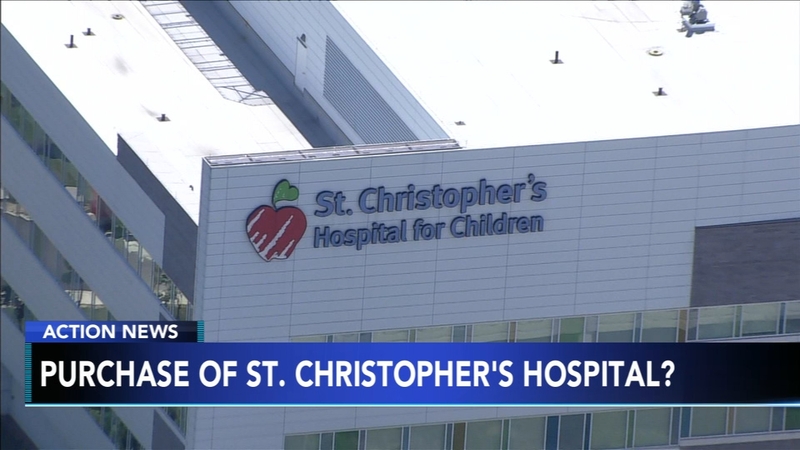
West Reading, Pa.-based Tower Health and Drexel University completed the $50 million acquisition of St. Christopher’s Hospital for Children in Philadelphia on Dec. 15.
St. Christopher’s was put up for sale after it and Philadelphia-based Hahnemann University Hospital filed for Chapter 11 bankruptcy at the end of June. Hahnemann closed in September, the same month Tower Health and Drexel University entered into a $50 million agreement to acquire St. Christopher’s.
With the sale complete, 188-bed St. Christopher’s will return to nonprofit status.
“We are grateful for the continuing dedication and hard work of the physicians and employees at St. Christopher’s,” Tower Health President and CEO Clint Matthews said in a press release. “We are excited about a bright future for St. Christopher’s as it continues to serve as a center for healthcare, medical education and research, and innovation.”


 HENRY KOTULA