Americans already pay a ‘gigantic’ hidden health-care tax, economists say

https://www.washingtonpost.com/business/2019/10/16/americans-already-pay-gigantic-hidden-health-care-tax-economists-say/?fbclid=IwAR1dG0uH1k6nZ8hC3UL7z8pDZtyTQa55NAWxM1Nni1uh7CLsD0sEaGjqie8

Image without a caption


The topic of Medicare-for-all was front and center — again — during Tuesday night’s Democratic presidential debate. Moderators were particularly interested in how its supporters, like Sen. Elizabeth Warren (D-Mass.), would pay for it. Specifically, would it require raising taxes on the middle class?

To some economists, the question is moot: Americans already pay a massive “tax” to fund health care, they say. It just happens to go to private insurance companies, rather than the federal government.

That’s the argument put forth in Emmanuel Saez and Gabriel Zucman’s new book,The Triumph of Injustice.” The economists at the University of California at Berkeley, who have advised Warren and Sen. Bernie Sanders (I-Vt.) on the creation of a wealth tax, call private health insurance costs “taxes in everything but name.” They are automatically deducted from workers’ paychecks. And they are essentially mandatory for families who don’t want to be crippled by long-term health-care costs or unexpected illnesses.

“Whether insurance premiums are paid to a public monopoly (the government) or to a private monopoly (the notoriously uncompetitive US private health insurance system) makes little difference,” the economists write. “Both payments reduce the take-home pay of workers; and although it’s always possible to evade taxes or to refuse to pay one thin dime to insurance companies, in practice almost everyone abides.”

The issue sparked a spirited discussion during Tuesday’s debate in Ohio for the 12 Democrats vying to take on President Trump in 2020, with Warren and Sanders’s plans getting blasted as being overly expensive and unworkable. Warren was specifically called out for refusing to say whether her proposal would result in higher taxes for the middle class or get into how it would eliminate employer-sponsored coverage for 160 million Americans. Although she vowed that her plan would not raise overall costs for the middle class, she notably evaded the specific issue of taxes.

Saez and Zucman have produced an estimate of just how much we’re already paying for health insurance and find it’s a little north of $1 trillion per year: “close to 6% of national income in 2019 — the equivalent of one-third of all federal income tax payments!” Health insurance costs raise the average effective tax rate on American labor from 29 percent to 37 percent, they said.

Thinking about health-care costs in this way is useful, Saez and Zucman write, because it allows for better tax comparisons between the United States and other wealthy countries, most of which fund health care via their tax codes. “Americans on average keep about the same fraction of their pretax income as their European brethren,” they write.

One of the key uncertainties about transitioning to a Medicare-for-all plan like the ones proposed by Warren and Sanders is whether doing so would raise or lower total health-care costs. Preliminary estimates have so far yielded wildly divergent outcomes, in part, because the financing specifics behind various candidates’ plans are largely still up in the air. How the change would affect the wallet of the typical middle-class tax payer relative to other groups also remains an open question.

But the Saez and Zucman data underscore that Americans already are paying a large health-care levy that is for all intents and purposes mandatory. If you consider health insurance costs as a tax on labor, as they do, it means the extremely rich, who derive most of their income from capital, are carrying a disproportionately light share of the total health cost load.
 

Heads Up: A Ruling On The Latest Challenge To The Affordable Care Act Is Coming

https://www.npr.org/sections/health-shots/2019/10/12/769038397/heads-up-a-ruling-on-the-latest-challenge-to-the-affordable-care-act-is-coming?fbclid=IwAR3g7_yZtBbywVWukbTC0PmcInHcioxPcF9Y5LsWYLpEH5Gs-3ZgBGgINVM

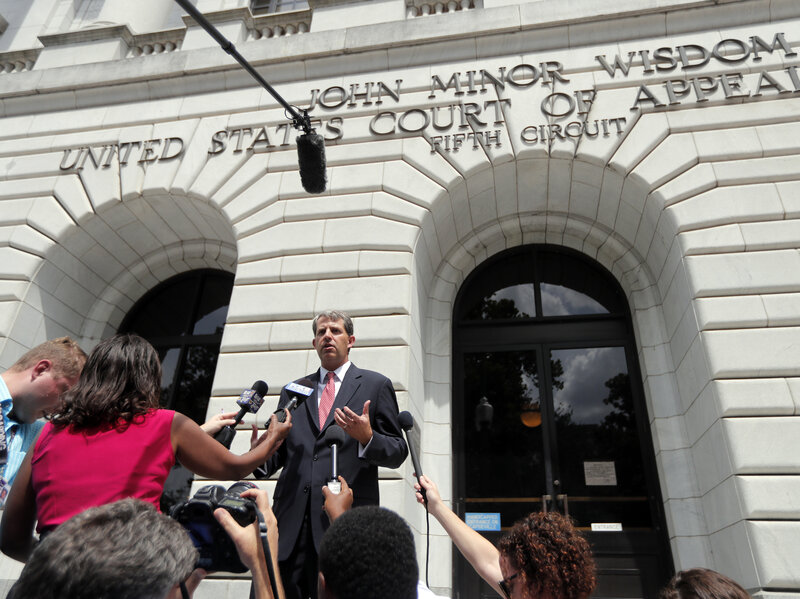
A decision in the latest court case to threaten the future of the Affordable Care Act could come as soon as this month. The ruling will come from the panel of judges in the 5th Circuit Court of Appeals, which heard oral arguments in the Texas v. Azar lawsuit.

An estimated 24 million people get their health coverage through programs created under the law, which has faced countless court challenges since it passed.

In court in July, only two of the three judges — both appointed by Republican presidents — asked questions. “Oral argument in front of the circuit went about as badly for the defenders of the Affordable Care Act as it could have gone,” says Nicholas Bagley, a professor of law at the University of Michigan. “To the extent that oral argument offers an insight into how judges are thinking about the case, I think we should be prepared for the worst — the invalidation of all or a significant part of the Affordable Care Act.”

Important caveat: Regardless of this ruling, the Affordable Care Act is still the law of the land. Whatever the 5th Circuit rules, it will be a long time before anything actually changes. Still, the timing of the ruling matters, says Sabrina Corlette, director of the Center on Health Insurance Reforms at Georgetown University.

“If that decision comes out before or during open enrollment, it could lead to a lot of consumer confusion about the security of their coverage and may actually discourage people from enrolling, which I think would be a bad thing,” she says.

Don’t be confused. Open enrollment begins Nov. 1 and runs at least through Dec. 15, and the insurance marketplaces set up by the law aren’t going anywhere anytime soon.

That’s not to underplay the stakes here. Down the line, sometime next year, if the Supreme Court ends up taking the case and ruling the ACA unconstitutional, “the chaos that would ensue is almost possible impossible to wrap your brain around,” Corlette says. “The marketplaces would just simply disappear and millions of people would become uninsured overnight, probably leaving hospitals and doctors with millions and millions of dollars in unpaid medical bills. Medicaid expansion would disappear overnight.

I don’t see any sector of our health care economy being untouched or unaffected,” she adds.

So what is this case that — yet again — threatens the Affordable Care Act’s very existence?

A quick refresher: When the Republican-led Congress passed the Tax Cuts and Jobs Act in 2017, it zeroed out the Affordable Care Act’s penalty for people who did not have health insurance. That penalty was a key part of the Supreme Court’s decision to uphold the law in 2012, so after the change to the penalty, the ACA’s opponents decided to challenge it anew.

Significantly, the Trump administration decided in June not to defend the ACA in this case. “It’s extremely rare for an administration not to defend the constitutionality of an existing law,” says Abbe Gluck, a law professor and the director of the Solomon Center for Health Law and Policy at Yale University. “The administration is not defending any of it — that’s a really big deal.”

The basic argument made by the state of Texas and the other plaintiffs? The zero dollar fine now outlined in the ACA is a “naked, penalty-free command to buy insurance,” says Bagley.

Here’s how the argument goes, as Bagley explains it: “We know from the Supreme Court’s first decision on the individual mandate case that Congress doesn’t have the power to adopt a freestanding mandate, it just has the power to impose a tax.” So therefore, the argument is that “the naked mandate that remains in the Affordable Care Act must be unconstitutional.”

The case made by the plaintiffs goes further, asserting that because the individual mandate was described by the Congress that enacted it as essential to the functioning of the law, this unconstitutional command cannot be cut off from the rest of the law. If the zero dollar penalty is unconstitutional, the whole law must fall.

Last December, a federal judge in Texas agreed with that entire argument. His judgement was appealed to the panel of judges in the 5th Circuit. Even if those judges agree that the whole law is unconstitutional, that would not be the end of the story — the case will almost certainly end up before the Supreme Court. It would be the third case to challenge the Affordable Care Act in the nation’s highest court.

So if the ruling will be appealed anyway, does it matter? “It matters for at least two reasons,” Bagley says. “First of all, if the 5th Circuit rejects the lower court holding and decides that the whole law is, in fact, perfectly constitutional, I think there’s a good chance the Supreme Court would sit this one out.”

On the other hand, if the 5th Circuit invalidates the law, it almost certainly will go the Supreme Court, “which will take a fresh look at the legal question,” he says. Even if the Supreme Court ultimately decides whether the ACA stands, “you never want to discount the role that lower court decisions can play over the lifespan of a case,” Bagley says.

The law has been dogged by legal challenges and repeal attempts from the very beginning, and experts have warned many times about the dire consequences of the law suddenly going away. Nine years in, “the Affordable Care Act is now part of the plumbing of our nation’s health care system,” Bagley says. “Ripping it out would cause untold damage and would create a whole lot of uncertainty.”