Tower turnaround continues as operating margin hits -4.2%

West Reading, Pa.-based Tower Health continues to make progress on its performance improvement plan as its operating margin for the three months ended Sept. 30 rose to -4.2% from -8% during the same period in 2022. Its operating cash flow margin also increased from -0.9% to 2.3%. 

During the first quarter of fiscal 2024, the three months ending Sept. 30, revenue decreased 2.9% year over year to $457.4 million. Expenses decreased 6.4% to $476.5 million. 

Tower’s operating loss for the period was $19.1 million, compared with a loss of $37.6 million for the prior-year period. 

As of Sept. 30, total balance sheet unrestricted cash and board-designated investment funds for capital improvements totalled $154 million — a decrease of $54 million from June 30, 2023. The main factors for the decrease were $15 million of debt service payments, physician incentive compensation payments of $9 million, capital expenditures of $6 million, negative changes in working capital of $32 million, partially offset by EBITDA of $10 million.

Total days of cash on hand for the system was 30 on Sept. 30.

After including the performance of its investment portfolio and other nonoperating items, the health system ended the three-month period with a net loss of $20.9 million, compared with a net loss of $37.6 million for the same period in 2022. 

Pennsylvania health system drops Cigna

West Reading, Pa.-based Tower Health will be out of network for all Cigna Healthcare members starting Jan. 1 following a disagreement over reimbursement rates, the Reading Eagle reported Nov. 24.

The split applies to all Tower Health facilities and physicians for Cigna commercial, Medicare Advantage and behavioral health plans. Cigna said it is continuing to negotiate with Tower Health, but the health system has already begun to notify patients about the impending contract break.

“Tower Health, like other health systems, has been contending with unprecedented cost increases for personnel, supplies, equipment and medication necessary to continue providing high quality care,” a health system spokesperson told the Eagle. “Cigna has been unwilling to compensate Tower Health at reasonable payment rates.”

“We are disappointed that Tower Health is choosing to leave our network Jan. 1 unless we agree to their demands for significant rate increases that will make healthcare much more expensive for the people we serve,” a Cigna spokesperson told the Eagle. “It’s important to understand who pays the bills: any increase in cost of care is paid directly by local employers, their employees and families.”

American Hospital Association: Medicare Advantage denials jump 56%

Medicare Advantage and commercial claims denials have spiked across the country, leaving hospitals increasingly financially strapped, according to research published Nov. 17 by the American Hospital Association and Syntellis. 

The report analyzed data from a national sample of 1,300 hospitals and health systems. From January 2022 to July 2023, revenue reductions related to Medicare Advantage denials increased 55.7% for the median hospital. During the same period, denial-related revenue reductions rose 20.2% for commercial plans. For denials relative to net patient service revenue for the median hospital, Medicare Advantage plans saw an increase of 63.3% and commercial plans rose 20%.

“[Hospitals] must take larger revenue reductions to account for those lost reimbursements from commercial payers and Medicare Advantage plans, which cover more than 31 million Americans and make up about half of all Medicare beneficiaries,” the report said. “The challenges will only worsen as Medicare Advantage enrollment continues to grow.”

In November 2022, an AHA survey found that half of hospitals and health systems reported having more than $100 million in unpaid claims that were more than 6 months old. As of June 2023, health systems had a median of 124 days cash on hand, down from 173 days in January 2022. 

The new data coincides with recent reporting from Becker’s about hospitals across the country that have ended some or all Medicare Advantage contracts. The reasons behind contract terminations vary by system and by payer offering the plan. Some systems have cited steep losses amid excessive prior authorization denial rates and slow payments from insurers. Others have noted that most MA carriers have faced allegations of billing fraud from the federal government and are being probed by lawmakers over their high denial rates.

“It’s become a game of delay, deny and not pay,” Chris Van Gorder, president and CEO of San Diego-based Scripps Health, told Becker’s in September.

According to data shared with Becker’s by FTI Consulting, among the 64 contract disputes reported in the media this year through Sept. 30, 37 involved Medicare Advantage plans, and 10 disputes exclusively involved MA plans. In the third quarter alone, 15 disputes involved MA plans, compared to seven in the third quarter of 2022, a 115% increase year over year.

COVID, RSV and flu cases rising as Americans gather for the holidays

Virus activity is picking up again as millions of Americans crisscross the country for Thanksgiving, taking fewer precautions to protect themselves against illness as concerns about COVID-19 fade away.

Why it matters: 

Indoor holiday gatherings are expected to fuel a spike in cases of COVID-19, RSV and the flu — and with vaccinations against all three respiratory viruses lagging, health experts worry hospitals could be slammed again this winter.

What they’re saying: 

“The concern here with this vaccination gap is: Could this get worse as the number of transmissions increases from November, December, into January?” Marc Watkins, chief medical officer for Kroger Health, told Axios.

State of play: 

Health officials are urging vaccinations to head off a repeat of last winter’s “tripledemic,” when particularly nasty RSV and flu seasons collided with a COVID surge.

  • About 15% of adults have received the updated COVID vaccine two months after it became available, according to the Centers for Disease Control and Prevention. That includes about a third of seniors, who are at highest risk from COVID.
  • Most adults aren’t planning to get the updated COVID shot, according to a recent KFF survey that also found small shares were worried about COVID affecting their holiday plans.
  • About half said they would take at least one precaution this fall and winter to limit their risk of getting COVID, such as avoiding large gatherings (35%) or masking in crowded places (30%).
  • The vast majority of Americans have some form of immunity against COVID — from past infection, vaccination or both — but the updated shots can help protect against the latest circulating variants.

Meanwhile, flu vaccinations for adults and kids are slightly behind last year’s pace.

  • Experts are hoping that new shots protecting older adults and infants against RSV will help keep patients out of the hospital. However, supplies have been limited, and some patients have run into hurdles getting insurers to pay for them.
  • To help ease the supply strain, the CDC last week announced the release of 77,000 additional doses of a monoclonal antibody that protects against RSV in infants.
  • 14% of adults 60 and older have received an RSV shot so far, according to the CDC. There isn’t yet data on pediatric vaccination rates.

Zoom in: 

Texas is among the states that have been hit particularly hard by RSV early on, as emergency departments filled up with young patients in recent weeks.

  • “We really were hoping that after two years of getting hit harder again with these viruses, it would kind of naturally be a milder season,” said Victoria Regan, a pediatrician at Children’s Memorial Hermann Hospital in Houston. “But it hasn’t happened yet.”
  • There’s been a sharp rise in RSV cases in the last two weeks, according to CDC data.
  • Flu cases rose 4% last week, and there’s high flu activity in several Southeastern states, as well as Washington, D.C., and Puerto Rico, according to CDC tracking.
  • Though COVID isn’t being tracked as intensely since the pandemic ended, Midwestern and Western states have recently seen the highest rates of positive tests.
  • And nationwide, COVID hospitalizations were up 8.6% in the most recent week for which the CDC has data, but still far below pandemic levels.

Be smart: 

Those who are traveling should mask up in crowded areas like airports, have a game plan for getting tested or treated, and skip gatherings if feeling sick, recommended Mary Jacobson, chief medical officer at primary care company Alpha Medical.

The bottom line: 

Expect a post-Thanksgiving spike in illness as respiratory virus season picks up and fewer people take precautions.

  • “I think people are just fatigued you know, and they just want to go back to pre-COVID,” Jacobson said. “But this is here to stay.”

FDA approves latest weight-loss drug while AMA endorses coverage for obesity treatments

https://mailchi.mp/169732fa4667/the-weekly-gist-november-17-2023?e=d1e747d2d8

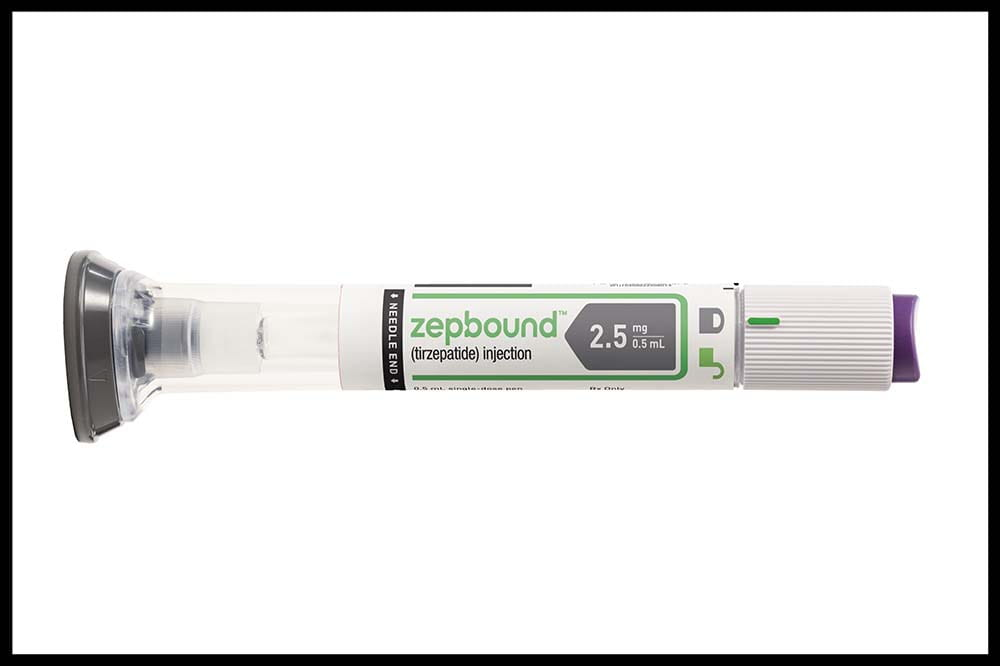
Last week, the Food and Drug Administration (FDA) announced the approval of Eli Lilly’s drug tirzepatide for treating obesity. The drug, which will be sold under the name Zepbound for obesity, is already branded as Mounjaro for diabetes treatment. 

While Novo Nordisk’s blockbuster semaglutide drug (sold as Wegovy for obesity and Ozempic for diabetes) works only as a GLP-1 agonist, tirzepatide also targets a second receptor and has been shown to elicit greater weight loss.

Spurred by trial results demonstrating significant health benefits beyond weight loss tied to these drugs, the American Medical Association House of Delegates voted this week to adopt a policy advocating for insurance coverage of GLP-1-based obesity treatments, affirming that it regards obesity as a disease, and that patients left untreated for the condition are at greater risk for serious health consequences.

To date, most insurers and self-funded employers have resisted covering weight loss drugs due to their prices: Zepbound has a list price of $1,060 per month, while Wegovy is priced at around $1,300 per month.

The Gist: We have entered a new era in treating obesity. 

Even with payers and employers dragging their feet over coverage decisions, and Medicare remaining prohibited from covering weight-loss drugs by law, consumer demand for the drugs has been strong enough to outpace supply. Zepbound’s approval will hopefully both improve availability and exert downward pricing pressure. 

While these drugs will undoubtedly contribute to higher healthcare spending in the short term, the long-term benefits of significant weight loss, combined with cardiovascular risk reduction, could lower healthcare costs over the patient’s lifespan—although the payer “holding the bag” for the cost today may not see the return, given that as many as 20 percent of individuals with commercial insurance switch carriers every year. 

Cigna’s Express Scripts adopts cost-plus pricing model

https://mailchi.mp/169732fa4667/the-weekly-gist-november-17-2023?e=d1e747d2d8

This week, Express Scripts, the nation’s second-largest pharmacy benefit manager (PBM), which is owned by health insurer Cigna, announced a new pricing model.

It is giving employers and health plans the option to pay pharmacies up to 15 percent over acquisition costs, plus a dispensing fee, for covered drugs. This payment structure was popularized by the Mark Cuban Cost Plus Drugs Company, founded by the billionaire businessman in reaction to the opaque pricing and complicated discounts and rebates common among PBMs.

While Cigna is not promising that this new pricing model will result in lower prices, it says it will improve transparency and should benefit retail pharmacies, who will split the markup with Express Scripts.

Cigna projects that only some employers will lower their healthcare spending through the cost-plus model, and that patient cost-sharing should be similar under both approaches. 

The Gist: Between disruptive competitors like Cuban’s venture and increasing scrutiny from Congress, PBMs are facing new pressures to improve transparency and account for their role in rising drug costs. 

This move by Cigna is an attempt to address at least one of those concerns, possibly intended to preempt regulatory and legislative action. 

After years of complaints surrounding their business practices, it appears that the Congressional tide may be turning toward PBM industry reform. However, patients—who by and large are unaware of what PBMs are or do—won’t be satisfied till they see their out-of-pocket prescription drug costs go down. 

Next up on this front: seeing which provisions targeting PBMs, many which have bipartisan support, make it into the Senate’s broad healthcare legislation planned for the end of this year, and in what form that bill ultimately passes.