

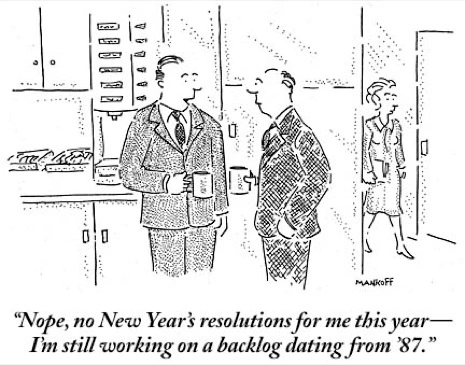
Cartoon – New Year’s Resolution Backlog

The Federal Trade Commission has been hit by a “tidal wave” of merger filings and cannot review them all before required deadlines.
The FTC is now sending letters to merging entities warning them that the agency may deem a combination unlawful even if the companies decide to merge.
“Companies that choose to proceed with transactions that have not been fully investigated are doing so at their own risk,” the regulator said in a statement Tuesday.
The alert may give pause to hospitals merging at a steady clip. Unwinding deals once they’re already consummated can be costly and complex. The premerger filings give regulators a chance to stop anticompetitive mergers before a deals closes, preventing harm to consumers and businesses in the meantime.
The FTC received 343 premerger filings in the month of July, more than three times the amount from July of last year, when 112 transactions were submitted for review.
So far this year, more than 2,000 transactions have been submitted through the month of July, according to figures with the FTC, eclipsing the 815 filings over the same time period last year.
Federal regulators have forced hospital to unwind mergers before.
The FTC forced ProMedica to unwind its buyup of St. Luke’s Hospital in the Toledo area after alleging the deal would severely hinder competition. The FTC later approved a divestiture plan in 2016 after a long battle in court.
The latest alert from the FTC comes as hospital deals are expected to face additional scrutiny under a recent executive order from President Joe Biden.
It came even as the FTC had signaled it plans to prioritize enforcement in a number of key industries including healthcare.
Plus, last year the FTC said it was expanding a key tool in its arsenal to potentially help police future deals.
Mergers that exceed a certain threshold — currently $92 million — are required to submit a premerger filing with the FTC per the Hart-Scott-Rodino Act.
The filing initiates a review period in which the FTC and Department of Justice investigate the deal.
Typically, the agencies have 30 days to determine whether additional information is needed. If so, the deal is on hold until the companies respond with the needed information, and after that the agencies have a limited number of days to file a challenge if they deem the tie-up unlawful.
The FTC can also terminate the waiting period early, allowing the deal to proceed.
However, the agency maintains the right to challenge any deal regardless of whether it was reviewed or not.
https://mailchi.mp/b5daf4456328/the-weekly-gist-july-23-2021?e=d1e747d2d8
/types-of-doctors-1736311_final-e807c88a56fc45569caa2afde85f71ac.jpg)
We’ve been hearing a growing number of stories from patients about difficulties scheduling appointments for specialist consults.
A friend’s 8-year-old son experienced a new-onset seizure and was told that the earliest she could schedule a new patient appointment with a pediatric neurologist at the local children’s hospital was the end of November. Concerned about a five-month wait time after the scary episode, she asked what she should do in the meantime: “They told me if I want him to be seen sooner, bring him to the ED at the hospital if it happens again.”
A colleague shared his frustration after his PCP advised him to see a gastroenterologist. Calling six practices on the recommended referral list, the earliest appointment he could find was nine weeks out; the scheduler at one practice noted that with everyone now scheduling colonoscopies and other procedures postponed during the pandemic, they are busier than they’ve been in years. Recent conversations with medical group leaders confirm a specialist access crunch.
Patients who delayed care last year are reemerging, and ones who were seen by telemedicine now want to come in person. “We are booked solid in almost every specialty, with wait times double what they were before COVID,” one medical group president shared. The spike in demand is compounded by staffing challenges: “I pray every day that another one of our nurses doesn’t quit, because it will take us months to replace them.”
Doctors and hospitals are now seeing a rise in acuity—cancers diagnosed at a more advanced stage, chronic disease patients presenting with more severe complications—due to care delayed by the pandemic. If patients can’t schedule needed appointments and procedures, this spike in severity could be prolonged, or even made worse.
For medical groups who can find ways to open additional access, it’s also an opportunity to capture new business and engender greater patient loyalty.
https://www.cbsnews.com/news/blood-donation-shortage-us-2021/
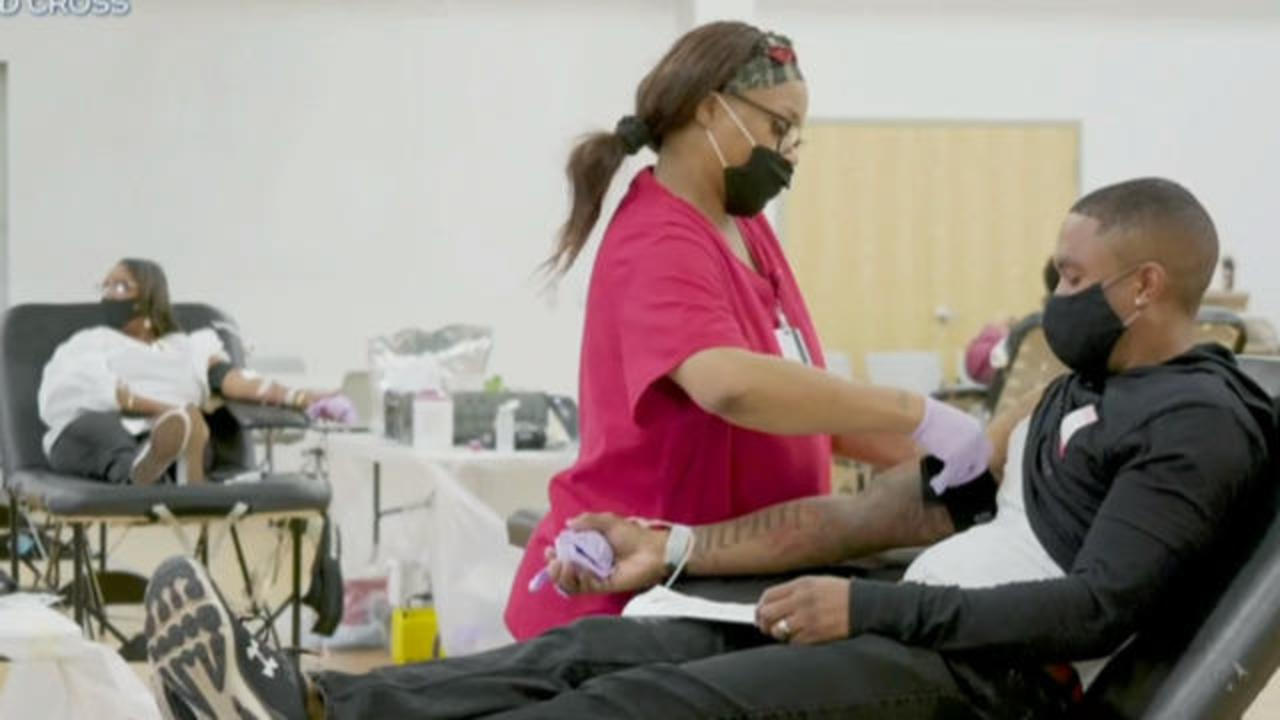
Blood centers in some U.S. cities are down to a one-day supply, forcing hospitals to postpone surgeries. The blood shortage is yet another fallout from the pandemic, experts say.
OneBlood, the Southeast’s largest blood center, is scrambling to manage the blood shortage crisis.
“It’s a 24/7 operation,” said OneBlood’s Susan Forbes. “The donors are not in the traditional locations anymore. We lost large corporations, religious organizations, movie theater drives, festivals that were taking place ended.”
Before COVID-19 shutdowns, schools accounted for 25% of collected blood. Now, demand for blood products is up 10% nationwide.
Some hospitals have had to delay scheduled surgeries. At NYU Langone Health in New York City, surgeon-in-chief Dr. Paresh Shah said they came close to doing the same.
“There’s this huge backlog of operations that really needed to get done,” Shah said. “We were down to such a low inventory of blood that if we had one major transfusion event, we would have been depleted completely.”
He said the lack of blood can mean life or death in trauma situations.
Eleven-year-old Iggy Friday was diagnosed with Leukemia this winter and has needed more than 30 transfusions during chemotherapy. His recent platelet transfusion was delayed because of the shortage — luckily for just a few hours.
“I did think about the people who needed it now and stuff. So that’s why I was fine with waiting,” he said. “It helps a lot of people and can save a lot of lives.”

 HENRY KOTULA