

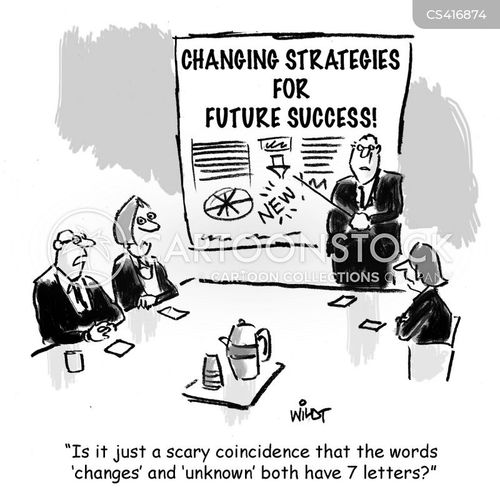
Cartoon – Scary Coincidence

https://www.jpmorgan.com/commercial-banking/insights/healthcare-financial-challenges-2019

Faced with slim margins and rising costs, the healthcare industry is looking to blockchain, data analytics and innovation to help drive savings and unlock new revenue.
The healthcare industry is facing an urgent need to reduce costs and increase revenue. Research from the Healthcare Advisory Council reveals the not-for-profit health system will need between $40 million and $44 million annually in cost avoidance over the next eight years to maintain a sustainable margin. The challenge is significant, but emerging technologies and innovative strategies are creating opportunities for greater efficiency, better patient care and decreased costs, according to executives and other leaders in healthcare.
Health systems with the best margin sustainability pursue effective cost-avoidance practices, including:
But even with these practices, cost avoidance is challenging—particularly when it comes to Medicare-reliant seniors, who often require frequent medical treatments and hospital admissions. Turning to advanced electronic medical records (EMRs) that are designed around a health system’s risk and workflow can improve treatment decisions and continuity of care, leading to decreased admissions, better cost effectiveness and a greater profit margin.
Simultaneously, some health systems are looking to a pre-paid, value-based medicine model, as opposed to the more common fee-for-service model. Value-based medicine moves the payment upstream, incentivizing providers to focus on maintaining patient health rather than on providing medical interventions. Decreasing the amount of care needed to keep patients healthy has a direct impact on the size of an organization’s margins.
One of the most common inefficiencies in healthcare is how physicians are credentialed. The months-long process for clinician credentialing commands significant time and costs. Emerging blockchain technology may be one solution to this persistent point of inefficiency.
With blockchain, rather than sending a clinician credentialing application to several organizations for verification, the physician and all credentialing locations—as members of a dedicated blockchain network—can have access to the physician’s highly encrypted log. Any changes to the physician’s log can be transmitted to the network and validated by private keys known only to each party and with algorithms agreed upon by the network. In this, trust transfers from a third-party clearinghouse to the network as a whole.
In the blockchain world, the physician could provide access codes to the hospital to review their verified credentials. This could save as much as 80 percent of the current cost and time invested in physician credentialing. Using the same technology and process, blockchain may also be a valuable tool for finding efficiencies when working with patient records.
Healthcare system-based venture capital funds are growing rapidly. In 2017, more than 150 distinct corporate venture groups operated within the healthcare arena, according to Health Enterprise Partners, and these groups participated in 38 percent of all healthcare IT financing.
There are four common objectives for starting such a fund:
Once healthcare investors establish their fund objectives (or mix of objectives), they define their investment approach. This includes establishing a decision-making chain with operational leaders and board members that can allow decisions to be made quickly and in an established pattern. It also includes building infrastructure and could mean adopting a rigorous information environment system, like a healthcare customer relationship management (CRM) system, as well as developing stringent custody and accounting procedures for securities.
Funds should gather resources to support the interactions between the investment fund and the companies in which they invest. At the outset, they should decide the relationship they will have with their investment targets and whether return on investment is a primary or secondary goal. As a part of choosing investment targets, it is important that funds address an important problem of the parent organization and in a way that the organization supports.
For health systems, every patient hour costs $250 in direct operating costs, more than half of which owe to labor. By this, improving efficiency and decreasing the time needed for tasks can save money and support a healthy margin. A mix of advanced analytical data and targeted interpersonal relations can help reduce the time required for common hospital and health system tasks. Predictive analytic modeling software can help yield clearer insight into operations, revealing ways to break down barriers between departments and more effectively manage census levels. This optimizes census distribution inside a complex medical center.
Another rich source of potential healthcare savings lies in the staff hiring process. Successful staff hiring for all income levels is one of the great challenges for health systems, but data analytics can help make the hiring process more efficient. With models built on the characteristics of successful hires, predictive analytics can point to applicants with the best potential for success, improving confidence in hiring decisions. Importantly, while analytics and automation can play a big part in finding the best applicants, once a candidate becomes an employee, important decisions like promotions or relocations require direct personal contact.
As health systems explore avenues for increased efficiency, lower costs and better margins, J.P. Morgan has developed digital innovations to support healthcare investment, strategy and operation. Two of the most applicable include:
These innovations in artificial intelligence and machine learning drive efficiency across a range of areas. Consider the benefits one client enjoyed by virtue of J.P. Morgan’s digital tools:
Going forward, emerging technologies and strategies are indispensable for healthcare systems striving to grow margins in a time when health costs and needs are increasing. Ultimately, hospitals and health systems that find pathways to greater profitability will be best positioned to achieve their primary goal: delivering better care that leads to better patient outcomes.
Nobel Economist Says Inequality is Destroying Democratic Capitalism

At the launch of the IFS Deaton Review, a 5-year review of rising inequalities in the UK, Sir Angus Deaton decried extreme inequality and the system that allows it. “As it is, capitalism is not delivering to large fractions of the population.”
We are about to embark on a large, ambitious, and open-ended review of inequalities. We are bringing together a distinguished group of scholars and writers from different disciplines. Each thinks about inequality differently, and together they encompass a wide range of methodological, political, and philosophical perspectives. At a first stage, currently underway, the guiding panel is asking each member of this larger group to write about one or other aspect of the topic; this collective effort will be one of our main products. At the second stage, the panel will write a synthetic volume. We will think about inequalities broadly—note my use of “inequalities” rather than “inequality”—and will not be confined to the traditional economic concerns with measures of the distribution of income and wealth, important although those are. Our main focus is the United Kingdom, but there is a great deal of recent thinking and evidence from other countries, particularly the United States, Scandinavia, and other European countries, and we shall repeatedly have to assess its relevance, and are often asking authors or combinations of authors to make the links.
As at no other time in my lifetime, people are troubled by inequality. In 2016, Theresa May, in her first speech as Prime Minister, said “we believe in a union not just between the nations of the United Kingdom but between all of our citizens, every one of us, whoever we are and wherever we’re from. That means fighting against the burning injustice that, if you’re born poor, you will die on average 9 years earlier than others.” Jeremy Corbyn has called for a new economics to address what he called “Britain’s grotesque inequality.” President Obama said that he believed that the defining challenge of our time is to make sure that the US economy works for every American. Across the rich world, not only in America, large groups of people are currently questioning whether their economies are working for them. The same can be said of politics. Two-thirds of Americans without a college degree believe that there is no point in voting, because elections are rigged in favor of big business and the rich. Britain is divided as never before and, once again, many believe that their voice doesn’t count either in Brussels or in Westminster. And one of the greatest miracles of the 20th century, the miracle of falling mortality and rising lifespans, is no longer delivering for everyone, and is now faltering or reversing.
Yet when people say that they are worried about inequality, it is frequently unclear what they mean or why they care. Economists think they know what they mean when they talk about inequality, and they produce charts of gini coefficients of income and of wealth, and when other social scientists say that they have wider concerns, economists—among whom I count myself—have often been too ready to tell them that they don’t know what they are talking about. What we would like to do in this review, even with its large quota of economists, is to get a better understanding of exactly what it is that bothers people about inequality.
We will also think about how we might address concerns about inequality and which concerns need to be addressed. If the concern with inequality is simply envy—as is often claimed by the right—it is perhaps better to address the concern than the inequality. If the inequality comes from incentives that work for a few but benefit many, then we may want to do a better job of documenting the need for incentives and what they do for the economy as a whole. If working people are losing out because corporate governance is set up to favor shareholders over workers, or because the decline in unions has favored capital over labor and is undermining the wages of workers at the expense of shareholders and corporate executives, then we need to change the rules. Why are the myriad differences between men and women so persistent and so difficult to erase?
Given that we are just starting, it is perhaps presumptuous of me to say anything substantive at this point. But what I am going to say is what I myself think, or at least what I think today, and I look forward to changing my mind as we go; I wouldn’t be chairing this review if I didn’t expect that to happen. I am also perhaps too much influenced by my own work—particularly my recent work with Anne Case—and this work is primarily about the United States, though we have been doing quite a bit of thinking about how it applies to Britain.
At the risk of grandiosity, I think that today’s inequalities are signs that democratic capitalism is under threat, not only in the US, where the storm clouds are darkest, but in much of the rich world, where one or more of politics, economics, and health are changing in worrisome ways. I do not believe that democratic capitalism is beyond repair nor that it should be replaced; I am a great believer in what capitalism has done, not only to the oft-cited billions who have been pulled out of poverty in the last half-century, but to all the rest of us who have also escaped poverty and deprivation over the last two and a half centuries. It also provides our jobs and the cornucopia of goods and services that we take for granted. And Milton Friedman, whose starry-eyed view of capitalism has much to answer for, was not entirely wrong when he extolled the freedom that free markets can bring. Though history has not been kind to his view that equality would be guaranteed by using markets to pursue freedom.
But we need to think about repairs for democratic capitalism, either by fixing what is broken, or by making changes to head off the threats; indeed, I believe that those of us who believe in social democratic capitalism should be leading the charge to make repairs. As it is, capitalism is not delivering to large fractions of the population; in the US, where the inequalities are clearest, real wages for men without a four-year college degree have fallen for half a century, even at a time when per capita GDP has robustly risen. Mortality rates are rising for the less-educated group at ages 25 through 64, and by enough that life expectancy for the entire population has fallen for three years in a row, the first time such a reversal has happened since the end of the first world war and the great influenza epidemic. Less educated Americans are dying by their own hands, from suicide, from alcoholic liver disease, and from overdoses of drugs. Morbidity is rising too, and they are also suffering from an epidemic of chronic pain that, for many, makes a misery of daily life.
In Britain, these inequalities are not so stark, at least not yet. But median real wages in Britain have not risen for more than a decade. One decade is much better than five decades, but we surely do not want to wait to find out whether the American experience will be replicated here. There have also been prolonged periods of real wage stagnation in recent years in Italy and in Germany. In those countries too, increasing overall prosperity is not reaching everyone. And as I noted above, democracy too does not seem to be working for everyone. The sense of being left behind, of not being represented at Westminster, is much the same as the sense of not being represented in Washington.
In Clement Attlee’s 1945 cabinet—the cabinet that implemented the Beveridge Report and built the first modern welfare state—there were seven men who had begun their working lives at the coal face. When labor MPs from Glasgow set off to London, local bands and choirs came to the station to see them off as if they were going to war, which indeed they were. Only three percent of MPs elected in 2015 were ever manual workers, compared with sixteen percent as recently as 1979. The union movement, which once produced talents like those in Attlee’s cabinet, has been gutted by the success of postwar meritocracy. Attlee’s warriors would today have gone to university and become professionals; they would never have been down the pit, nor in a union hall. Meritocracy has many virtues, but, as predicted by Michael Young in 1958, it has deprived those who didn’t pass the exams, not only of social status and of the higher incomes that degrees bring, but even of the kind of political representation that comes from having people like themselves in parliament. Young wrote, “The bargaining over the distribution of national expenditure is a battle of wits, and defeat is bound to go to those who lost their clever children to the enemy.” He referred to the less educated group as “the populists” who, in turn, refer to the elite as “the hypocrisy.”
What does history tell us? Not surprisingly, we have been here before. There have been several episodes where capitalism seemed broken, but was repaired, either on its own, or by deliberate policy, or by a combination of the two.
In Britain at the beginning of the 19th century, inequality was vast compared with today. The hereditary landowners not only were rich, but also controlled parliament through a severely limited franchise. After 1815, the notorious Corn Laws prohibited imports of wheat until the local price was so high that people were at risk of starving; high prices of wheat, even if they hurt ordinary people, were very much in the interests of the land-owning aristocracy, who lived off the rents supported by the restriction on imports. The Industrial Revolution had begun, there was a ferment of innovation and invention, and national income was rising. Yet working people were not benefitting. Mortality rates rose as people moved from the relatively healthy countryside to stinking, unsanitary cities. Each generation of military recruits was shorter than the last as their childhood nutrition worsened, from not getting enough to eat and from the nutritional insults of unsanitary conditions. Churchgoing fell, removing a major source of community and support for working people, if only because churches were in the countryside, not in the new industrial cities. Wages were stagnant and would remain so for half a century. Profits were rising, and the share of profits in national income rose at the expense of labor. It would have been hard to predict a positive outcome of this process.
Yet by century’s end, the Corn Laws were gone, the rents and fortunes of the aristocrats had fallen along with the world price of wheat. Reform Acts had extended the franchise, from one in ten males at the beginning of the century to more than a half by its end, though the enfranchisement of women would wait until 1918. Wages had begun to rise in 1850, and the more than century-long decline in mortality had begun. All of this happened without a collapse of the state, without a war, or a pandemic, through a gradual change in institutions that slowly gave way to the demands of those who had been left behind.
America’s first Gilded Age is another case. It also shows that the fundamental rules of the game can be changed. In the Progressive Era, four constitutional amendments were passed, all designed to limit inequality of one form or another. One instituted the income tax, one gave women the vote, one prohibited alcohol—strongly supported by women, who believed that alcohol abuse was an instrument of their oppression—and one an electoral reform that instituted the direct election of senators, as opposed to their previous appointment by state legislatures that were often dominated by business.
I have already mentioned the case that is most on my mind, the construction of the modern welfare state by Attlee’s government after the Second World War. The Great Depression, like the stagnation of wages in the early 1800s, spawned a large literature on how to modify or abolish capitalism, and according to one version of the story, it was Attlee’s government that tamed the beast and that made it possible for the tamed beast to deliver the unprecedented shared growth that many of us grew up on. Joe Stiglitz has recently written that he grew up in the golden age of capitalism though, as he wryly notes, it was only later that he discovered that it was the golden age. And, of course, it wasn’t a golden age—at least in terms of material living standards or in terms of health—but perhaps it was such in terms of the rules of the game that allowed growing prosperity to be widely shared. I don’t think that anyone would argue that the late 1940s was a golden age in Britain— there was bread rationing, petrol rationing, and to a young Angus Deaton, the terrible deprivation of sweet rationing, but the safety net that was built in those years played a role in fairly sharing, and perhaps even in helping generate, the prosperity that was to come.
That safety net is needed just as much today. Globalization and automation are challenging us today just as they did in the early 19th century. Safety nets are most needed when change is rapid, and it is one of the reasons why America is doing so much worse—most obviously in deaths of despair—than are wealthy European countries. But what is happening today is also a real threat to Britain and to Europe.
The argument that Anne Case and I are making in our new book is that less-educated white men and women in America have had their lives progressively undermined, starting in the 1970s, and showing up, since 1990, in rising numbers of deaths from suicide, alcoholic liver disease, and drug overdoses. African Americans experienced a similar disaster thirty years earlier and the improvements in their lives since then have protected them to an extent. In the face of globalization and innovation, many of us would argue that American policy, instead of cushioning working people, has instead contributed to making their lives worse, by allowing more rent-seeking, reducing the share of labor, undermining pay and working conditions, and changing the legal framework in ways that favor business over workers. Inequality has risen not only due to wealth generation from innovation or creation, but also through upward transfers from workers. It is not inequality itself that is hurting people, but the mechanisms of enrichment.
How much is this a threat in Britain? Some of the mechanisms of enrichment are not operative here. The US wastes about a trillion dollars a year on a healthcare system that is very good at enriching providers, hospitals, device manufacturers, and pharmaceutical companies, but very bad at delivering health. You do not have that problem. The US has licensed pharma companies to sell opioids to the general public, including for chronic pain, which ignited an epidemic of addiction and death with a cumulative death toll larger than all Americans lost in both World Wars. You too use opioids, but usually in hospitals, not in the general population. Yet the opioid manufacturers are following the model of tobacco manufacturers, and working hard, when blocked in the US, to expand elsewhere. Purdue Pharma has a subsidiary, Mundipharma, that agitates on behalf of the greater pain relief that they argue opioids can bring. As I write this, Matt Hancock, the Minister of Health, noted that “things are not as bad here as in America, but we must act now to protect people from the darker side of painkillers.” The BBC news report on this carries a chart showing the extraordinary geographical inequality in opioid prescriptions in England, with prescription rates five times larger in Cumbria and the North East than in London. As the briefing note for this launch shows, deaths of despair are rising in Britain, particularly in less successful parts of Britain, just as they are in other English-speaking countries, though the numbers (and death rates) are small compared with the US.
What about wages? The US has extensive business lobbying, which the UK does not have, or at least not in the same overt form. (The US also had very little prior to 1970, so it could happen here too.) As in the US, unions have become much less powerful in Britain, a decline that many have welcomed, but their countervailing power in boardroom decisions may have protected wages and working conditions. Unions provided social life and political power for many people who have less of both today. The replacement of stakeholder capitalism by shareholder value maximization is widespread in the US and has been remarked on here, too. Paul Collier has noted that Imperial Chemical Industries, once the crown jewel of British industry, used to boast “we aim to be the finest chemical company in the world,” but that, before it was lost to takeovers and mergers in 2006, it had changed its slogan to “we aim to maximize shareholder valuation.”
In Britain, as in America, some cities and towns are doing much better than other cities and towns, and the easy mobility that tended to keep these differences in check seems to have been much reduced. America has no city that is as dominant or as uniquely prosperous as is London.
Political dysfunction in Britain is different, but there is a common thread that many voters believe that they are not well represented. And there are sharp differences across groups, with age, education, ethnicity, gender and geography important in both countries.
I think that people getting rich is a good thing, especially when it brings prosperity to others. But the other kind of getting rich, “taking” rather than “making,” rent-seeking rather than creating, enriching the few at the expense of the many, taking the free out of free markets, is making a mockery of democracy. In that world, inequality and misery are intimate companions.

Former Representative Jim Delaney (D-Md) threw down the gauntlet to the left-leaning attendees at the California Democratic convention on June 2 by challenging Medicare-for-all.
”The problem with Medicare for all, it’s actually really simple, is that it makes private insurance illegal. And 150 million Americans have private insurance, and 70% of them like it according to polling. So if we want to actually create universal health care, we’re never going to do it by trying to get 150 million Americans to give up what they want.”
The crowd booed at first, but then gave him a respectful hearing. Pundit George Will and commentator Charlie Sykes think Delaney has a good point politically. But let’s look at Delaney’s claim through the apolitical lens of this blog.
1. Why Did Delaney make this claim?
Two reasons: He wanted to move the debate over U.S. healthcare from sound bites to substance. And Rep. Delaney wanted to distinguish himself from the rest of the pack of Democrat Presidential contenders and position himself as a moderate on this and other issues.
2. Does Medicare-for-all mean making private health insurance illegal?
Clearly for Sen. Bernie Sanders the answer is yes. But not for any of the other Democrat Presidential candidates, at least not right away. Some like Mayor Pete Buttigieg and entrepreneur Andrew Yang contemplate a gradual path, eventually leading to a single public payer. In Yang’s case, he expects that public health insurance will eventually out-compete private insurance, not that it will be outlawed. Others like Senators Cory Booker and Amy Klobuchar, Governors Hickenlooper and Inslee, and Rep. Eric Swalwell contemplate using public insurance, alongside private insurance, as the means to get to universal coverage, more like “Medicare for all who want it.” This month’s Kaiser Family Foundation poll found that 55% do not perceive that Medicare-for-all would mean abolishing private insurance.
3. How many Democratic candidates advocate Medicare-for-all?
Of the 24 Democrats who have announced their candidacy (25, if you count former Sen. Mike Gravel), 13 advocate some version of Medicare-for-all, but 10 prefer some other approach to achieve universal coverage. Former Vice-President Joe Biden has not put forward a clear position yet. (Sen. Gravel supports universal healthcare “like Medicare.”)
4. What about Republicans?
Many Republicans, including the President himself, have at times given lip service to universal healthcare coverage. Most of them also advocate “protecting” Medicare, in some cases by scaling it back and limiting it. However, the President and Senate Republicans are once again pledging to “repeal and replace Obamacare” with a new plan, touted as “phenomenal” (though no details so far). At first the new plan was promised “in a very short period of time,” then “in next 2 months,” and now most recently “after the 2020 election.” For them, opposition to Medicare-for-all is a political matter of faith, not just a strategy for preserving private health insurance for those who want it.
5. How many Americans have private health insurance?
Private employer-based insurance covered 181 million Americans in 2017. According to the Census Bureau the full 2017 breakdown is:
(Note: Some individuals had more than one type of insurance during year)
6. Are Americans satisfied with their own private employer-based healthcare insurance?
Americans currently rate the “coverage” (69%) and “quality” (80%) for their own individual health plans as “good” or “excellent,” according to a December 2018 Gallup poll.
7. How does this compare with Medicare satisfaction statistics?
For Medicare recipients the ratings for “coverage” (88%) and “quality” (88%) are even better, in the same poll.
8. Do Americans see any downside to having employer-based healthcare insurance?
Many Americans feel locked into their current jobs lest they lose health benefits. This is especially so if they have chronic pre-existing conditions. Fear of losing coverage subtly puts them at the mercy of the employer for wages and work conditions. In addition, employees are shouldering a larger share of premiums and copays with each passing year. A Rand study showed that in the first decade of the 2000s, workers gains in productivity were offset by higher healthcare costs, holding their take-home wages flat. Increasingly, employees are switching to plans with high deductibles and less doctor choice.
Americans also express dissatisfaction with the wider system, even if they are satisfied with their own plans. They rate “coverage” at 34% and “quality” at 55% nationally.
Americans polled by Gallup are especially dissatisfied with costs. Only 58% are satisfied with cost of their own plan, while a low 20% are satisfied with overall cost in the national system.
9. Who are other stakeholders in the healthcare debate besides employees with employer-based insurance?
All Americans have a stake in healthcare reform. But here are some stakeholder sub-groups with special issues:
The uninsured are special stakeholders, as well.
10. Which of these stakeholders have the most to lose with Medicare-for-all?
In the first instance, healthcare insurers would be most directly affected. On closer look, I predict that several functions would not change much at all under a single-payer. There would still be enrollments, benefits management, claims processing, chronic disease management, contract negotiation, and customer service. These functions would continue, either in the form of subcontracts with government payers or in the form of direct government employment. Meanwhile, some would say that insurance companies have abdicated their job of true risk management, and have simply become pass-throughs for local health system monopolies and oligopolies. Under Medicare-for-all administrative complexities would be simplified, and inflated profits and salaries would be constrained, with resultant cost savings for the overall system
11. Which of these stakeholders have the most to gain with Medicare-for-all?
Big business and public sector employers probably have the most to gain from Medicare-for-all or other healthcare reform. In 1991, Sam Walton famously railed to his managers, “These people are skinnin’ us alive not just here in Bentonville but everywhere else, too….They’re charging us five and six times what they ought to charge us….So we need to work on a program where we’ve got hospitals and doctors…saving our customers money and our employees money.” Walmart and others like Bezos, Buffet and Dimon’s innovative Haven healthcare management enterprise are taking matters into their own hands out of frustration with traditional insurance’s inability to control healthcare costs and deliver value.
Small businesses also stand to gain much from jettisoning healthcare costs and administrative burdens under a single payer system. Small businesses feel a disproportionate brunt of current high healthcare costs. For them, a single sick employee can jack up their experience-rating. Tracking payments and maintaining regulatory compliance saps valuable administrative time. For these reasons, just 29 percent of small businesses with fewer than 50 employees provided group health insurance in 2016. Many dropped insurance for their employees and referred them to the public exchanges instead.
12. Is Medicare-for-all the end goal for its supporters, or only the means to a further goal?
Democrat candidates base their arguments for Medicare-for-all, or for their alternative approaches, primarily on achieving universal coverage. This is a worthy goal in itself. Having healthcare insurance has been linked to quality of life, life expectancy, worker productivity, and financial security.
But this blog has argued that an even more critical goal is constraining costs. Climbing healthcare costs are consuming an ever-greater share of the GDP, diverting resources from other worthy projects, and stressing household, corporate and public budgets.
This blog, thus, sees single payer as a means to the end of leveraging cost containment.
13. If Medicare-for-all in some form would give government the ability to finally constrain costs, who would be the biggest losers?
Clearly, potentially the biggest losers would be the healthcare industry, from front-line workers to professionals to health system CEOs. However, many could shift into higher-value healthcare activities. Others could transition to equivalent jobs in other service industries. True, a few might need to accept cuts in their bloated incomes. Since healthcare currently comprises almost one-fifth of all economic activity, these transitions should be done slowly. Leaders should do some industrial policy planning to facilitate changes and mitigate disruptions. Having said that, we should keep in mind that healthcare professionals are generally well educated, motivated, adaptable and resourceful, thus able to successfully navigate change.
Conclusion
Rep. Delaney asks a good question: Whether Americans with current employer-based health insurance would trade it for Medicare-for-all. Would they recognize that Medicare gets better quality and coverage ratings than private insurance? Would they view changing to Medicare-for-all as a fair bargain to achieve universal access for all? Do they think that single-payer would give the government leverage to finally constrain costs? Do they recognize that the total cost of healthcare – whether in the form of out-of-pocket payments, paycheck deductions, or new “$30 trillion” healthcare taxes – comes out of their wallets, one way or another?
On the other hand, could a larger public insurer (Medicare-for-all-who-want-it) gain sufficient reach and clout to tame the healthcare tapeworm without a Sanders-style single payer system? This blog will tackle that question in another post.
Now, take action.
How People Weasel Out of Change and Justify Staying the Same

You’re frustrated when others do it. Maybe you’re a weasel, too.
#1. Weasel out of change by using the “exception justification”.
Exception-thinking appears when the response to advice is, “Yes, but,” or “What about?”
If you want to stay the same, use an exception like a comforting baby blanket. Now you can keep doing the same ineffective things and feel good about it.
It’s interesting that people who seek advice use small exceptions to justify rejecting advice.
You seldom change while looking for excuses to stay the same.
#2. Weasel out of change by using the “small flaw justification”.
If you want to stay the same, discount the WHOLE truth by finding a small flaw in the advice someone gives.
Find small reasons not to change so you can justify staying the same.
Imperfect people use imperfection as an excuse to continue following an ineffective path.
#3. Weasel out of change by using the “it might fail justification”.
It’s interesting that people who are failing use the excuse, “I might fail,” to continue failing.
Failure-thinking is seen when people say, “But it might not work,” or “What if I fail?”
You might not always get what you reach for, but if you reach for nothing, you always get it.
Tips:
What excuses do people use to avoid growth and change?
How might leaders overcome the challenge of weaseling out of change?

The importance of leadership trust increases as the pace of change accelerates. Leaders in hyper-competitive and turbulent business environments need employees to support decisions without a lot of extensive explanation and back and forth discussion. It is not that change management topics like “what’s in it for me” are not important. It is simply a matter that when you need quick action, you may not have time to fully explain why this action is critical.
The need for fast action creates a dilemma for leaders. To move quickly, leaders need employees to accept and believe in their decisions without demanding a lot of discussion and justification. On the other hand, leaders do not want employees to blindly accept leadership decisions if they know these decisions could be leading the company down a path of failure. This issue was famously captured in Tennyson’s poem “The Charge of the Light Brigade” where he described soldiers responding to a questionable order with the stanza “theirs not to make reply, theirs not to reason why, theirs but to do & die.” While this phrase summons up notions of courage and duty, the story it describes is a tragic example of people following leadership orders they knew were foolish. In the case of the Light Brigade, the unwillingness to question the wisdom of their leaders led to 278 needless casualties of which 156 were killed.
Leadership in fast moving world requires asking employees to trust your decisions while ensuring employees are willing to criticize your decisions. To quote General Colin Powell, “Leadership is solving problems. The day soldiers stop bringing you their problems is the day you have stopped leading them.” How can leaders create the sort of trust that strikes this balance between employees accepting decisions but also questioning them? The following are some suggestions based on psychological research studying trust in organizations.
People are good at picking up subtle cues that show whether their co-workers trust their commitment and abilities. If a leader lacks trust and confidence in their employees, then employees will soon lack trust and confidence in that leader. This is a major issue when companies restructure. It is common to assign leaders to “fix” struggling divisions of a company. If these leaders believe existing employees are to blame for the previous problems, then they are almost certain to fail in gaining the trust of those employees when they most need it.
Some leaders believe the best way to build employee confidence is to hide bad results and downplay challenges the company is facing. This behavior damages leadership trust. Employees put more trust in leaders who openly share information with them, both good and bad. This goes back to employees trusting leaders who trust them. Leaders who trust employees with sensitive information about company performance are both educating employees on the realities the company is facing and building leadership trust in return. There is a right way to share bad news to avoid undermining confidence. But not sharing bad news at all undermines trust.
Trust comes from you knowing your employees (not just them knowing you).
One often hears leaders attempt to build trust by saying things like, “Anyone who knows me will tell you I am a person of my word.” What these leaders fail to understand is trust, particularly when it comes to providing critical upward feedback, is often more dependent on leaders knowing their employees then employees knowing their leaders. Employees put themselves at risk when they say things that might be viewed as critical of leadership decisions and behaviors. And employees do not want their only interactions with leaders to be centered on them sharing problems. This is captured by something a colleague once told me, “Why would I tell our division president what he is doing wrong if he doesn’t even know what I do. He’d just think of me as that person who complains.”
Building trust with employees depends on getting to know employees. The only way to know your employees is to spend time with them. Short personal interactions have big effects on trust. One way to see the difference between effective and ineffective leadership in this area is to observe executives at company conferences. The ones employees trust are the ones who spend time with employees two or three levels below them. These leaders intentionally start conversations with employees they do not know. Executives employees often mistrust are ones who spend their time in closed conference rooms or fancy dinners talking with other senior executives and people they already know.
Managers play a critical role in building leadership trust. Managers have more time to spend getting to know employees, and as a result they can build far stronger relationships. What is interesting is that how much employees trust their managers depends in part on how much managers trust their own leaders. There is as a “trickle down” effect associated with trust. When leaders build trusting relationships with their managers, their managers are more likely to build trusting relationships with their employees. This is good news for leaders because it means that they can delegate the role of building trust to managers. But the only way to do this is to spend time with their own direct reports. And increasingly companies are adopting organizational structures where executives will have 15 or more people reporting to them. This increases the risk that executives may not spend enough time building trusting relationship with their own reports, which in turn will undermine leadership trust lower within the company.
It is often said that “trust takes years to build but seconds to destroy.” The first part of this statement is not necessarily true. Trust can be built fairly quickly. This is good news for leaders in a fast-moving world where trust needs to be established in a matter of days or weeks. But leadership trust will not come from leaders simply saying, “Trust me.” The only way to build leadership trust is for executives to demonstrate that they trust the employees, communicate with employees in a transparent manner, make time to get to know employees at all levels, and focus on building strong relationship with the people who actually manage the employees. Building leadership trust may not take years, but it does take active time and attention.


 HENRY KOTULA