


The distinction may sound academic. But understanding it is actually vital to designing the policies that should follow.
In an economic crisis, you could imagine a situation in which people lose their jobs and are unable to spend money. That’s called a demand shock, which is what happened during the global financial crisis of 2008. Or producers could raise prices (for various reasons), making it harder to buy their goods. That’s a supply shock, and it describes the oil crises of 1973 and 1979. But what is happening now cannot be addressed primarily by economic responses, because we are witnessing the suspension of economics itself.
Today, even if you have money, increasingly you cannot go into a shop, restaurant, theater, sports arena or mall because those places are closed. If you own a factory that hasn’t already closed for health reasons, you may still have to shut it down because you can’t get key components from suppliers or you can’t find enough stores open to sell your goods.
In these conditions, cash to consumers cannot jump-start consumption. Relief to producers will not jump-start production. This problem is on a level different and far greater than the recession of 2008 or the aftermath of 9/11. If it were to go on for months, it could look worse than the Great Depression.
This is not an argument against any of the economic measures being proposed. People need to be able to eat, buy medicine and pay their bills. New York Times columnist Andrew Ross Sorkin has canvassed experts and concluded that the best approach would be a zero-interest “bridge loan” to all businesses and self-employed people as long as they keep most of their workers on staff. It is probably the right course of action, massively expensive but cheaper than a full-blown Great Depression.
But even that might not work if we do not recognize that first and foremost the United States faces a health crisis. And that crisis is not being solved. China is now reporting no new domestic infections. South Korea, Taiwan and Singapore have also made progress in “flattening the curve” — the phrase of the year — because they have prioritized dealing with the health-care crisis over enacting a grand economic stimulus.
The United States is still dangerously behind the curve. A headline in Thursday’s Wall Street Journal is, “Coronavirus Testing Chaos Across America.” The article details how the country still has “a chaotic patchwork of testing sites,” with testing proceeding “far slower than experts say is necessary, in part due to a slow federal response.” The U.S. testing rate remains shockingly low, well behind the rates of most other rich countries and far behind those of the Asian countries that are handling this crisis best. Across the United States, hospitals are warning of a dire shortage of beds, medical equipment and supplies. And the worst is yet to come. With infections doubling every two to three days, the U.S. health-care system will face what New York Gov. Andrew Cuomo correctly described as a “tsunami.”
The Trump administration is still acting slowly and fitfully. Experts predicted weeks ago that cities would need thousands more hospital beds, and yet the Navy is still performing maintenance on two hospital ships and figuring out staffing. The president says he will invoke “defense production” powers only if necessary. What is he waiting for? He should direct firms to start production of all key medical equipment in short supply. The armed forces should be deployed immediately to set up field testing and hospital sites. Hotels and convention centers should be turned into hospitals. The federal government should announce a Manhattan Project-style public-private partnership to find and produce a vaccine. After decades of attacks on government, federal agencies are understaffed, underfunded and ill-equipped to handle a crisis of this magnitude. They need help, and fast.
And here’s another idea: President Trump could forge an international effort to unite the world against this common threat. If the United States, China and the European Union worked together, prospects for success — on a vaccine, for example — would be greater. China in particular produces most of the supplies and medical ingredients the world needs. Trump should remove all of his self-defeating tariffs so that American consumers don’t have to pay more for these goods and China can ramp up production. This is a war, and in a war you try to find allies rather than create enemies.
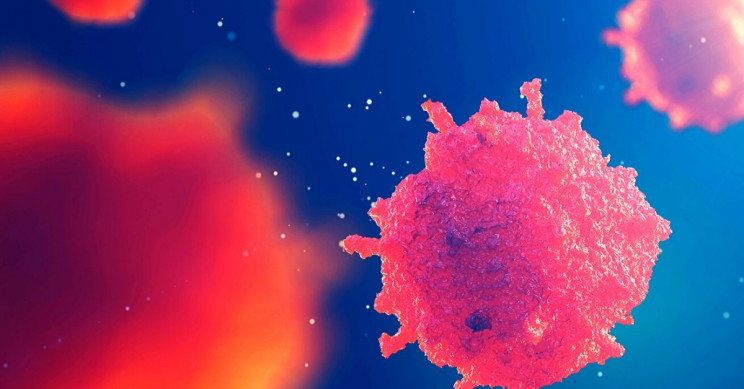
Coronavirus has undergone mutation into two distinct strains, one of which is far more aggressive and efficient.
Coronavirus has undergone mutation into two distinct strains, and one of them is far more aggressive than the other, according to scientists. This development may slow global attempts to develop a viable vaccine.
Researchers at Peking University’s School of Life Sciences and the Institut Pasteur of Shanghai witnessed the deadly virus evolve into two major lineages — called “L” and “S” types.
The “S-type” is the older, milder and less infectious type, while the evolved “L-type” spreads more rapidly, and presently accounts for roughly 70% of cases. While the L strain seemed to be more prevalent than the S strain, the S-type of the coronavirus is the ancestral version, reports The Guardian.
Genetic analysis of a man residing in the U.S. who was confirmed infected with coronavirus on Jan. 21 demonstrated to scientists that double-infection is possible.
In other words, anyone can be infected with both types.
The scientists who carried out the genetic analysis used 103 samples of the virus, taken from patients in Wuhan and other cities. This suggests that both the L and S strains emerged early in the early days of the coronavirus, according to The Guardian.
It’s important to note that all viruses mutate over time, and the virus causing COVID-19 is no exception. In other words, while it’s natural to be dismayed, this was and is an expected development.
How widespread it ultimately becomes depends on the evolutionary process of natural selection — the types capable of propagating fastest and most efficiently within the human body achieve the most “success.”

For the first time, scientists have used the gene-editing technique CRISPR inside the body of an adult patient, in an effort to cure congenital blindness, Bryan reports.
Why it matters: CRISPR has already been used to edit cells outside a human body, which are then reinfused into the patient.
Details: The research was sponsored by biotech companies Editas Medicine of Cambridge, Massachusetts, and Allergan of Dublin, Ireland, and was carried out at Oregon Health and Science University.
“It gives us hope that we could extend that to lots of other diseases — if it works and if it’s safe,” National Institutes of Health director Francis Collins told NPR.

Congress is expected to pass a major $8.3 billion spending package to help providers and local governments handle the spread of the coronavirus and to boost the development of vaccines and tests of the virus.
Here are key parts of the spending package released Wednesday:
The package sailed through the House on Wednesday and could be taken up quickly by the Senate.
Provider groups bracing for a coronavirus outbreak praised the spending package.
“This bill will provide essential assistance to caregivers and communities on the front lines of this battle,” said Chip Kahn, president and CEO of the Federation of American Hospitals, in a statement.

Hospitals in Pennsylvania made a total economic impact of $136.1 billion in Fiscal Year (FY) 2018, according to a Hospital and Healthsystem Association of Pennsylvania (HAP) report released Tuesday.
Of the total economic impact, $60.5 billion were the result of “direct impact,” such as employee salaries, benefits, as well as goods and services for hospital operations. Another $75.6 billion were the result of “ripple impact,” such as additional economic effects of a hospital in a community.
HHAP also found that hospitals supported more than 650,000 jobs, accounting for more than one in every 10 jobs in the state and providing $32.3 billion in total wages. Nearly 300,000 jobs were directly associated with hospitals while 363,000 jobs were associated with “ripple effects” of health systems.
The study’s findings point to the significant economic impact provider organizations have in the Keystone State and the need to promote policies that foster continued growth, according to Sari Siegel, PhD, vice president of healthcare research at HAP.
“While overall growth projections are strong, some hospitals remain financially stressed. Our work illustrates that hospitals often are the backbones of their communities and closure could cause devastating economic ripples throughout a region,” Siegel said in a statement. “The findings of this report underscore the need for policies that bolster hospitals’ long-term sustainability.”
Pennsylvania hospitals have contributed significantly to the state’s economy in recent years and have also made headlines throughout 2019.
Hahnemann University Hospital, a Pennsylvania-based hospital, filed for bankruptcy and closed over the summer. A group of six Philadelphia-based health systems won the hospital at auction for $55 million in early August.
The report was also released days after two Pennsylvania-based health systems, Tower Health and Drexel University, finalized a $50 million acquisition of St. Christopher’s Hospital for Children, a 188-bed pediatric medical center in Philadelphia.
There are 253 hospitals in Pennsylvania, according to HAP, with more than 37,600 staffed beds. The report also found that hospitals are among the 10 largest employers in 85% of counties across the state.
The total economic impact of Pennsylvania hospitals in FY 2018 grew by nearly $50 billion over the past decade, according to a HAP analysis of data collected from the Department of Health and Human Services (HHS).
Additionally, Pennsylvania hospitals received nearly $2 billion in research allocations from HHS and Patient-Centered Outcomes Research Institute in FY 2018.

The Trump administration eliminated funding for fetal tissue medical research by government scientists on Wednesday.
Why it matters: The decision is considered a win for anti-abortion rights supporters and a major blow to scientists who rely on the tissue from elective abortions for research into diseases like cancer, HIV and Zika, the Washington Post reports.

 HENRY KOTULA