

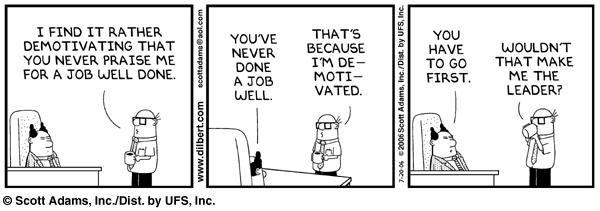
Cartoon -Importance of Employee Motivation
https://mailchi.mp/bfba3731d0e6/the-weekly-gist-july-2-2021?e=d1e747d2d8

Health system executives continue to tell us that the top issue now keeping them up at night is workforce engagement.
Exhausted from the COVID experience, facing renewed cost pressures, and in the midst of a once-in-a-generation rethink of work-life balance among employees, health systems are having increasing difficulty filling vacant positions, and holding on to key staff—particularly clinical talent. One flashpoint that has emerged recently, according to leaders we work with, is the growing divide between those working a “hybrid” schedule—part at home, part in the office—and those who must show up in person for work because of their roles. Largely this split has administrative staff on one side and clinical workers on the other, leading doctors, nurses, and other clinicians to complain that they have to come into work (and have throughout the pandemic), while their administrative colleagues can continue to “Zoom in”. There’s growing resentment among those who don’t have the flexibility to take a kid to baseball practice at 3 o’clock, or let the cable guy in at noon without scheduling time off, making the sense of burnout and malaise even more intense. Add to that the resurgence in COVID admissions in some markets, and the “help wanted” situation in the broader economy, and the health system workforce crisis looks worse and worse. Beyond raising wages, which is likely inevitable for most organizations, there is a need to rethink job design and work patterns, to allow a tired, frustrated, and—thanks to the in-person/WFH divide—envious workforce the chance to recover from an incredibly difficult year.
Many U.S. hospitals are turning to layoffs to cut costs as they recover from the financial hit of the COVID-19 pandemic.
Here are seven hospitals or health systems that recently announced layoffs or job cuts:
1. Mishawaka, Ind.-based Franciscan Health will lay off 83 employees of its 100-year-old hospital in Hammond, Ind., according to a notice filed with the state. The layoff notice comes as the health system works to shrink the 226-bed Franciscan Health Hammond Hospital to an eight-bed acute care facility with an emergency department and primary care practice. The layoffs are slated to begin Aug. 21 and will be permanent, the health system said.
2. HealthAlliance of the Hudson Valley, a three-hospital system in the Westchester Medical Center Health Network, laid off an undisclosed number of workers June 14. Westchester Medical Center Health Network in Valhalla, N.Y., said it laid off HealthAlliance hospital employees in Kingston, N.Y., to eliminate redundancies as it begins to consolidate inpatient services to one location.
3. As part of a financial restructuring plan, Sacramento, Calif.-based Sutter Health will issue another round of layoffs this year. The health system said in early June it plans to lay off 400 employees. These newly announced layoffs are in addition to 277 information technology jobs that were cut April 2. Sutter said most of the new layoffs affect employees in administrative positions in benefits, human resources, data services and accounting. The layoff notice said many of these employees were working remotely or in the field.
4. A little over a month after filing a notice to complete about 651 layoffs this year, Ascension Technologies, the IT subsidiary of St. Louis-based Ascension, eliminated 92 remote IT jobs in Indiana, according to a June 3 report. Most of the laid-off employees are based in Indianapolis and Evansville, Ind., the Indiana Department of Workforce Development said June 2
5. Lawrence (Mass.) General Hospital plans to lay off 56 employees and is warning of more cuts unless it receives government aid quickly, according to a May 25 report. The layoffs will affect employees working in administration and patient care. The layoffs affect about 2.5 percent of the 186-bed hospital’s workforce. Lawrence General attributed the layoffs to the COVID-19 pandemic weakening its financial profile.
6. Boca Raton, Fla.-based Cancer Treatment Centers of America closed its hospital in Tulsa, Okla. About 400 employees will be affected by the closure. The hospital saw its last patient on May 27.
7. Boca Raton, Fla.-based Cancer Treatment Centers of America is selling its hospital in Philadelphia and will lay off the facility’s 365 employees, according to a closure notice filed with the state. The cancer care network said it anticipates the layoffs in Philadelphia will begin after May 30.
https://mailchi.mp/bade80e9bbb7/the-weekly-gist-june-18-2021?e=d1e747d2d8

A topic that’s come up in almost every discussion we’ve had with health system executive teams and boards recently is workforce strategy. Beyond the immediate political debate about whether temporary unemployment benefits are exacerbating a shortage of workers, there’s a growing recognition that the healthcare workforce is approaching something that looks like a “perfect storm”.
The workforce is mentally and physically exhausted from the pandemic, which has taken a toll both professionally and personally. Many workers are rethinking their work-life balance equations in the wake of a difficult year, during which working conditions and family responsibilities shifted dramatically. That, along with broader economic inflation, is driving demands for higher wages and a more robust set of benefits.
Meanwhile, many health systems are shifting into cost-cutting mode, due to COVID-related shifts in demand patterns and continued downward pressure on reimbursement rates, forcing a renewed focus on workforce productivity.
These combined forces threaten to create a negative spiral, which could lead to even worse shortages and deteriorating workplace engagement. It’s striking how quickly the “hero” narrative has shifted to a “crisis” narrative, and we agree completely with one health system board member who told us recently that workforce strategy is now the number one issue on his agenda.
No easy answers here, but we’ll continue to report on innovative approaches to addressing these difficult challenges.


Hospitals added 2,900 jobs in May, after four months of job losses this year, according to the latest jobs report from the U.S. Bureau of Labor Statistics.
The May count compares to 5,800 hospital jobs lost in April, 600 jobs lost in March, 2,200 jobs lost in February and 2,100 jobs lost in January. Before January, the last job loss was in September, when hospitals lost 6,400 jobs.
Overall, healthcare added 22,500 jobs last month — compared to 4,100 jobs lost in April and 11,500 jobs added in March — and employment in the industry is down by 508,000 compared with February 2020.
Within healthcare, ambulatory healthcare services saw 22,000 added jobs in May, and nursing and residential care facilities lost 2,400 jobs in May.
Overall, the U.S. gained 559,000 jobs in May after gaining 266,000 in April. The unemployment rate was 5.8 percent last month, compared to 6.1 percent in April.
To view the full jobs report, click here.
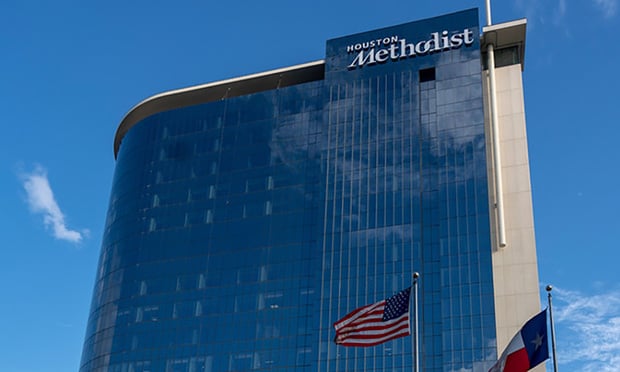
A group of 117 employees is suing Houston Methodist over its COVID-19 vaccination mandate for workers, ABC News reported May 29.
Houston Methodist, which comprises an academic medical center and six community hospitals, rolled out its mandatory vaccination policy March 31, setting an April 15 deadline for managers to receive at least one dose or get an exemption. More than 99 percent of the management team complied by the deadline. By June 7, all about 26,000 employees are required to be vaccinated. However, employees can receive medical or religious exemptions or a deferral if they are pregnant.
Now, 117 Houston Methodist employees have filed a lawsuit, claiming that the mandate is illegal.
The lawsuit, filed May 28 in Montgomery County District Court in Texas, alleges the hospital is “illegally requiring its employees to be injected with an experimental vaccine as a condition of employment,” according to ABC News. It specifically cites that the COVID-19 vaccines are authorized for emergency use by the FDA but have not been fully approved.
The employees allege that Houston Methodist is violating Texas public policy and the Nuremberg Code, a medical ethics code for human experimentation drafted in 1947 because of the Nuremberg trials at the end of World War II, according to the report.
The plaintiffs’ attorney, Jared Woodfill, told ABC News the health system’s mandate is meant “to promote its business and increase profits at the expense of other healthcare providers and their employees’ health. Defendants advertise to the public that they ‘require all employees and employed physicians to get a COVID-19 vaccine.’ More clearly, defendants’ employees are being forced to serve as human ‘guinea pigs’ to increase defendants’ profits.”
Houston Methodist said earlier this year that employees who do not comply with the vaccination mandate initially will have a discussion with their supervisor, then could face suspension followed by termination. The lawsuit seeks to prevent the health system from terminating unvaccinated workers.
Houston Methodist President and CEO Marc Boom, MD, shared a statement about the lawsuit with Becker’s. As of May 28, he said 99 percent of Houston Methodist’s employees have met the requirements for the vaccination mandate.
“We are extremely proud of our employees for doing the right thing and protecting our patients from this deadly virus,” Dr. Boom said. “As healthcare workers, it is our sacred obligation to do whatever we can to protect our patients, who are the most vulnerable in our community. It is our duty and our privilege.
“It is unfortunate that the few remaining employees who refuse to get vaccinated and put our patients first are responding in this way. It is legal for healthcare institutions to mandate vaccines, as we have done with the flu vaccine since 2009. The COVID-19 vaccines have proven through rigorous trials to be very safe and very effective and are not experimental. More than 165 million people in the U.S. alone have received vaccines against COVID-19, and this has resulted in the lowest numbers of infections in our country and in the Houston region in more than a year. We proudly stand by our employees and our mission to protect our patients.”

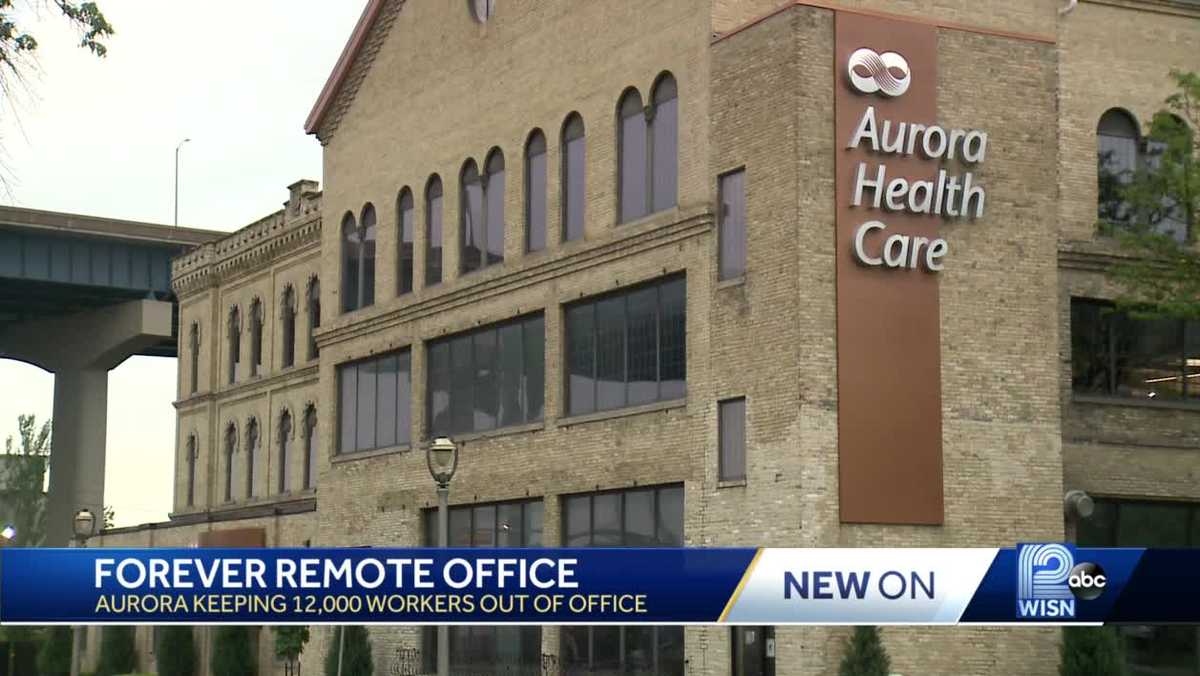
Advocate Aurora Health is implementing a new work model that will move 12,000 non-clinical employee positions in finance, consumer experience and more departments to remote-first operations, according to a May 21 BizTimes report.
Under the new work model, dubbed WorkForward, the 12,000 non-clinical employees who have been working remotely throughout the COVID-19 pandemic will continue to do so permanently; these employees will “no longer have dedicated workspaces” like cubicles or offices at the health system’s Milwaukee and Downers Grove, Ill.-based offices, the publication reports.
Affected departments include finance and accounting, consumer experience and public affairs, strategy and business development, government relations and administration. Employees will be able to choose to work from home, at a coffee shop or other locations, Advocate Aurora Chief Human Resources Officer Kevin Brady told BizTimes.
“For some departments, remote-first may come to mean monthly team meetings in the office, once-a-week collaboration sessions or a trip to an outside-the-box location that inspires the team,” he said.
Advocate Aurora will “regularly evaluate” its real estate needs with the work model transition; the health system recently vacated non-headquarters office space when its lease ended at the end of 2020. Advocate Aurora is also reconfiguring its remaining facilities to create more “innovative and productive” work areas that employees can use for meetings or temporary office space, according to the report.

Johns Hopkins University and Johns Hopkins Health System, both based in Baltimore, are boosting their minimum wage to $15 per hour, they said May 6.
The change will take effect July 1, in accordance with annual pay increases for university employees. For health system employees, including more than 300 at Johns Hopkins All Children’s Hospital in St. Petersburg, Fla., the change will take effect Jan. 1.
“Moving to a $15 minimum wage recognizes the hard work and sacrifices Hopkins employees make every day to advance our mission and serve our patients,” Johns Hopkins Health System President Kevin Sowers said in a news release. “We are proud to announce our adoption of a $15 per hour minimum wage even sooner than planned.”
Johns Hopkins said the minimum wage boost includes full-time temporary workers, student workers and contract employees.
Overall, the increase affects more than 6,000 Maryland workers, in addition to the more than 300 Johns Hopkins All Children’s workers in Florida.
 HENRY KOTULA