

ttps://medcitynews.com/2023/04/gun-violence-healthcare-costs/?utm_medium=email&_hsmi=255846167&_hsenc=p2ANqtz-_dvFU0DOP4iOPFuqoTdvRwnXBSHTQJaXxK9BOrg5BQ0cQ_7PuWJ_KN4z0KqlHL0yQZCndlLTqNJEKp6soK6s2MU_0Z4w&utm_content=255846167&utm_source=hs_email

In just 2020, deaths from gun violence cost the U.S. healthcare system $290 million, or about $6,400 per patient, according to a report from the Commonwealth Fund. These costs are mostly covered by Medicaid and other government insurance programs.
The U.S. healthcare system sees about 30,000 inpatient hospital stays and 50,000 emergency room visits due to gun violence each year, leading to more than $1 billion in initial medical costs, according to a new analysis.
The Commonwealth Fund published these results last week and relied on three data sources for its analysis: the 2019 Global Burden of Disease study, the Small Arms Survey and the U.S. Government Accountability Office.
Even after leaving the hospital, patients are faced with challenges. A year after a gun injury, medical spending rises about $2,495 per person per month. In addition, those who suffer firearm injuries are more likely to form mental health challenges and substance use disorders.
“The impact of gun violence reaches far beyond the hospital room,” the analysis states.
Firearm-related deaths are increasing, according to the Centers for Disease Control and Prevention. In 2021, almost 49,000 Americans died from firearms, compared to 45,000 in 2020.
Additional findings from the report include:
- In 2019, the U.S. had a higher rate of firearm deaths than any other country. Its rate of firearm deaths was almost five times as much as France, the second-highest country.
- Eight times more people in the U.S. died from firearm violence in 2019 compared to Canada, the second-highest country.
- More people died from self-harm by firearm in the U.S. than any other country in 2019, more than three times higher than France and Switzerland.
- More women were killed by guns in the U.S. than any other country in 2019.
- In the U.S., there are 67 million more firearms than people. That difference is higher than the population of the United Kingdom, which has 66.2 million people.
- In the U.S., 52% of people who are admitted to hospitals for firearm injuries are Black, 29% are White, 14% are Hispanic and 5% are another race or ethnicity. Black Americans account for 50% of firearm injury hospital costs, while White Americans account for 27%, Hispanic Americans account for 17% and other races or ethnicities account for 6%.
- About 48% of firearm-related inpatient hospital stays are in the American South, while 20% are in the Midwest, 20% are in the West and 12% are in the Northeast. The South accounts for 44% of firearm injury hospital costs, while the West accounts for 26%, the Midwest accounts for 18% and the Northeast accounts for 11%.
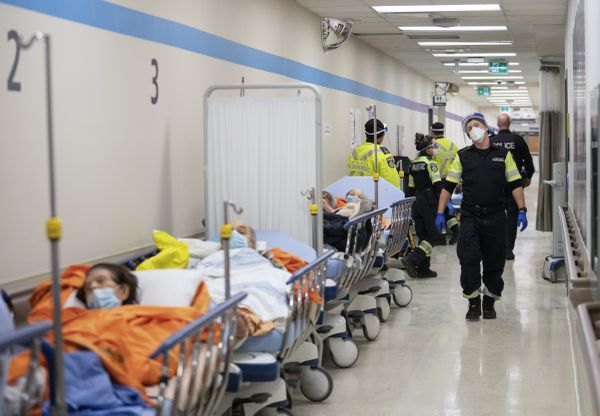
 HENRY KOTULA