Charting the consolidation of US healthcare

https://infogram.com/1t0dvy02dplrpma82vpx7od14rf3z3g0qel

 
As much discussion as there’s been about consolidation in the hospital industry recently, there are surprisingly few good sources of data on the scope and scale of multi-hospital systems in the US. One very helpful resource is the Compendium of US Health Systems, a project sponsored by the Agency for Healthcare Quality and Research (AHRQ), which is part of the Department of Health and Human Services (HHS).

First launched in 2016, the compendium includes downloadable data on 626 health systems, with information about location, number of beds, number of discharges, and other key characteristics. This spring, AHRQ supplemented the data set with new information about participation in payment reform pilots and provider-sponsored health plan activity. Drawing on this information, we constructed the interactive graphic below—click on the chart or follow this link to explore the data. A few highlights indicate how consolidated the hospital sector has become.

Health systems account for more than 90 percent of all discharges in the US, with the largest 11 systems accounting for a quarter of discharges, and the largest 67 accounting for half. Nonprofit systems dominate the landscape, and many of those are multi-state enterprises. And the trend toward consolidation continues apace. When AHRQ first released the data set in 2016, there were 626 systems on the list; the last two years have seen that number decrease to 591, with several large systems merging together. We’ll continue to mine this rich resource for more insights in the weeks to come.

 

4 health systems team up to save Philadelphia hospital

https://www.beckershospitalreview.com/finance/4-health-systems-team-up-to-save-philadelphia-hospital.html

Image result for St. Christopher's Hospital for Children

Four healthcare organizations based in Philadelphia have created a consortium to collectively negotiate with American Academic Health System for the potential purchase of St. Christopher’s Hospital for Children in Philadelphia.

St. Christopher’s, along with Philadelphia-based Hahnemann University Hospital, was included in a June 30 Chapter 11 bankruptcy case filed by Philadelphia Academic Health System, a subsidiary of AAHS.

The four consortium institutions — Einstein Healthcare Network, Jefferson Health, Philadelphia College of Osteopathic Medicine and Temple Health — said July 17 they plan to submit a letter of intent to AAHS for the purpose of keeping St. Christopher’s open.

“In a time of difficult transition for healthcare in Philadelphia, four healthcare organizations stepping up to do what’s right by St. Christopher’s patients is truly emblematic of neighbors helping neighbors,” said Achintya Moulick, MD, CMO at St. Christopher’s as well as its chairman of cardiothoracic surgery. “This will ensure continuity of care and service to the children of the community it serves, especially the underserved population.”

The four healthcare organizations formed the consortium as AAHS continues to wind down services at Hahnemann University Hospital. Under a closure timeline released July 16, Hahnemann will shut down Sept. 6.


Optum aims to help John Muir Health System thrive in Bay Area

https://www.beckershospitalreview.com/strategy/optum-aims-to-help-john-muir-health-system-thrive-in-bay-area.html?oly_enc_id=2893H2397267F7G

Image result for John Muir Health System

UnitedHealth Group’s Optum is partnering with John Muir Health to help the system remain independent and become more competitive in California, according to CNBC.

“Optum’s expertise and capabilities will help us expand upon the high-quality patient care we provide to the Bay Area community,” Cal Knight, president and CEO of Walnut Creek, Calif.-based John Muir Health, said in a news release. “We share common values with Optum, and this new relationship will help us further deliver on our mission to improve the health of the people we serve. We are committed to remaining independent while embracing partnerships that help us grow and serve more patients.”

Optum, based in Eden Prairie, Minn., will take over John Muir’s information technology, revenue cycle management, analytics, purchasing, claims processing and other nonclinical functions. Optum and John Muir representatives said Optum will also be involved in John Muir’s physician network ambulatory care coordination and utilization management services.

Optum will hire about 540 John Muir employees as part of the partnership.

Optum, which offers various technologies and analytic tools, told CNBC the partnership provides a model under which it can help small, struggling hospitals remain independent.

Nick Howell, Optum senior vice president, told the TV business news channel: “Optum is not in the business of owning and operating health systems. We see this kind of partnership as a model. A lot of health systems out there are facing similar cost pressures and  are trying to find ways to remain independent. We believe this is a new third option for them.”

Optum has been a big contributor to revenue growth for UnitedHealth. It also has emerged as a competitor for some hospitals as it expands its physician workforce.


Michigan’s Beaumont Health to acquire Ohio-based Summa Health

https://www.healthcarefinancenews.com/news/michigans-largest-health-system-acquire-ohio-based-summa-health?mkt_tok=eyJpIjoiTjJVNE9HTm1OelEwTlRkaiIsInQiOiJsaDZIK0JaczhmMFBzWElmSDluT1VROHc3ckM2azFCZ0NvUnR2U2NmYlRIa2VnYkw2dnR1NmJEMnFrcEFVZUVVSEpVTjlBcXkxaXZaSFFlUFR6djBvRjBTM2NpRFFQMXBDQkRVaFpQSEVtMVFTRlNqUTRBaUxTUmg2MnNrVXFiYiJ9

Beaumont Health will gain a health insurance arm in SummaCare.

Michigan-based Beaumont Health will gain a health insurance operation and opportunities for significant regional expansion as part of its acquisition of Summa Health, headquartered in Akron, Ohio.

The not-for-profit health systems announced their intent to merge last week in a deal that’s expected to close by the end of the year.  Among other benefits, the merger will add four hospitals, a health plan, and managed care expertise to Beaumont’s overall portfolio.

Financial terms were not disclosed.

WHY THIS MATTERS

These are big players in their respective markets. Beaumont is among Michigan’s largest healthcare systems and includes eight hospitals and a total annual net patient revenue of $4.7 billion.

Summa Health is among the largest such organizations in Ohio, encompassing a network of four hospitals, community health centers, a health plan, a physician-hospital organization, and a multi-specialty physician organization. The company reports total annual revenues of $1.4 billion.

Summa Health, which began seeking a partner in September 2018, will keep its name and some degree of local control.

THE LARGER TREND

The Beaumont-Summa deal is the latest merger to form a regional health system that allows two entities to share operational capabilities and care models across state lines but within a contiguous geography.

ON THE RECORD

“By welcoming Summa into the Beaumont family, both organizations will share expertise, invest in each other and continue to thrive as the industry evolves,” Beaumont Health CEO John Fox said.

“Since the formation of Beaumont Health, we have invested significantly in our Michigan employees, facilities and communities. We will continue to do so. One of our strategic goals is to become a regional healthcare leader. The planned addition of Summa Health allows us to take one step closer to achieving this key strategic priority,” Beaumont Health Board Chair John Lewis added.


CHS shares close at all-time low

https://www.beckershospitalreview.com/finance/chs-shares-close-at-all-time-low-071619.html

Image result for community health systems stock

Shares of Franklin, Tenn.-based Community Health Systems closed July 15 at $2.40, their lowest closing price ever and down 2 percent from July 12. 

The hospital chain’s stock price traded as low as $2.37 and as high as $2.52 on July 15 after closing July 12 at $2.45. Over the past year, CHS shares have traded between $2.35 and $5.35.

CHS has been selling off hospitals in recent years to improve its financial position and reduce its heavy debt load. In late 2017, the company announced a plan to sell a group of hospitals with combined annual revenue of $2 billion. During an earnings call on April 30, CHS Chairman and CEO Wayne Smith said the company expects to complete the hospital divestiture plan in 2019.

CHS carried $13.88 billion in long-term debt when it announced its divestiture plan at the end of 2017. As of March 31, CHS said its long-term debt totaled $13.39 billion.


Bernie Sanders pitches $20B hospital bailout plan

https://philadelphia.cbslocal.com/2019/07/15/bernie-sanders-hahnemann-university-hospital-rally-center-city/

Image result for Bernie Sanders Joins Rally In Philadelphia To Protest Hahnemann University Hospital Closure


Democratic Presidential Candidate Bernie Sanders calls Hahneman University Hospital Impending Closure Insane

https://philadelphia.cbslocal.com/2019/07/14/presidential-candidate-bernie-sanders-hahnemann-university-hospital-closure/

Image result for Fight to Save Hahnemann


Aligning executive comp with long-term strategy

https://mailchi.mp/3675b0fcd5fd/the-weekly-gist-july-12-2019?e=d1e747d2d8

Image result for long term decision making

I recently had a conversation with the CEO of a regional health system we’ve worked with for many years. It’s a system at the forefront of the shift to risk-based contracting—rather than the 3-5 percent of revenue at risk common across the industry, his system already has a third of its revenue fully at risk. (That’s not counting performance bonuses and other “value-based” reimbursement—it’s true, delegated risk for total cost of care.)

The system managed to get to this point without owning its own insurance plan, but now the CEO is considering whether that’s the right next step, which was the topic of our discussion. We talked through the pros and cons of launching a provider-sponsored plan, which has proven to be a difficult step for many other health systems.

When I asked the CEO how his team was able to move so much faster to risk than other systems, he told me an important component of their approach was the incentive structure put in place for executives and facility leaders. Rather than continuing to pay bonuses based on hospital or system profitability, the board agreed to encourage executives to take a longer-term, strategic view by paying straight salary.

Eliminating P&L-based bonuses allowed leaders to focus on making the right decisions to transform the business, without being overly concerned about the short-term impact on profitability. It’s an idea worth considering for other systems committed to leaving fee-for-service behind. The critical ingredient, of course, is ensuring the board is fully bought into the strategy and has a high degree of trust in system executives to make the best long-term decisions on behalf of the organization.


What happens when a teaching hospital shuts down

https://mailchi.mp/3675b0fcd5fd/the-weekly-gist-july-12-2019?e=d1e747d2d8

Image result for hahnemann hospital closing

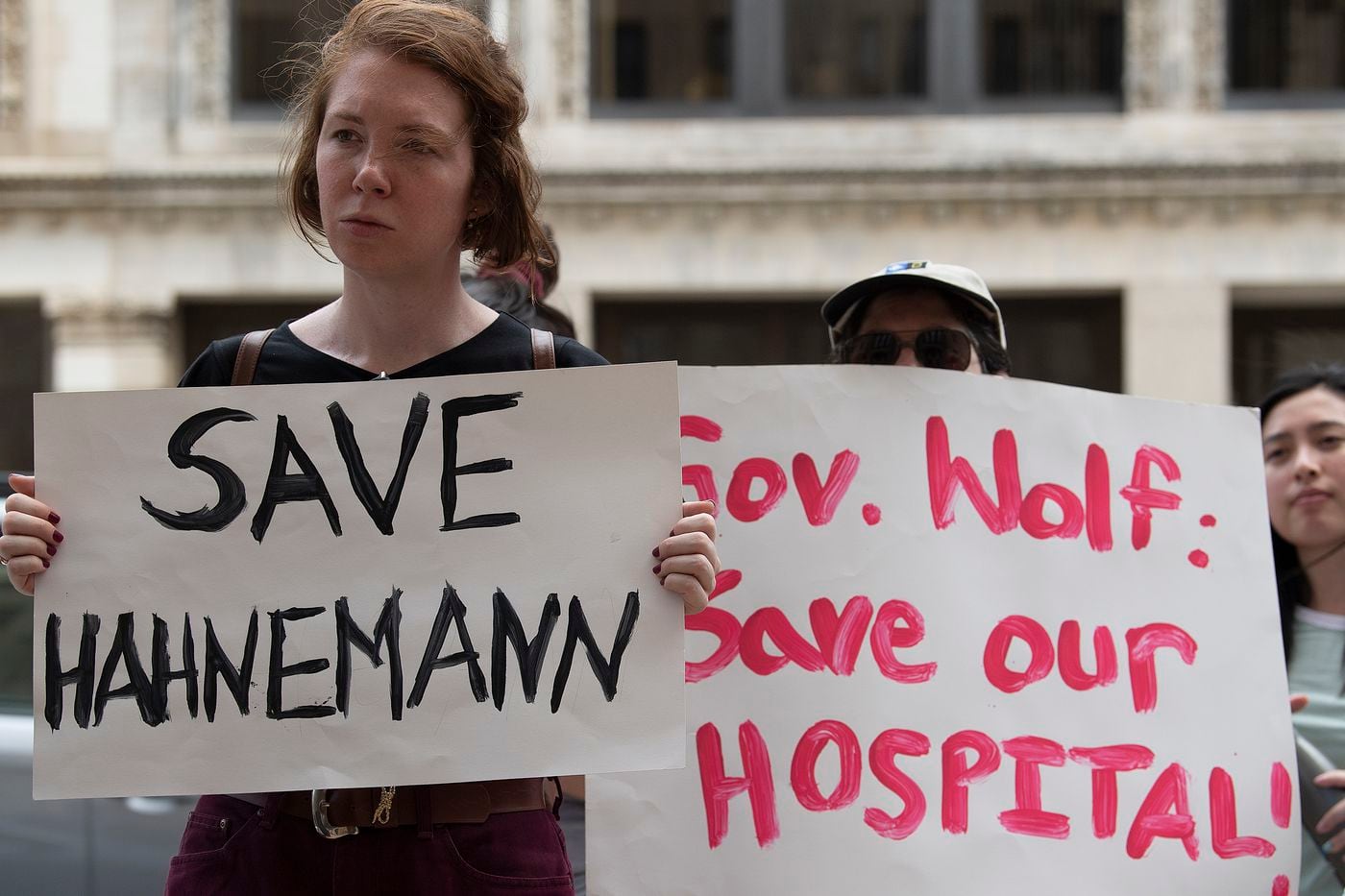
It’s been less than a month since Hahnemann University Hospital in Philadelphia, the primary teaching hospital for Drexel University College of Medicine, announced that it will close in September. (A judge this week ordered the hospital to remain open while final bankruptcy and closure plans are approved.) The hospital was acquired by for-profit firm American Academic Health System (AAHS) from Tenet Healthcare Corp. just last year. AAHS cited untenable and irreversible financial losses as the reason for closure.

Hahnemann’s shuttering not only deprives the city of a 150-year old institution providing a large portion of its healthcare safety net, but also displaces 570 resident physicians, many of whom just arrived to begin training. The Philadelphia Inquirer eloquently captured the personal stories behind and implications of the closure. Many industry experts, including us, have questioned whether the country may be better served by fewer, larger teaching and research centers. With four medical schools, Philadelphia is a market where there may be too many academic medical centers, each operating at suboptimal scale.

But the Hahnemann saga illustrates the myriad difficulties of actually closing a financially-strained teaching hospital: challenges of for-profit “turnaround” management and performance goals, disruption for hundreds of trainees, and impact on access for the neediest patients. Getting to the right academic training and care delivery model for a region won’t come from reactive responses to abrupt closures, but will require community, government, academic and hospital leaders across organizations to collaborate on a long-term plan aimed at delivering greater value, scale and productivity.