29 hospitals, health systems cutting jobs

A number of hospitals and health systems are reducing their workforces or jobs due to financial and operational challenges. 

Below are workforce reduction efforts or job eliminations announced this year. 

Editor’s Note: This webpage was created Jan. 19 and updated May 10. 

May

White Rock Medical Center in Dallas laid off nearly 35% of its staff. The hospital temporarily stopped taking patients transported by emergency medical services due to the layoffs, The Dallas Morning News reported. It has since resumed accepting those patients.

Oakland-based Kaiser Foundation Hospitals is laying off 76 workers in California. The layoffs primarily affect employees in IT and marketing, according to regulatory documents filed with the state May 1.

April

Pittsburgh-based UPMC will lay off approximately 1,000 employees. The layoffs, which represent more than 1% of the health system’s 100,000 workforce will primarily affect nonclinical, administrative and non-member-facing employees. 

Union Springs, Ala.-based Bullock County Hospital laid off 95 employees beginning April 9, according to regulatory documents filed with the state. The layoffs occurred as Bullock seeks to become a rural emergency hospital and is ending psychiatric services as part of the shift, AL.com reported April 25.

Jackson Health System reduced compensation programs for senior leaders; laid off fewer than 25 people, including one hospital CEO; and froze many vacant positions, especially in support and nonclinical areas, a spokesperson for the Miami-based organization confirmed to Becker’s. President and CEO Carlos Migoya shared these efforts in a message to staff, citing financial challenges.

Coos Bay, Ore.-based Bay Area Hospital plans to conduct layoffs as it outsources its revenue cycle management operations, a spokesperson for the hospital confirmed to Becker’s. The transition will affect 27 positions.

Manchester, N.H.-based Catholic Medical Center plans to cut 142 positions, including 54 layoffs. An April 18 letter to employees from CMC president and CEO Alex Walker, obtained by Becker’s, said cuts would occur through the 54 staff eliminations, open position cuts, reduced hours, planned departures, and resource redeployment in satellite locations for CMC.

Marshfield (Wis.) Clinic Health System will lay off furloughed staff, effective in early May. The health system furloughed about 3% of its workforce in January, affecting positions mostly in non-patient-seeing departments, including leadership roles. 

Norwalk, Ohio-based Fisher-Titus Medical Center laid off some workers in nonclinical roles and reduced hours for others. Seven employees, about 0.5% of the health system’s workforce, were laid off  April 1. Work hours were reduced for another 10 positions, a hospital spokesperson told Becker’s.

March

Robbinsdale, Minn.-based North Memorial Health is laying off 103 employees in clinical and nonclinical roles, citing financial challenges. The layoffs affect several services across the two-hospital system. 

AHMC’s San Gabriel (Calif.) Valley Medical Center is laying off 62 workers, according to regulatory documents filed with the state March 13. The layoffs take effect May 13.

Miami-based North Shore Medical Center, part of Steward Health Care, started conducting layoffs as part of cuts to some of its programs amid the Dallas-based health system’s continued financial struggles. Around 152 workers represented by 1199SEIU were laid off, a union spokesperson confirmed. However that number could be higher as their members do not represent every employee at NSMC, the spokesperson said.

Oakland, Calif.-based Kaiser Foundation Hospitals is laying off more than 70 employees. The layoffs primarily affect those in IT roles.

February

Lion Star, the group that operates Nacogdoches (Texas) Memorial Hospital, is closing four of its clinics on March 22, which will result in fewer than 50 layoffs, a Lion Star spokesperson confirmed to Becker’s. No additional layoffs are planned.

Little Rock-based Arkansas Heart Hospital has laid off fewer than 50 employees since the beginning of 2024, citing low reimbursement rates. The layoffs affected lower-paying positions, Bruce Murphy, MD, CEO of the hospital, said, according to Arkansas Business.

Cincinnati-based Mercy Health will lay off some call center positions. The system attributed the move to its partnership with a third party to operate its enterprise contact center for primary care scheduling.

Ridgecrest (Calif.) Regional Hospital announced more layoffs to avoid closure. It is laying off 31 more employees, including seven licensed vocational nurses and four registered nurses, two months after it announced plans to lay off nearly 30 others and suspend its labor and delivery unit, Bakersfield.com reported Feb. 15.

Medford, Ore.-based Asante health system laid off about 3% of its workforce. The layoffs primarily affected administrative and support roles and were necessary to offset “financial headwinds” over the past several years, according to a report from NBC affiliate KOBI-TV, which is based on an internal memo sent to staff Feb. 9. 

Oakdale, Calif.-based Oak Valley Hospital District is scaling back services and laying off workers to improve its finances. The hospital said in a Feb. 2 statement shared with Becker’s that it will close its five-bed intensive care unit, discontinue its family support network department and lay off 28 employees, including those in senior management and supervisor positions. 

Chicago-based Rush University System for Health laid off an undisclosed number of workers in administrative and leadership positions, citing “financial headwinds affecting healthcare providers nationwide.” No additional information was provided about the layoffs, including the number of affected employees.

University of Chicago Medical Center laid off about 180 employees, or less than 2% of its roughly 13,000-person workforce. The majority of affected positions are not direct patient facing, the organization said in a statement shared with Becker’s.

Fountain Valley, Calif.-based MemorialCare laid off 72 workers due to restructuring efforts at its Long Beach (Calif.) Medical Center and Long Beach, Calif.-based Miller Children’s and Women’s Hospital. The layoffs include 13 positions at Long Beach Medical Center’s outpatient retail pharmacy, which is closing Feb. 2, a spokesperson for MemorialCare said in a statement shared with Becker’s.

January

George Washington University Hospital in Washington, D.C., part of King of Prussia, Pa.-based Universal Health Services, is laying off “less than 3%” of its employees. The move is attributed to restructuring efforts.

Amarillo-based Northwest Texas Healthcare System, also part of Universal Health Services, announced plans to lay off a “limited number of positions.” The move is attributed to restructuring efforts. 

Lehigh Valley Health Network is cutting its chiropractic services and laying off 10 chiropractors. The layoffs are effective April 12 and due to restructuring. The Allentown, Pa.-based health system has 10 chiropractic locations, according to its website

Central Maine Healthcare is laying off 45 employees as part of management reorganization. The Lewiston-based system, which also ended urgent care services at its Maine Urgent Care on Sabattus Street in Lewiston on Jan. 12, has 3,100 employees total.

University of Vermont Health Network, based in Burlington, is cutting 130 open positions. The move is part of the health system’s efforts to reduce expenses by $20 million.

Med-Trans, a medical transport provider based in Lewisville, Texas, closed its UF Health ShandsCair base serving Gainesville, Fla.-based UF Health Shands Hospital on Jan. 10 due to decreased transportation demands. The move also resulted in layoffs, a spokesperson for UF Health, the hospital’s parent company, told Becker’s in a statement. 

RWJBarnabas Health, based in West Orange, N.J., is laying off 79 employees, according to documents filed with the state on Jan. 8. The layoffs are effective March 31 and April 5. A spokesperson for the health system told Becker’s that 74 of the positions were “time-limited information technology training job functions.” The other layoffs were due to closure of an urgent care center.
U.S. adds solid 315,000 jobs in August

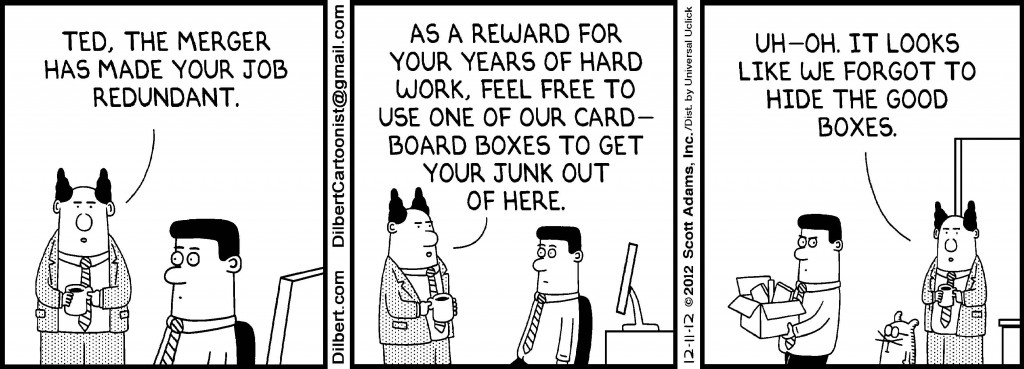
America had another month of solid job gains: The economy added 315,000 jobs in August, while the unemployment rate ticked up to 3.7% as more workers entered the labor force, the government said on Friday.

Why it matters: Employers continue to hire workers at a robust pace, even as the Federal Reserve raises interest rates swiftly to crush inflation.

  • Job growth eased from July’s breakneck pace, which were revised a tick higher to 528,000 jobs. Job growth in June was weaker than initially thought, downwardly revised by 100,000 to 293,000.
  • The August figures are roughly in line with economists’ expectations.

Details: Perhaps the most welcoming piece of news in the report is the influx of workers who entered the labor force last month. The labor force participation rate — the share of people working or looking for work — rose by 0.3 percentage points, after a string of monthly declines.

  • Average hourly earnings rose by 0.3%, a slowdown from the 0.5% rate in July.

The backdrop: The Fed has been bracing for some heat to come out of the labor market. It has raised interest rates at a historically rapid pace in a bid to squash elevated inflation. This report offers some good news as wage growth slowed — and more workers entered the workforce, helping ease the tightness in the labor market.

  • Higher rates work to slow demand by making it pricier for consumers and companies to borrow money, causing slower economic growth and, in turn, less price pressure.
  • “While higher in­ter­est rates, slower growth, and softer la­bor mar­ket con­di­tions will bring down in­fla­tion, they will also bring some pain to house­holds and busi­nesses,” chair Jerome Powell said last week.

U.S. adds whopping 528,000 jobs in July as labor market booms

Employers added a stunning 528,000 jobs in July, while the unemployment rate ticked down to 3.5%, the lowest level in nearly 50 years, the Labor Department said on Friday.

Why it matters: It’s the fastest pace of jobs growth since February as the labor market continues to defy fears that the economy is heading into a recession.

  • Economists expected the economy to add roughly 260,000 jobs in July.
  • Job gains in May and June were a combined 28,000 higher than initially estimated.

The backdrop: The data comes at a delicate time for the U.S. economy. Growth has slowed as the Federal Reserve raises interest rates swiftly in an attempt to contain soaring inflation.

  • Many economists and Fed officials alike are pointing to the ongoing strength of the labor market as a sign the economy has not entered a recession.
  • Policymakers want to see some heat come off the labor market. They are hoping to see more moderate job growth as the economy cools, in order to ease inflation pressures.

These are the questions candidates must ask during a job interview

https://www.fastcompany.com/90763864/these-are-the-questions-candidates-must-ask-during-a-job-interview

Job seeking is a grueling process, but it is also an opportunity to put your best foot forward in order to find a company that is the best fit for you.

Although it can be nerve wracking to sit through one interview after another, candidates should remind themselves that these interactions are a two-way street, and they have every right to ask challenging questions to make a decision, should the offer come.

Here are the critical questions you as a candidate must ask during a job interview—because remember, you’re interviewing the employer, too.

QUESTIONS TO ASK YOURSELF BEFORE APPLYING FOR THE JOB

Before setting off on your job search, make a list of the types of companies you’re interested in. 

  • Is this a place you see yourself thriving in?
  • Do you believe in the mission?
  • Why do you want to work at this place?
  • What attracts you about the organization?

Oftentimes, our current situations dictate how we go about making our next move. Perhaps you’re working in an environment that you find suffocating and want out, or you’re seeking more responsibilities, or are looking to become a people manager. 

Whatever the case, be sure to keep in mind that in every new workplace, there will be pros and cons, no matter the salary or job description. So be cognizant of all the aspects of a new role that are truly important to you; also, be mindful of what your personal dealbreakers are.

PREPARE A LIST OF STRATEGICALLY PLANNED QUESTIONS

Interviewing is a two-way exchange. While candidates are being scrutinized by the potential employer, the skilled candidate will have an opportunity to evaluate the company based on the flow of the conversation.

Typically, candidates aren’t given the opportunity to ask questions until the very end of the interview. That’s not to say there aren’t ways to integrate specific queries into the conversation, as long as you remember that you’ll get full control of the floor in the grand finale.

In a previous Fast Company story, Patrick Mullane, executive director of Harvard Business School Online, shares how interviewees often will drop the ball when the interviewer tosses out the famous line, “Do you have any questions for me?”

“Candidates forget that when they’re given control of the discussion, it’s an opportunity to do two very important things. First, it’s a chance to learn something genuinely useful about the firm you might be joining. Second, you get to show that you’re thoughtful and conscientious,” he said. “Both are hugely important as you look to make a change. Don’t waste the opportunity.”

When it comes to the questions candidates typically ask companies during an interview, the “big three” revolve around corporate culture, the interviewer’s personal experience (“How have you liked working here?”), and growth.

Rather than default on these inquiries (which interviewers likely receive quite often and may respond in kind with generic answers), Mullane challenged candidates to take these questions and reframe them in a more thoughtful, strategic way:

Culture questions: Rather than asking, “What’s the culture like here,” ask something along the lines of, “Can you share a time when the company’s culture made you excited to work here or helped you during a challenging time?” This bypasses a typical answer like “It’s collaborative,” and dives into the intersection of employees and culture, offering an in-depth look into a specific, and perhaps relatable, scenario.

Personal experience questions: Instead of “How do you like working here?” try, “I noticed you left X company for this one. What convinced you to make the jump?” This reframing achieves two things: It shows the interviewer you did your research and gives you insight into their decision-making, which may help you make your own.

Company growth questions: A question like, “I noticed the company is growing rapidly. Do you expect that to continue?” will often bear a generic, dead-end answer. To get additional, more useful information, put a spin on it. Ask something like, “I noticed the company is expanding rapidly. Is this putting a strain on your customer service team?” Getting information on a company’s financials is not particularly difficult, especially if it is already publicly traded. But asking a question of this nature is especially useful if you are interviewing for a role like Customer Success Manager, as it allows you to get a better sense of how growth impacts the day-to-day of the team.

Overall, it will only work in your favor when you do your due diligence in gathering intelligence on the company you are interviewing for; also, you’ll be setting yourself up for success by having prepared questions that lead to a conversation and present yourself as a thoughtful and conscientious candidate.

“In a hot job market, it’s tempting to be lazy when doing the upfront work to prepare for an interview,” said Mullane. “It’s easy to figure that the interview is over when the person interviewing you gives you the floor. But it’s not. Asking better questions in the right way can significantly increase the chances you’ll not only impress the interviewer, but also gain valuable insights that can help you decide if the position is right for you.”

COVER THE BASICS

It can be easy to get caught up in nerves when interviewing for a company you are extremely attracted to—or even in general. Interviewing is a lot of pressure!

However, when preparing to ask your questions, the areas that you as a candidate must focus on should give you a well-rounded perspective on multiple aspects of the company, not just the specific job description.

This Fast Company article shared a roundup of all the pertinent focus areas that your questions should fall under to get you the best answers, which include:

  1. The specific role you are interviewing for
  2. The management style of your would-be boss or team
  3. Company culture and reputation
  4. What performance metrics look like
  5. What kind of colleagues you can expect to work with
  6. Opportunities for growth

ASK TOUGH BUT FAIR HIGH-LEVEL QUESTIONS

Sometimes it’s not enough to consider the high-level questions, such as salary and work culture. Many of us are in a unique position in life, whether that involves our personal situations, families, health, or other concerns.

When considering your interest in a company, it’s helpful to understand how they can help or support you as an individual beyond your contributions to the job.

On the flip side, you’ll want to know other aspects of internal support for employees. How does this company support internal mobility? How do managers deliver feedback? In other words, what will a day in the life of this role really be like? 

Prepare to ask the employer a series of questions tailored to your situation. FlexJobs’ team of career coaches offers guidance in this Fast Company story, including specific inquiries to ask your interviewer, such as:

  • Why is this position available? This can give you some insight into the way things are handled at the company. Was someone fired? Are they unable to keep the position filled because of the workload?
  • What makes it a great day at work, and what makes it a challenging day? Answers to this question can vary depending on the personal experience of the interviewer, but it’s good to get a sense of how they approach the question.
  • How are criticism and feedback handled within the team? Mistakes can happen, and knowing that managers on the team can handle employee errors with grace will offer a sense of relief rather than unnecessary conflict when they do occur.
  • Do you have any Employee Resource Groups (ERGs)? How do they support the company’s DEI plans? This question gives you an opportunity to understand where the company stands in terms of diversity, equity, and inclusion (DEI) and how well they support the objectives of ERGs, as well as pushing forward their higher-level strategy.
  • How does the company approach salary differences? This can highlight whether the company pays people differently based on location, if they work remotely, in-office, or hybrid. It can also shed light on whether the company has done a pay audit to achieve equity, especially for women and underrepresented groups.
  • What’s the company’s approach to supporting work-life balance? Many companies have put forth specific benefits and incentives to support employees in the past two years, including mental health initiatives, fitness classes, therapy, and flexibility. This critical question will help you determine just how the company views employees as individuals and not just by their work output.

An example of a tough conversation to navigate can pertain to how the organization supports employees in specific work situations. If this particular job requires you to relocate, an example of how to navigate the question of moving-cost accommodations might go something like this:

Candidate (C): I noticed this position is based in San Francisco. Is there an option for potential hires to work remotely?

Interviewer (I): I’m afraid our new company policy is to operate on a hybrid schedule. This particular role is based in the Bay Area and requires the individual to come into work three times a week.

C: I understand. Sometimes companies need to make tough decisions based on their needs. 

I: Do you think you would be willing to relocate, should we decide to move forward with your application?

C: I think this role is a wonderful opportunity for me, and I truly believe my personal values align with those of this company and its culture. If all goes well, I’d like to learn what the company’s budget is in regards to supporting moving and transition costs. 

In this scenario, the interviewer is honest about the new hybrid model their company has adopted. If you, the candidate, are first learning about this aspect during the interview, it’s important to ask direct questions about how the company plans to support potential moving costs, rather than framing the question in a way that offers a loophole or an out. 

Organizations are aware that with the plentiful options of remote jobs, finding talent willing to relocate or adopt a hybrid work life will be tougher. Know that the ball is in your court and be straightforward about expensed costs if you are willing to relocate.

WRAP UP THE INTERVIEW WITH THESE KEY QUESTIONS

This will likely be the last time you interact with this team member before either moving onto the next stage or the decision-making process. 

In a prior Fast Company story, the founder of executive search firm The Mullings Group shares the best questions to ask when wrapping up.

Don’t let the conversation end without answers to the following questions, so you have enough information to help you reflect on and assess your experience and understanding of the company.

Am I a good fit for this company? The feeling needs to be mutual. Be sure to determine whether your skills, interests, personality, and goals align with the direction of the company. 

What are the expected deliverables for this role over the next three months to a year? Depending on the role of the person you are interviewing with, you may get different answers. This is a good question to ask to get a sense of the priorities as it relates to different stakeholders. 

How will we both know that I have succeeded in this role? This is another question in which the answers may vary, but it will be helpful for you as a candidate to understand how to work toward specific goals and measure your own impact so that, when it comes time for a raise or promotion in the future, you have the evidence to back it up.

What are the growth opportunities in this role, and what important skills will I learn? It’s not enough to make a lateral move. You need to know how will working for this company enable you to grow and thrive.

Who will I become? Your environment and the people you work with will directly influence your work output, ethic, and your future values. Asking questions about the kind of people you will interact with regularly will help you get a sense of what your day-to-day experiences will look like.

Getting a new job is a big deal. You will be working 40 hours a week in a specific environment that supports a certain culture and hires a certain type of colleague. It’s not just the job description that matters, nor the skill set the company requires to perform in that role. A new job is a combination of your livelihood, a commitment to learn and grow, and contribute. 

Remember to be selective in your process because you’re interviewing your next employer, too. 

More Americans are quitting — and job openings hit record high

Across industries, 4.54 million Americans quit or changed jobs in March, the highest level since December 2000, according to seasonally adjusted data released May 3 by the Bureau of Labor Statistics.

The count is up from 4.38 million in February. In the healthcare and social assistance sector, 542,000 Americans left their jobs in March, compared to 561,000 the previous month, according to the bureau.

The number of job openings in the U.S. also hit a record high of 11.55 million in March, up from 11.34 million in February, according to the bureau. Job openings in the healthcare and social assistance sector remained similar in February and March, at around 2 million.

During the pandemic, hospital CEOs are among those who have joined the list of workers quitting. Additionally, older, tenured employees in America are part of the trend.

Although there continues to be churn in the labor market, Fitch Ratings projects the U.S. labor market will recover jobs lost during the pandemic by the end of August.

7 hospitals laying off workers

Several hospitals are trimming their workforces due to financial and operational challenges, and some are offering affected workers new positions.

1. Watsonville (Calif.) Community Hospital is preparing to lay off 658 workers, according to a notice filed with the state and shared with Becker’s Hospital Review. The hospital, which filed for Chapter 11 bankruptcy in December, expects the layoffs to occur between May 16 and May 23. 

2. Toledo, Ohio-based ProMedica’s health plan, Paramount, is laying off about 200 employees in July after losing a Medicaid contract. Anthem acquired Paramount’s Medicaid contract, and ProMedica and Anthem have been working to identify open roles for employees affected by the layoffs.

3. NYC Test & Trace Corps, the city’s initiative for COVID-19 testing and contact tracing, is ending universal contact tracing by the end of April. NYC Health + Hospitals, which leads the program in collaboration with the city’s department of health and other agencies, is planning to lay off 874 workers when the program scales back, according to a notice filed with state regulators March 4. The health system said affected temporary employees will be laid off at the end of April. Managerial employees affected by the layoffs will have their employment terminated between May 13 and May 27, according to the notice. 

4. MarinHealth Medical Center is laying off 104 revenue cycle and supply chain employees in April after entering into a contract with Optum to provide those services, according to a notice filed with state regulators in February. Greenbrae, Calif.-based MarinHealth said that as a result of the contract with Optum, all non-contractual revenue cycle and supply chain employees will be terminated from employment with the hospital on April 9. Optum is offering jobs to most workers affected by the layoffs. Employees who accept an offer will begin employment with Optum on the first work day following separation from MarinHealth, a spokesperson for the hospital told Becker’s Hospital Review

5. St. Mary’s Medical Center in West Palm Beach, Fla., is laying off 49 employees, including 21 registered nurses, when it stops providing mental health services in April, according to a notice filed with state regulators.

6. West Reading, Pa.-based Tower Health closed Brandywine Hospital in Coatesville, Pa., on Jan. 31. As a result of the closure, 534 employees were laid off Feb. 7, according to a notice filed with state regulators. 

7. Community Hospital Long Beach (Calif.) shut down and surrendered its acute care license to the state in December, according to the Long Beach Post. The hospital laid off 328 employees early this year, according to a notice filed with state regulators. The hospital said the layoffs would begin Feb. 1 and may come in stages. The hospital’s owner is planning to transition the facility into a behavioral health and wellness campus.