Kaiser Permanente reports $908M in Q2 operating income

Kaiser Permanente showed year-to-year financial improvement in Q2, reporting an operating income of $908 million (up from $741 million in Q2 2023), and an operating margin of 3.1% (up from 2.9% a year ago).

The news comes months after Kaiser Foundation Health plan reported a data breach affecting over 13 million people. Certain online technologies, previously installed on its websites and mobile applications, may have transmitted personal information to third-party vendors Google, Microsoft Bing and X (Twitter) when members and patients accessed its websites or mobile applications, the health system said in April.

Despite that hardship, Kaiser Foundation Health Plan, Kaiser Foundation Hospitals and assorted subsidiaries and affiliates reported operating revenues of $29.1 billion and operating expenses of $28.2 billion, compared to operating revenues of $25.2 billion and operating expenses of $24.4 billion in the same period last year.

According to Kaiser, favorable financial market conditions drove other income (net of other expense) of $1.2 billion in the second quarter of 2024. Other income Q2 2023 was $1.3 billion. For the second quarter of 2024, net income was $2.1 billion, identical to last year. 

Kaiser’s financial results in the second quarter include Geisinger, which joined subsidiary Risant Health on March 31.

WHAT’S THE IMPACT?

Kaiser said that it typically experiences higher operating margins in the first half of the year due to the annual enrollment cycle. Lower operating margins in the second half of the year are not uncommon, because expenses usually increase, in part due to the impact of seasonal care, while revenues stay relatively flat.

Kaiser Permanente membership was more than 12.5 million as of June 30, while membership for Risant Health affiliates was nearly 552,000.

Capital spending in the second quarter was $889 million, compared to $824 million in the same period of the prior year, as the organization continued to invest strategically in facilities and technology.

Though Kaiser logged a strong Q2, in May it announced plans to sell up to $3.5 billion of holdings in private-equity funds due to cash constraints, according to unnamed sources in The Wall Street Journal. Kaiser is reportedly working with investment bank Jefferies Financial Group to offload up to $3.5 billion of stakes to secondary buyers.

However, a Kaiser spokesman said at the time, “None of our decisions have been driven by liquidity needs; we maintain liquidity that is appropriate for a AA- rated organization. We will continue to make prudent, thoughtful investment decisions.”

THE LARGER TREND

Kaiser’s Q1 financial results showed operating income of $935 million, compared to $233 million for Q1 2023.

In March, Kaiser Permanente and Town Hall Ventures said they would be launching an organization called Habitat Health, which is designed to help older adults overcome the challenges of aging at home. Operating as a Program of All-Inclusive Care for the Elderly, Habitat Health is designed to help participants live independently in their homes, with comprehensive care the companies say will lead to better health outcomes.

Habitat Health plans to begin serving older adults in Sacramento and Los Angeles in 2025, and will aim to keep low-income participants in their homes to receive personalized support.

Cone Health to join Kaiser Permanente subsidiary Risant Health

https://www.kaufmanhall.com/insights/blog/gist-weekly-june-28-2024

Last Friday, Greensboro, NC-based Cone Health announced that it signed a definitive agreement to join Risant Health, Kaiser Permanente’s not-for-profit subsidiary.

Launched in April 2023, Risant aims to acquire and support not-for-profit health systems focused on value-based care.

If the deal is approved by regulators, Cone Health, a $2.8B not-for-profit system with five hospitals and an insurance arm, would join Danville, PA-based Geisinger as Risant’s second member.

As part of the deal, Risant will invest an undisclosed sum into Cone, but Cone will continue to operate independently, retaining its branding, leadership, and ability to work with multiple insurers. The two parties expect to close the deal in the next six months.

The Gist: Like Geisinger, Cone has a strong track record of value-based care, including a 15K-member health plan and a high-performing accountable care organization.

Neither Risant nor Kaiser has operations in North Carolina, a state currently seeing strong population growth

Risant has previously said that is looking to acquire four or five more systems in addition to Geisinger, in order to reach a combined revenue target of $30-35B over the next five years.

    Risant Health plans to acquire North Carolina system

    Risant Health, a nonprofit formed under Oakland, Calif.-based Kaiser Permanente, has signed a definitive agreement to acquire Greensboro, N.C.-based Cone Health.

    The news comes less than three months after Risant acquired its first health system, Danville, Pa.-based Geisinger Health. If the transaction closes, Cone Health will operate independently as a regional and community-based health system under Risant, which supports organizations with technology and services to improve outcomes and lower care costs in diverse business models.“Cone Health’s impressive work for decades in moving value-based care forward aligns so well with Risant Health’s vision for the future of healthcare. Their longstanding success and deep commitment to providing high-quality care to North Carolina communities make them an ideal fit to become a part of Risant Health,” CEO, Jaewon Ryu, MD, said in a June 21 news release. “We will work together to share our industry-leading expertise and innovation to expand access to value-based care to more people in the communities we serve.” 

    Cone Health includes four acute-care hospitals, a behavioral health facility, three ambulatory surgery centers, eight urgent care centers and more than 120 physician practices, according to its website. It has more than 13,000 employees and over 700 physicians, along with 1,800 partner physicians. “As part of Risant Health, Cone Health will build upon its long track record of success making evidence-based health care more accessible and affordable for more people. The people across the Triad will be among the first to benefit,” Cone Health President and CEO Mary Jo Cagle, MD, said. 

    Cone Health will maintain its brand, name and mission, and maintain its own board, CEO and leadership team. It will continue to work with health plans, provider organizations and independent physicians. Dr. Cagle said she does not anticipate changes in the types of care Cone Health provides as a result of becoming part of Risant. The proposed transaction is subject to regulatory approvals and closing conditions.

    What’s next for Risant?


    Kaiser Permanente stock
    Permanente grabbed everyone’s attention last year when it said it was creating Risant Health, a new and vague entity that acquired Geisinger and had plans to scoop up at least four more health systems that are focused on “value-based care.”

    Well, nothing has happened since then, at least publicly. Instead, everyone has been playing the parlor game of guessing who those next systems could be. There are some rumblings that the next deal could be announced in the near future. After reading some recent hospital financial reports, it’s clear there are a handful of systems that mirror Geisinger’s shaky trajectory and could find themselves in Kaiser’s crosshairs

    But Kaiser is being very deliberate in its next targets. “The old phrase, ‘Measure twice, cut once’ — Kaiser will measure four or five times before they cut,” said Kevin Holloran, a senior director at Fitch Ratings who leads the company’s nonprofit health care group.

    By picking Geisinger as its first acquisition, Kaiser has established some criteria for future Risant targets. Read my story to learn which health systems could fit the mold.

    Kaiser rides completed Geisinger acquisition to $7.4B income in Q1

    However, the nonprofit provider and health plan warned subsequent quarters may be less profitable as expenses are projected to climb.

    Dive Brief:

    • Nonprofit hospital and health plan giant Kaiser Permanente reported a $7.4 billion net gain for the first quarter ended March 31, compared to an income of $1.2 billion reported in the same period last year.
    • The Oakland, California-based operator’s earnings were boosted by its completed acquisition of Geisinger Health, which netted Kaiser a one-time operating gain of $4.6 billion. 
    • Kaiser reported a quarterly operating margin of 3.4%, but noted the first quarter tends to be its strongest due to the timing of the open enrollment cycle. Kaiser predicts revenues will remain steady during subsequent quarters but expenses will likely rise.

    Dive Insight:

    Kaiser operates 40 hospitals, according to its website, and serves nearly 12.6 million health plan members as of the first quarter.

    During the quarter, Kaiser subsidiary Risant Health — a nonprofit health network created last year to independently buy and operate other nonprofit health systems — completed its purchase of Geisinger Health. Kaiser received a one-time payment, boosting earnings. Net income for the quarter excluding the Geisinger transaction was $2.7 billion. 

    Kaiser increased its operating income year over year by more than 300% to total $935 million. Still, the nonprofit provider said that figure fell short of income logged prior to the pandemic. 

    Continued cost pressures from high utilization, care acuity and rising prices of goods and services drove quarterly expenses up 6% year over year to total $26.5 billion.

    Kaiser has conducted at least three rounds of layoffs since the fall. It most recently cut 76 employees at the beginning of this month, a spokesperson confirmed to Healthcare Dive. 

    The cuts were done to “reduce costs across our organization,” and primarily impacted information technology and marketing roles, the spokesperson said via email.

    Kaiser is not on a hiring freeze, the spokesperson noted. The organization has increased headcount by 5% since 2022 and has open positions currently listed online.

    The Wall Street Journal also reported this weekend that Kaiser is attempting to sell $3.5 billion of its private investment holdings due to liquidity issues, citing sources familiar. Kaiser may attempt to sell further holdings later in 2024, according to the report.

    Kaiser did not respond to requests for comment by press time about the possible sale.

    Former Kaiser nurse awarded $41M in retaliation lawsuit

    A Los Angeles jury awarded $41.49 million to a former nurse who said Kaiser Permanente’s hospitals and health plan retaliated against and eventually terminated her for raising issues with patient safety and care quality, MyNewsLA reported Dec. 12.

    The former nurse, Maria Gatchalian, was awarded $11.49 million in compensatory damages, including $9 million for emotional distress, and $30 million in punitive damages.

    “We stand by her termination and are surprised and disappointed in the verdict,” Murtaza Sanwari, senior vice president and area manager for Kaiser Permanente Woodland Hills/West Ventura County, told Becker’s in a statement. “Kaiser Permanente plans to appeal this decision and will maintain our high standards in protecting the health and safety of all our patients.” 

    Before her termination in 2019, Ms. Gatchalian had worked at the Kaiser Permanente Woodland Hills Medical Center since 1989, first as a registered nurse in the neonatal intensive care unit and later as a charge nurse in that unit.

    According to MyNewsLA, Ms. Gatchalian said she had repeatedly raised concerns with Kaiser management about patient safety and care quality related to alleged understaffing and was discouraged from submitting formal complaints. Oakland, Calif.-based Kaiser argued in court that Ms. Gatchalian admitted she had placed her bare feet on equipment in the NICU, and the organization made the decision to terminate her following her conduct.

    “We work hard to make Kaiser Permanente a great place to work and a great place to receive care,” Mr. Sanwari said. “The allegations in this lawsuit are at odds with the facts we showed in the courtroom.” 

    “To be clear, this charge nurse’s job was to be a leader for other nurses, ensure the standards of care were followed and to protect the neonatal babies entrusted to our care. She was terminated in 2019 following an incident where she was found sitting in a recliner in the neonatal intensive care unit, on her personal phone and resting her bare feet on an isolette with a neonatal infant inside. Neonatal intensive care units are critical care units designed for critically ill babies most often born prematurely and very susceptible to infections.

    The isolette, where this nurse placed her bare feet, is a protective environment designed to shield the infant from infection causing germs. Placing her bare feet on the isolette may have created risk to the infant which could have been life threatening. Her actions were egregious and in violation of our infection control policies and standards.”

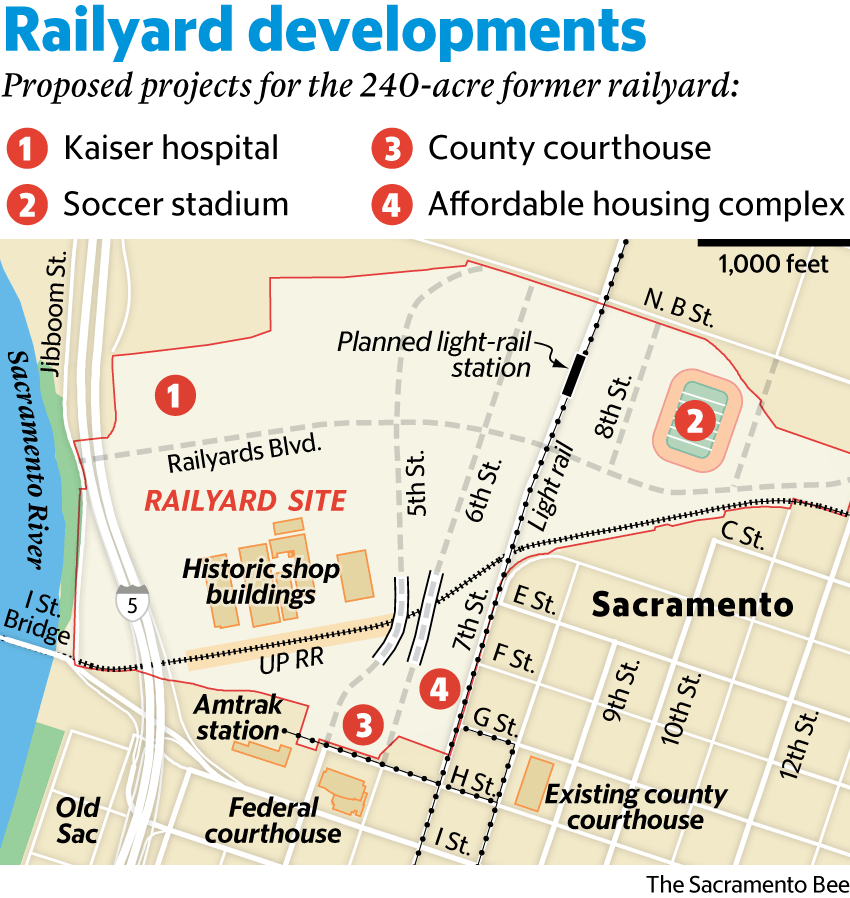
    New Kaiser hospital could cost up to $1.5B

    Oakland, Calif.-based Kaiser Permenante’s new hospital development in Sacramento, Calif., could cost as much as $1.48 billion, Sacramento Business Journal reported Dec. 11.

    The project costs 50% more than when the health system first announced the new hospital six years ago. The 310-bed hospital building is expected to cost $924.4 million. When Kaiser assessed the building part of the project in 2018, it projected that it would cost $749.5 million.

    Currently, Kaiser operates a 287-bed hospital in the area. However, it does not meet California’s earthquake compliance standards.

    California passes law raising healthcare worker hourly minimum wage to $25

    https://mailchi.mp/59f0ab20e40d/the-weekly-gist-october-27-2023?e=d1e747d2d8

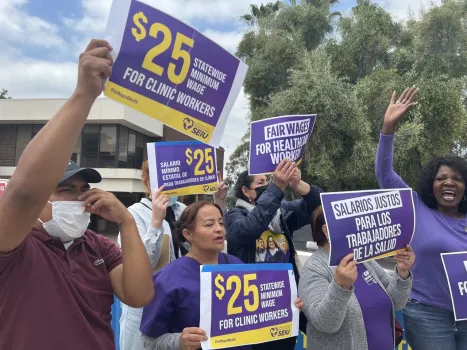
    Earlier this month, Governor Gavin Newsom signed a bill that puts all full- and part-time California healthcare workers, including all ancillary support staff, on a path to earning $25 per hour.

    While wage increases will begin phasing in next year, the timeline for implementation depends on facility type and other factors like payer mix. Large health systems and dialysis centers have until 2026 to fully implement the new wage, while rural, independent hospitals and those with high public payer mixes, as well as other clinical facilities, have more time to comply.

    The law, which replaces the $15.50 state minimum wage for all workers, is projected to impact over 469K healthcare workers in the state, potentially including 50K who already earn more than $25 per hour but are forecasted to receive wage increases to maintain their pay premiums. Strongly backed by California healthcare unions, the law ultimately received the support of the California Hospital Association on the grounds that it will “create stability and predictability for hospitals” by preempting local wage and compensation measures active in many California cities. 

    The Gist: On the heels of a tentatively successful labor negotiation with Kaiser Permanente—which would raise the system’s hourly minimum wage to $25—California healthcare unions have flexed their might for another win.

    While this new law directly benefits healthcare workers earning less than $25 an hour, its knock-on effects will extend to those earning above that to avoid pay compression, as well as to workers in other industries that draw from the same labor pool. 

    The mandated higher pay may provide California healthcare employers with a recruitment edge (and lure talent away from neighboring states), but higher costs will exacerbate the margin challenges plaguing many hospitals in the state.

    Kaiser Permanente healthcare workers initiate record strike

    https://mailchi.mp/9fd97f114e7a/the-weekly-gist-october-6-2023?e=d1e747d2d8

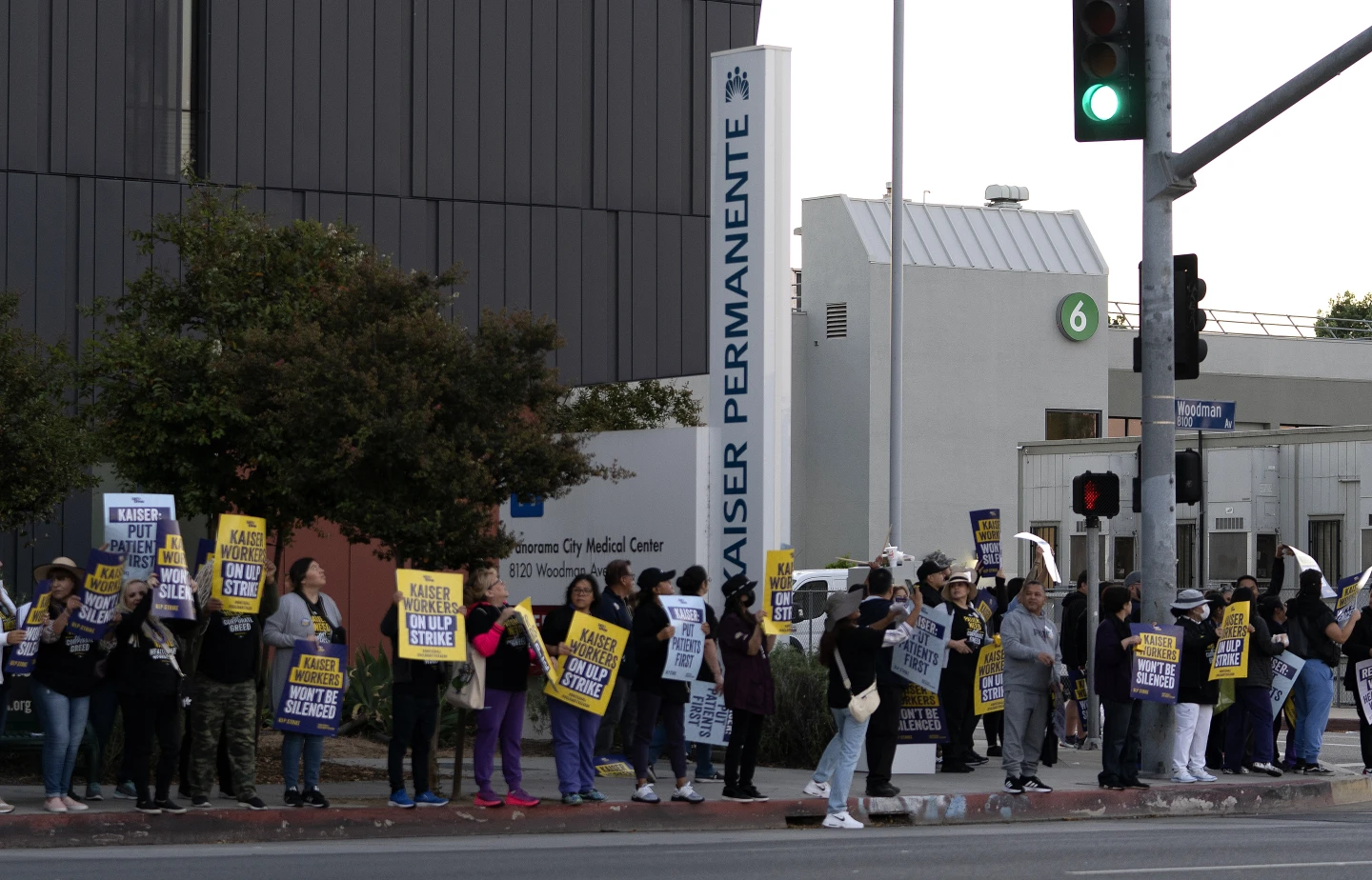
    On Wednesday, 75K Kaiser Permanente (KP) healthcare workers in five states and Washington, DC walked off the job as part of the largest healthcare strike in US history.

    The striking workers are a diverse group, based mostly in California, that includes support staff, X-ray technicians, medical assistants, and pharmacy workers. They will continue their work stoppage until Saturday morning, though union leadership is threatening an even larger strike in November if a new contract agreement is not reached by then.

    Their employment contract expired on September 30th, and while negotiations have progressed on issues like shift-payment differentials and employee training investments, union leaders and KP executives remain at odds over key wage increase demands, with the unions asking for a $25 national minimum wage, and KP proposing $21.

    The company has sought to minimize disruptions to patient care during the strike, bringing in temporary labor to keep critical infrastructure open, but has told its members to expect some non-urgent procedures to be rescheduled, some clinic and pharmacy operating hours to be reduced, and call center wait times to be lengthy. 

    The Gist: Kaiser Permanente has enjoyed solid relations with its unions for decades, making this strike a significant break from precedent, fueled by post-pandemic burnout and staffing shortages. 

    While KP is keeping all essential services open, care disruptions are inevitable with around one third of its total workforce on strike. 

    The stakes of these labor negotiations extend far beyond just KP and its employees, as union success could inspire other unionized healthcare workers to adopt similar tactics and demands. (Case in point: Employees at eleven Tenet Healthcare facilities in California represented by SEIU-UHW, one of the unions representing striking KP workers, just voted to authorize their own strike.)

    While happening alongside high-profile strikes in other industries, labor unrest is a troubling trend for health systems, whose margins remain well below historical levels amid persistently high labor and supply expenses.

    Thousands of US health care workers go on strike in multiple states over wages and staff shortages

    https://apnews.com/article/kaiser-health-care-workers-strike-b8b40ce8c082c0b8c4f1c0fb7ec38741

    Picketing began Wednesday at Kaiser Permanente hospitals as some 75,000 health care workers went on strike in Virginia, California and three other states over wages and staffing shortages, marking the latest major labor unrest in the United States.

    Kaiser Permanente is one of the country’s larger insurers and health care system operators, with 39 hospitals nationwide. The nonprofit company, based in Oakland, California, provides health coverage for nearly 13 million people, sending customers to clinics and hospitals it runs or contracts with to provide care.

    The Coalition of Kaiser Permanente Unions, representing about 85,000 of the health system’s employees nationally, approved a strike for three days in California, Colorado, Oregon and Washington, and for one day in Virginia and Washington, D.C.

    A cheer went up from union members outside Kaiser Permanente Los Angeles Medical Center when the strike deadline arrived before dawn.

    The strikers include licensed vocational nurses, home health aides and ultrasound sonographers, as well as technicians in radiology, X-ray, surgical, pharmacy and emergency departments.

    Doctors are not participating, and Kaiser says its hospitals, including emergency rooms, will remain open during the picketing. The company said it was bringing in thousands of temporary workers to fill gaps during the strike. But the strike could lead to delays in getting appointments and non-urgent procedures being rescheduled.

    It comes amid unprecedented worker organizing — from strike authorizations to work stoppages — within multiple industries this year, including, transportationentertainment and hospitality.

    Wednesday’s strike is the latest one for the health care industry this year as it continues to confront burnout with the heavy workloads — problems that were exacerbated greatly by the pandemic.

    Unions representing Kaiser workers in August asked for a $25 hourly minimum wage, as well as increases of 7% each year in the first two years and 6.25% each year in the two years afterward.

    They say understaffing is boosting the hospital system’s profits but hurting patients, and executives have been bargaining in bad faith during negotiations.

    “They’re not listening to the frontline health care workers,” said Mikki Fletchall, a licensed vocational nurse based in a Kaiser medical office in Camarillo, California. “We’re striking because of our patients. We don’t want to have to do it, but we will do it.”

    Kaiser has proposed minimum hourly wages of between $21 and $23 next year depending on the location.

    Since 2022, the hospital system has hired 51,000 workers and has plans to add 10,000 more people by the end of the month.

    Kaiser Permanente reported $2.1 billion in net income for this year’s second quarter on more than $25 billion in operating revenue. But the company said it still was dealing with cost headwinds and challenges from inflation and labor shortages.

    Kaiser executive Michelle Gaskill-Hames defended the company and said its practices, compensation and retention are better than its competitors, even as the entire sector faces the same challenges.

    “Our focus, for the dollars that we bring in, are to keep them invested in value-based care,” said Gaskill-Hames, president of Kaiser Foundation Health Plan and Hospitals of Southern California and Hawaii.

    She added that Kaiser only faces 7% turnover compared to the industry standard of 21%, despite the effects of the pandemic.

    “I think coming out of the pandemic, health care workers have been completely burned out,” she said. “The trauma that was felt caring for so many COVID patients, and patients that died, was just difficult.”

    The workers’ last contract was negotiated in 2019, before the pandemic.

    Hospitals generally have struggled in recent years with high labor costs, staffing shortages and rising levels of uncompensated care, according to Rick Gundling, a senior vice president with the Healthcare Financial Management Association, a nonprofit that works with health care finance executives.

    Most of their revenue is fixed, coming from government-funded programs like Medicare and Medicaid, Gundling noted. He said that means revenue growth is “only possible by increasing volumes, which is difficult even under the best of circumstances.”

    Workers calling for higher wages, better working conditions and job security, especially since the end of the pandemic, have been increasingly willing to walk out on the job as employers face a greater need for workers.

    The California legislature has sent Democratic Gov. Gavin Newsom a bill that would increase the minimum wage for the state’s 455,000 health care workers to $25 per hour over the next decade. The governor has until Oct. 14 to decide whether to sign or veto it.