

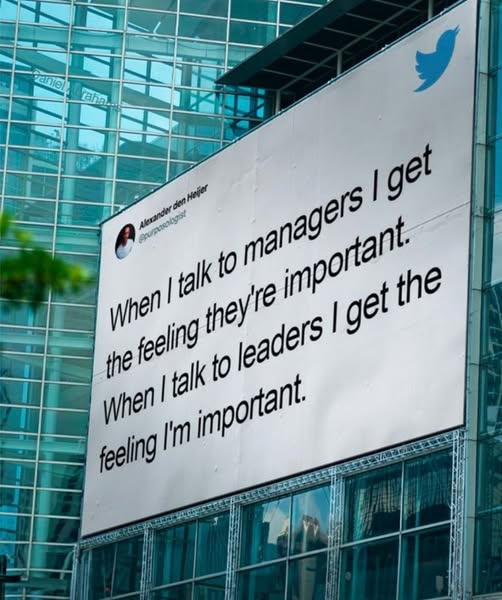
When I talk to …

Writing for Forbes, Sachin Jain, president and CEO of SCAN Group and Health Plan, argues that “toxic positivity,” or the idea that one should only focus on what’s going right rather than identifying and working on the underlying causes of a problem, is rampant throughout the healthcare industry and offers a few ideas on how to fix it.
Jain writes that toxic positivity is a “somewhat understandable reaction to seemingly insurmountable obstacles, which perhaps explains toxic positivity’s ascendancy in the healthcare industry.” But now, toxic positivity is “bleeding into situations involving challenging but fully solvable problems.”
For example, Jain writes that nearly every company in the healthcare industry eventually pays a marketing agency to craft “glorious-sounding mission statements” that are then used by leaders whenever they are confronted with their shortcomings.
“Your health system just christened a new billion-dollar hospital, but is unleashing bill collectors on the indigent? Our mission is clear: Patients first!” Jain writes. “Your startup appears to be serving only the wealthiest and healthiest retirees, while pulling no cost from the healthcare system? We’re proudly committed to doing right by seniors by offering value-based care!”
Jain clarifies that he doesn’t believe all healthcare executives are cynically trying to avoid hard issues. Rather, they are “often too far removed from the front lines of the system, and even their own companies’ patient-facing operations, to witness the flaws.”
Often executives don’t notice the flaws in their health systems until a loved one needs help, Jain writes. “Only then do the industry’s leaders confront the reality that, at a person’s most vulnerable point in life, healthcare companies often treat you like a consumer … instead of just taking care of you.”
Without that reality check, it’s easy for executives to rely on their lofty mission statements and value propositions, and to “see their companies as distinct from, rather than intrinsically connected to, the industry’s biggest issues,” Jain writes.
One simple intervention won’t fix toxic positivity in the healthcare industry, Jain writes, but companies can start by talking about their flaws.
“In a perfect world, the healthcare industry would commit to a culture of relentless interrogation of its flaws as a means of driving to better results,” Jain writes. Healthcare leaders need to “stop hiding behind company mission statements and ‘just-so stories’ about their impact and start speaking publicly about the steep challenges we each face as we fall short of fulfilling our specific corporate mission,” Jain adds. That means publicly addressing issues at events and discussing strategies for addressing them.
Private behavior within a company can also help reverse toxic positivity, Jain writes. Leaders should continue celebrating the accomplishments of frontline healthcare providers, but they should also “bring a critical eye to their operations and demand — not just encourage — that their colleagues help them uncover ways they can individually and collectively do better.”
That means asking questions like, “If our organization disappeared tomorrow and people were forced to find their healthcare insurance or services or devices elsewhere, would anyone be truly worse off and why?” Jain writes. If your company doesn’t have an answer for that, then you should work harder to increase your replacement value and drive competitive differentiation.
Addressing toxic positivity also means addressing the flaws in value-based care and having “honest, authentic conversations about what works and what doesn’t and why,” Jain writes. “About whether companies that proclaim to improve care are merely benefitting from arbitrage opportunities in reimbursement systems or are actually, meaningfully improving service to patients.”
Executives need to stop treating the healthcare industry like all other industries and “call BS on the idea that it’s somehow okay to be financially successful without making an actual difference in anyone’s lives,” Jain writes.
The healthcare industry needs to welcome thoughtful, critical, and reflective voices to every table, Jain writes. “Because nothing — absolutely nothing — will actually get better without them.”
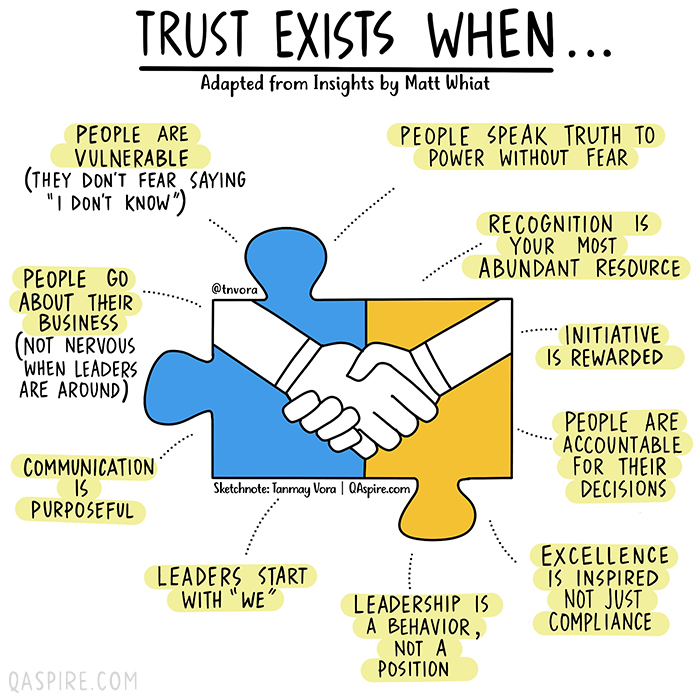
In the era of great awakening, leaders have to step up and be conscious about building trust with people they work with.
The old rules and hierarchies, that were already becoming obsolete, have now been thrown out of the window. People look for integration of work and well-being knowing that work is what you do, not a place you go to.
Opportunities are abound and excellent people have ample choices (they always had). It is high time that organizations and leaders think this through carefully to first align their own mindset to this new reality and then take conscious actions to build teams, practices and processes that are not just high-performing but also have a strong fabric of trust woven in.
Employees, after all, are volunteers who exercise their choice of working with you. Effective leadership is about making it worth for them.
Building high-trust environment means putting the human back at the center of how a business functions and building everything – purpose, culture, processes, structures, rituals, systems, tools and mindsets – around it.
How would we know if we are working in an environment where we can trust others and that we are trusted? We can always answer this based on our intrinsic feeling but if you are a leader who is working hard to build trust, here are a few vital signs that you need to look for.



A lot of communication in the workplace is conducted electronically. However, it is essential for hospital and health system leaders to have face-to-face conversations with employees in some situations.
Becker’s asked healthcare executives to share the interactions they prioritize when they’re in person at their organizations. Many expressed their preference for the deeper connections in-person interactions allow, citing inspiration and team building as reasons to facilitate face-to-face communication. Below are their responses:
Russell F. Cox. President and CEO of Norton Healthcare (Louisville, Ky.): Healthcare, by its very nature, requires in-person interactions.
With the onset of the COVID-19 pandemic, we made a quick and successful shift to virtual visits for the safety of our patients and providers. This enabled patients with a variety of time and transportation constraints to receive convenient care from a trusted provider. However, telemedicine will never completely replace in-person visits, and the opportunity for our patients and community to interact in-person with our patient care providers is very important to me, and to our team.
And, although the pandemic created the need for virtual meetings, I have always prioritized in-person interactions and meetings with all team members. Whether that be rounding in our hospitals and facilities, holding in-person meetings, celebrating employee accomplishments or milestones, or dropping by one of our community vaccine or testing centers — web meetings will never replace what can be accomplished face to face. It became even more important to interact in person with our caregivers and employees during the pandemic. It was important to show my support for their hard work and extraordinary sacrifices during this time. I’m thankful that with the vaccine, more in-person events, with proper safety precautions, are resuming.
Our motto has been and continues to be: Stay safe. Keep the faith.
Jim Dunn, PhD. Executive Vice President and Chief People and Culture Officer of Atrium Health (Charlotte, N.C.): Recognition is part of our organizational DNA, and in-person delivery is an essential component of that — especially as we continue working through the COVID-19 pandemic. One thing our teammates love is the “Surprise Patrol,” which we employ for some of our most special and meaningful awards, such as our annual Pinnacle Award — the highest award given by our organization to those who best exemplify our Culture Commitments: Belong, Work as One, Trust, Innovate and Excellence. Executives, leaders, teammates and loved ones come together to celebrate honorees with balloons, cupcakes, cheers and even a few happy tears. Our honorees are shocked, uplifted and proud to be recognized in-person for their outstanding accomplishments, and our “Surprise Patrol” participants are honored to be a part of such a special moment. Whether we’re celebrating small wins, personal successes, birthdays or prestigious awards, in-person recognition — where and when possible — is a vital part of the teammate experience and culture at Atrium Health.
Robert Gardner. CEO of Banner Ironwood Medical Center (Queen Creek, Ariz.) and Banner Goldfield Medical Center (Apache Junction, Ariz.): Over the past few years in particular, I’ve spent some time reflecting on the differences between motivation and inspiration. More often than not, it seems like leaders don’t know the differences and often confuse the two as being synonymous or interchangeable. Put in overly simplified terms, I see motivation as being the metaphorical carrot or the stick. We can motivate with reward (aka the carrot) and with discipline (aka the stick), and both are used frequently in life. Motivation tends to be more surface level. However, inspiration is something much deeper, more intimate, and therefore much more complex. Inspiration is getting to a point of genuinely desiring to change, do more, be better, etc.
For me, knowing the differences is critical when it comes to prioritizing being in person in the workplace. Virtual meetings, emails, newsletters and other forms of electronic communication can work incredibly well when it comes to items of motivation; and believe me, there are plenty of these items. However, when it comes time to inspire the team, I heavily prioritize these meetings to take place in person. Items that fall into this category will be mission-critical initiatives and overall reminders on living our mission, purpose values, etc. It’s so ironic to me that despite the increasing complexity, regulation, bureaucracy and proverbial red tape that healthcare has become famous for, that an inspirational dose of simplicity has more effect on change than any other bestseller leadership book on how to motivate performance through some sort of complicated multistep process.
Brian Koppy. Chief Financial Officer of Cano Health (Miami): As a rapidly growing primary care provider, we have found that face-to-face interactions at our offices are as essential as they are in our medical centers. Our providers provide the best care when they see patients in person because it builds lifelong bonds that improve patient outcomes. In our offices, our team members feel more connected and integrated into the Cano Health family when we are together, both formally and informally. This, of course, does not mean we do not have a flexible work environment, which we do. It simply means our priority is on the employee benefits and outcomes that come from working in the office.
At the beginning of the pandemic, we moved many corporate employees to remote work and moved about 95 percent of our patient interactions to televisits. That did not last long, however. Within a month or two, our employees were asking to come back to the office. Our medical centers never closed their doors, and our visits rapidly returned to mostly in person.
It’s the seemingly inconsequential daily interactions that often have the greatest impact on a company’s employees and their connection to the mission, values and culture of the organization. The quick stop-ins to someone’s workstation, the chance hallway encounters, the team lunches — these are so important in developing relationships and, in turn, maximizing efficiency. Employees who know and personally interact with each other work better together. They discuss ideas, they strategize freely, and they execute on the company’s goals together and more effectively.
At Cano Health, our high-touch approach to primary care is key to our success. And we believe that daily face-to-face interactions among employees are equally important to create a rewarding experience for our employees, but also expanding Cano Health’s services across the country.
Christopher O’Connor. President and incoming CEO of Yale New Haven (Conn.) Health:We are prioritizing one-on-one meetings and small groups. With our vaccination mandate, we feel it is critical to have that in-person contact and fill that void that video can’t replicate. This is a relationship business, and spending the time to build and nurture those relationships is critical.
Thomas J. Senker. President of MedStar Montgomery Medical Center (Olney, Md.): Before and especially during the pandemic our priority has been the well-being and engagement of our front-line staff and essential personnel. And while in-person activities have been limited, our executive team makes regular rounds visiting each unit, expressing gratitude, providing snacks and refreshments, and sharing important hospital updates directly. We believe these face-to-face interactions are critical opportunities to gain feedback and focus on areas of improvement across different areas of MedStar Montgomery Medical Center’s operations.


 HENRY KOTULA