Michael Dowling: The most pressing question to start the year

The new year is always an ideal time for healthcare leaders to reflect on the state of our industry and their own organizations, as well as the challenges and opportunities ahead.

As the CEO of a large health system, I always like to reflect on one basic question at the end of each year: Are we staying true to our mission? 

Certainly, maintaining an organization’s financial health must always be a priority but we should also never lose sight of our core purpose. In a business like ours that has confronted and endured a global pandemic and immense financial struggles over the past several years, I recognize it’s increasingly difficult to maintain our focus on mission while trying to find ways to pay for rising labor and supply costs, infrastructure improvements needed to remain competitive and other pressures on our day-to-day operations. 

After all, the investments we need to make to promote community wellness, mental health, environmental sustainability and health equity receive little or no reimbursement, negatively impacting our financial bottom lines. During an era of unprecedented expansion of Medicaid and Medicare, we get less and less relief from commercial insurers, whose denial and delay tactics for reimbursing medical claims continue to erode the stability of many health systems and hospitals, especially those caring for low-income communities. 

Despite those enormous pressures, it’s imperative that we continue to support underserved communities, military veterans struggling with post-traumatic stress, and intervention programs that help deter gun violence and addiction. 

The list of other worthy investments goes on and on: charity care to uninsured or underinsured patients who can’t pay their medical bills, funding for emergency services that play such a critical role during public health emergencies, nutritional services for families struggling to put food on the table, programs that combat human trafficking and support women’s health, the LGBTQIA+ community and global health initiatives that aid Ukraine, the Middle East and other countries torn apart by war, famine and natural disasters. 

We must also recognize the key role of healthcare providers as educators. School-based mental health programs are saving lives by identifying children exhibiting suicidal behaviors, anger management issues and other troublesome behaviors. School outreach efforts have the added benefit of helping health systems and hospitals address their own labor shortages by introducing young people to career paths that will help shape the future healthcare workforce. 

Without a doubt, the “to-do” list of community health initiatives that support our mission is daunting. We can’t do it all alone, but as the largest employers in cities and towns across America, health systems and hospitals can serve as a catalyst to get all sectors of our society — government, businesses, schools, law enforcement, churches, social service groups and other community-based organizations — to recognize that “health” goes far beyond the delivery of medical care. 

The health of individuals, families and communities hinges on the prevalence of good-paying jobs, decent and affordable housing, quality education, access to healthy foods, medical care, transportation, clean air and water, low prevalence of crime and illicit drugs, and numerous other variables that typically depend on the zip codes where we live. Those so-called social determinants of health are the driving factors that enable communities and the people who live there to either prosper or struggle, resulting in disparities that are the underlying cause of why so many cities and towns across the country fall into economic decay and become havens for crime and hotbeds for gun violence, which shamefully is now the leading cause of death for children and adolescents. 

To revive these underserved communities, many of which are in our own backyards, we have to look at all of the socioeconomic issues they struggle with through the prism of health and use the collective resources of all stakeholders to bring about positive change. 

Health is how we work together to build a sense of community. Having a healthy community also requires everyone doing what they can to tone down the political rhetoric and social media-fueled anger that is polarizing our society. Health is bringing back a sense of civility and respect in our public discourse, and promoting the values of honesty, decency and integrity. 

As healthcare providers and respected business leaders, we should all make a New Year’s resolution to stay true to our mission and do what we can within our communities to bring oxygen to hope, optimism and a healthier future. 
10 signs your board has a strong pulse

https://www.beckershospitalreview.com/hospital-management-administration/10-signs-your-board-has-a-strong-pulse.html

Great systems are usually governed by great boards, who are made up of people who match the following 10 descriptions. 

Great board members do more than comply with corporate governance structure and rules. Too often, board members have loose ties to one another, are passive to the wants and views of the CEO or are not as informed about the specifics of healthcare as they ought to be. We view all of these traits, and more, as signs that a board has lost its charge and is no longer effectively governing.

We consider the following 10 items as descriptors of a board member who has a strong pulse and adds value to a governing body. 

1. The board member is active, engaged and passionate about being a board member. No board can afford to have disengaged members. Bylaws and attendance requirements are important, but simply complying with them does not necessarily equate to being an active, contributing and passionate trustee. Engaged board members show up to meetings, and they show up prepared. While members typically refrain from meddling in day-to-day operations, boards with high levels of trust and candor make a point to communicate with the CEO outside of scheduled board meetings. Quality of board engagement is an important contributing factor to board performance, and there is a correlation between board engagement and the ability to attract board members. Everything that follows is dependent on board engagement. 

2. The board member has a point of view on what the organization must be great at, and the board member is vehement about it. Health systems cannot be all things to all people, although the opportunities to attempt this are ample. The best organizations are not static, but disciplined. Well-governed systems know the specialties they are great in, and they continue to double down on their strengths. Their boards are cognizant of where revenues come from and ensure resources are allocated accordingly.

3. The board member realizes that her top job is to ensure the system has great leadership in place. Leaders can fall short in all sorts of ways, some more visible and easily detectable than others. The active, engaged and vehement board does not easily accept disappointment. Boards have many steps at their disposal to manage a problem before firing a CEO or senior leader, but they should never function in a way where termination is unthinkable. Boards cause great damage when they tolerate mediocre performance or compromised values among people at the top of the organization. 

4. The board member understands accountability for patient safety and quality of care rests firmly in the boardroom. It rests on board members to insist that they receive sufficient, timely information about patient safety and care quality from the CEO. It rests on board leadership to ensure members have access to expertise and resources to properly obtain, process and interpret this information. It is not a bad idea for quality expertise to be included in board members’ competency profiles and for boards to undergo training and continued education in quality and safety. This is especially relevant for board members who come from industries outside of healthcare. It rests on the board when care quality declines or when lapses in patient safety are unaddressed: It is unacceptable for a board to say it missed the memo on care outcomes or that it did not understand the information in front of it. 

5. The board member is a watchdog on societal, governance and audit issues. Informed citizens make for strong board members. It is important to not only be plugged in and aware of the issues and challenges confronting the organization today, but to be aware of broader societal issues that could affect system strategy and performance tomorrow. This is not hypothetical thinking. The past year was a master class in how broader issues affected healthcare in acute and direct ways: systemic racism, a global supply chain and a churning labor market are just three. Good boards are made up of members who stay informed and are biased toward anticipatory thinking, in which they are eager to explore the ways in which issues larger than or outside of their industry may come to affect the organization they help govern. 

6. The board member supports the leadership team, but also questions it and holds it accountable. Board members cannot be pushovers for leadership. Directors are nominated by existing board directors on the nominating committee, which often includes the CEO. As a result, trustees can empathize with the CEO of the organization on whose board they sit. Empathy does not equate to blind acceptance, but this is nonetheless a dynamic trustees should be aware of and work to keep in check. It is not unusual for board members to struggle when giving candid feedback to the CEO, for example. As a result, chief executives carry on and live in a bigger and bigger bubble. 

It’s worth noting that the reverse can occur within boardrooms as well, in which board members disagree about strategy and seek a CEO they can easily influence. At the end of the day, being a pushover is not associated with strong leadership and should be avoided by both trustees and senior executives. Instead, trustees need to embrace constructive tension in the boardroom. Questions, challenges and disagreements that reach resolution can drive valuable dialogue and stronger outcomes.

7. The board member allows others to voice their thoughts. In many boardrooms, a small number of the participants do most of the talking while the majority stays relatively quiet. A powerful or well-connected member may dominate discussions. Ideally, boards embrace the middle in interpersonal communication, with trustees contributing not too much nor too little. Either goes against the board’s very reason for being. 

8. The board member helps ensure the board as a whole reflects the racial, ethnic, gender, religious and socioeconomic diversity of the community served by the organization. This is important for a number of reasons, with health equity being principal. Trustees are stewards for the communities they serve. For hospitals and health systems to increase opportunities for everyone to be healthier — including those who face the greatest obstacles — they need visions, strategies and goals that begin at the top from individuals who have viewpoints from the community. Without these insights, the board simply can’t govern effectively. Additionally, research has consistently found that teams of people who have diversity in knowledge and perspectives — as well as in age, gender and race — can be more creative and better avoid groupthink.

9. The board member is accessible. Just as no board wants its CEO in a bubble, governing bodies must actively resist this risk. For a stretch of time, boards were less visible groups of people who would meet four to six times a year in a mahogany-paneled room to decide the future of an organization that employs tens of thousands and serves even more. This dynamic cannot hold in healthcare. Community members and employees should know — or be able to easily learn — who serves on their health system’s board. If stakeholders bring issues or concerns to a board member, the trustee should be prepared to respond and follow up. In 2021’s healthcare, board members cannot breathe rarified air.

10. The board member emulates the values of the health system. So often when people talk about the tone being set at the top, they have the CEO in mind. The board is just as responsible, if not more responsible, for this charge. What a board permits, it promotes. Board members that emulate system values are better positioned to collaborate with mutual respect, candor and trust. Board members whose values are mismatched or personal agendas are at cross-purposes with the good of the organization should be replaced. 

Thought of the Day: On Leadership Integrity

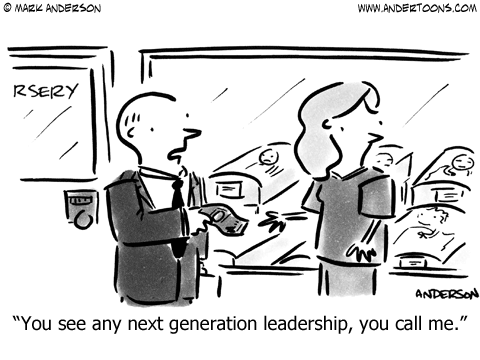
Cartoon – Next Generation Leadership

Thought of the Day: Too Few Candies Left in the Box

“I know that I have less to live than I have lived.

I feel like a child who was given a box of chocolates. He enjoys eating it, and when he sees that there is not much left, he starts to eat them with a special taste.

I have no time for endless lectures on public laws – nothing will change. And there is no desire to argue with fools who do not act according to their age. And there’s no time to battle the gray. I don’t attend meetings where egos are inflated and I can’t stand manipulators.

I am disturbed by envious people who try to vilify the most capable to grab their positions, talents and achievements.

I have too little time to discuss headlines – my soul is in a hurry.

Too few candies left in the box.

I’m interested in human people. People who laugh at their mistakes are those who are successful, who understand their calling and don’t hide from responsibility. Who defends human dignity and wants to be on the side of truth, justice, righteousness. This is what living is for.

I want to surround myself with people who know how to touch the hearts of others. Who, through the blows of fate, was able to rise and maintain the softness of the soul.

Yes, I hustle, I hustle to live with the intensity that only maturity can give. I’ll eat all the candy I have left – they’ll taste better than the ones I already ate.

My goal is to reach the end in harmony with myself, my loved ones and my conscience.

I thought I had two lives, but it turned out to be only one, and it needs to be lived with dignity.”

Brilliant Anthony Hopkins

and free interpretation of Mario de Andrade’s poem

Thought of the Day: On Leadership Environment

Some people in leadership positions, intentionally or not, harm their employees and their organization by creating a toxic work environment, causing their employees to focus on job searching or protecting themselves from internal forces instead of safeguarding the company against external threats.

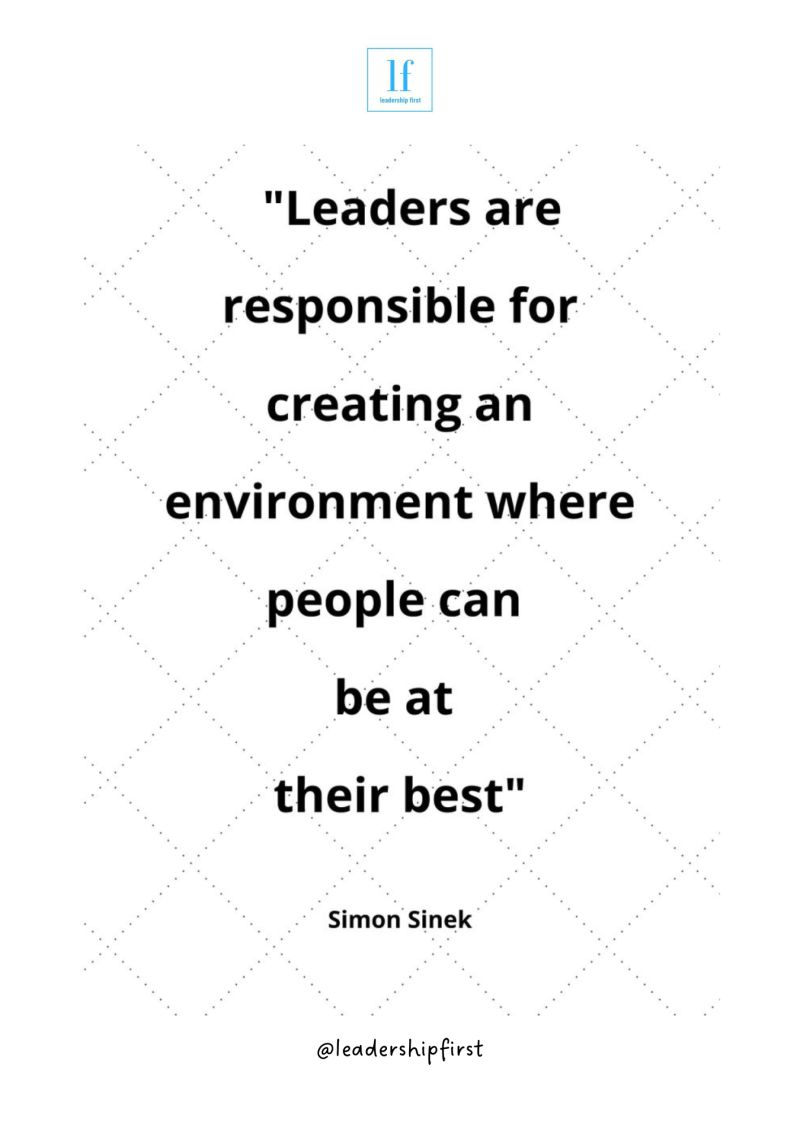
According to Simon Sinek, if someone feels safe enough to raise their hands and say, “I made a mistake” or “I need some help,” that leader has created an environment where their people feel safe to be themselves. However, if someone is so focused on “covering themselves” and sending a CYA email after every conversation or meeting, that leader has created a toxic culture that shouts NOT SAFE, every man/woman for themselves.

Great leaders create an environment where their people can be themselves but, more importantly, to become the very best version of themselves.