The recession risk

https://www.axios.com/newsletters/axios-future-trends-0eb404e7-34a3-40ac-af56-8fefba59535c.html?utm_source=newsletter&utm_medium=email&utm_campaign=newsletter_axiosfuturetrends&stream=top

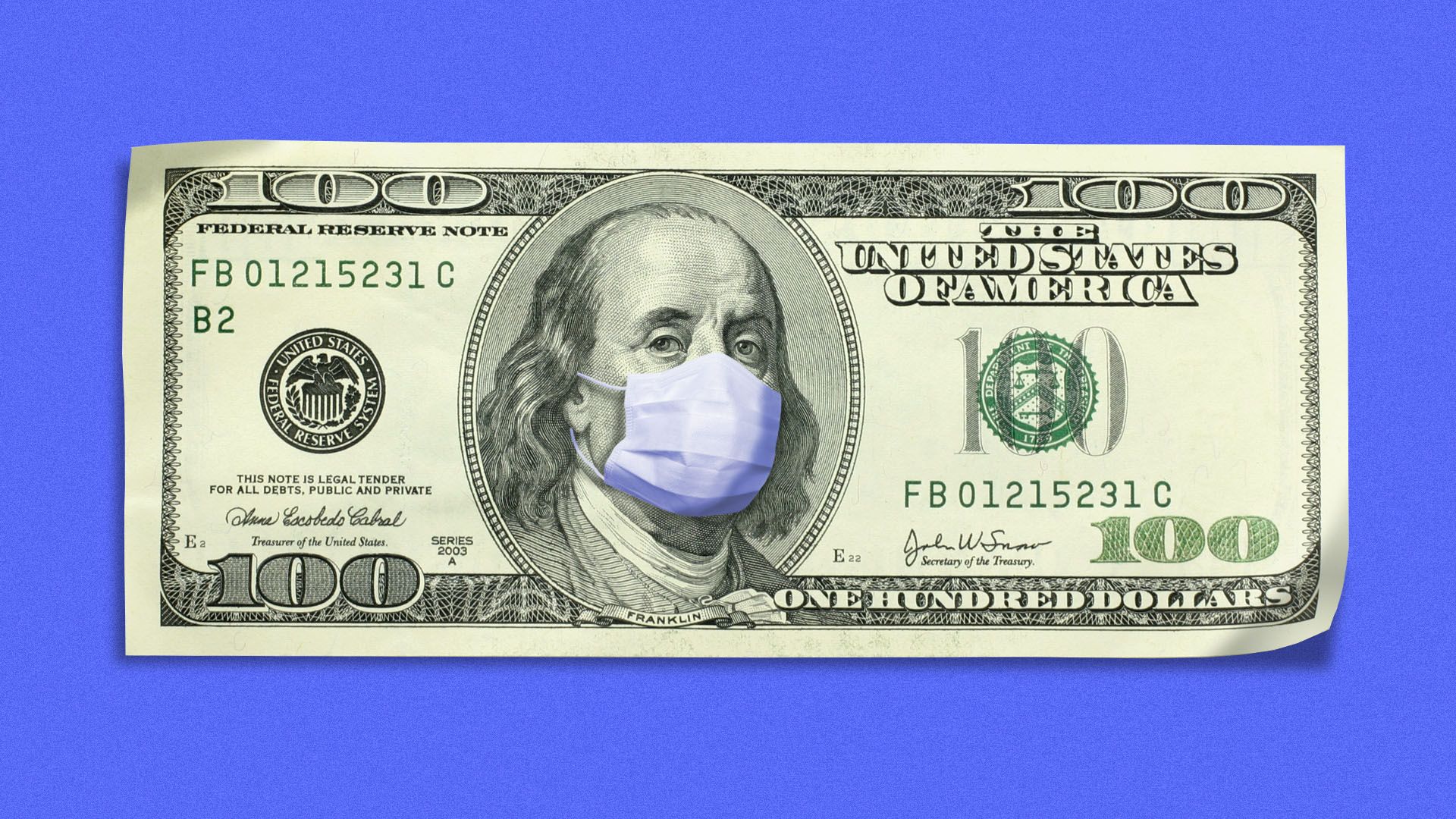
Illustration of Benjamin Franklin on a 100 dollar bill wearing a medical mask

Economists are growing more certain both the U.S. and the world are going to have a recession in 2020, Axios markets editor Dion Rabouin reports.

The big question: How bad will it be?

  • The answer depends on how quickly the outbreak can be contained and how fast people regain confidence to participate in activities they once enjoyed.

What’s happening: Economists and investment banks continue to write down their expectations for growth this year, as more economic activity is halted “until further notice.”

  • The shutdown of the NCAA’s annual March Madness basketball tournament and Austin’s South by Southwest festival are just two examples of mass gatherings that were expected to generate billions of dollars.
  • And that’s to say nothing of the millions of dollars that Chinese and European tourists would have spent, but who are temporarily banned or reluctant to come to the United States.

The bottom line: Businesses had pulled back on spending even before the year began, as a result of the U.S.-China trade war. That left consumer spending as the only thing holding up the economy, and the COVID-19 outbreak will kick that leg out from under us for an unknown period of time.

Go deeper: Listen to Dion discuss the risk of a recession with Dan Primack on the Pro Rata podcast.


The pandemic shaping the future

https://www.axios.com/newsletters/axios-future-trends-0eb404e7-34a3-40ac-af56-8fefba59535c.html?utm_source=newsletter&utm_medium=email&utm_campaign=newsletter_axiosfuturetrends&stream=top

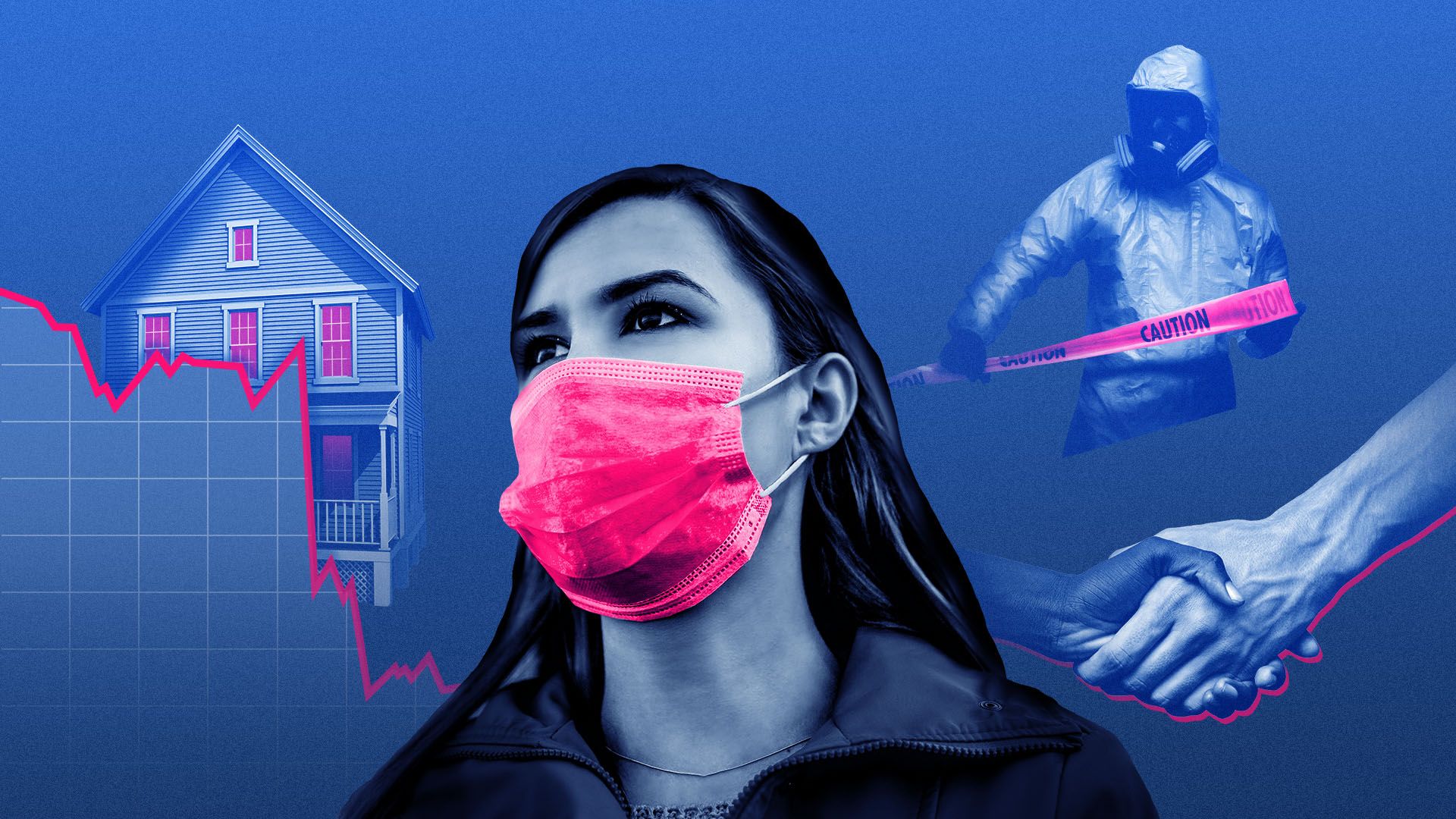
Illustration of a woman in a medical mask surrounded by a falling trend line, a house, a person in a hazmat suit with caution tape, and two hands shaking

The world that emerges from the coronavirus pandemic will be fundamentally different, Axios Future correspondent Bryan Walsh writes.

  • Why it matters: This crisis may prove to be as significant as the 2008 financial meltdown or even 9/11.
  • So the choices that businesses and governments are making now will have enormous social and economic ramifications.

The intrigue: U.S. health and government officials are facing the epidemiological equivalent of the “fog of war,” worsened by a massive American failure to act on weeks of warnings as the virus spread in China.

  • The Trump administration declared a national emergency yesterday, seven weeks after the first U.S. case was announced by the Centers for Disease Control and Prevention.
  • By failing to rapidly scale up testing, U.S. officials have added an additional — and partly unnecessary — layer of uncertainty about how to respond.
  • Harvard epidemiologist Michael Mina calls it “the most daunting virus that we’ve contended with in half a century or more.”

Flashback: As recently as the 1918 influenza pandemic, scientists lacked the ability to rapidly respond to an infectious disease outbreak.

  • Today, scientists can sequence a virus in days, develop rapid tests that can determine infection before obvious symptoms, and use complex mathematical models to predict future spread.

What we’ll find out in coming days:

  • The actual fatality rate of the virus.
  • How contagious it is, and the precise role that children — who seem outwardly unaffected by the disease — may play in transmission.
  • If the outbreak will naturally slow down when the weather warms, as tends to happen with influenza.

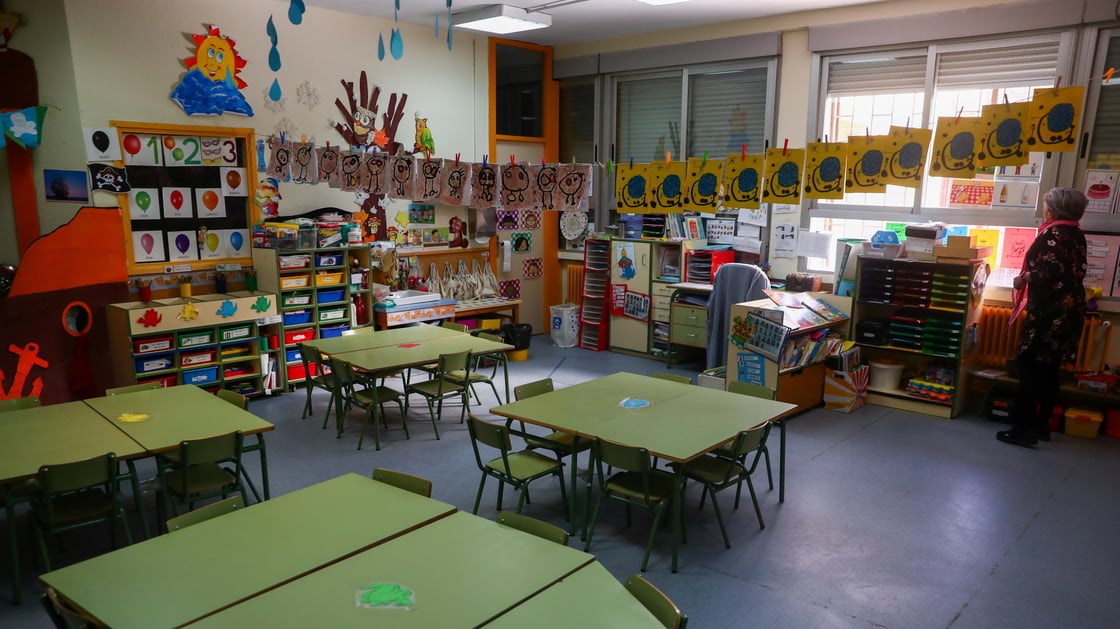
What’s next: For now, distance becomes the first line of defense. Schools and companies are shifting online — with potential consequences.

  • If companies are able to function relatively well with a largely remote workforce, expect lower levels of business travel.
  • After decades of emphasizing the efficiency of supply chains — which often meant complex international linkages and just-in-time inventories — businesses will look to build resilient supply chains.

The bottom line: The mobility — of people, capital and products — that we’ve taken for granted may not outlast the virus.




The Impacts of the Coronavirus Pandemic

http://connect.brookings.edu/the-impacts-of-the-coronavirus-pandemic?ecid=ACsprvt-3HcA2vsUW0LnSP3fTMVxIuh63w-XOlyQsQ1aObmBrsBe2PiYGLK1FUBp2-0UoJGoVdLX&utm_campaign=brookings-comm&utm_source=hs_email&utm_medium=email&utm_content=84702540

As the coronavirus outbreak continues to spread, Brookings experts are working to keep the public and policymakers informed with nonpartisan, fact-based research and policy recommendations to address the crisis. Below, read a selection of their recent work, including proposals to offset an economic downturn and analyses on the impact on schools, industries, and key countries.

Brookings has also taken new measures to protect our staff, visitors, and the greater community. As we continue to analyze the impact of this global pandemic, you can find the latest work on our coronavirus topic page and stay connected with us via TwitterFacebook, and newsletters.

The economics of the crisis

A U.S. fiscal response. While we still don’t know exactly how the coronavirus outbreak will impact the economy, Jay Shambaugh explains how Congress can help reassure people that there will be support in the event of a downturn. In addition, Shambaugh joined Alan Blinder and David Wessel for a conversation on ways to limit economic harm.

Possible effects on the world economy. New research from Warwick McKibbin outlines seven scenarios for how COVID-19 could impact the global economy. McKibbin also joined the Dollar & Sense podcast to discuss how the epidemic compares to SARS and why it will cause complications for the recent U.S.-China trade deal.

Food security is economic security. To alleviate economic hardship and stimulate the U.S. economy during this time of uncertainty, Lauren Bauer and Diane Whitmore Schanzenbach call on Congress to provide additional resources for improving food security.

How the pandemic compares to the 2008 financial crisis. While there are significant differences between the crises, the Great Recession offers some important lessons for policymakers as they prepare an economic response to the coronavirus, Louise Sheiner discusses.

The oil price collapse. With oil prices plummeting in the wake of the pandemic, Morgan Bazilian and Samantha Gross assess the impacts on the U.S. economy and global energy markets.

The impact on education

How should schools prepare? This week, the Brown Center on Education Policy at Brookings hosted a discussion with health and education leaders on the many issues that may arise as schools decide to close. Watch the video here.

The critical gaps in school emergency preparedness. Many schools have some sort of plan to deal with natural disasters, armed violence, the flu, and other emergencies, but the vast majority have not planned for long school closures. Allison Anderson discusses how to protect students and teachers, while also continuing quality education.

The case for summer school and summer teacher pay. Studies of online learning suggest that students learn less in online environments than in the classroom. Douglas Harris highlights how summer school can prevent students from falling further behind.

The impact on China’s classrooms. Last month, Rebecca Winthrop spoke with Jin Chi, a former Brookings Echidna Global Scholar and professor at Beijing Normal University about the situation for China’s education community.

The international response

Italy’s coronavirus outbreak. Italy is the European country hardest hit by COVID-19. Giovanna De Maio explains why the situation will be a major stress test for Europe and Federica Saini Fasanotti outlines several lessons learned so far.

The effect on China-Japan relations. “The coronavirus has done what few observers thought possible: quell generations of China-Japan antagonism. And for the immediate future, both countries are now bound together in the same public health crisis,” write Cheng Li and Ryan McElveen.

COVID-19 may rewrite the Shinzo Abe era in Japan. The coronavirus crisis stands to deal a severe blow to the Japanese economy and has raised significant questions about the government’s ability to deal with a pandemic, Mireya Solís argues.

The virus is exposing populism’s limits. “Over the past decade, the world has grown more authoritarian, nationalistic, xenophobic, unilateralist, anti-establishment, and anti-expertise. The current state of politics and geopolitics has exacerbated, not stabilized, the crisis,” Thomas Wright and Kurt Campbell write.

What the crisis means for international relations. While the pandemic could strengthen nationalism and isolationism, it also has the potential to spur a new wave of international cooperation, Kemal Derviş and Sebastian Strauss contend.

To learn more about what the coronavirus crisis means for key countries and sectors, see this roundup of commentary from Brookings Foreign Policy experts.


This is the coronavirus math that has experts so worried: Running out of ventilators, hospital beds

https://www.washingtonpost.com/health/2020/03/13/coronavirus-numbers-we-really-should-be-worried-about/?utm_campaign=wp_post_most&utm_medium=email&utm_source=newsletter&wpisrc=nl_most

Image result for This is the coronavirus math that has experts so worried: Running out of ventilators, hospital beds

For weeks now, America’s leaders and its public have been obsessed with one set of numbers: How many people have died? How many confirmed cases? And in what states?

But to understand why experts are so alarmed and what may be coming next, the public needs to start paying attention to a whole other set of numbers: How many ventilators do we have in this country? How many hospital beds? How many doctors and nurses? And most importantly, how many sick people can they all treat at the same time?

Consider the ventilators

For those severely ill with a respiratory disease such as covid-19, ventilators are a matter of life or death because they allow patients to breathe when they cannot on their own.

In a report last month, the Center for Health Security at Johns Hopkins estimated America has a total of 160,000 ventilators available for patient care (with at least an additional 8,900 in the national stockpile).

planning study run by the federal government in 2005 estimated that if America were struck with a moderate pandemic like the 1957 influenza, the country would need more than 64,000 ventilators. If we were struck with a severe pandemic like the 1918 Spanish flu, we would need more than 740,000 ventilators — many times more than are available.

The math on hospital beds isn’t any better

The United States has roughly 2.8 hospital beds per 1,000 people. South Korea, which has seen success mitigating its large outbreak, has more than 12 hospital beds per 1,000 people. China, where hospitals in Hubei were quickly overrun, has 4.3 beds per 1,000 people. Italy, a developed country with a reasonably decent health system, has seen its hospitals overwhelmed and has 3.2 beds per 1,000 people.

The United States has an estimated 924,100 hospital beds, according to a 2018 American Hospital Association survey, but many are already occupied by patients at any one time. And the United States has 46,800 to 64,000 medical intensive-care unit (ICU) beds, according to the AHA. (There are an additional 51,000 ICU beds specialized for cardiology, pediatrics, neonatal, burn patients and others.)

A moderate pandemic would mean 1 million people needing hospitalization and 200,000 needing intensive care, according to a Johns Hopkins Center for Health Security report last month. A severe pandemic would mean 9.6 million hospitalizations and 2.9 million people needing intensive care.

Now, factor in how stretched-thin U.S. hospitals already are during a normal, coronavirus-free week handling usual illnesses: patients with cancer and chronic diseases, those walking in with blunt-force trauma, suicide attempts and assaults. It’s easy to see why experts are warning that if the pandemic spreads too widely, clinicians could be forced to ration care and choose which patients to save.

No one knows how bad it will be

This is where we need to say that no one knows how bad this is going to get. But, as many experts have pointed out, that is part of the problem.

“The problem with forecasting is you have to know where you are before you know where you’re going and because of the problems with testing, we’re only starting to know where we are,” said Caitlin Rivers, an epidemiologist at the Johns Hopkins Center for Health Security.

The speed at which the number of U.S. cases is rising hints we are headed in a bad direction.

But because so much is still unknown, exactly how bad could range widely. It will depend largely on two things: The number of Americans who end up getting infected and the virus’s still-unknown lethality (its case-fatality rate).

One forecast, developed by former CDC director Tom Frieden, found that infections and deaths in the United States could range widely. In a worst-case scenario, but one that is not implausible, half the U.S. population would get infected and more than 1 million people would die. But his model’s results varied widely from 327 deaths (best case) to 1,635,000 (worst case) over the next two or three years.

This is why experts have been yelling so much about testing, social distancing and hand washing

“Slowing it down matters because it prevents the health service becoming overburdened,” said Bill Hanage, an epidemiologist at the Harvard T.H. Chan School of Public Health. “We have a limited number of beds; we have a limited number of ventilators; we have a limited number of all the things that are part of supportive care that the most severely affected people will require.”

The sooner you interrupt the virus’s chain of transmission, experts say, the more you limit its climb toward exponential growth. It’s similar to the compounding interest behind all those mottos about invest when you’re young. Early action can have profound effects.

That math is also why so many health officials, epidemiologists and experts have expressed frustration, anger and alarm over how slowly America as a country has moved and is still moving to prepare for the virus and to blunt its spread.