

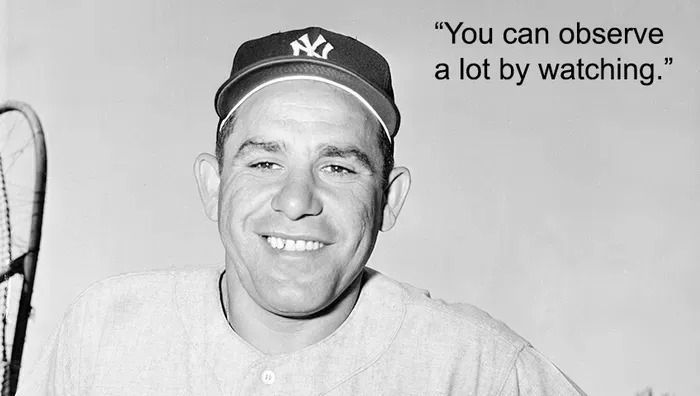
Thought of the Day – On Observation


The Great Nursing Resignation, and hospitals’ growing reliance on expensive agency labor (a.k.a. “travelers”) has grabbed headlines, for good reason. But lately we’ve heard a couple of anecdotes from health system leaders about the second-order impacts of the phenomenon that are worth considering as well.
First, as the ranks of agency nurses at hospitals have swelled, full-time employed nurses’ morale has plummeted—tenured nurses are having to orient their new temporary co-workers, then watch them earn up to three times as much money for the same work.
At the same time, willingness to work overtime among employed nurses has dropped. That’s not just because of burnout—it turns out that the nurses who were most likely to take overtime shifts are also more likely to have chosen to leave full-time employment to become travelers, where they are even more richly rewarded for working extra shifts. So, the “productivity” of the remaining corps of staff nurses has dropped, even as caseloads have increased.
One other implication we’ve heard about recently: the economic impact of “observation” cases, where patients are held in a staffed bed but not admitted—already a bad bargain for hospitals—has gotten worse. That’s because the cost of deploying staff to care for those patients has gone up, due to wage inflation and use of travelers. It’s hard to overstate the level of staffing crisis at most hospitals today, and the rapid growth in reliance on temporary staff will have consequences lasting well beyond the current surge.

What makes someone extraordinary? As a retired FBI agent with more than 40 years of studying human behavior and performance, no question has captivated me more.
Extraordinary people have a wisdom and way of being that inspires and commands respect. They energize you with their wisdom and empathy. You want them to be your friend, neighbor, co-worker, manager, mentor or community leader.
Surprisingly, the qualities that make these people stand out aren’t related to their level of education, income or talents (say, in athletics or art or business).
As it turns out, based on thousands of observations, there are five traits that set exceptional individuals apart from everyone else — but you must have the entire set, and not just one or a few.
I call them “The Five Domains of Exceptional People”:
Self-mastery brings out your best in whatever you do through dedication, curiosity and adaptability.
Usain Bolt, the fastest human to ever live, didn’t achieve that status merely through athletic ability. He achieved it through self-mastery: He learned, sacrificed, worked hard and remained diligently focused. Michael Jordan, the greatest basketball player of all time, did the same.
But another side to self-mastery is knowing our emotions, strengths and, more importantly, our weaknesses. By understanding ourselves, we know things like when others should take the lead, when today is not our day or when we need to confront our demons.
Start attaining self-mastery by asking:
We’re taught to look, but not to observe. We look to see if we can cross the street safely or what supermarket line is moving the fastest. It’s a passive experience that’s useful, but may not provide complete information.
Observing, on the other hand, is active; it requires effort, but the results are more enlightening. It’s about using all our senses to decode the world in real time for a more informed understanding of our environment and of others.
By working as an FBI agent and as an ethologist, I’ve developed my sensitivity for reading the needs, wants, desires, concerns and preferences of others — all crucial information for understanding and communicating with people.
The most observational people have a skill set that many lack. They instantly know:
We communicate constantly. Do it right and people will adore you. Do it wrong and you create doubt, indifference, even anger.
Exceptional communication skills elevate the quality of your relationships. It’s not about communicating perfectly, but rather effectively — and that builds trust. Here’s how:
Our actions are the nonverbals that show who we are, what’s important to us and how we feel about others.
You can’t fully master this trait without the previous three: Self-mastery prepares us for possible actions to take based on what’s happening; observation allows us to understand the situation in context so we can act appropriately; communication allows us to give and receive the information and support to act.
Exceptional individuals weigh four major factors when making decisions:
Psychological comfort is a state where our biological and emotional needs and preferences are met.
It forms the bedrock of our mental and physical health, driving everything from our relationship choices to the brands we buy. We thrive when we have psychological comfort, and it’s especially essential in difficult times.
Since we’re primed to receive psychological comfort, it doesn’t take a grand gesture — it just takes the right one. It could be a calm voice, a kind word, an acknowledgment, a thank you note, a welcoming smile or suggesting a break.
Psychological comfort is where self-mastery, observation, communication and action join forces, helping you recognize and provide what best reduces unwanted emotions like stress, fear or apprehension.
It’s simple: In the 21st century, whoever provides the most psychological comfort wins.
 HENRY KOTULA