The Department of Justice (DOJ) is appealing a Florida judge’s Monday decision to strike down the mask requirement for public transportation. Federal judge Kathryn Mizelle ruled the Centers for Disease Control and Prevention (CDC) exceeded its authority under the Public Health Service Act of 1944. Meanwhile, giddy passengers and flight crew have been discarding their face coverings as airlines, the Transportation Safety Administration, several local transit authorities, Uber and Lyft, all removed their mask requirements.
The Gist: Despite DOJ’s appeal, which appears to be aimed at preserving its own authority to act during health crises, rather than reinstating the current mask requirement (which was set to expire in two weeks anyway), the tone of the Biden administration is clearly shifting. Earlier this week President Biden told reporters that the decision to wear a mask is “up to them,” meaning individual Americans.
In the bumpy transition out of the emergency phase of the pandemic, we now have a patchwork of rules for masking. This is even true within healthcare facilities: some, including Houston Methodist and Iowa-based UnityPoint Health, are no longer requiring masks for visitors or employees who are not involved in patient care.
With COVID cases now rising in 41 states as mask mandates fall, the next month will prove critical in determining whether “endemic” COVID remains manageable, or once again stresses the healthcare system and other critical infrastructure.
But officials caution that people should not presume they have protection against the virus going forward.
Before omicron, one-third of Americans had been infected with the coronavirus, but by the end of February, that rate had climbed to nearly 60 percent — including about 75 percent of kids and 60 percent of people age 18 to 49, according to federal health data released Tuesday.
The data from blood tests offers the first evidence that over half the U.S. population, or 189 million people have been infected at least once since the pandemic began — double the number reflected in official case counts. Officials cautioned, however, that the data, in a report from the Centers for Disease Control and Prevention, does not indicate people have protection against the virus going forward, especially against increasingly transmissible variants.
“We continue to recommend that everyone be up to date on their vaccinations, get your primary series and booster, when eligible,” CDC Director Rochelle Walensky said during a media briefing.
Kristie Clarke, the CDC official who authored the report, said by February, “evidence of previous COVID-19 infections substantially increased among every age group, likely reflecting the increase in cases we noted as omicron surged in this country.”
Clarke said the greatest increases took place in those with the lowest levels of vaccination, noting that older adults were more likely to be fully vaccinated.
The largest increases were in children and teenagers through age 17 — about 75 percent of them had been infected by February, based on blood samples that look at antibodies developed in response to a coronavirus infection but not in response to vaccination. That’s about 58 million children.
The blood test data suggests 189 million Americans had covid-19 by end of February, well over double the 80 million cases shown by The Washington Post case tracker, which is based on state data of confirmed infections. Clarke said that’s because the blood tests captures asymptomatic cases and others that were never confirmed on coronavirus tests.
With the omicron surge, officials had expected there would be more infections. “But I didn’t expect the increase to be quite this much,” Clarke added.
Separately, CDC is about to publish another study that estimates three infections for every reported case, she said.
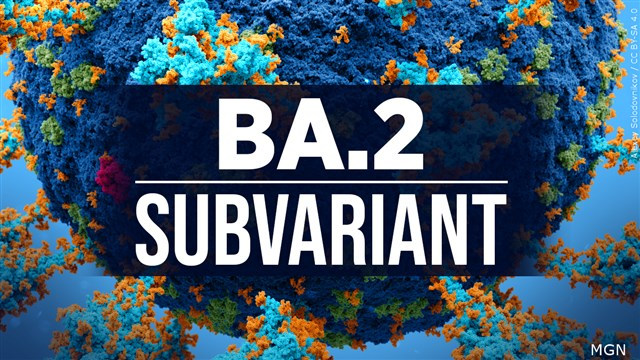
A subvariant of omicron known as BA.2 is now the dominant strain in the United States, according to new data from the Centers for Disease Control and Prevention (CDC).
The variant has been steadily rising in proportion because of its increased transmissibility compared to the original omicron strain, and it represented 54.9 percent of new cases for the week ending March 26, according to CDC data. That is up from about 27 percent two weeks earlier.
The BA.2 subvariant is thought to be about 30 percent more transmissible than the original BA.1 omicron strain, which itself was already more contagious than earlier versions of the virus.
Importantly, though, experts say there is no evidence that BA.2 causes more severe disease than the original omicron strain or that it evades the protection from vaccines to a greater degree.
The subvariant may cause some increase in cases after weeks of steady declines that have led to a relative lull in the virus. But it is unclear how sharp the increase will be, and people who are vaccinated and boosted are still well-protected against severe disease.
The Food and Drug Administration on Tuesday authorized a fourth COVID-19 vaccine shot for people 50 and older, which could further help protect the most vulnerable from the subvariant.
“CDC says the BA.2 subvariant of Omicron is now dominant in the US,” tweeted Leana Wen, a public health professor at George Washington University. “Reminder that while this appears to be even more contagious than the original Omicron, it is not more virulent than previous strains, and existing vaccines still protect well against severe disease.”
CDC Director Rochelle Walensky said last week that her agency was monitoring the subvariant, particularly in the Northeast, where it has been concentrated so far.
“Over the past week, we have seen a small increase in reported COVID-19 cases in New York state and New York City, and some increases in people in the hospital with COVID-19 in New England, specifically where the BA.2 variant has been reaching levels above 50 percent,” she said.
“This small increase in cases in the Northeast is something that we are closely watching as we look for any indication of an increase in severe disease from COVID-19 and track whether it represents any strain on our hospitals. We have not yet seen this so far.”
The expected green light for a second coronavirus booster shot poses a challenge to the Biden administration, which will need to work overtime to convince a public that has largely decided to move on from the COVID-19 pandemic.
Both Pfizer and Moderna have filed for emergency use authorization with the Food and Drug Administration for a fourth dose of their respective vaccines, citing evidence that protection from the third shot has decreased enough to warrant a fourth dose.
Yet the nation’s vaccination and booster rates have dropped to record lows, just as experts and officials are bracing for the possibility of another wave of infections from the BA.2 subvariant of omicron.
The BA.2 version of omicron is much more transmissible than the original variant. Combined with relaxed precautions like indoor masking and waning immunity among those who have not received a vaccine booster, cases have risen sharply in Europe in the past few weeks, and the U.S. could follow shortly.
The omicron subvariant is responsible for about 35 percent of all cases in the country. In some regions though, like the northeast, it is responsible for the majority of infections.
Federal health officials are reportedly poised to authorize a fourth dose of coronavirus vaccine for adults age 50 and older as soon as this week. A fourth shot is already authorized for the immunocompromised.
But the issues that plagued the administration during the first booster campaign loom large, and officials are likely eager to avoid the same pitfalls.
Chaotic and at times disparate messages from administration health officials culminated in a complicated set of recommendations about who should be getting booster shots, and why, which experts said helped depress enthusiasm.
“I think that some of the low uptake of boosters, especially amongst people who would benefit, the high risk population, is because that message has been diluted,” said Amesh Adalja, a senior scholar at the Johns Hopkins Center for Health Security.
But the underlying disagreement about the goal of booster shots has not changed. While there’s widespread agreement that older Americans are much more at risk for severe outcomes, it’s still not clear if younger people will benefit from an additional dose.
Much of the debate has centered on whether the goal is to prevent people from being hospitalized with COVID-19 or whether the goal is to prevent them from getting sick at all, even if it is milder.
Anthony Fauci, White House chief medical advisor and the nation’s top infectious disease doctor, said regulators are trying to determine how low protection against hospitalization needs to drop before a booster is warranted.
“So the real open question that we don’t know definitively the answer to, is how long is the durability of protection against severe disease going to last even when the protection against infection diminishes substantially,” Fauci said during a Washington Post event last week.
“For example, we know that when you get down to a rather low level 30, 40 or so percent of protection against infection, you still have, when you look at hospitalization, a high degree [of protection],” Fauci said.
President Biden last summer promised widespread boosters for all Americans by the end of September, well before the FDA and the Centers for Disease Control and Prevention (CDC) had examined the evidence.
While officials were careful to say the booster program was contingent on the FDA and CDC giving the green light, scientists inside and outside the government argued there wasn’t enough evidence showing protection against severe illness and hospitalization dropped to levels that warranted a booster.
The CDC initially decided against recommending broad authorization, and instead recommended a booster shot for people over the age of 65, as well as anyone who was at “high risk” of exposure to the virus in the workplace.
The agency eventually decided to make everyone eligible, but by then much of the damage had been done. Vaccinated Americans have largely shown they are not interested in getting a booster.
According to current CDC data, less than 45 percent of all adults have received a booster shot, but the number rises to about 67 percent of adults age 65 and older.
Adalja said it makes sense to be proactive and have a plan to get additional booster shots to the older group. But he said the decisions should be left to the scientists, and the health agencies should make decisions independent of the White House.
“Keep the politicians out of it,” Adalja said. “The miscommunications occurred because they made boosters a political issue, not a scientific issue.”
But even if there is a targeted recommendation, a stalled funding request in Congress further complicates matters. The U.S government does not have enough doses on hand to vaccinate everyone who would be eligible for another booster.
The White House says it needs tens of billions of dollars in COVID response funding, which is tied up due to political disagreements. Administration officials say they don’t have enough doses on hand to cover anyone other than the immunocompromised and people aged 65 and older.
But an independent analysis from the Kaiser Family Foundation found the government only has enough vaccine supplies to cover 70 percent of the 65 and older group.
Cases of COVID-19 have increased during the last 14 days in 10 states and Washington, D.C., with the latest additions of the district and Illinois.
Nationwide, COVID-19 cases decreased 15 percent over the past 14 days, according to HHS data collected by The New York Times. But as the more contagious omicron subvariant BA.2 continues to spread, cases are ticking upward in 10 states and D.C. as of March 25. Cases were moving upward in nine states as of March 24, with D.C. and Illinois reporting increases a day later.
Here are the 14-day changes for cases in each state reporting an increase, according to HHS data collected by The New York Times:
New York: 44 percent
Kentucky: 35 percent
Arkansas: 23 percent
Colorado: 21 percent
Connecticut: 18 percent
Texas: 17 percent
Massachusetts: 15 percent
Vermont: 13 percent
Rhode Island: 11 percent
Washington, D.C.: 5 percent
Illinois: 1 percent
The latest variant proportion estimates from the CDC show the omicron subvariant BA.2 accounts for more than one-third of COVID-19 cases nationwide and more than half of cases in the Northeast. Rhode Island has the highest proportion of BA.2 cases of all states, according to the latest ranking of states by the subvariant’s prevalence.
“If we maintain our preparedness, an increase in cases does not need to be a cause for alarm like it once was,” Jeff Zients, White House COVID-19 response coordinator, said in a March 23 media briefing. “We know what tools we need to fight the virus. Unfortunately, because of congressional action, we’re at risk of not having these tools readily available.”
President Joe Biden signed into law March 15 a sweeping $1.5 trillion bill that funds the government through September. The legislation did not include COVID-19 funding the White House had requested from Congress due to partisan disagreement about offsetting the funding.
There is no clear path to approval of more COVID-19 funding.
The lack of funding is affecting resources for COVID-19 testing and treatment. The Health Resources and Services Administration stopped accepting providers’ claims for COVID-19 testing and treatment of the uninsured March 22 due to a lack of sufficient funds. The federal government is also cutting back shipments of monoclonal antibody treatments to states by 30 percent, and the U.S. supply of those treatments could run out as soon as May.
A new omicron subvariant of the virus that causes COVID-19, BA.2, is quickly becoming the predominant source of infections amid rising cases around the world. Immunologists Prakash Nagarkatti and Mitzi Nagarkatti of the University of South Carolina explain what makes it different from previous variants, whether there will be another surge in the U.S. and how best to protect yourself.
What is BA.2, and how is it related to omicron?
BA.2 is the latest subvariant of omicron, the dominant strain of the SARS-CoV-2 virus that causes COVID-19. While the origin of BA.2 is still unclear, it has quickly become the dominant strain in many countries, including India, Denmark and South Africa. It is continuing to spread in Europe, Asia and many parts of the world.
The first omicron subvariant, BA.1, is unique in the number of alterations it has compared to the original version of the virus – it has over 30 mutations in the spike protein that helps it enter cells. Spike protein mutations are of high concern to scientists and public health officials because they affect how infectious a particular variant is and whether it is able to escape the protective antibodies that the body produces after vaccination or a prior COVID-19 infection.
BA.2 has eight unique mutations not found in BA.1, and lacks 13 mutations that BA.1 does have. BA.2 does, however, share around 30 mutations with BA.1. Because of its relative genetic similarity, it is considered a subvariant of omicron as opposed to a completely new variant.
While standard PCR tests are still able to detect the BA.2 variant, they might not be able to tell it apart from the delta variant.
Is it more infectious and lethal than other variants?
BA.2 is considered to be more transmissible but not more virulant than BA.1. This means that while BA.2 can spread faster than BA.1, it might not make people sicker.
Does previous infection with BA.1 provide protection against BA.2?
Yes! A recent study suggested that people previously infected with the original BA.1 subvariant have robust protection against BA.2.
Because BA.1 caused widespread infections across the world, it is likely that a significant percentage of the population has protective immunity against BA.2. This is why some scientists predict that BA.2 will be less likely to cause another major wave
However, while the natural immunity gained after COVID-19 infection may provide strong protection against reinfection from earlier variants, it weakens against omicron.
How effective are vaccines against BA.2?
A recent preliminary study that has not yet been peer reviewed of over 1 million individuals in Qatar suggests that two doses of either the Pfizer–BioNTech or Moderna COVID-19 vaccines protect against symptomatic infection from BA.1 and BA.2 for several months before waning to around 10%. A booster shot, however, was able to elevate protection again close to original levels.
Importantly, both vaccines were 70% to 80% effective at preventing hospitalization or death, and this effectiveness increased to over 90% after a booster dose.
How worried does the US need to be about BA.2?
The rise in BA.2 in certain parts of the world is most likely due to a combination of its higher transmissibility, people’s waning immunity and relaxation of COVID-19 restrictions.
CDC data suggests that BA.2 cases are rising steadily, making up 23% of all cases in the U.S. as of early March. Scientists are still debating whether BA.2 will cause another surge in the U.S.
Though there may be an uptick of BA.2 infections in the coming months, protective immunity from vaccination or previous infection provides defense against severe disease. This may make it less likely that BA.2 will cause a significant increase in hospitalization and deaths. The U.S., however, lags behind other countries when it comes to vaccination, and falls even further behind on boosters.
Whether there will be another devastating surge depends on how many people are vaccinated or have been previously infected with BA.1. It’s safer to generate immunity from a vaccine, however, than from getting an infection. Getting vaccinated and boosted and taking precautions like wearing an N95 mask and social distancing are the best ways to protect yourself from BA.2 and other variants.
Over the next few weeks, the U.S. should expect an increase in cases from the BA.2 variant, Dr. Anthony Fauci told ABC News, but it may not lead to as severe a surge in hospitalizations or deaths.
“I would not be surprised if in the next few weeks we see somewhat of either a flattening of our diminution or maybe even an increase,” Fauci told ABC News’ Brad Mielke on the podcast “Start Here.”
His prediction is based on conversations with colleagues in the U.K., which is currently seeing a “blip” in cases, Fauci said. The pandemic trajectory in the U.S. has often followed the U.K. by about three weeks.
However, he added, “Their intensive care bed usage is not going up, which means they’re not seeing a blip up of severe disease.”
The BA.2 variant, a more transmissible strain of omicron, now represents around 23% of all cases in the U.S., according to the latest data from the Centers for Disease Control and Prevention.
And while Fauci predicted that the BA.2 variant will eventually overtake omicron as the most dominant variant, it’s not yet clear how much of a problem that will be.
“Whether or not that is going to lead to another surge, a mini surge or maybe even a moderate surge, is very unclear because there are a lot of other things that are going on right now,” Fauci said.
Similar to the U.K., much of the U.S. has recently relaxed mitigation efforts like mask mandates and requirements for proof of vaccination. At the same time, people who were vaccinated over six months ago and still haven’t gotten a booster shot, which is about half of vaccinated Americans, according to the CDC, are facing continuously waning immunity.
It’s also not yet clear how long immunity from prior infection will last, Fauci said.
Taken together, it’s why Fauci and other experts, including CDC Director Rochelle Walensky, have increasingly predicted that elderly people will need a second booster shot soon. The Food and Drug Administration began reviewing data from Pfizer on the safety and efficacy this week, and its advisory panel will debate if and when the additional booster shot is necessary in the coming weeks.
At the same time, Fauci urged Americans who haven’t yet gotten their first booster, which would be their third shot in a Pfizer or Moderna series, to do so.
A resurgence of cases could also mean Americans are asked to wear masks again, which Fauci predicted would be an uphill battle.
“From what I know about human nature, which I think is pretty much a lot, people are kind of done with COVID,” Fauci said.
Still, he defended the CDC decision to loosen its mask recommendations earlier this month by shifting to a strategy that focused more on severe outcomes, like hospitalizations and deaths, rather than on daily case spread.
“You can go ahead and continue to tiptoe towards normality, which is what we’re doing, but at the same time, be aware that you may have to reverse,” Fauci said.
And if the U.S. does continue to make its way back toward normal times, Fauci himself has a personal choice to consider. At 81 years old, the director of the National Institute of Allergy and Infectious Diseases is “certainly” thinking about retirement.
“I have said that I would stay in what I’m doing until we get out of the pandemic phase and I think we might be there already, if we can stay in this,” Fauci said, referring to the falling cases and hospitalizations in the U.S.
“I can’t stay at this job forever. Unless my staff is gonna find me slumped over my desk one day. I’d rather not do that,” he said, laughing.
While he doesn’t currently have retirement plans, the recent hire of Dr. Ashish Jha, dean of the Brown University School of Public Health, to be White House coronavirus coordinator, could alleviate some of his pandemic response duties and give him a window.
But Fauci, who has dedicated his career to public health, primarily studying HIV and AIDS, and worked under seven U.S. presidents, said he doesn’t have any particular hobbies waiting for him in retirement.
“I, unfortunately, am somewhat of a unidimensional physician, scientist, public health person. When I do decide I’m going to step down, whenever that is, I’m going to have to figure out what it is I’m going to do,” he said.
“I’d love to spend more time with my wife and family. That would really be good.”
A surge in coronavirus infections in Western Europe has experts and health authorities on alert for another wave of the pandemic in the United States, even as most of the country has done away with restrictions after a sharp decline in cases.
Infectious-disease experts are closely watching the subvariant of omicron known as BA.2, which appears to be more transmissible than the original strain, BA.1, and is fueling the outbreak overseas.
In all, about a dozen nations are seeing spikes in coronavirus infections caused by BA.2, a cousin of the BA.1 form of the virus that tore through the United States over the past three months.
In the past two years, a widespread outbreak like the one now being seen in Europe has been followed by a similar surge in the United States some weeks later. Many, but not all, experts interviewed for this story predicted that is likely to happen. China and Hong Kong, on the other hand, are experiencing rapid and severe outbreaks, but the strict “zero covid” policies they have enforced make them less similar to the United States than Western Europe.
A number of variables — including relaxed precautions against viral transmission, vaccination rates, the availability of antiviral medications and natural immunity acquired by previous infection — may affect the course of any surge in the United States, experts said.
Most importantly, it is unclear at this point how many people will become severely ill, stressing hospitals and the health-care system as BA.1 did.
Another surge also may test the public’s appetite for returning to widespread mask-wearing, mandates and other measures that many have eagerly abandoned as the latest surge fades and spring approaches, experts said.
“It’s picking up steam. It’s across at least 12 countries … from Finland to Greece,” said Eric Topol, director of the Scripps Research Translational Institute in San Diego, who recently posted charts of the outbreak on Twitter. “There’s no question there’s a significant wave there.”
Topol noted that hospitalizations for covid-19, the disease caused by the virus, are rising in some places as well, despite the superior vaccination rates of many Western European countries.
At a briefing Monday, White House press secretary Jen Psaki said about 35,000 cases of BA.2 have been reported in the United States to date. But she offered confidence that “the tools we have — including mRNA vaccines, therapeutics and tests — are all effective tools against the virus. And we know because it’s been in the country.”
Kristen Nordlund, a spokeswoman for the Centers for Disease Control and Prevention, said in an email Tuesday that “although the BA.2 variant has increased in the United States over the past several weeks, it is not the dominant variant, and we are not seeing an increase in the severity of disease.”
The seven-day average of cases in the United States fell 17.9 percent in the past week, according to data tracked by The Washington Post, while the number of deaths dropped 17.2 percent and hospitalizations declined 23.2 percent.
Predicting the future course of the virus has proved difficult throughout the pandemic, and the current circumstances in Europe elicited a range of opinions from people who have closely tracked the pathogen and the disease it causes.
In the United States, just 65.3 percent of the population, 216.8 million people, are fully vaccinated, and only 96.1 million have received a booster shot, according to data tracked by The Post. In Germany, nearly 76 percent are fully vaccinated, according to the Johns Hopkins data, and the United Kingdom has fully vaccinated 73.6 percent.
That lower vaccination rate is very likely to matter as BA.2 spreads further in the United States, especially in regions where it is significantly lower than the national rate, several experts said. And even for people who are fully vaccinated and have received a booster shot, research data is showing that immunity to the virus fades over time. Vaccine-makers Pfizer and BioNTech asked the Food and Drug Administration on Tuesday for emergency authorization to offer a fourth shot to people 65 and older.
“Any place you have relatively lower vaccination rates, especially among the elderly, is where you’re going to see a bump in hospitalizations and deaths from this,” said Céline Gounder, an infectious-diseases physician and editor at large for public health at Kaiser Health News.
Similarly, as the public sheds masks — every state has dropped its mask mandate or announced plans to do so — another layer of protection is disappearing, several people tracking the situation said.
“Why wouldn’t it come here? Are we vaccinated enough? I don’t know,” said Kimberly Prather, a professor of atmospheric chemistry and an expert on aerosol transmission at the University of California at San Diego.
“So I’m wearing my mask still. … I am the only person indoors, and people look at me funny, and I don’t care.”
Yet BA.2 appears to be spreading more slowly in the United States than it has overseas, for reasons that aren’t entirely clear, Debbie Dowell, chief medical officer for the CDC’s covid-19 response, said in a briefing Saturday for clinicians sponsored by the Infectious Diseases Society of America.
“The speculation I’ve seen is that it may extend the curve going down, case rates from omicron, but is unlikely to cause another surge that we saw initially with omicron,” Dowell said.
One reason for that may be the immunity that millions of people acquired recently when they were infected with the BA.1 variant, which generally caused less-severe illness than previous variants. Yet no one really knows whether infection with BA.1 offers protection from BA.2.
“That’s the question,” said Jeffrey Shaman, an epidemiologist at the Columbia University Mailman School of Public Health. “Better yet, how long does it provide protection?”
Topol said the United States needs to improve its vaccination and booster rates immediately to protect more of the population against any coming surge.
“We have got to get the United States protected better. We have an abundance of these shots. We have to get them into people,” he said.
Biden administration officials said that whatever the further spread of BA.2 brings to the United States, the next critical step is to provide the $15.6 billion in emergency funding that Congress stripped from a deal to fund the government last week. That money was slated to pay for coronavirus tests, more vaccines and antiviral medications.
“That means that some programs, if we don’t get funding, could abruptly end or need to be pared back, Psaki said at Monday’s briefing. “And that could impact how we are able to respond to any variant.”
Welcome to Wednesday’s Overnight Health Care, where we’re following the latest moves on policy and news affecting your health. Subscribe here: thehill.com/newsletter-signup.
Masks come to the Super Bowl: Fans attending the big game next month will be given KN95 masks.
Despite omicron being less severe on average, the sheer number of cases has driven deaths past the peak from last year’s delta surge.
The average number of U.S. COVID-19 deaths this week surpassed the height of the delta surge earlier this fall and is at its highest point since last winter, when the nation was coming out of the peak winter surge.
The seven-day average of deaths hit 2,166 on Monday, according to the latest data from the Centers for Disease Control and Prevention (CDC). Average daily deaths in mid-September before the omicron variant was discovered peaked at around 1,900.
While increasing evidence shows omicron may be less likely to cause death or serious illness than delta, the sheer infectiousness and the speed at which it spreads has overwhelmed hospitals, primarily with people who have not been vaccinated.
The U.S. saw the highest numbers of deaths in the pandemic just over a year ago, before vaccines were widely available, when the daily average reached 3,400. The last time the U.S. topped 2,000 deaths was last February, as the country was slowly coming down from the January peak.
Caution urged: Infections are falling in states that were hardest hit earlier, as well as broadly across the nation. Hospitalizations are also falling, but deaths are a lagging indicator and are still increasing. CDC Director Rochelle Walsenky said deaths have increased about 21 percent over the past week.
The fact that the omicron variant tends to cause less severe disease on average also helped avoid an even greater crisis that would have occurred if it was as severe as the delta variant.
This week the Biden Administration unveiled actions to make at-home COVID tests and N95 masks available, free of charge, to hundreds of millions of Americans. However, even as US COVID hospitalizations have now surpassed last winter’s previous peak, two newly-approved COVID antiviral drugs remain scarce. Just as fast as Omicron has surged across the country, it may be starting to recede, with cases beginning to drop in several states in the Northeast. Modelers now project the incredibly contagious variant will infect 40 percent of Americans and more than half the human race by the end of March.
The Gist:Absent another significant variant, experts are cautiously optimistic that enough of the US population will soon have either infection-acquired or vaccine-induced immunity that we may be nearing the end of the pandemic, and the beginning of “endemic COVID.”
The US must now shift from COVID “war footing” to learning how to live with the virus long term. That will mean tackling difficult and politically-charged decisions, such as what level of testing and masking are sustainable, and how many COVID deaths we are willing to tolerate.





 HENRY KOTULA