UnitedHealth CEO Sold $5.6 Million in Shares the Same Day as Ransomware Attack

Other senior executives also cashed out as the company faced a $1.6 billion threat that wreaked havoc throughout the health care system.

On February 21, the same day that a ransomware attack began to wreak havoc throughout UnitedHealth Group and the U.S. health care system, five of UnitedHealth’s C-suite executives, including CEO Andrew Witty and the company’s chief legal officer, sold $17.7 million worth of their stock in the company. Witty alone accounted for $5.6 million of those sales.

The company’s stock has not recovered since the ransomware attack and has underperformed the S&P 500 index of major stocks by 8% during that time. In the two weeks following the ransomware attack, the company’s stock slid by 10.4%, wiping out more than $46 billion in market cap and greatly reducing the value of shares held by non-insiders. The slide continued for several weeks. On the day Witty and the other executives sold their shares, the stock price closed at $521.97. By April 12, it had fallen to $439.20.

The ransomware attack is estimated to have cost the insurance giant as much as $1.6 billion in total. Witty would later confirm, during his appearance before the Senate Finance Committee on May 1, that the company paid $22 million in ransom to the hackers

“He (Witty) sold the shares on the same day that he learned of the ransomware attack,” said Richard Painter, a professor at the University of Minnesota School of Law who is also the vice chair of Citizens for Responsibility and Ethics in Washington. “That’s not good. For the SEC to prove a civil case of insider trading they just have to prove that it’s more probable than not that executives acted on inside information. CEOs have got to be a heck of a lot more careful.

You’re the CEO of a company, you should not be buying or selling the stock right in the middle of a material event like a ransomware attack. You’re asking for trouble. You’re going to end up with an SEC investigation. If that goes badly you could end up with a DOJ investigation.” 

How much UnitedHealth’s C-suite executives sold in company stock on February 21, 2024:

Brian Thompson, the CEO of UHG’s insurance arm, sold $1.5 million on the same day. John Rex, then the CFO and now the CFO and president, sold $4.4 million, as did Dirk McMahon, now the former president. Chief Legal Officer Rupert Bondy, who would likely have to have signed off on the sales, sold $750,000. 

HEALTH CARE un-covered is the first media outlet to report these disclosures. 

The ransomware attack was caused at least in part by negligence on UnitedHealth’s part, Witty admitted at the Finance Committee hearing. He acknowledged that the company had failed to use multi-factor authentication — requiring more than just a password to access information — to secure its data. The cyberattack exposed the personal health information of as much as a third of Americans’ health information. 

“This incident and the harm that it caused was, like so many other security breaches, completely preventable and the direct result of corporate negligence,”

Sen. Ron Wyden (D-Ore.) wrote to federal regulators on May 30. “UHG has publicly confirmed that the hackers gained their initial foothold by logging into a remote access server that was not protected with multi-factor authentication (MFA). MFA is an industry-standard cyber defense that protects against hackers who have guessed or stolen a valid username and password for a system.”

UnitedHealth exploited the crisis created by its own negligence to further entrench its position as the largest employer of doctors in the country, acquiring medical practices that were unable to pay their bills due at least in part to the chaos created by the ransomware attack. The American Medical Association is considering legal action against the company for the attack, with a proposal for its House of Delegates conference beginning June 8 stating that “Optum is the largest employer of physicians and has acquired practices when the ransomware disruption made those practices unable to survive without acquisition… Even the practices that survive will have ongoing damages including but not limited to denials related to giving therapy when it was impossible to obtain prior authorization, from using lines of credit and having to pay interest, from having billing departments and others work overtime to submit claims, to losing key employees from inability to make payroll.”

Other well-timed insider stock transactions

In April, Bloomberg reported that in the lead up to the disclosure of an FTC investigation into UnitedHealth’s monopolistic practices, other UnitedHealth insiders, including Chairman Stephen Hemsley, had sold $102 million worth of their shares.

News of that investigation and the stock sales led Sen. Elizabeth Warren (D-Mass.) and other lawmakers to call for an SEC investigation into the trading.

The disclosures revealed here, however, are potentially more incriminating: the executives sold the stock the same day the company became aware of the devastating ransomware attack. When Witty was supposed to be all hands on deck strategizing how to protect health care providers and millions of patients, he spent at least part of his day taking action to preserve his net worth.

EDITOR’S NOTE: 

This is not the first time UnitedHealth executives have engaged in questionable or illegal stock transactions. In 2007, former CEO William McGuire agreed to a record $468 million settlement with the SEC after it was learned that for more than a decade he had engaged in a scheme to inflate the value of his holdings in the company and, consequently, his net worth.

An SEC investigation that year found that over a 12-year period, “McGuire repeatedly caused the company to grant undisclosed, in-the-money stock options to himself and other UnitedHealth officers and employees without recording in the company’s books and disclosing to shareholders material amounts of compensation expenses as required by applicable accounting rules.” In other words, he was back-dating his stock options.

As the SEC explained: 

[F]rom at least 1994 through 2005, McGuire looked back over a window of time and picked grant dates for UnitedHealth options that coincided with dates of historically low quarterly closing prices for the company’s common stock, resulting in grants of in-the-money options.

According to the complaint, McGuire signed and approved backdated documents falsely indicating that the options had actually been granted on these earlier dates when UnitedHealth’s stock price was at or near these low points.

These inaccurate documents caused the company to understate compensation expenses for stock options, and were routinely provided to the company’s external auditors in connection with their audits and reviews of UnitedHealth’s financial statements.

Company behind Joe Namath Medicare Advantage ads has long rap sheet of misconduct

https://wendellpotter.substack.com/p/company-behind-namath-ads-has-long

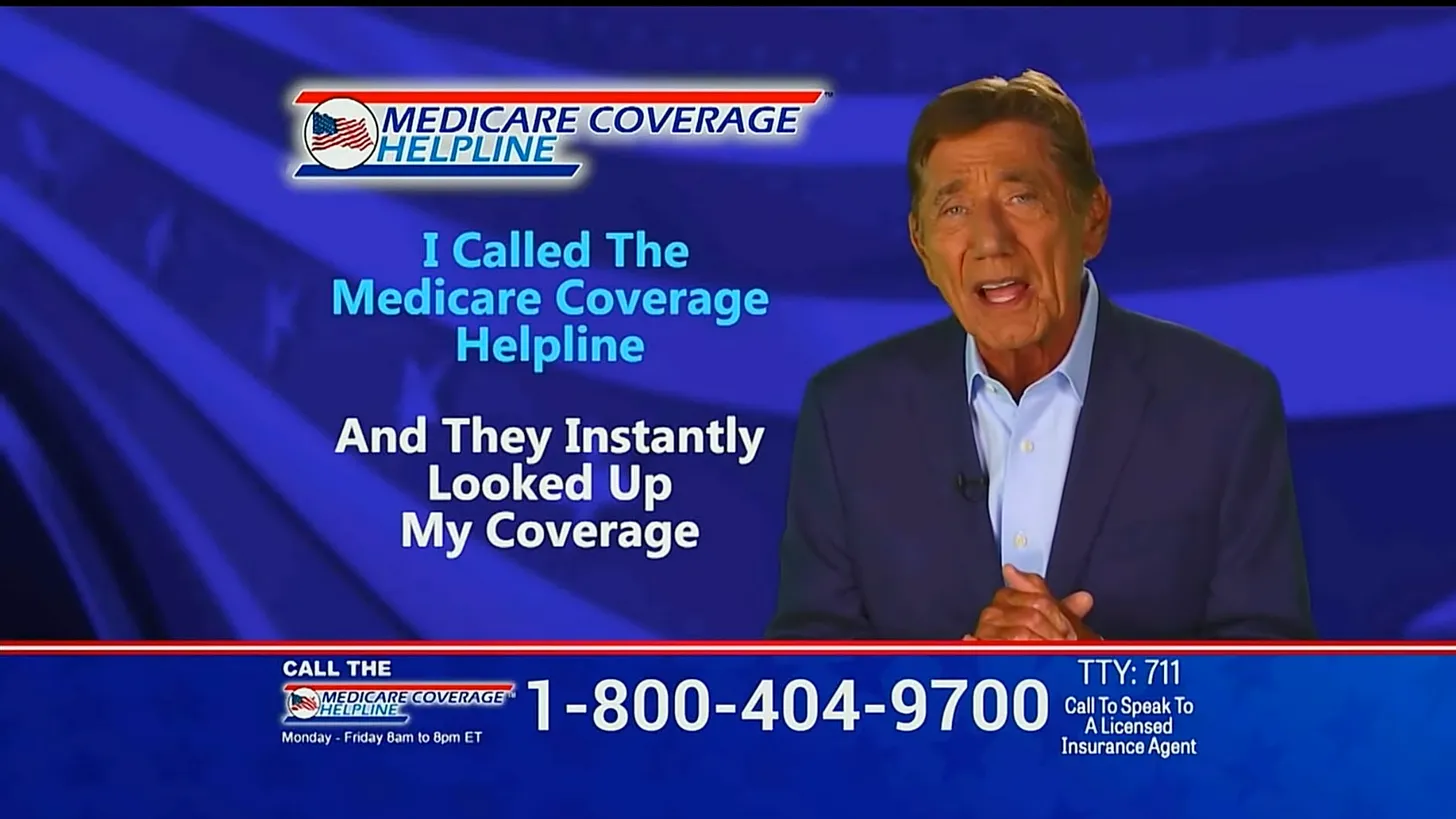
Former New York Jets superstar Joe Namath can be seen every year during Medicare open enrollment hocking plans that tell seniors how great their life would be if only they signed up for a Medicare Advantage plan. From October 15 to December 7 last year alone, Joe Namath ads ran 3,670 times, according to iSpot, which tracks TV advertising.

But the company behind those ads, now called Blue Lantern Health, and their products, HealthInsurance.com and the Medicare Coverage Helpline, have an expansive rap sheet of misconduct, including prosecutions by the Securities and Exchange Commission and the Federal Trade Commission, and a recent bankruptcy filing that critics say is designed to jettison the substantial legal liabilities the firm has incurred. In September 2023, the company became Blue Lantern; before that, it was called Benefytt; and before that, Health Insurance Innovations. Forty-three state attorneys general had settled with the company in 2018, with it paying a $3.4 million fine. A close associate of the company, Steven Dorfman, has also been prosecuted by the FTC, in addition to the Department of Justice

Namath himself has a bit of a checkered past when it comes to his business associates—in the early 1970s, he co-owned a bar frequented by members of the Colombo and Lucchese crime families, according to reporting at the time cited in a 2004 biography.  Due to the controversy surrounding the bar, Namath was forced by the NFL Commissioner to sell his interest in it. Last year, it was revealed that Namath had employed a prolific pedophile coach at his football camp, also in the 1970s, and the 80-year-old ex-quarterback is now being sued by one of the coach’s victims. 

The Namath ads are the main illustration of the behemoth Medicare Advantage marketing industry, which is designed to herd seniors into Medicare Advantage plans that restrict the doctors and hospitals that seniors can go to and the procedures they can access through the onerous “prior authorization” process, and it costs the federal government as much as $140 billion annually compared to traditional Medicare. Over half of seniors—nearly 31 million people—are now in Medicare Advantage, and there is little understanding of the drawbacks of the program. Seniors are aware that they may receive modest gym or food benefits but typically do not realize that they may be giving up their doctors, their specialists, their outpatient clinics, and their hospitals in favor of an in-network alternative that may be lower quality and farther away.

How so many seniors are lured into Medicare Advantage

Blue Lantern—with its powerful private equity owner Madison Dearborn—may be the key to understanding how so many people have been ushered into Medicare Advantage—and the pitfalls that private equity’s rapid entrance into health care can create for ordinary Americans.

While Blue Lantern is just one company, it is a Rosetta Stone for everything that is wrong with American health care today—fraud, profiteering, lawbreaking, no regard for patient care—where only the public comes out the loser. 

Blue Lantern uses TV ads and, at least until regulators began poking around, a widespread telemarketing operation, being one of the main firms charged with generating “leads” that are then sold to brokers and insurers, as Medicare Advantage plans are banned from cold-calling. Court filings reviewed by HEALTH CARE Un-Covered allege that after legal discovery, Blue Lantern (then known as Benefytt) at minimum dialed seniors over 17 million times, potentially in violation of federal law that requires telemarketers to properly identify themselves and who they are working for—ultimately, in this case, insurers that generate huge profits from Medicare Advantage.

The Namath ads have been running since 2018 when the company was named Health Insurance Innovations—the same year the FTC began prosecuting Simple Health Plans, along with its then-CEO Steven Dorfman. The Fort Lauderdale Sun-Sentinel identified Health Insurance Innovations as a “successor” to Simple Health Plans. After five years of likely exceptionally costly litigation, for which Dorfman is represented by jet-set law firm DLA Piper, on February 9, the FTC won a $195 million judgment against Simple Health Plans and Dorfman. The FTC alleged in 2019 that Dorfman had lied to the court when he said that he did not control any offshore accounts. The FTC found $20 million, but the real number is probably higher. 

Friends in high places 

In February 2020, Trump’s Secretary of Health and Human Services, Alex Azar, said that the Namath ads might not “look or sound like the future of health care,” but that they represented “real savings, real options” for older Americans. 

In March 2020, Health Insurance Innovations (HII) changed its name to Benefytt, and in August 2020, it was acquired by Madison Dearborn Partners. Madison Dearborn has close ties to the Illinois Democratic elite, pumping over $916,000 into U.S. Ambassador to Japan Rahm Emanuel’s campaigns for Congress and mayor of Chicago.

In September 2021, HII settled a $27.5 million class action lawsuit. The 230,000 victims received an average payout of just $80.  

In July 2022, the SEC charged HII/Benefytt and its then-CEO Gavin Southwell with making fraudulent representations to investors about the quality of the health plans it was marketing. “HII and Southwell…told investors in earnings calls and investor presentations that HII’s consumer satisfaction was 99.99 percent and state insurance regulators received very few consumer complaints regarding HII. In reality, HII tracked tens of thousands of dissatisfied consumers who complained that HII’s distributors made misrepresentations to sell the health insurance products, charged consumers for products they did not authorize and failed to cancel plans upon consumers’ requests,” the SEC found, with HII/Benefytt and Southwell ultimately paying a $12 million settlement in November 2022. 

By August 2022, Benefytt had paid $100 million to settle allegations that it had fraudulently directed people into “sham” health care plans. “Benefytt pocketed millions selling sham insurance to seniors and other consumers looking for health coverage,” the FTC’s Director of Consumer Protection, Samuel Levine, said at the time. 

Bankruptcy and another name change

In May 2023, Benefytt declared Chapter 11 bankruptcy—where the company seeks to continue to exist as a going concern, as opposed to Chapter 9, when the company is stripped apart for creditors—in the Southern District of Texas. The plan of bankruptcy was approved in August. The Southern Texas Bankruptcy Court has been mired in controversy in recent months as one of the two judges was revealed to be in a romantic relationship with a woman employed by a firm, Jackson Walker, that worked in concert with the major Chicago law firm Kirkland and Ellis to move bankruptcy cases to Southern Texas and monopolize them under a friendly court. While the other judge on the two-judge panel handled the Benefytt case, Jackson Walker and Kirkland and Ellis were retained by Benefytt, and the fees paid to Jackson Walker by Benefytt were delayed by the court as a result of the controversy.

In September 2023, Benefytt exited bankruptcy and became Blue Lantern

The August approval of the bankruptcy plan was vocally opposed by a group of creditors who had sued Benefytt over violations of the Telephone Consumer Privacy Act (TCPA). The creditors asserted that Benefytt had substantial liabilities, with millions of calls made where Benefytt did not identify the ultimate seller—Medicare Advantage plans run by UnitedHealth, Humana, and other firms prohibited from directly contacting people they have no relationship with—and violations fined at $1,500 per willful violation. 

Attorneys for those creditors stated in a filing reviewed by HEALTH CARE Un-Covered that Madison Dearborn always planned “to steer Benefytt into bankruptcy,” if they were unable to resolve the substantial liabilities they owed under the TCPA. 

Madison Dearborn “knew that Benefytt’s TCPA liabilities exceeded its value, but purchased Benefytt anyway, for the purpose of trying to quickly extract as much money and value as they could before those liabilities became due,”

the August 25, 2023, filing stated on behalf of Wes Newman, Mary Bilek, George Moore, and Robert Hossfeld, all plaintiffs in proposed TCPA class action suits. The filing went on to say that the bankruptcy was inevitable “if—after siphoning off any benefit from the illegal telemarketing alleged herein—[Madison Dearborn] could not obtain favorable settlements or dismissals for the telemarketing-related lawsuits against Benefytt.”

Under the bankruptcy plan, Blue Lantern/Benefytt is released from the TCPA claims, but individuals harmed can affirmatively opt-out of the release, which is why the bankruptcy court justified its approval. Over 7 million people—the total numbers in Benefytt’s database, according to the plaintiffs—opting out of the third-party release is an enormous administrative hurdle for plaintiffs’ lawyers to pass, massively limiting the likelihood of success of any class-action litigation against Blue Lantern going forward. 

Their attorney, Alex Burke, stated in court that “[t]his bankruptcy is an intentional and preplanned continuation of a fraud.” His statement was before 3,670 more Namath ads ran during 2023 open enrollment. 

In response to requests for comment from HEALTH CARE un-covered, the Centers for Medicare and Medicaid Services did not answer questions about Benefytt and why the company was simply not barred from the Medicare Advantage market altogether. 

Corporations have used the bankruptcy process in recent years to free themselves from criminal and civil liability, with opioid marketer Purdue Pharma being the most prominent recent example. The Supreme Court is reviewing the legality of Purdue’s third-party releases currently, with a decision expected in late spring.

The role that private equity plays in keeping Benefytt going cannot be overstated.

Without Madison Dearborn or another private equity firm eager to take on such a risky business with such a long history of legal imbroglios, it is almost certain that Benefytt would no longer exist—and the Joe Namath ads would disappear from our televisions. Instead, Madison Dearborn keeps them going, suckering seniors into Medicare Advantage plans. 

This is part and parcel of the ongoing colonization by private equity into America’s health care system. Private equity is making a major play into Medicare Advantage.

It has pumped billions of dollars into purchasing hospitals. It has invested in hospice care. It is gobbling up doctors’ groups. It is acquiring ambulance companies. It is hoovering up nurse staffing firms. It is making huge investments into health tech. It is in nursing homes. And it is in health insurance. Nothing about America’s health care system is untouched by private equity.

That’s a problem, experts say.

“I’ve been screaming at the TV every time Joe Namath gets on—it is not an official Medicare website,” said Laura Katz Olson, a professor of political science at Lehigh University who has written on private equity’s role in the health care system.

“Private equity has so much money to deploy, which is far more than they have opportunities to buy. As such, they are desperately looking for opportunities to invest. There’s a lot of money in Medicare Advantage—it’s guaranteed money from the federal government, which makes it perfect for the private equity playbook.”

Eileen Appelbaum, the co-director at the Center for Economic and Policy Research, who has also studied private equity’s role in health care, concurred that private equity was a perfect fit for Medicare marketing organizations.

“I think basically the whole privatized Medicare situation is ready for all kinds of exploitation and misrepresentations and denying people the coverage that they need,” she said. “My email is inundated with these totally misleading ads. Private equity  took a look at this and said, “look at that, it’s possible to do something that’s misleading and make a lot of money.”

Madison Dearborn receives a large portion of its capital from public pension funds like the California Public Employees Retirement System (CalPERS) and the Washington State Investment Fund—people who are dependent on Medicare. Appelbaum said that the pension funds exercise little oversight over their investments in private equity. “Pension funds may have the name of the company that they are invested in, they’re told that it’s ‘part of our health care investment portfolio,’ but they don’t find out what they really do until there’s a scandal.

It is amazing that pension funds give so much money to private equity with so little information about how their money is being spent.”

With bankruptcy looming, Bright Health is fully ditching its insurance business

https://www.fiercehealthcare.com/payers/bankruptcy-looming-bright-health-fully-ditching-its-insurance-business

Embattled insurtech Bright Health will fully ax its insurance business as a potential bankruptcy looms, the company announced Friday.

The company secured an extension to its credit facility through June 30, giving it a few extra months to avoid going belly-up. To ensure it qualifies for the extension, the company must find a buyer for its California-based Medicare Advantage (MA) business by the end of May, according to a filing with the Securities and Exchange Commission.

Bright Health revealed March 1 that it had overdrawn its credit and would need to secure $300 million by the end of April to stay afloat.

The MA business includes nearly 125,000 California seniors across its Brand New Day and Central Health Plan brands. In the announcement, Bright said the sale would “substantially bolster” its finances.

“Since our founding, Bright Health has worked to make healthcare simpler, more personal and affordable for consumers,” CEO Mike Mikan said in the announcement. “As our markets evolve, we are taking steps to adapt and ensure our businesses are best positioned for long-term success.”

In late 2022, the company announced that it would exit the Affordable Care Act’s (ACA’s) exchanges and slashed its reach in MA down to just California and Florida as its financial challenges mounted. It later cut the Florida plans as well.

Manny Kadre, lead independent director of Bright Health’s board of directors, said in the announcement that the company has “received inbound interest” about the California MA business as it explores its options.

With the full divestiture of its insurance business, that means Bright Health will be all-in on its NeueHealth care delivery services. Mikan said in the announcement that the segment performed well in the first quarter and has grown to serve about 375,000 value-based care customers.

As Bright shops for a buyer for its MA plans, it’s also continuing to unwind the ACA business, a process that hit a snag as it was hit with a lawsuit from Oklahoma-based health system SSM Health, which alleged that the insurer owed it more than $13 million in unpaid claims.

Bright Health is also under the gun to boost its stock price, as the New York Stock Exchange has threatened to delist its shares. Shares in the company were trading at 17 cents on Friday afternoon.


SEC may take ‘fresh look’ at auditor conflicts of interest: Gensler

SEC Chair Gary Gensler.

Dive Brief:

  • Securities and Exchange Commission (SEC) Chair Gary Gensler has asked the Public Company Accounting Oversight Board (PCAOB) Chair Erica Williams to consider adding auditor independence standards to its agenda and the SEC itself may need to take a “fresh look” at its own rules on the independence issue, Gensler said during a webinar Wednesday.
  • SEC staff has seen “situations of decreased vigilance” when it comes to auditor independence and Gensler expressed concern that conflicts of interest stemming from auditors and affiliated firms serving the same client persist 20 years after the Sarbanes Oxley Act directed the SEC to take steps to create stronger barriers between auditors and other parts of their firms, he said.
  • “A number of firms spun out their consulting businesses in the days shortly before and after Sarbanes-Oxley. Over the past 20 years, however, many of these firms went on to rebuild them again. PCAOB inspections continue to identify independence — and lack of professional skepticism — as perennial problem areas,” Gensler said.

Dive Insight:

Gensler spoke during a webinar hosted by the Center for Audit Quality commemorating the 20th anniversary Sarbanes-Oxley Act, which established the PCAOB in the wake of the Enron and WorldCom accounting scandals to oversee accounting firms that audit public companies.

The SEC chair has been shaking up the oversight of auditors for some time, ousting William Duhnke as PCAOB chair last year. Last fall SEC Acting Chief Accountant Paul Munter underscored the importance of independent audits as an investor safeguard, saying that an auditor that provides extensive non-audit services to an entity that has an active mergers and acquisitions business model must continually monitor the impacts of all such transitions on its audit engagement to ensure that the auditor remains independent of all of its audit clients. 

During the talk Gensler was also critical of the sluggish pace at which PCAOB has undertaken the responsibility that it was given to update interim standards that it inherited from the American Institute of Certified Public Accountants.

“Historically … the PCAOB has been too slow to update auditing standards. Twenty years later, most of those interim standards remain,” Gensler said. But he expressed confidence that Williams, who took over as chair of the U.S. audit watchdog in January, and the board would “live up to Congress’s original vision with respect to standard-setting. I hope we can make some progress before Sarbanes-Oxley can legally drink.” 

In May the PCAOB announced plans to update almost all of the remaining interim standards.

In analyst call, Clover reveals it doesn’t have the customers it said it did during IPO

Why Clover Health Chose a SPAC, Not an IPO, to Go Public | Barron's

When it planned to go public through a SPAC merger, insurance startup Clover Health told investors that it already had 200,000 direct contracting lives under contract for 2021. But in new guidance shared on Monday, the company now plans to end the year just 70,000 to 100,000 covered lives from direct contracting. 

After telling investors that it would more than quadruple its membership base in a year, insurance startup Clover Health is cutting its projections in half.

The insurance startup now plans to end the year with between 70,000 and 100,000 covered lives from direct contracting, a new payment program launched last by the Centers for Medicare and Medicaid (CMS) services last year, according to its most recent earnings report. 

Last year, when Clover announced plans to go public through a merger with a special-purpose acquisition company backed by “SPAC King” Chamath Palihapitiya, the company told investors it already had 200,000 direct contracting lives under contract for 2021, according to a slide deck.

But its projections call into question the veracity of those shared when the company was looking to go public. In fact, Kevin Fischbeck, an analyst with Bank of America, called out the discrepancy when he asked the company about estimates that it would have nearly half-a-million members covered through direct contracting by 2023.

Clover could only manage a feeble response, with CFO Joe Wagner saying it was “too early to say in future years exactly where we’re going to end up.”

It’s not the only big question that Clover faces about its future. After a scathing report from a short-seller earlier this year, the startup confirmed it had received a request for information from the Department of Justice, which it hadn’t disclosed previously. A day later, the company received notice of an investigation from the Securities and Exchange Commission.

When asked about the current status of the investigation, co-founder and CEO Vivek Garipalli said it was the company’s policy not to comment on pending inquiries.

In an unusual move, the company fielded questions from Reddit during the investor call, alongside those from analysts.

Clover is one of 53 companies selected to participate in CMS’ direct contracting programs in 2021. The value-based payment models were created under the previous administration, which would allow the startup to strike contracts with doctors who are caring for patients under the traditional Medicare program and manage their care.

Under the new administration, CMS has stopped taking applications for the new direct contracting models, which are slated to launch next year. It also paused the rollout of an alternative model that would tie payments to the population health and cost outcomes for all residents of a specific location.

In the meantime, most of Clover’s business still comes from its Medicare Advantage plans, where it has 66,300 members, an 18% increase year-over-year. It brought in $200.3 million in revenue in the first quarter, up 21%, but its net loss jumped more than 70% to $48.4 million.

The company also decreased its revenue projections from what it originally told investors last year. The startup said it expects to bring in revenue of $810 million to $830 million by the end of 2021, a decrease from its previous projections of $880 million. A small portion of that, just $20 million to $30 million, would come from direct contracting.

Genesis HealthCare plans to cut $236M in debt, delist stock from NYSE

Genesis Corporate Headquarters | Paul Risk Construction

Kennett Square, Pa.-based Genesis HealthCare will institute a three-pronged restructuring plan to improve its financial metrics and cut debt by $236 million, the company said March 3. 

Genesis HealthCare is a holding company with subsidiaries that provide services to more than 325 skilled nursing facilities and assisted or senior living communities in 24 states. 

As part of its financial improvement strategy, Genesis agreed to end master lease agreements at 51 assisted or senior living facilities leased from Welltower and transition them to new operators. Genesis expects to receive $86 million from the deal, which it will use to repay a portion of its debt obligations to Welltower. 

Genesis will also receive $170 million in debt reduction from Welltower after completing the transaction. 

The company also signed a definitive agreement for a capital infusion of $50 million from ReGen Healthcare, which ups its ownership interest in Genesis to 25 percent.  

The third part of the strategy is that it will voluntarily delist its Class A common stock from the New York Stock Exchange and deregister its common stock under the Securities Exchange Act of 1934.

“The severity of the pandemic dramatically impacted patient admissions, revenues and costs, compounding the pressures of our long-term, lease-related debt obligations,” said Genesis CEO Robert Fish. “These restructuring transactions improve the financial and operational stability of the company significantly and build on the encouraging signs we are seeing as COVID-19 case rates continue to materially decline and residents, patients and staff are vaccinated.”

Anthem: No change in 2020 profit forecast

https://www.beckershospitalreview.com/payer-issues/anthem-no-change-in-2020-profit-forecast.html?utm_medium=email

End Citizens United announces 2018 targets, will spend $35M in 2018

Anthem reaffirmed its profit guidance for 2020 as the insurer expects continued financial growth despite the COVID-19 pandemic, according to a June 9 filing with the Securities and Exchange Commission. 

Anthem officials said their full-year guidance will be greater than $21 per share. The company expects to generate about 70 percent of its adjusted earnings in the first half of the year.

Anthem reported first-quarter revenues of $29.6 billion, up from $24.7 billion in the same period a year before. Anthem ended the quarter with $1.5 billion in profits, down slightly from $1.6 billion a year prior. 


Quorum says it may have to file for bankruptcy

https://www.healthcaredive.com/news/quorum-10k-delay-bankruptcy-warning/575491/

Dive Brief:

  • For-profit hospital operator Quorum Health said in a recent filing with the Securities and Exchange Commission that it may have to file for Chapter 11 bankruptcy to address current liquidity needs while continuing to care for patients and keep its hospitals operating.
  • The company said it’s in ongoing discussions with certain debt holders concerning a recapitalization or financial reorganization transaction.
  • Quorum also announced in the SEC filing that it will be late to file its annual 10-K report, covering financials for its fiscal year ending December 31, 2019.

Dive Insight:

COVID-19 has upended hospitals’ typical operations, prompting many to halt lucrative elective surgeries and cancel doctors visits to preserve staff and resources. Some worry those patients and revenue may never come back as unemployment claims go up and people lose their employer-sponsored health coverage. 

Tennessee-based Quorum Health, which operates 24 hospitals in 14 states, may have already been more ill-positioned financially than other systems for such a pandemic.

Quorum missed Wall Street earnings expectations in its most recent financials for the third quarter of 2019, posting a net loss of almost $76 million and a revenue decline almost 9% year over year. The company now said it’s delaying its 10K report with its most recent financials due to restructuring talks, but has 15 days to do so.

The for-profit chain went public in May 2016 with 38 hospitals – 14 of which have since shuttered. In 2017 private equity firm KKR took a 5.6% stake in the system for $11.3 million. 

Beyond being Quorum’s largest debt-holder today, KKR also owns about 9% of its public shares. In December, the firm offered to buy Quorum out and take the hospital chain private at $1 a share.

While negotiating with debt holders and weighing its options, Quorum intends to maintain all operations at its hospitals without any interruption in service, CEO Robert Fish said in a statement.

“Our facilities play a critically important role in their communities and the fight against COVID-19,” Fish said. “We are intensely focused on ensuring our employees have the resources they need to provide quality care to the patients and communities they serve, now and well into the future.”


Tenet plans to spin off revenue-cycle subsidiary Conifer

https://www.modernhealthcare.com/finance/tenet-plans-spin-revenue-cycle-subsidiary-conifer?utm_source=modern-healthcare-daily-dose-wednesday&utm_medium=email&utm_campaign=20190724&utm_content=article1-readmore

After nearly two years of fielding underwhelming offers for its revenue-cycle subsidiary, Tenet Healthcare Corp. has settled on a decidedly different maneuver: It will spin it off as a separate, publicly-traded company.

Leaders with Dallas-based Tenet have spent the past 18 months finalizing a deal on Conifer Health Solutions. While CEO Ron Rittenmeyer conceded on an investor call Wednesday that an outright sale would have been the company’s first choice, there are several benefits to a tax-free spin off.

Shareholders win in that they’ll get shares in the new company in addition to their Tenet stock, but Rittenmeyer couldn’t say say yet how many they will receive.

“From a shareholder standpoint, I believe it’s a no-brainer,” he said.

The stock market responded positively to Wednesday’s news. Tenet’s shares were up about 14.5% at market close.

Rittenmeyer said the deal, which isn’t scheduled to close for another two years, is also the best path forward for Tenet in that it will have a “reasonable” impact on the company’s debt. Tenet’s long-term debt stood at $14.8 billion as of March 31. He characterized the deal as a “debt-for-debt exchange” that will be tax free. Tenet also would have had to pay taxes on a sale.

The aim of Tenet’s asset sales, including—hypothetically—Conifer, have been to lower the company’s debt. But analysts questioned how much spinning off Conifer will truly achieve that purpose, and some said they believe it could actually increase the company’s debt ratio.

Rittenmeyer said in an interview Tenet has long maintained it will bring down debt through a combination of performance and asset sales, which are ongoing.

“The spin-off will be a debt-to-debt exchange that will put debt on the new company and pay off debt at Tenet,” he said. “So our debt will come down by that process.”

Tenet won’t disclose how much of its debt will shift to Conifer until 6 months before the deal closes, Rittenmeyer told investors on Wednesday morning’s call. He wouldn’t say whether Conifer will have more, less or similar leverage to Tenet. One thing’s for sure, he said Tenet does not plan to overleverage the new company.

“There’s no way we plan to load up Conifer and cause that to have a capital structure problem on the way out,” Rittenmeyer said. “We want it to be successful, so it’s a balancing act.”

Others aren’t convinced that will be the case. Brian Tanquilut, a healthcare equity analyst with Jefferies, thinks the deal will actually increase Tenet’s debt ratio because Conifer’s departure from Tenet will pull more from its earnings than it will from its debt, he said.

“There will be more debt sitting on Tenet’s books than what you’re moving off earnings proportionally to the Conifer spin,” he said.

John Ransom, a managing director in healthcare equity research with Raymond James & Associates, agreed that the deal could nudge Tenet’s debt ratio higher depending on how it plays out, although Conifer will likely pay a dividend to Tenet.

It makes sense that Tenet doesn’t want to load up the new company with debt, Ransom said.

“I think they want to try to dress this up as more of a growth company,” he said.

The deal won’t close until the end of the second quarter of 2021. To get there, Tenet will have to meet regulatory approvals from the Internal Revenue Service and Securities and Exchange Commission, Rittenmeyer said.

Tenet also announced Wednesday the departure of Conifer’s CEO, Stephen Mooney. He will be replaced on an interim basis by Tenet’s Chief Operating Officer, Kyle Burtnett, while the company searches for a permanent replacement. Rittenmeyer said that wasn’t connected to the Conifer announcement, but that Mooney simply wanted to pursue other endeavors.

“It’s very positive; no negative,” Rittenmeyer said. “We’re not pushing him out the door.”

In February, Tenet was in exclusive talks over what would have been a very different Conifer deal. Rittenmeyer revealed Wednesday Tenet had considered a merger with another company that would have ultimately been spun out. He said Tenet decided against that because it wasn’t clear that plan would have yielded enough of a financial return.

Tenet received nine preliminary bids to purchase Conifer, including three that were high enough to consider, Rittenmeyer said. Tenet spoke with 74 potential buyers overall, including 16 strategic buyers and 58 financial buyers. However, the company encountered a number of setbacks when it came to those deals.

Some of the would-be buyers were offering company stock in addition to cash, but Tenet wanted an all-cash sale, Rittenmeyer said. Additionally, he said the bids were not high enough to reflect the performance improvements Tenet has added to Conifer.

A number of the bids included stipulations Tenet could not agree to, such as not being accountable for collecting 100% of Tenet’s cash, “which is critically important to us,” Rittenmeyer said. In the end, none of the proposals would have assured Tenet would have effective recourse if cash collection fell short, Rittenmeyer said.

Some would-be buyers expected Tenet to guarantee that if it sold a hospital, the buyer would continue to use Conifer or, if it didn’t, Tenet would pay Conifer’s new owner for the sold asset’s revenue-cycle management, Rittenmeyer said.

This deal was complicated by the fact that Tenet continues to divest hospitals to pay down its debt, Tanquilut said. Since Tenet is Conifer’s largest customer, buyers would be taking on a shrinking company, he said.

“How do you value an asset that we know at least for its largest client will see shrinking revenue?” Tanquilut said.

On Wednesday’s call, Rittenmeyer said early in the process, shareholders said they believed buyers would pay high multiples for Conifer, possibly in the mid- to high-teens.

Ransom said Tenet likely received an unreasonably high valuation from an investment bank, which may have contributed to the extended time it spent seeking a buyer.

“Whoever told them they were going to get a high-teens valuation, that’s insane,” Ransom said. “They probably shouldn’t have bought that.”