An “employee diaspora” is complicating network contracting

https://mailchi.mp/bade80e9bbb7/the-weekly-gist-june-18-2021?e=d1e747d2d8

Home - Diaspora Dialogues

This week we caught up with a benefits consultant colleague to get her perspective on how employers are thinking about health benefits as they come out of the pandemic. “It seems like employers and health systems have switched places in their enthusiasm for direct contracting,” she shared.

Prior to the pandemic, employer interest in working directly with a health system around a narrow network product to deliver coordinated care was growing, but there were few systems offering attractive solutions. Now more health systems are ready, but the number of employees working remotely has created a new obstacle for direct contracting.

One chief people officer for a large employer noted that while some employees have relocated permanently, others are still hopping from one Airbnb to another: “It’s at the point where I have no idea where half of our people are living on any given day.” In this new “employee diaspora”, some firms are seeing ten percent or more of their formerly office-based workforce now located outside the market, creating challenges for a geographically concentrated network to meet their needs.

How many companies will allow permanent telework, and how many employees will take them up on it, remains to be seen (our colleague suggested we’ll know more in the fall, after the return to school anchors many families in place). But for now, the best employer partners for direct contracting efforts are likely mid-sized regional employers, who are more likely to retain a local workforce, and face fewer obstacles to making benefit design changes.


Advocate Aurora to make remote work permanent for 12,000 employees

Advocate Aurora keeping 12,000 employees on remote work assignment

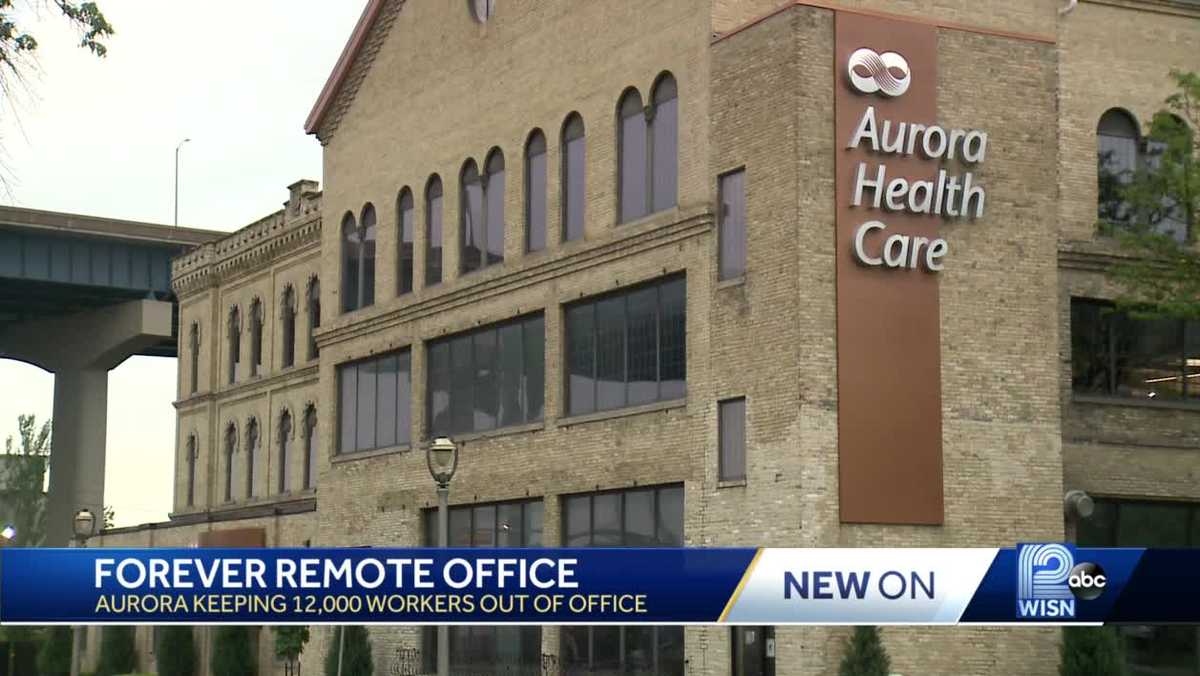
Advocate Aurora Health is implementing a new work model that will move 12,000 non-clinical employee positions in finance, consumer experience and more departments to remote-first operations, according to a May 21 BizTimes report. 

Under the new work model, dubbed WorkForward, the 12,000 non-clinical employees who have been working remotely throughout the COVID-19 pandemic will continue to do so permanently; these employees will “no longer have dedicated workspaces” like cubicles or offices at the health system’s Milwaukee and Downers Grove, Ill.-based offices, the publication reports. 

Affected departments include finance and accounting, consumer experience and public affairs, strategy and business development, government relations and administration. Employees will be able to choose to work from home, at a coffee shop or other locations, Advocate Aurora Chief Human Resources Officer Kevin Brady told BizTimes

“For some departments, remote-first may come to mean monthly team meetings in the office, once-a-week collaboration sessions or a trip to an outside-the-box location that inspires the team,” he said. 

Advocate Aurora will “regularly evaluate” its real estate needs with the work model transition; the health system recently vacated non-headquarters office space when its lease ended at the end of 2020. Advocate Aurora is also reconfiguring its remaining facilities to create more “innovative and productive” work areas that employees can use for meetings or temporary office space, according to the report.

A mounting wave of post-COVID CEO retirements

https://mailchi.mp/097beec6499c/the-weekly-gist-april-30-2021?e=d1e747d2d8

The Great Reset - YouTube

A recently retired health system CEO pointed us to a working paper from the National Bureau of Economic Research, which indicates that leading an organization through an industry downturn takes a year and a half off a CEO’s lifespan.

It’s not surprising, he said, that given the stress of the past year, we will face a big wave of retirements of tenured health system CEOs as their organizations exit the COVID crisis. Part of the turnover is generational, with many Baby Boomers nearing retirement age, and some having delayed their exits to mitigate disruption during the pandemic.

As they look toward the next few years and decide when to exit, many are also contemplating their legacies. One shared, “COVID was enormously challenging, but we are coming out of it with great pride, and a sense of accomplishment that we did things we never thought possible.

Do I want to leave on that note, or after three more years of cost cutting?” All agreed that a different skill set will be required for the next generation of leaders. The next-generation CEOs must build diverse teams capable of succeeding in a disruptive marketplace, and think differently about the role of the health system.

“I’m glad I’m retiring soon,” one executive noted. “I’m not sure I have the experience to face what’s coming. You won’t succeed by just being better at running the old playbook.” Compelling candidates exist in many systems, and assessing who performed best under the “stress test” of COVID should prove a helpful way to identify them.