

 |
| The politics and substantive rules of the road for the Affordable Care Act are more stable now than they have been in years. But chaos is never far away.
What to watch: The upcoming ACA enrollment season, which starts Nov. 1, will be the first one with the Trump administration’s agenda fully in place, and it will test just how effective that agenda is.
This period of relative certainty could come undone in court.
The bottom line: We’re either adjusting to the new normal, or in the calm before the storm. A federal judge in Texas and a six-week enrollment period will tell us which. — Sam Baker Sign up for Sam’s daily Vitals newsletter here. |
Category Archives: Uncategorized
How to Fix Bullying Culture in Health Care
https://www.kevinmd.com/blog/2018/06/how-to-fix-bullying-in-health-care.html

When we think of bullying, we’re usually worrying about our school-age kids or remembering bad experiences from high school.
We learn quickly in the health care field that bullies don’t change once they enter the clinical world. Health care, with its incredible differential in knowledge, authority and pay creates large power differentials and easily generates subordinate/superior relationship dynamics.
Bullying occurs within professions between trainees and trainers and faculty, and across clinical areas when there are knowledge differences such as between specialists and primary care. Mistreatment also frequently occurs in an interdisciplinary manner between physicians and non-physicians, supervisors and direct reports, nurses, and technicians.
For many (bully and bullied alike), this has been considered the price of entry into the healthcare arena.
The fears generated by the power differentials are very real:
- loss of one’s job
- loss of referrals
- loss of business to a competitor
Through trial and error, bullies find the right formula to preserve the power dynamics.
These unspoken fears create a culture of silence. It then becomes very difficult to achieve a culture of high reliability, which operates on a framework of deference to everyone’s expertise with an intense preoccupation with avoiding errors and failure. I have seen this culture of silence lead to OR fires and use of new OR equipment and procedures without adequate training or supervision.
An organization-wide “anti-bullying statement” should stop the problem, right? Not likely. An organization where I once served in administration had such a statement but also had a “hidden agenda,” i.e., ‘”We need these doctors to bring in business and need these nurses’ experience.” It led to confusion as to what the organization would stand for. Staff began accepting physician rounding at 10 p.m. and used equipment in the OR without proper training.
Working with the medical staff leadership, we opened some honest conversations around patient safety. Both groups were surprised. The medical staff thought administration was OK with the unsafe behaviors; the administration team hadn’t even been made aware of them until that point.
Having a policy against disruptive physicians and nurses is a Band-Aid for a much deeper issue. Many physicians rightly resent the implication that a legitimate disagreement with another healthcare professional can immediately and irrevocably label one “disruptive” without a fair hearing. Stories of false accusations fuel the need for physicians to protect each other, to the detriment of improving the system.
There are more effective ways to address this complex problem. Those on the “wrong side” of the power differential need scripting to defuse the confrontation. For example, a nurse being yelling at by a physician about being paged at 2:00 a.m. regarding “non-urgent orders” could neutralize the situation by calling attention to the behavior, while still allowing an escape route for de-escalation by saying “It sounds like you are having a bad night. Are you yelling at me or simply venting?” Simple lines like these can empower line staff to safely de-escalate these situations and re-train those on the “right side” of the power differential.
Now, a single physician or nurse practicing scripting won’t be able to implement a culture change. It’s up to medical and nursing officers to establish the expectation that physicians and nurses will learn and apply such tools.
Medical staff officers must enlighten clinicians on how a culture of fear leads to more complications and patient harm. Medical errors occur when the safety systems designed to catch an error before it reaches a patient are short-circuited, which is commonplace if physicians give in to the doctor yelling the loudest.
Research from the Vanderbilt Center for Patient and Professional Advocacy in Patient Advocacy Reporting System (PARS) and Co-Worker Observation Reporting System (CORS) databases supports the notion that truly disruptive physicians are the minority and can be identified by staff and patient complaints. It further validates the potentially adverse outcomes and unsafe environment physician bullies perpetuate.
Their research also shows that “what gets measured, matters” as these “disruptive providers” don’t always need to be reported to NPDB. Some physicians simply need to understand that their behavior, though considered acceptable in past generations, needs to change.
With new scripting to manage an increasingly difficult health care environment and clear expectations laid out by medical staff officers, it’s entirely reasonable to expect the same zero tolerance for bullying in health care environments that now exists in our children’s schools.
Leaders in Healthcare – Celebrating 9,000 Posts

Cartoon – As If I would know that

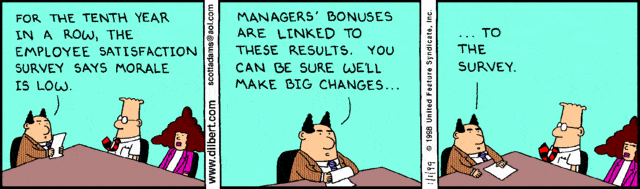
Cartoon – You can be sure we’ll make big changes
Cartoon – Artificial Intelligence Defined

Cartoon – Morale Booster of the Week

Cartoon – Importance of Staff Morale

Essentia to continue mandatory flu shot policy
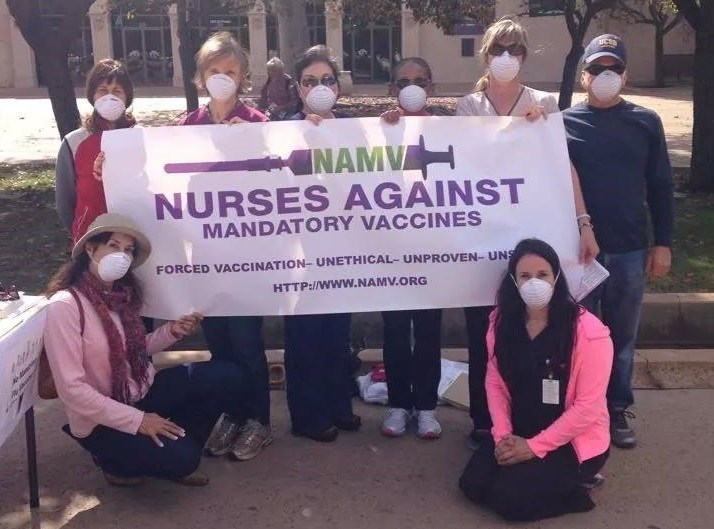
Duluth, Minn.-based Essentia Health rolled out a mandatory flu shot policy last year, and the health system will continue the program this year.
Under the program, employees had until Nov. 20, 2017, to receive a flu shot, obtain a medical/religious exemption or face termination. Essentia reported more than 99.5 percent compliance with the program.
For 2018, Essentia will continue its mandatory flu shot program, which also applies to students who train and vendors who operate at the health system’s facilities, as well as people who volunteer through Essentia programs.
To ensure there is plenty of time to review medical/religious exemptions before this year’s Nov. 20 compliance deadline, Essentia moved up the deadline to submit exemption requests.
“The first year [is] the most difficult because everyone [is] doing first-time medical and religious exemption requests,” said Rajesh Prabhu, MD, infectious disease and chief patient quality and safety officer for the system. “Those granted medical exemptions last year still [have their medical exemptions] in place. For religious exemptions, they just have to confirm their belief hasn’t changed from last year.”
He expects compliance to increase this year since fewer people need to request medical exemptions for the first time. Essentia now has 14,700 employees and began its flu shot campaign Oct. 2.
Dr. Prabhu encouraged other systems or hospitals considering a mandatory flu shot program to focus on the reasoning behind beginning the program.
“It’s not just a technical change. You have to get everyone to feel why this is important for not only our employees but [also] the patients we serve. We focus a lot of efforts on that end,” he said.
Dr. Prabhu said support from leadership helped make the first year of Essentia’s mandatory flu shot program a success.
“We had support from our CEO and everyone in leadership,” he said. “[They had] direct, in-person communication with some of those hesitant to get vaccinated because sometimes it’s good to talk to people to understand their concerns and barriers.”
Lessons learned
Essentia announced its mandatory flu shot program in September 2017 and some employees felt they didn’t get enough notice to comply. However, Dr. Prabhu said he believes some employees would not have complied with the program even if they were given more time.
“No matter how much lead time you give, I don’t think it will change the minds of people who are resistant to get the influenza vaccine,” he said.
Essentia’s flu shot policy encountered opposition from unions as well. The Minnesota Nurses Association and some other labor groups that represent Essentia employees continue to challenge the flu shot policy. In July, an arbitrator sided with Essentia over the United Steelworkers Union regarding the policy.
Despite the opposition and a few challenges in the initial rollout, Dr. Prabhu said Essentia needed the policy. He said the system was not going to get to where it wanted to be with its previous voluntary policy, which had 82 percent compliance. And, after evaluating the first year, Essentia decided it was necessary to continue the policy into the 2018-19 flu season.
2018-19 flu season
For this flu season, the CDC recommends everyone 6 months and older receive a flu vaccine by the end of October. Nasal spray FluMist was not recommended last season, but it is recommended for 2018-19 as an option for flu vaccination of nonpregnant individuals age 2 to 49.
It’s unclear how severe the 2018-19 flu season will be. Last year’s flu season was particularly severe, with about 900,000 people hospitalized and about 80,000 people dead due to the virus.
Dr. Prabhu said the flu season hasn’t hit the Duluth area yet, but Essentia is trying to do everything possible to prevent the spread of the virus among patients and staff.
Battle heats up between Stanford Health Care, union over hospital charge initiative

Stanford (Calif.) Health Care and an employees union are disputing over a November ballot initiative to place a 15 percent cap on hospital charges in Palo Alto, Calif., The Stanford Daily reported.
Seven things to know:
1. The ballot initiative, initially filed in May, would place a 15 percent cap on the amount Palo Alto-based hospitals can charge in excess of direct patient care costs. Hospitals, medical clinics and other providers in Palo Alto would have to refund payers for charges exceeding the 15 percent cap within 180 days of each fiscal year.
2. The Service Employees International Union-United Healthcare Workers West sponsored the measure. It represents healthcare workers at Stanford Health Care — which has a main campus in Palo Alto.
3. Stanford University announced its opposition to the measure in a Sept. 28 statement.
The measure “would threaten Stanford Health Care’s ability to provide top-quality healthcare to patients from Palo Alto and across the region,” officials said.
“Such a policy is estimated to reduce Stanford Health Care’s budget by 25 percent, requiring significant cutbacks and the possible closure of many services and programs that are essential to high-quality healthcare in the local area.”
4. Union spokesperson Sean Wherley argued the measure will provide accountability for local healthcare providers and the city, according to the report.
“This is about transparency [and] letting people understand how much [they] are being charged, and why [they] are being charged so much more than the clinic down the street or in the neighboring community,” he told The Stanford Daily. “This is our chance as an organization to get healthcare costs under control.”
5. The union has also taken issue with Stanford Health Care’s profits, but the system said these are necessary resources to maintain its specialists, facilities and community benefit program, and that the system invests all its profit margin.
6. Palo Alto City Council members voted this summer to oppose the measure. According to the report, they attributed the decision to not having adequate bureaucratic infrastructure to regulate healthcare charges from local providers.
7. As of Oct. 3, the political action committee of the union and the opposition committee — Protect Our Local Hospitals and Health Care — had spent a combined $1.8 million on the measure.

