

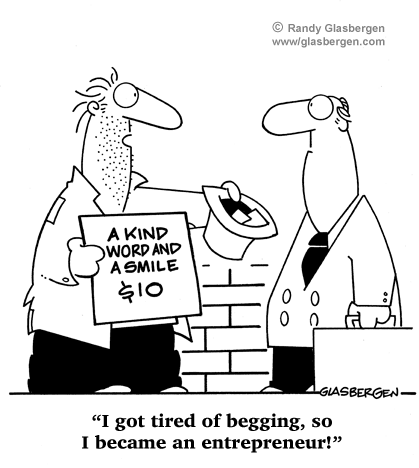
Cartoon – Today’s Entrepreneur




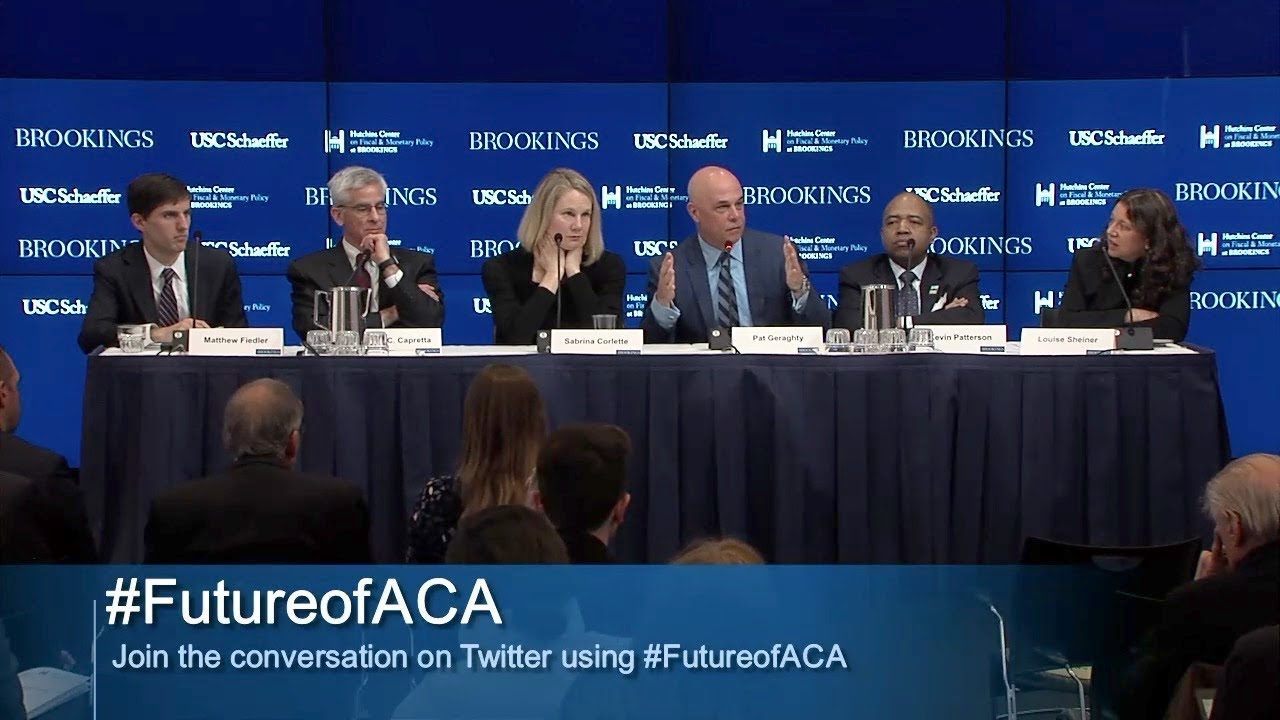
Stability has long been an issue for the individual health insurance market, even before the Affordable Care Act. While reforms adopted under the ACA initially succeeded in addressing some of these market issues, market conditions substantially worsened in 2016.
Insurers exited the individual market, both on and off the subsidized exchanges, leaving many areas with only a single insurer, and threatening to leave some areas (mostly rural) with no insurer on the exchange. Most insurers suffered significant losses in the individual market the first three years under the ACA, leading to very substantial increases in premiums a couple of years in a row.
For a time, it appeared that rate increases in 2016 and 2017 would be sufficient to stabilize the market by returning insurers to profitability, which would bring future increases in line with normal medical cost trends. However, Congress’s decision to repeal the individual mandate and the Trump Administration’s decision to halt “cost-sharing reduction” payments to insurers, along with other measures that were seen as destabilizing, created substantial new uncertainty for market conditions in 2018.
This uncertainty continues into 2019, owing both to lack of clarity on the actual effects of last year’s statutory and regulatory changes, and to pending regulatory changes that would expand the availability of “non-compliant” plans sold outside of the ACA-regulated market. These uncertainties further complicate insurers’ decisions about whether to remain in the individual market and how much to increase premiums.
In “Stabilizing and strengthening the individual health insurance market: A view from ten states” (PDF), Mark Hall examines the causes of instability in the individual market and identifies measures to help improve stability based off of interviews with key stakeholders in 10 states.
In the states studied—Alaska, Arizona, Colorado, Florida, Iowa, Maine, Minnesota, Nevada, Ohio, and Texas—opinions about market stability vary widely across states and stakeholders.
While enrollment has remained remarkably strong in the ACA’s subsidized exchanges, enrollment by people not receiving subsidies has dropped sharply.
States that operate their own exchanges have had somewhat stronger enrollment (both on and off the exchanges), and lower premiums, than states using the federal exchange.
A core of insurers remain committed to the individual market because enrollment remains substantial, and most insurers have been able to increase prices enough to become profitable. Some insurers that previously left or stayed out of markets now appear to be (re)entering.
Premiums have increased sharply over the past two to three years, initially because insurers had underpriced relative to the actual claims costs that ACA enrollees generated. However, political uncertainty in recent years caused some insurers to leave the market and those who stayed raised their rates.
Insurers were able to cope with the Trump administration’s halt to CSR payments by increasing their rates for 2018 while the dominant view in most states is that the adverse effects of the repeal of the individual mandate will be less than originally thought. Even if the mandate is not essential, many subjects viewed it as helpful to market stability. Thus, there is some interest in replacing the federal mandate with alternative measures.
Because most insurers have become profitable in the individual market, future rate increases are likely to be closer to general medical cost trends (which are in the single digits). But this moderation may not hold if additional adverse regulatory or policy changes are made, and some such changes have been recently announced.
Many subjects viewed reinsurance as potentially helpful to market conditions, but only modestly so because funding levels typically proposed produce just a one-time lessening of rate increases in the range of 10-20 percent. Some subjects thought that a better use of additional funding would be to expand the range of people who are eligible for premium subsidies.Actions to restore stability
Concerns were expressed about coverage options that do not comply with ACA regulations, such as sharing ministries, association health plans, and short-term plans. However, some thought this outweighed harms to the ACA-compliant market; thus, there was some support for allowing separate markets (ACA and non-ACA) to develop, especially in states where unsubsidized prices are already particularly high.
Other federal measures, such as tightening up special enrollment, more flexibility in covered benefits, and lower medical loss ratios, were not seen as having a notable effect on market stability.
Measures that states might consider (in addition to those noted above) include: Medicaid buy-in as a “public option”; assessing non-complying plans to fund expanded ACA subsidies; investing more in marketing and outreach; “auto-enrollment” in “zero premium” Bronze plans; and allowing insurers to make mid-year rate corrections to account for major new regulatory changes.
The ACA’s individual market is in generally the same shape now as it was at the end of 2016. Prices are high and insurer participation is down, but these conditions are not fundamentally worse than they were at the end of the Obama administration. For a variety of reasons, the ACA’s core market has withstood remarkably well the various body blows it absorbed during 2017, including repeal of the individual mandate, and halting payments to insurers for reduced cost sharing by low-income subscribers.
The measures currently available to states are unlikely, however, to improve the individual market to the extent that is needed. Although the ACA market is likely to survive in its basic current form, the future health of the market—especially for unsubsidized people—depends on the willingness and ability of federal lawmakers to muster the political determination to make substantial improvements.

The proposed $69 billion merger between CVS Health and Aetna hit a snag on Wednesday when the California insurance commissioner urged the Department of Justice to block the deal.
California Insurance Commissioner Dave Jones said the proposed merger would have significant anti-competitive impacts on consumers and health insurance markets and would also pose a concern in the Medicare Part D market.
Nationally, Aetna has a 9 percent market share among Part D plans while CVS Health has a 24 percent market share, with even greater overlap in some geographic markets. Economic evidence suggests that increasing the market concentration and reducing competition for Part D plans will likely result in higher premiums, Jones said.
California is the largest insurance market in the U.S., according to Jones. Insurers collect $310 billion annually in premiums from individuals and businesses in the state.
“Mergers which decrease competition are not in the interest of Californians,” Jones said in the August 1 letter to Attorney General Jeff Sessions and Assistant Attorney General Makan Delrahim.
In 2016, Jones also vetoed the proposed Anthem/Cigna and Aetna/ Humana mergers that were both blocked by federal regulators.
Jones did approve of Centene’s plan to acquire Health Net, a deal that also received federal approval.
Those mergers would have combined competitors in the same industry, while CVS has dominant market power as a supplier.
Post merger, CVS would have less incentive to keep down the cost of prescription drugs for insurers competing with Aetna, Jones said. Insurers would have difficulty using CVS’s pharmacy benefit manager, CVS-Caremark.
CVS currently provides PBM services to 94 million plan beneficiaries nationally, of which 22 million are Aetna subscribers.
The merger would increase market concentration in the PBM market, eliminate Aetna as a potential entrant in that market and put other insurers at a competitive disadvantage, he said.
Many of the largest PBM competitors are also owned by health insurers, such as OptumRx, which is part of UnitedHealthcare, and Cigna, which has initiated a merger with Express Scripts.
“The PBM market’s lack of competition and the merger of CVS-Aetna is likely to put other insurers that do not own a PBM at a disadvantage,” Jones said.
The merger would not benefit consumers and it would also harm independent pharmacies, he said.
The California Department of Insurance does not have direct approval authority over the proposed acquisition because the transaction does not involve a California insurance company. It does involve Aetna subsidiary, Aetna Life Insurance Company, which is licensed by the state.
The proposed merger was announced in December. The deal has been going through the regulatory process.

The Trump administration this week issued a final rule reversing federal limits on short-term health coverage, allowing such plans to become a long-term alternative to individual market coverage. Starting in October, insurers will be allowed to sell short-term plans for just under 12 months, up from the current federal limit of three months. And in a sharp break from prior regulations, insurers can renew short-term plans for up to 36 months. The rule does strengthen a consumer notice required in application materials, but the notice does not need to inform consumers of all limitations and “fine print.” Importantly, the rule does not preempt state regulation that includes shorter limits on coverage.
Short-term plans are not required to comply with the Affordable Care Act’s (ACA) consumer protections, meaning insurers that sell these policies can deny coverage to individuals with preexisting conditions and are not required to cover essential health benefits. These plans are typically marketed to healthy consumers, for whom coverage with limited benefits and a low premium may appear attractive.
In the past, many state insurance departments have had to warn residents about deceptive marketing practices sometimes undertaken by short-term plan sellers, which can lead consumers to believe they are buying a comprehensive policy when they are not. During the fall open-enrollment seasons for ACA marketplaces, these plans will be competing for consumers’ premium dollars with comprehensive coverage, introducing the possibility of still greater consumer confusion.
We surveyed the Departments of Insurance (DOIs) in the 17 state-based ACA marketplace states to understand how the market for short-term coverage is working on the eve of this policy shift. We found that most states have little information about the status of their current short-term plan markets. Additionally, inconsistencies in how states have collected and reviewed the premium rates and contracts for short-term plans will make it difficult to assess how the market is responding to the new federal rules.
With the exception of New York, which doesn’t permit short-term plans, 16 states in our survey require insurers to file for approval in order to sell short-term policies. However, once these policies are approved, few states require annual reapproval unless policies undergo significant rate or benefit design changes. Most DOIs acknowledged that insurers with short-term policies that were approved decades ago could potentially market them to consumers this fall without any additional regulatory approval.
As a first step to prepare for the Trump administration’s rulemaking, some states started to identify their approved short-term sellers and which ones are actively marketing. For example, in Maryland, the legislature directed the DOI to contact every approved short-term plan insurer to determine whether they are actively marketing. Similarly, Oregon is now reviewing advertisements for short-term products, and insurers marketing products that are at least five years old have been asked to refile with the state. However, overall, few states are aware of which short-term insurers are actively marketing. A few DOI officials also explained that with the new rule, more short-term plan insurers are likely to market within their state.
We compared the list of 2018 marketplace insurers to those who have been approved to sell short-term policies. Four of the 17 states (Massachusetts, New York, Rhode Island, and Vermont) in our survey have no approved short-term sellers because they require such plans to play by some or all of the same rules as traditional coverage. While the data are limited,1 it appears that 11 of the 17 states have more insurers approved to sell short-term plans than individual plans. There tends to be little overlap among the companies, although there are a few approved to sell in both the individual and short-term markets.
This separation poses a risk to individual market stability, as short-term sellers may target healthy marketplace consumers, undercutting ACA-compliant insurers. In return, ACA-compliant insurers may be incentivized to start selling short-term policies in order to shift and maintain their healthy enrollees in those plans. Indeed, the Trump administration expects that as many as 500,000 individual market enrollees will migrate to short-term plans in 2019. Because they will be relatively healthy, their departure will cause premiums in the individual market to increase by a projected 5 percent. This increase will come on top of other projected increases resulting from the repeal of the ACA’s individual mandate penalty and the expansion of association health plans.
The final rule allowing short-term policies to be sold for longer durations puts enrollees at financial risk, as they unknowingly enroll in the skimpier policies that do not meet their health needs. In turn, the shift of large numbers of healthy consumers to the short-term market will increase prices for those remaining in the individual market. As a new market of long-term short-term plans emerges, states need to understand their short-term market in order to protect consumers and maintain a stable individual market. This can begin with an assessment of which insurers are actively marketing in the state. States also may want to ensure that any short-term plan sellers seeking to offer coverage that mimics the 12-month duration of ACA-compliant coverage submit plan designs, rates, and marketing materials for review and approval, as Vermont has done recently. Doing so will allow states to have a firmer understanding of the insurance products being sold to their residents, and will better position them to reduce consumer confusion and monitor for potential fraud.
https://www.chcf.org/publication/california-employer-health-benefits-workers-shoulder-more-costs/

From 2000 to 2017, the percentage of employers offering health insurance coverage has declined from 69% to 56%. At the same time, workers are shouldering more of the costs for their health care with increasing premiums and higher deductibles and copays.
California Employer Health Benefits: Workers Shoulder More Costs presents data compiled from the 2017 California Employer Health Benefits Survey.
Key findings include:
The full report, all of the charts found in the report, and the data files are available under Related Materials. These materials are part of CHCF’s California Health Care Almanac, an online clearinghouse for key data and analyses describing the state’s health care landscape.
The California Employer Health Benefits Survey is a joint product of CHCF and the National Opinion Research Center (NORC) at the University of Chicago. The survey was designed and analyzed by researchers at NORC and administered by National Research.
 HENRY KOTULA