

Cartoon – Second Option Sounds Festive


The House on Thursday only narrowly passed a White House plan to cut almost $15 billion in unused government money, a closer-than-expected tally on legislation that’s designed to demonstrate fiscal discipline in Washington even though it wouldn’t have much of an impact on spiraling deficits.
The measure, which passed 210-206, would take a mostly symbolic whack at government spending because it would basically eliminate leftover funding that wouldn’t have been spent anyway. The bill now goes to the Senate, where it faces long odds.
The deficit is on track to exceed $800 billion this year despite a strong economy. Republicans controlling Congress are not attempting to pass a budget this year.
The package of so-called rescissions has been embraced by GOP conservatives upset by passage in March of a $1.3 trillion catchall spending bill that they say was too bloated. More pragmatic Republicans on Capitol Hill’s powerful Appropriations panels aren’t keen on the measure since it would eliminate accounting moves they routinely use to pay for spending elsewhere.
The measure includes $4 billion in cuts to a defunct loan program designed to boost fuel-efficient, advanced-technology vehicles, rescissions of various agriculture grant programs, and cuts to conservation programs at the Department of Agriculture, among others.
While Democrats blasted the cuts, the real objection to some of them, such as $7 billion from popular Children’s Health Insurance Program funding, is that it would take that money off the table so it couldn’t be used later as it was in the earlier spending bill. The CHIP cuts wouldn’t affect enrollment in the program, which provides health care to children from low-income families that don’t qualify for Medicaid.
“Targeting CHIP for a rescission prevents Congress from reinvesting in other priorities like child and maternal health, early childhood education, biomedical research and our community health centers,” said New York Rep. Nita Lowey, the top Democrat on the Appropriations Committee.
Some GOP moderates also worry that they’re casting a difficult-to-explain vote to cut CHIP funding in the run-up to November’s midterm elections.
“I don’t think the vote’s intended for people in swing districts,” said Rep. Ryan Costello, R-Pa. Nineteen Republicans, mostly moderates, opposed the bill. No Democrats voted for it.
President Donald Trump is the first President to employ the so-called rescissions tool since the Clinton administration. The obscure process is one of the few ways around the Senate filibuster, though other parliamentary problems could await in that chamber — even if resistance from moderates and Republicans on the Appropriations Committee can be overcome.
The nonpartisan Congressional Budget Office weighed in Thursday to estimate that the measure — pushed largely by White House budget director Mick Mulvaney and No. 2 House Republican Kevin McCarthy of California — would only cut the deficit by $1.1 billion over the coming decade. That’s because most of the cuts wouldn’t affect the deficit at all since CBO doesn’t give deficit credit for cutting money that would never have been spent.
Trump proposed the measure last month, but it was slow to come to a vote because some Republicans came out against it.
The White House submitted a revised package of cuts Tuesday, removing politically troublesome proposals to cut money to fight Ebola funds and to rebuild watersheds damaged by Superstorm Sandy. Trump weighed in soon after to urge Republicans to pass the plan.
It’s still unclear whether it will pass in the Senate, where pragmatic-minded Republicans are focusing on trying to get the troubled process for handling annual appropriations back on track on a bipartisan basis.
The White House and tea party lawmakers upset by the budget-busting “omnibus” bill have rallied around the plan, aiming to show that Republicans are taking on out-of-control spending.
“If this body cannot be trusted to reclaim money that will not or cannot be used for its intended purpose, can we really be trusted to save money anywhere else?” McCarthy said.
While some Democrats opposed the spending cuts as heartless, others mostly mocked the legislation.
“After spending nearly $2 trillion on tax cuts for the super-rich and blowing up the deficit, the Majority’s bill is like putting a Band-Aid on a gaping wound,” said Rep. Jim McGovern, D-Mass. “Republicans are trying to trick the American people into thinking they care about fiscal responsibility. They’re not fooling anyone.”
https://khn.org/news/podcast-khns-what-the-health-health-care-politics-midterm-edition/

The 2018 midterm elections were supposed to be a referendum on President Donald Trump, not about issues such as health care. Still, voters, Democrats and, to a lesser extent, Republicans seem to be keeping health care on the front burner.
The news from Medicare’s trustees that its hospital trust fund is on shakier financial footing than it was last year, hefty premium increases being proposed in several states and activity on Medicaid expansion all take on a political tinge as the critical elections draw closer.
Also this week, an interview with Matt Eyles, president and CEO of America’s Health Insurance Plans, the health insurance industry trade group.
This week’s panelists for KHN’s “What the Health?” are Julie Rovner of Kaiser Health News, Stephanie Armour of The Wall Street Journal, Alice Ollstein of Talking Points Memo and Rebecca Adams of CQ Roll Call.
Among the takeaways from this week’s podcast:
http://www.thefiscaltimes.com/2018/06/08/Biggest-Health-Care-News-Year
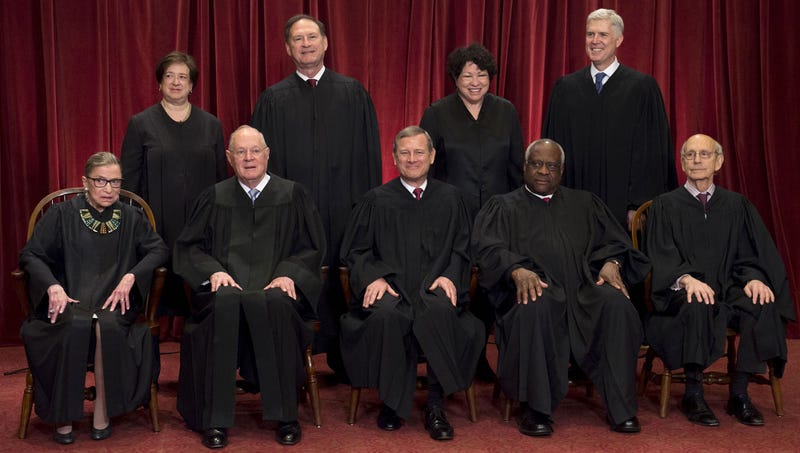
Trump Administration Says ACA Protections for Preexisting Conditions Are Unconstitutional.
The Department of Justice said Thursday that it will not defend the constitutionality of key provisions of the Affordable Care Act in a lawsuit currently underway in Texas. Here’s what you need to know:
The background: Twenty states, led by Texas, sued the federal government in February as part of an effort to overturn the Affordable Care Act, arguing that, because the GOP tax bill eliminated the penalty for individuals who don’t buy health insurance, the law as a whole was unconstitutional. The Supreme Court’s 2012 ruling that upheld the Affordable Care Act called the individual mandate penalty a tax — and therefore legal. But the lawsuit argues that since the mandate can no longer raise any revenue, the mandate itself is now unconstitutional – and so is the entire ACA.
What they did: The Department of Justice filed a brief Thursday in support of the suit, saying “this Court should hold that the ACA’s individual mandate will be unconstitutional as of January 1, 2019,” and that some other provisions of the law – including those protecting people with pre-existing conditions being denied coverage or charged higher premiums – are inseparable from the mandate and therefore should be declared unconstitutional as well.
Why they did it: Republicans have targeted the Affordable Care Act for elimination ever since it passed, and President Trump continues to promise that it will be overturned. However, the federal support for the states’ lawsuit is unusual, since the Justice Department typically defends existing law. Attorney General Jeff Sessions wrote a letter to House Speaker Paul Ryan explaining that this is a “rare case” that warrants deviating from the Justice Department’s “longstanding tradition of defending the constitutionality of duly enacted statutes.” Tom Miller of the American Enterprise Institute told Politico that the refusal to defend key parts of the ACA shows that the Trump administration is going even further in its battle against the health care law.
What it means: If successful, the states’ lawsuit would allow insurers to charge much higher rates to people with pre-existing conditions, or deny them coverage altogether, effectively ending the ACA’s promise of providing health care for all Americans. If the Justice Department’s analysis is ultimately persuasive, however, other parts of the law, including Medicaid expansion, could stay in place. Some legal experts say the suit is weak, since it turns on the idea that if one part of a law is invalid, the whole thing is invalid, without recognizing that the Congress passed the law and is free to alter it while leaving the rest in place. But the lawsuit has been filed in a conservative court in Texas, and the Trump administration’s refusal to defend key parts of the law has likely boosted the plaintiffs’ chances.
Supporters of the health care law expressed considerable alarm on Friday. Andy Slavitt, who ran the Centers for Medicare and Medicaid Services under President Obama, tweeted that the Justice Department’s decision is the “biggest health care news of the year” and a blow to public health. Slavitt and others criticized the move as an unprecedented decision by the Justice Department to not defend the rule of law. Ultimately, the case may be heading for the Supreme Court.

Geisinger President and CEO David T. Feinberg, MD, who was reportedly one of the top contenders for the chief executive role at the Amazon, Berkshire Hathaway and JPMorgan Chase healthcare venture, said he will remain at the Danville, Pa.-based health system, CNBC reports.
People close to the hiring process told CNBC Dr. Feinberg was at one time highly considered for the position. However, Dr. Feinberg confirmed to the publication through a spokesperson he would not be leaving the health system.
“I appreciate being part of the conversation, which I believe reflects the accomplishments of the entire Geisinger team. I personally remain 100 percent committed to Geisinger and remain excited about the work we are doing and the opportunities ahead as we continue to deliver exceptional care to our patients, our members and our communities,” he said.
Berkshire Hathaway Chairman and CEO Warren Buffett told CNBC June 7 the companies have selected a CEO for the venture and will publicly name the individual within two weeks. Sources familiar with the matter told CNBC the organizations did not announced the appointment June 7 because Dr. Feinberg declined the job.
Sources said the top 10 candidates for the position were asked to write a white paper detailing how they would fix the healthcare system, according to the report. From there, the companies narrowed down the candidate pool to three individuals. All three reportedly spoke with Jamie Dimon, chairman and CEO of JPMorgan, who referred his top two choices to Mr. Buffett, who passed along his top choice to Amazon Chairman, Founder and CEO Jeff Bezos.
One of the three finalists was Owen Tripp, co-founder and CEO of healthcare company Grand Rounds.
Sources told CNBC Dr. Feinberg had been advising the group since the companies announced the venture in January, and emerged as a top contender for the role. He has led the 13-hospital Geisinger Health System since 2015.
Berkshire Hathaway Investment Manager Todd Combs has been the lead recruiter on the venture, CNBCpreviously reported. Other candidates who have been approached for the role include former CMS Acting Administrator Andy Slavitt, former U.S. Chief Technology Officer Todd Park, and Gary Loveman, former senior vice president of Aetna.
To access the CNBC report, click here.

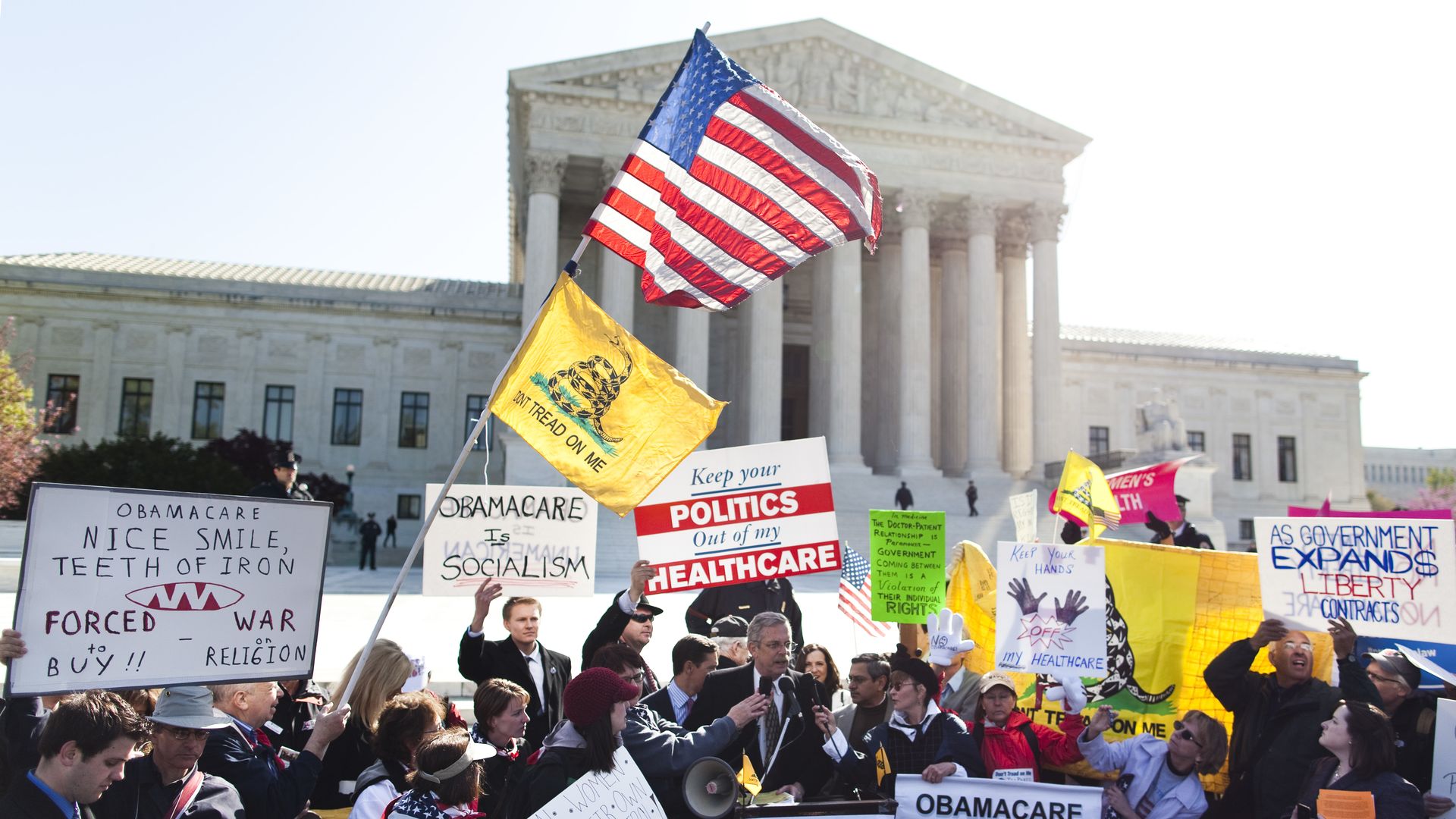
The Justice Department will not defend the Affordable Care Act in court, and says it believes the law’s individual mandate — the provision the Supreme Court upheld in 2012 — has become unconstitutional.
Why it matters: The Justice Department almost always defends federal laws when they’re challenged in court. Its departure from that norm in this case is a major development — career DOJ lawyers removed themselves from the case as the department announced this shift in its position.
Justice Dept. argues key parts of ObamaCare are unconstitutional

The Department of Justice (DOJ) argued in court Thursday that key parts of ObamaCare are now unconstitutional, siding in large part with a conservative challenge to the law.
The move is a break from the norm of the DOJ to defend federal laws when they are challenged in court. Under President Trump, the department has opted not to defend a law that it strongly opposes.
Attorney General Jeff Sessions acknowledged in a letter to Speaker Paul Ryan (R-Wis.) that the DOJ has a “longstanding tradition” of defending federal laws, but argued that this is “a rare case where the proper course is to forgo defense” of the law.
The lawsuit in question was filed in February by Texas and 19 other GOP-led states, arguing that ObamaCare is unconstitutional and should be overturned.
Legal experts are deeply skeptical the challenge can succeed, and 17 Democratic-led states have already intervened to defend the law in the absence of DOJ action.
The DOJ argues that ObamaCare’s protections against people with pre-existing conditions being denied coverage or charged more should be invalidated, maintaining that the individual mandate that people have insurance or face a tax penalty is now unconstitutional.
The conservative states and DOJ point to the Supreme Court’s 2012 ruling that upheld ObamaCare’s individual mandate under Congress’s taxing power. Now that Congress has repealed the mandate penalty as part of last year’s tax bill – while technically keeping the mandate itself in place – they argue the mandate is no longer a tax and is now invalid.
They also argue that the key pre-existing condition protections cannot be separated from the mandate and should be invalidated. The DOJ argues the remainder of the law can stay.
The chances for that argument succeeding are viewed with deep skepticism by legal experts, in part because Congress itself indicated that the rest of ObamaCare could still stand without the mandate when it moved to repeal the tax penalty last year.
The case is currently before a federal district court judge in Texas, Reed O’Connor, who was appointed by former President George W. Bush.
Some supporters of ObamaCare view the DOJ’s move more as a damaging break from precedent rather than an actual serious legal threat to ObamaCare, since the lawsuit is unlikely to succeed.


