


Cartoon – Stall this project into the Ground
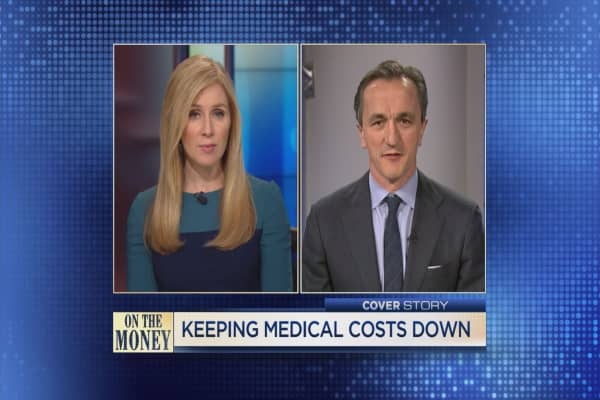
As health care costs keep rising, more people seem to be skipping physician visits.
It’s not fear of doctors, however, but more of a phobia about the bills that could follow. Higher deductibles and out-of-network fees are just some of the out-of-pocket costs that can hit a consumer’s pockets.
U.S. health care costs keep rising, and hit more than $10,000 a year per person in 2016. According to a recent national poll, over the past 12 months, 44 percent of Americans said they didn’t go to the doctor when they were sick or injured because of financial concerns. Meanwhile, 40 percent said they skipped a recommended medical test or treatment.
Also, the study found most people who are delaying or skipping care actually have health insurance. Some 86 percent of those surveyed said they’re covered either through their employer, have insurance they purchased directly, or through government programs like Medicare and Medicaid.
“There have been so many changes in the health care landscape in the United States that this news is not entirely surprising,” Cleveland Clinic president and CEO Tom Mihaljevic told CNBC’s “On the Money” in a recent interview. However, Mihaljevic warned that skipping visits or treatment can be counterproductive.
“One of most important consequences of skipping medical care or delaying care ultimately impacts the quality of care, impacts the outcome,” he said. “Untimely visits or delay of visits to the physician ultimately leads to the increased cost of care.”
However, the poll, conducted by the University of Chicago and the West Health Institute, found Americans fear large medical bills more than they do serious illness. The data showed 33 percent of those surveyed were “extremely afraid” or “very afraid” of getting seriously ill. About 40 percent said paying for health care is more frightening than the illness itself.
“Part of problem here is healthcare tends to be very complex, and every patient typically requires a number of procedures and tests to be done, so it’s really difficult to estimate the upfront cost of care, ” Mihaljevic told CNBC.
Additionally, the survey found 54 percent of those polled received one or more medical bills over the past year for something they thought was covered by their insurance. And 53 percent received a bill that was higher than they expected.
Mihaljevic acknowledged the range of different fees for the same services should be made clearer for consumers. “There is an absolute need for increased transparency when it comes to cost and this is one of mandates for our industry as a whole,” he said.
To combat rising health costs, Mihaljevic explained that the Cleveland Clinic is focused on the “standardization of care.”
“When we reduce the variability of the way we take care of patients, we manage to decrease the cost and at the same time improve the quality of care that we provide,” he added.
In addition, the health system is also pushing ahead with advances in medical technology, which may help bring down costs in the future. “We firmly believe digital technology is going to have a transformative effect,” Mihaljevic said. Among the initiatives is a partnership with IBM Watson to use big data to help clinical decision making.
And through the Cleveland Clinic’s Express Care Online, 25,000 virtual doctor visits were completed in 2017. Although virtual visits are billed as more cost effective,new data suggest otherwise.
“We are constantly looking how to make our care more accessible more affordable and of higher quality,” Mihaljevic added.

“There is no question we’ll have to act [on health care]. It’s the No. 1 issue in America. The polls are clear.”
— Sen. Chris Murphy (D-Conn.), quoted in an article in Vox, April 18, 2018
Politicians are often eager to cite polling as a reason for action. In an article that highlighted a proposal by Murphy and Sen. Jeff Merkley (D-Ore.) to allow individuals and large employers to purchase health insurance coverage through Medicare, Murphy described health care as the “number one issue” in America.
Does polling back up that assertion?
Laura Maloney, a spokeswoman for Murphy, directed us to a number of polls. She first provided four examples, but three — a Bloomberg News poll, a Morning Consult poll and an NBC News exit poll from the Virginia governor’s race — were from 2017. They were taken as Republicans were trying to repeal and replace the Affordable Care Act, so health care was certainly in the news at the time.
The fourth poll, a HuffPost/YouGov poll from April, was more on target. Asked to choose their two top issues from a list, 30 percent of registered voters picked health care. But gun policies and immigration were close behind, at 25 percent each, with the economy at 24 percent. There was a clearly partisan divide on some of these issues — 43 percent of Republicans picked immigration compared with 10 percent of Democrats — but both Democrats and Republicans rated health care highly.
In a follow-up email, Maloney also cited a Gallup poll that asked Americans about their “top worry.” In that survey, 55 percent of respondents said they worry “a great deal” about the availability and affordability of health care, more than 14 other issues that Gallup asked about. Crime, federal spending and the availability of guns followed, tied at 51 percent.
“Top worry,” however, is not the same as “top issue.” In fact, there is another poll by Gallup that is more often cited for its analysis of “the top problem” — and it comes to a starkly different conclusion. This Gallup poll is based on an open-ended question in which people were asked, “What do you think is the most important problem facing this country today.” Gallup conducts the poll once a month.
Just 4 percent volunteered “health care” or “hospitals,” far behind “dissatisfaction with government” (23 percent), immigration-illegal aliens (15 percent), race relations (7 percent) gun control/guns (6 percent), economy (5 percent) and unifying the country (4 percent). Health care had been in third place, with 9 percent, in November but faded as a top concern.
In a Pew Research poll from January, “reducing health care costs” ranked fourth, after terrorism, education and the economy and just before Social Security. The poll shows only a slight increase over the past year.
Finally, Quinnipac’s poll in March asked for “the most important issue” from a list of five issues. This is not as flexible as the other polls, but health care narrowly edged the economy, 23 percent to 22 percent.
Rather than the polls being clear, it’s actually quite murky. Murphy can point to a poll that shows health care at the top of the list. But other polls — including Gallup’s monthly open-ended question that is widely cited for identifying the top problem — show that health care is lower on the list of concerns.
Clearly, the methodology of a poll makes a difference in the result. The open-ended nature of the Gallup poll might get closest to what concerns Americans have when they do not have to choose from a list.
Murphy may be convinced that health care is what will motivate voters in the coming year. But based the polls, he might be fooling himself.

BM Watson Health has revealed its 15 Top Health Systems based on overall organizational performance. Formerly known as the Truven Health Analytics 15 Top Health Systems, the rankings have been conducted annually since 2008 and reflect operational and clinical excellence, IBM Watson Health said.
Top systems earned the ranking at least in part through more consistent care across member hospitals, finding a “small but discernable difference” in the level of individual hospital alignment within the top-performing health systems as well as 1.9 percent lower volatility, the group said.
Demonstrating what separates the best from the rest, top hospitals achieved several benchmarks over their peers including: 14.6 percent fewer in-hospital deaths, 17.3 percent fewer complications and 16.2 percent fewer healthcare-associated infections. They also had a median severity-adjusted length of stay roughly one half-day shorter than peers and median ED wait times 40 minutes shorter per patient as well as 5.6 percent lower per episode combined in-hospital and post-discharge costs. HCAHPS scores for overall hospital experience were also 2.3 percent higher.
Using the study’s findings, IBM Watson health said that if all Medicare inpatients received the same level of care as delivered by the top 15 systems, more than 60,000 lives could have been saved, more than 31,000 more patients could have a complication-free care episode, HAI’s would drop 16 percent and ER wait times would be reduced to 40 minutes or less.
Researchers evaluated 338 health systems and 2,422 member hospitals on nine clinical and operational performance benchmarks to formulate the rankings. Those benchmarks included risk-adjusted inpatient mortality index, risk-adjusted complications index, mean healthcare-associated infection index, mean 30-day risk-adjusted mortality rate, mean 30-day risk-adjusted readmission rate, severity-adjusted length of stay, mean emergency department throughput, Medicare spend per beneficiary index and HCAHPS score.
The research was based on public data including Medicare cost reports, Medicare Provider Analysis and Review data, Healthcare Associated Infections and patient satisfaction data from the CMS Hospital Compare website.
| HEALTH SYSTEM | City | State |
|---|---|---|
| Mayo Foundation | Rochester | Minnesota |
| Mercy | Chesterfield | Missouri |
| Sentara Healthcare | Norfolk | Virginia |
| St. Luke’s Health System | Boise | Idaho |
| UCHealth | Aurora | Colorado |
| Aspirus Network | Wausau | Wisconsin |
| HealthPartners | Bloomington | Minnesota |
| Mercy Health, Cincinnati | Cincinnati | Ohio |
| Mission Health | Ashville | North Carolina |
| TriHealth | Cincinnati | Ohio |
| Asante | Medford | Oregon |
| CHI St. Joseph Health | Bryan | Texas |
| Maury Regional Health | Columbia | Tennessee |
| Roper St. Francis Healthcare | Charleston | South Carolina |
| UPMC Susquehanna Health System | Williamsport | Pennsylvania |

Wahidullah Medical Corp., which owns Eureka, Calif.-based Redwood Urgent Care and its outpatient medical testing laboratory, filed an anti-trust lawsuit against Eureka-based St. Joseph Hospital claiming the hospital used unfair business tactics and stifled competition to protect 10-fold price markups, according to The North Coast Journal.
Here are five things to know.
1. Wahidullah Medical Corp. filed the lawsuit in early April seeking a preliminary injection to bar St. Joseph from attempting to monopolize the outpatient laboratory testing industry. In addition, the medical company is seeking a jury trial, legal fees and damages.
2. The lawsuit claims St. Joseph Hospital, which is owned by Irvine, Calif.-based St. Joseph Health, illegally conspired to stifle competition for medical lab testing in the Eureka market by actively tarnishing its competition’s reputation, misleading consumers and implementing an EMR that was incompatible with Redwood Urgent Care.
3. The suit claims lab tests at St. Joseph’s medical lab were nearly 10 times more expensive than the Redwood outpatient testing lab, citing an instance where St. Joseph charged a patient without insurance $327 for a vitamin D test — a test that would cost $36 at Redwood for an uninsured patient. Specifically, the suit alleges St. Joseph’s failed to inform patients that there was another medical testing facility that could save them money.
4. “St. Joseph Health … decided to protect its lab-testing business from fair competition by resorting to tortuous and anticompetitive behavior designed to put Redwood Lab out of business and thereby leave consumers of out-patient medical laboratory testing services in Eureka with no option but St. Joseph Health,” the lawsuit reads, according to The North Coast Journal.
5. In total, the suit accuses St. Joseph’s of seven specific violations of state and federal anti-trust laws.

The nonprofit hospital median operating cash flow margin decreased to 8.1 percent in fiscal year 2017, marking the lowest level seen since the 2008-09 recession, according to preliminary financial data from Moody’s Investors Service.
The revenue decline comes amid expense growth and pinched revenue growth.
Here are five report insights to know.
1. The nonprofit hospital median operating cash flow margin was 8.1 percent in fiscal year 2017 compared to 9.5 percent the year prior.
2. The nonprofit hospital annual median revenue growth rate decreased by 2.2 percent in fiscal year 2017 compared to the year prior, while the median expense growth rate fell by 1.7 percent. Pinched revenue growth was attributed to factors such as declining reimbursement from payers, as well as median growth in outpatient visits (2.2 percent) outpacing median growth in inpatient hospitalizations (1.2 percent). Moody’s expects nonprofit hospitals’ credits to continue to be stressed by the aging population and declining reimbursement.
3. Nonprofit hospital’s median absolute unrestricted cash and investments increased by 8.2 percent in fiscal year 2017, partially due to strong market returns, according to Moody’s. This compares to 3.8 percent in fiscal year 2016. But the agency reported this growth was offset by median days cash on hand, which only increased 1.5 percent as organizations were pressured by labor, technology and supply costs. Moving forward, Moody’s expects limited liquidity improvement as expenses grow and capital spending needs increase.
4. Due to weaker operating performance, nonprofit hospitals generally saw tempered leverage ratios. This is despite the fact median total absolute debt decreased 1.7 percent in fiscal year 2017, according to Moody’s. “Operating challenges and increased debt issuance in the fourth quarter of calendar year 2017 will keep debt service coverage measures subdued,” the agency wrote.
5. The fiscal year 2017 preliminary financial data from Moody’s is in line with the agency’s negative outlook on the nonprofit healthcare and hospital sector. The data was based on audited fiscal year 2017 financial statements for 160 nonprofit healthcare organizations, including freestanding hospitals as well as single- and multi-state health systems.
Access the full data here.


 HENRY KOTULA