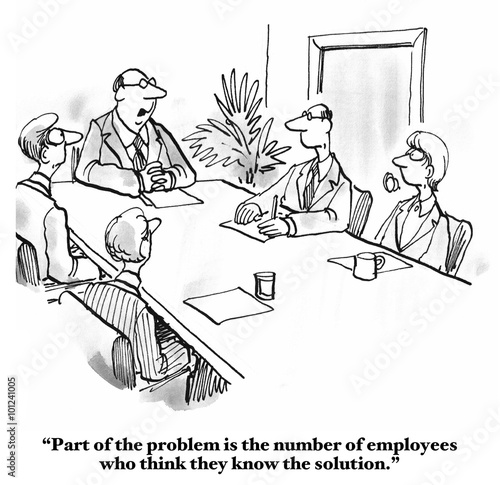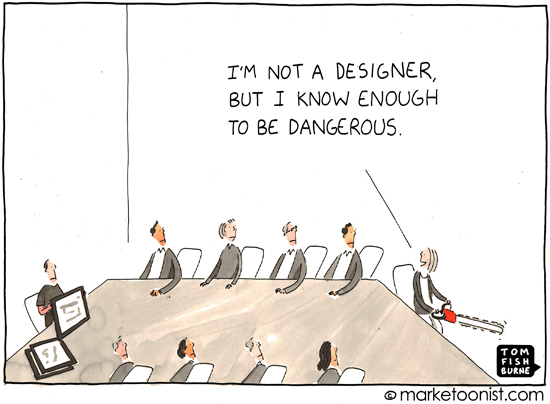
Cartoon – Knowing Enough to be Dangerous
http://www.chicagotribune.com/news/opinion/editorials/ct-edit-home-health-care-20171214-story.html

For those who are ailing but hope to stay out of nursing homes or hospitals — and who wouldn’t? — there’s an increasingly popular alternative: home health care providers. These are doctors, nurses and other medical staffers who visit patients at home, with the goal of treating chronic conditions and keeping people healthy enough to avoid costly long-term stays in more intensive facilities. That saves patients, and the health care system, money.
But, as with all things in the health field, there are plenty of caveats for potential customers.
Illinois is a field of dreams for home health care fraud, the Tribune’s Michael J. Berens reports. Why? Because state public health regulators doled out too many home health licenses too fast in the past decade. The state allowed almost anyone with a $25 licensing fee to open a home health care business but fails to provide meaningful oversight on hundreds of operators. You can find Berens’ full report at chicagotribune.com/homehealth.
The upshot of lax oversight: In the last five years, area home health agencies have improperly collected at least $104 million in Medicare dollars, Berens reports. (Most patients in home health care are covered by Medicare.) Often the home health businesses did that by falsely certifying that Medicare patients were homebound and in need of nursing care.
But the problem here isn’t measured only in Medicare dollars wasted. It’s measured in patients at risk or harmed. Thousands of patients have been subjected to unwarranted procedures, therapies and tests; some were prescribed unneeded and powerful drugs, the Tribune analysis concludes.
So what can patients, and their families, do to protect themselves? How can someone in Illinois — or her family — shop smartly for a home health care provider? It’s not easy, but here are a few tips:
On average, some 10,000 Americans turn 65 every day. That means the market for home health will likely continue to surge, placing greater demands on regulators.
In 2013, the federal government banned Illinois from issuing new licenses. The feds said that fraud was rampant, driven by too many home health companies for too few patients. Still, Cook County has more home health companies than the entire state of New York.
Many companies provide excellent care for their customers. The industry’s trade association, the Illinois Homecare and Hospice Council, represents about 160 providers (among the 750 or so licensed in the state).
“We support the moratorium,” Executive Director Sara Ratcliffe told the Tribune. “We want more enforcement.”
So do we. This field of dreams needs to be weeded of fraudsters. At least 357 active home health companies in the Chicago area have been linked to potential financial fraud by federal investigators but never charged.
That’s a daunting fact for families and patients seeking home health care. The state could help prospective patients by posting disciplinary and enforcement actions on the web. More sunshine — readily available information on providers’ performance and disciplinary records — would help them make a wise choice.

Health insurers are not the most beloved companies. They deny claims, bury people in paperwork, and generally make life more difficult.
But a good case can be made that America’s health care woes lie more with its providers than its insurers. Some communities are served by a single hospital or group of specialists. Some patients are reliant on a single drug. That gives these businesses enormous leverage to hike prices.
In theory, insurance companies hold down costs by driving hard bargains with providers. In reality, they find it difficult to do so.
OPPOSING VIEW: Health care mergers benefit patients
UnitedHealth Group is the largest private health insurer, with about 11% of the overall market. Everyone else is less than 10% (though in local and regional markets there is more concentration).
That makes these insurers plenty big enough to beat up on consumers, but too small to take on powerful providers.
The result: In the USA, 18 cents of every dollar spent goes to health care each year. In other developed countries, health care expenditures are much less, in the range of 10 to 12 cents per dollar.
Which makes recent trends in the hospital industry all the more troubling. Two major hospital chains, Ascension and Providence St. Joseph Health, are in talks to merge, a move that would create a 191-hospital colossus operating in 27 states.
This comes on top of a raft of other hospital mergers and announced mergers. That they have been in the non-profit space, including a proposed chain of 139 Catholic-run hospitals, does not change the economics.
These massive businesses run much as their for-profit brethren — and will put pressure on for-profits to merge as well. That won’t be good for consumers, or the ridiculously high premium the American economy pays for a health care system that lacks effective cost controls.
Not all mergers in health care are problematic. The proposed combination of CVS, the owner of drug stores and walk-in clinics, with Aetna, a major insurer, holds intriguing possibilities for efficiencies and more comprehensive tracking of health care decisions.
It could also be argued that there should be more consolidation among insurance companies. This might not be a hugely popular concept, but it would give them more leverage to say no to costly increases demanded by hospitals and other potent health care providers.
At the very least, it’s time to take a critical eye to the mega hospital empires being erected. They could be very hazardous to your health.
http://www.sacbee.com/opinion/california-forum/article189661334.html
When the Legislature reconvenes and the campaigns for governor heat up next year, Californians will be hearing a lot – and a lot of hot air – about universal health care.
Making California the first state to guarantee health care for every resident has become a touchstone issue – and a divisive one – for the state’s dominant Democrats.
The state Assembly will take up – or possibly ignore – a universal health care bill that the Senate passed this year.
PASSING UNIVERSAL HEALTH CARE WITHOUT A SYSTEM OF PAYING FOR IT WOULD INVITE SCORN FROM THE MEDIA AND THE PUBLIC. BUT PASSING IT WITH IMMENSE NEW TAXES WOULD PUT DEMOCRATS IN POLITICAL JEOPARDY.
Assembly Speaker Anthony Rendon applied brakes to Senate Bill 562 in June, saying it “was sent to the Assembly woefully incomplete and has “potentially fatal flaws…including the fact it does not address many serious issues, such as financing, delivery of care (and) cost controls.”
That stance generated a torrent of personal invective from the measure’s advocates in the Democratic Party’s left – or Berniecrat – wing, driven by the California Nurses Association.
There’s a similar divide among the Democratic candidates for governor, with Lt. Gov. Gavin Newsom the most insistent advocate of expanding coverage.
Like Rendon, Newsom’s chief rivals, former Los Angeles Mayor Antonio Villaraigosa and Treasurer John Chiang, endorse universal health care in principle, but are leery about how it would be financed.
A Senate Appropriations Committee analysis pegs costs of universal coverage at $400 billion a year, but suggests that half could be covered by redirection of existing federal, state and local government health care spending.
It added that “about $200 billion in additional taxes would be needed to pay for the remainder,” but also noted that half or more of that burden could be offset by eliminating direct health care costs now borne by consumers and their employers.
To put that in perspective, even $100 billion in new taxes would be the equivalent of a one-third increase in the $300 billion a year now levied by state and local governments.
In theory – one advanced by advocates – the two-thirds “supermajorities” in the Legislature and the governor could levy new taxes of that magnitude.
In practice, however, even if the supermajorities survive the recent spate of sexual harassment resignations and next year’s elections, there’s virtually no chance of such a vote.
Rendon knows that passing universal health care without a system of paying for it would invite scorn from the media and the public, but passing it with immense new taxes would put some of his Democratic members in political jeopardy.
If, however, Democrats are serious about having universal health care insurance there’s another, perhaps easier, way to do it.
A new report from the federal government’s Centers for Disease Control says that with the advent of Obamacare, which expands the Medi-Cal program serving the poor and offers subsidies for others, California’s medically uninsured population has dropped from 17 percent in 2013 to 6.8 percent in 2017.
That means that there are about 2.7 million Californians still lacking some form of medical coverage, although many, if not most, receive rudimentary, albeit uncompensated, care in charity clinics and hospital emergency rooms.
As many as half of them would be eligible for government-paid or -subsidized care, and covering them is potentially doable under existing programs, according to Covered California, the state’s Obamacare implementation agency.
The remainder, mostly, are maybe a million-plus undocumented immigrant adults who are, by law, ineligible.
It’s not necessary for the state to seize control of California’s entire medical care system if the real bottom line goal is covering those undocumented immigrants. It could be done for about $10 billion a year, which is a lot less than $100 billion.
However, advocates would have to publicly acknowledge that covering them is what this conflict is all about and take whatever political heat it generates.
It’s a test of whether universal coverage is a real goal, or merely political symbolism.
Words banned at CDC were also banned at other HHS agencies: report

Multiple agencies in the Department of Health and Human Services (HHS) have reportedly been told by the Trump administration that they cannot use certain phrases in official documents.
Officials from two HHS agencies, who asked that their names and agencies remain anonymous, told The Washington Post that they had been given a list of “forbidden” words similar to the one given to the Centers for Disease Control and Prevention (CDC).
A second HHS agency was told not to use the phrases “entitlement,” “diversity” and “vulnerable,” in documents. It was also told to use “ObamaCare” as opposed to the “Affordable Care Act” and to refer to “marketplaces,” where people purchase health insurance, as “exchanges.”
The Post’s new report builds on its Friday report that the CDC had been told it could no longer use the phrases “evidence-based” and “science-based” in documents being prepared for the 2019 budget.
The list of “forbidden” words and phrases given to policy analysts at the CDC also included “vulnerable,” “entitlement,” “diversity,” “transgender” and “fetus.”
The Health and Human Services Department has pushed back on the first report.
“The assertion that HHS has ‘banned words’ is a complete mischaracterization of discussions regarding the budget formulation process,” HHS spokesman Matt Lloyd told The Hill on Saturday.
“HHS will continue to use the best scientific evidence available to improve the health of all Americans. HHS also strongly encourages the use of outcome and evidence data in program evaluations and budget decisions,” the statement continued.
According to the Post, similar guidance on word choice has been issued at the State Department. Employees at the State Department have been told to call sex education “sexual risk avoidance,” which primarily refers to abstinence-only education.
The Trump administration has been repeatedly scrutinized for declining to acknowledge scientific findings, particularly related to climate change. Trump has also repeatedly expressed doubts about the scientific consensus that humans are the main cause of a warming planet. Numerous members of his administration and his appointees have also denied aspects of the scientific consensus related to global warming.
CDC director tells staff ‘there are no banned words,’ while not refuting report

This morning, I’m thinking about gifts that touch us deeply and change us profoundly. I’m not thinking about a bottle of wine or tickets to a play.
The first gift leaders give is belief.
Doubt:
Doubt is a virtue.
You doubt rosy reports and projections. You doubt everyone who says, “Don’t worry.” You’re skeptical of unproven systems and untested people. Leaders believe cautiously.
If you’re smart, you doubt yourself a little. But a little doubt, like hot sauce, goes a long way.
Those who change us believe in us.
Belief:
Big sticks make bosses. But the tool of influence is belief.
The more you believe in someone, the more influence you have with them. The less you believe in someone, the more resistance they feel toward you.
Someone believed in you. Be that person for someone else.
Failure and belief:
Belief means most when it’s difficult to give.
Nothing says I believe in you like a second chance.
Believe when someone fails responsibly. (Responsible failure happens when someone gives their best and fails.)
A third or fourth chance – after the same failure – says you’re irresponsible. You should have changed something.
The gift of belief:
Leaders change us when they believe in us.
If people believe in you, teach them to believe in themselves.
What are some gifts leaders give others?
How might leaders demonstrate belief in others today?
https://interimcfo.wordpress.com/2017/12/17/answer-the-phone-%EF%BB%BF/

Abstract: This article explores how doing something as simple as disrespecting people by not returning phone calls can be career limiting.
One of the lectures I vividly remember was when the boss called the group together to absolutely shellack all of us because one of us had a very bad habit of not returning phone calls. During the course of the lecture, we were told to ALWAYS return EVERY phone call even if it is to tell the caller to never call again. The fact that one of us was not returning calls was described as an embarrassment for all of us. We were told that the next time such a complaint was received, there would be no more second chances. The person that galvanized my thinking on this topic has passed away but the influence of his powerful speech continues to resonate into the future and guide my thinking and actions.
Why would someone refuse or fail to return phone calls? All of us are very busy and as those of us who are decision makers know, a lot of the calls we receive are cold, unsolicited sales pitches. My assistants in several venues have been continually amused by all of my ‘long lost friends’ that drive everyone crazy with unsolicited calls that usually lead to some kind of sales pitch. Most of these people I have never heard of. Another reason that calls are not returned is that we are all extremely busy. It is easy to procrastinate about returning a call until you have forgotten about it. The next thing you know, you have disrespected someone.
I am used to not having my phone calls returned. It is an all too common phenomena that those of us who put any effort into networking are well familiar with. I will usually call someone three or four times and get no response before I black list them. I recently had a very frustrating experience. You know, the one where the administrative assistant answers the phone and says, “let me see if he’s in” only to return to the phone a few seconds later to tell me that she needs to take a message. The probability that an Administrative Assistant will not actually know whether their principal is in or not is infatesimally small. The last time this occurred, I told the assistant that the person I had called could use any of the last three messages I had left for him. I am still waiting for one of those calls to be returned or better, an opportunity to return the disrespect I have been subjected to by this idiot; maybe in the form of a blind reference. By the way what kind of narcissist would put their assistant into the position of having to lie for them in the first place but I digress.
Not only is this behavior disrespectful and unprofessional, it can be career limiting. The very people that refuse to return your calls are frequently among your callers when they need something from you. I have had several people that refused to accept my calls call me when they were referred to me during a career transition or job search. I return their calls and enjoy listening to their lame excuses about how embarrassed they are that they haven’t kept up. I indulge them while I make their call as short as possible. What kind of arrogance and narcism is at the root of a person that would not demonstrate a whit of professional courtesy to me when they do not need me then reach out to me asking for help when they think that I might be able to do something for them? Obviously, these morons have never heard of the golden rule. You know, the one that admoishes us to do unto others as we would have them do unto us.
One of the many problems that can arise from this behavior is a blind reference. Occasionally, I will receive an inquiry from someone that wants to know if I know someone. All too frequently, the target is being considered for some type of public relations or networking opportunity like opening doors. I ask the person wanting a reference how successful they think that someone that did not return calls would be representing their firm?
On this note, have you received requests from people that refused to return your calls or engage with you come around later and ask you to meet with them so they can try to sell you something you did not ask for and not need? The arrogance of this behavior is impressive to say the least. I know people that will agree to these meetings. They will let the idiot that disrespected them spend time and expense traveling only to limit their presentation to one hour or less. At the end of these meetings the hapless moron is bid adieu and sent off with no intention of ever spending a cent with them or the company they now represent.
What goes around comes around.
The point of this is that when you fail or refuse to return phone calls, in my opinion you are intentionally damaging yourself. There is an old one liner that says, “Don’t burn any more bridges that you have to because one day, you might have to re-cross one of them.” When you fail or refuse to return phone calls, you are proactively burning bridges. The irony of not retuning calls is that the behavior is a boomerang. The disrespect will come back and wack you. It is a whole lot easier to be arrogant toward those that call you when you have a gig that is when you do not have a gig. An acquaintance that had ignored me for years finally got his ass fired. A few months later, I got the call. He was desparate for a job and in his opinion I held a key to him getting his next gig. I told him that I would see what I could do and that was the last time we talked. He never even bothered to follow up with me to see what if anything had transpired. That conversation occured several years ago and as far as I know, his run in the helathcare industry is over.
RETURN YOUR CALLS. FOLLOW THE GOLDEN RULE. NEVER FORGET, WHAT GOES AROUND COMES AROUND.
A lot of people have the memories of race car drivers. They NEVER forget.
Please feel free to contact me to discuss any questions or observations you might have about these blogs or interim executive services in general. As the only practicing Interim Executive that has done a dissertation on Interim Executive Services in healthcare in the US, I might have an idea or two that might be valuable to you. I can also help with career transitions or career planning.
The easiest way to keep abreast of this blog is to become a follower. You will be notified of all updates as they occur. To become a follower, just click the “Following” link that usually appears as a bubble near the bottom this web page.
There is a comment section at the bottom of each blog page. Please provide input and feedback that will help me to improve the quality of this work.
This is original work. This material is copyrighted by me with reproduction prohibited without prior permission. I note and provide links to supporting documentation for non-original material.
If you would like to discuss any of this content or ask questions, I may be reached at ras2@me.com. I look forward to engaging in productive discussion with anyone that is a practicing interim executive or a decision maker with experience engaging interim executives in healthcare.