


Cartoon – Did you make the changes I asked for?


http://www.baltimoresun.com/health/bs-hs-hopkins-lawsuit-20171213-story.html

A former supervisor in the patient appointments department at the Johns Hopkins Health System Corp. has accused the medical system in a lawsuit of prioritizing out-of-state patients over Maryland residents to boost revenue.
Anthony C. Campos said in the lawsuit filed Wednesday in U.S. District Court that his department was directed with the task of “filling the plane” with patients from outside Maryland. The directive to bring in more of these patients came from the highest ranks at the medical system, the lawsuit contends.
In Maryland, hospitals are required under an agreement with the federal government to operate under global budgets assigned to them by the state that limit how much revenue they can make in a given year. The budgets were put in place as part of a broader effort to cut soaring health costs and improve care.
But the budgets only apply to patients who live in Maryland. Any money brought in by treating out-of-state patients is additional revenue for the hospital.
The lawsuit contends that Hopkins is violating a clause in its budget agreement with the state that says hospitals can’t deny services to patients for inappropriate financial reasons. The medical system is also required to provide care that focuses on the community, something the lawsuit contends can’t be done if the emphasis is on patients from elsewhere. The medical system also hid what it was doing from the Centers for Medicare and Medicaid, which oversees payments through public health programs, and the Health Services Cost Review Commission, which sets the hospital’s global budgets, according to the lawsuit.
An attorney representing Campos said he was not available for comment.
“I think Maryland residents will find it highly offensive that Hopkins is pushing out-of-state residents to the front of the treatment line while Maryland residents are forced to the back of the line all in the interest of profits,” said the attorney, Lindsey Ann Thomas, with the law firm of Conti Fenn & Lawrence LLC.
In a statement Wednesday night, Johns Hopkins said the “the complaint is without merit. Safe and high quality care for all patients, regardless of where they live, is our number one priority. Our census shows that the majority of our patients are from Maryland and that the number has steadily increased over the past several years.”
The medical institution began pushing for more out-of-state patients in 2015, Campos said in the lawsuit. He pushed back and told his bosses his team was getting complaints and concerns from doctors about the preference being given to out-of-state patients. Campos’ supervisors responded that they were following the orders of senior management, according to the lawsuit.
Priority was sometimes given without taking into consideration which patients were sicker, the lawsuit said.
The tactics to attract these patients became more aggressive over time, the lawsuit said. Johns Hopkins USA, a medical concierge service, was enlisted to help prioritize out-of-state appointments. The medical system began targeting the most profitable departments, including neurosurgery, oncology, otolaryngology, pediatrics and surgery. In some departments, a supervisor was ordered to intervene if an out-of-state patient could not get an appointment within 30 days, and those patients were also given priority on wait lists, the lawsuit said.
In May 2016, the Department of Patient Access was told that 250 to 350 additional out-of-state cases were needed that fiscal year to reach profit targets of $5 million to $7 million, according to the suit.
Campos is asking that the government be awarded damages and Johns Hopkins fined under the False Claims Act. He is also asking for a “percentage of any recovery allowed to him.”
http://www.modernhealthcare.com/article/20171213/NEWS/171219953

The CMS’ planned $1.6 billion in Medicare cuts to 340B hospitals across the nation will disproportionately impact providers in California, North Carolina and New York, according to a new study.
Slashing the 340B drug discount program, which is intended to lower operating costs for hospitals to give its low-income patients access to drugs, would result in large funding cuts across California, North Carolina and New York hospitals, ranging from $62 million to $126 million, researchers for consultancy Avalere found. Overall, six states will see drug payment cuts of more than $50 million next year.
About 62% of Medicaid disproportionate-share hospitals will experience less than a 5% reduction in Medicare Part B revenue due to the drug cuts, while 6% of impacted hospitals will experience cuts greater than 10%.
But the concurrent increase in non-drug payments will mean that most hospitals will have very minimal changes to their revenues, according to the study. Because the drug-related cuts will disproportionately impact 340B hospitals while the non-drug payment increases will be distributed evenly across facilities, some hospitals would see increased payments while hospitals with high 340B volumes will likely see decreases.
Still, any reduction to the already thin margins of hospitals could spell trouble for providers.
Consumers stand to benefit from the cuts, researchers said. Since Medicare beneficiaries are responsible for a portion of the total drug reimbursement, consumers in California, North Carolina and New York would save a range of $15 million to $32 million. Ten states will have aggregated Medicare beneficiary savings greater than $10 million in 2018.
“The 340B program has become a big business for hospitals,” Avalere President Dan Mendelson said. “As a result, all hospitals in the program have to think about this carefully going into next year.”
Beginning in 2018, Medicare intends to reduce 340B payments from average sales price (ASP) plus 6% to ASP minus 22.5%, which the CMS estimates to be closer to the hospitals’ acquisition cost. With the proposed changes, if a drug costs $84,000, the CMS would pay just over $65,000, instead of the current $89,000. Hospital groups have sued to prevent those cuts and litigation is ongoing.
About half of the hospitals across the country participate in the 340B program, which has been criticized because it does not restrict how hospitals spend 340B money. Critics say that some hospitals use the program to pad profits while rural and critical access hospitals maintain that it’s a vital revenue source and helps support preventive services.
In a House Energy and Commerce Committee hearing on the pharmaceutical supply chain on Wednesday, U.S. Rep. Dr. Larry Bucshon (R-Ind.) said that some hospitals manipulate the program. A financially stable hospital could acquire a physician practice in a rural community and get a 340B distinction for it, he said.
Mandating more transparency on how hospitals use 340B money would prevent abuse, Bucshon said.
“The rules allow the hospitals to pursue these mechanisms aggressively,” said Mendelson. “Some members of Congress believe the rules diverge from the original intent of the program as a way for low-income individuals to access drugs.”

Living within half a mile of a hydraulic fracturing site carries a serious risk for pregnant women, a new study has found. The drilling technique, also known as fracking, injects high-pressure water laced with chemicals into underground rock to release natural gas.
Women who lived within that distance to fracking operations in Pennsylvania were 25 percent more likely to give birth to low-weight infants than were mothers who lived more than two miles beyond the sites.
The five-year study of more than 1.1 million births in the state between 2004 and 2013, published Wednesday in the journal Science Advances, also found lower birth weights, although not as low, in infants whose mothers lived between half a mile and two miles from a fracking site. Beyond two miles, there was no indication of any health effect to newborns, a significant drop-off, the study said.
“I think I was surprised by the magnitude of the impact within the half-mile radius,” said Michael Greenstone, a professor and director of the Energy Policy Institute at the University of Chicago, and one of three authors of the study.
There are about 4 million births per year in the United States. According to the study’s research, about 30,000 births are within half a mile of a fracking site and 100,000 are within two miles. “I don’t think that’s an insubstantial number,” Greenstone said.
Greenstone said it’s important not to read too much into the study’s conclusion. “I like to joke that there’s a little bit for everyone to hate in this paper,” he said. “There’s a big effect within one kilometer of sites, which the oil and gas industry dislikes, but the impact on the population beyond that may not be massive, which opponents of fracking won’t like.”
Reid Porter, a spokesman for the American Petroleum Institute, an advocacy group for the oil and gas industry, condemned the study, saying that while it addresses a legitimate health issue in the United States, it “fails to consider important factors like family history, parental health, lifestyle habits” and other factors that lead to low birth weight.
In his emailed statement, Porter did not address why those factors might have led to underweight babies near the sites but not farther from them.
Food and Water Watch, a nonprofit environmental group, referred to the study in calling on Pennsylvania Gov. Tom Wolf (D), who wants to expand hydraulic fracturing in the state, to reverse course.
“This study adds to existing scientific literature that tells us the serious health consequences linked to fracking,” the group’s executive director, Wenonah Hauter, said in a statement. “Unfortunately, Gov. Wolf [is] encouraging news drilling and expanding fossil fuel operations. We call on him to heed the science.”
When Greenstone and his co-authors — Janet Currie, a Princeton University economics professor, and Katherine Meckel, an assistant professor of economics at the University of California at Los Angeles — embarked on the research, he said, the aim wasn’t to condemn fracking, which is a relatively new method of drilling vertically underground, then switching to a horizontal direction to reach gas trapped in shale rock formations.
The practice has come under scrutiny because of the potentially toxic chemicals used to crack the shale and the amount of water used to force out natural gas. State health officials and residents near fracking operations have complained that wastewater from fracking taints local drinking water. Companies in some cases have been forced to provide bottled drinking water for residents who relied on underground wells. A number of states, such as Maryland and New Jersey, have banned fracking.
A U.S. Geological Survey study in 2014 said pumping wastewater into deeply buried storage wells was probably why Oklahoma was experiencing more small earthquakes than California. The sites are also known to leak methane, a gas that’s up to 100 times more harmful than carbon dioxide in causing global warming in the atmosphere.
But those drawbacks are offset by the benefits of natural gas, Greenstone said. Hydraulic fracturing for oil and natural gas “has led to a sharp increase in U.S. energy production and generated enormous benefits, including abruptly lower energy prices, stronger energy security and even lower air pollution and carbon dioxide emissions by displacing coal in electricity generation.”
The authors hope that policymakers will use the study’s finding as a talking point in a robust debate over fracking. They chose to study Pennsylvania because they got access to birth record data that identified “the exact locations of the mothers and the wells,” Greenstone said. “This was like a great success of big data.”
Most drilling operations sit in remote areas where they have little chance of harming pregnant women.
But some sites in Pennsylvania are near Pittsburgh, and others in Texas are inside heavily populated Fort Worth.
“Different communities are going to feel differently about this,” Greenstone said. “If you’re in Fort Worth, where fracturing is occurring in a dense area, you’re probably going to feel differently about it than if you’re in rural North Dakota.”

The House and Senate have agreed upon a unified tax overhaul bill, putting Republicans on the fast track to pass legislation that has significant implications for the health insurance industry.
For one, the compromise tax bill will repeal the Affordable Care Act’s individual mandate penalty, Senate Majority Leader Mitch McConnell said in a statement on Wednesday. To McConnell, axing the mandate will offer “relief to low- and middle-income Americans who have struggled under an unpopular and unworkable law.”
Health insurers and the healthcare industry at large have opposed removing the key ACA provision without a viable alternative to encourage healthy consumers to buy coverage, arguing that doing so will destabilize the individual markets. Indeed, the Congressional Budget Office has estimated that repealing the mandate would increase the number of uninsured people by 13 million over the next 10 years and hike individual market premiums by 10% during most years of that decade.
Yet while the individual mandate repeal is problematic for insurers that do business on the ACA exchanges, nearly all insurance companies stand to gain from the GOP tax bill overall, according to Leerink Partners analyst Ana Gupte, Ph.D. She estimates that insurers can capture about 10% to 15% of the potential 25% upside from the legislation, subject to regulatory constraints such as medical loss ratio rules and competitive pricing constraints.
Likely the biggest gain for insurers is the fact that, per the New York Times, the compromise bill sets the corporate tax rate at 21%—significantly lower than the current rate of 35%.
Though the House and Senate have ironed out the differences in their bills, the final version still must be approved by both chambers. GOP leaders have but two votes to spare in the Senate, and will likely have to include two bipartisan measures to shore up the ACA in Congress’ year-end spending bill to win the support of Sen. Susan Collins, R-Maine.
Collins said on Wednesday that Vice President Mike Pence assured her that those measures would make it into the spending bill, according to The Hill. Yet some House conservatives have expressed opposition to the bills, which would provide funding for cost-sharing reduction payments and state-based reinsurance programs, among other provisions.
Meanwhile, the results of the headline-grabbing Senate race in Alabama have put a major crimp in Republicans’ plans to retry repealing the ACA. Once Democrat Doug Jones officially takes his seat, the GOP will have an even slimmer majority in the Senate, where the defection of a handful of moderate Republicans was already enough to kill several repeal bills earlier this year.
http://www.chcf.org/articles/2017/12/tax-bill-threatens-our-democracy

Earlier this month, the Senate passed legislation that would overhaul the tax code, make dramatic changes to federal health care policy, and undermine the budgets of Medicaid and Medicare, two pillars of the American health care system. The House and Senate are now trying to reconcile their two tax bills. Each passed the legislation on a party-line vote, with one Republican voting against the bill in the Senate.
Congress is now one step away from passing a tax bill that will have a profound effect on the health and well-being of Americans for a generation. No one should forget that, to get this close, the Senate rushed to approve a deeply unpopular proposal with little transparency and due diligence — and no bipartisanship. Left unchecked, these actions will harm millions of Americans — and American democracy itself.
Even though the legislation has been framed as a tax bill, it is very much a health care bill. The Senate bill would eliminate the Affordable Care Act’s individual health insurance mandate, which would lead to the destabilization of the individual health insurance market. The Congressional Budget Office (CBO) projects that this change alone would increase individual premiums by 10% a year and cause as many as 13 million Americans to join the ranks of the uninsured by the end of the next decade. In California, the uninsured population would grow by 1.7 million people. Congress may still pass separate legislation to restore some stability to the individual market, but the leading proposals are too modest to prevent much damage.
Seismic Impact
On its own, the language in the tax bills would trigger a major earthquake in the health care system, and the aftershocks of this tax bill would be just as dangerous. By eliminating more than $1 trillion of federal revenue, the administration and congressional leaders are manufacturing a budget crisis that would likely lead to automatic cuts to Medicare under federal rules. The CBO, which examined the House bill, has estimated that those cuts could be around $25 billion a year. Republican leaders have also indicated they intend to use the revenue shortfall that they are engineering with this tax bill to seek deep cuts in safety-net programs, starting with Medicaid.
This isn’t merely about what the legislation will do to health care, because it also would exacerbate inequality and worsen health disparities in this country. Under both the House and Senate bills, low- and middle-income families would pay more in taxes and have a harder time paying not just for health care, but also for food, housing, child care, education, and other basic needs. When people struggle so much to make ends meet, they suffer more from illness and die younger. And if inequality keeps getting worse, it will undermine the economic, social, and political stability upon which our nation depends.
The burden on Californians would be particularly heavy. Our families would no longer be able to deduct what they pay in state and local taxes on their federal tax returns. This change alone would take more than $112 billion a year out of the pockets of hardworking Californians — more than any other state. The fact that Californians would be paying more in federal taxes would inevitably put new pressure on our state and municipal governments to reduce their taxes. Under that scenario, it is not hard to imagine a new wave of painful state and local budget cuts.
The irony is that California actually has the power to stop this runaway train. If the entire California congressional delegation worked together to protect their constituents, and if they were united and strong, they could prevent many — if not all — of the worst provisions in the tax bills from becoming law.
This moment is a test of leadership. Nothing less than the health of our people — and our democracy — are at stake.
As Congress moves to assemble the final version of its tax plan, projects like Spooner, Wisconsin’s 20-bed hospital hang in the balance.
The rural community, about 110 miles (177 kilometers) northeast of Minneapolis, sold tax-exempt bonds to build the $26 million facility it opened last May. The hospital’s chief executive officer said that if its access to such low cost financing had been cut off it would have paid over $6 million more in interest.
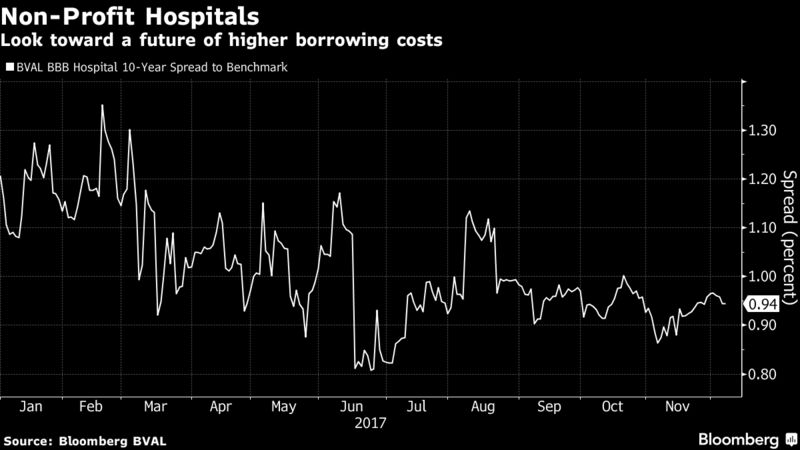
That may soon be an expense that other hospitals across the country will have to shoulder. The House’s tax legislation revokes non-profit hospitals’ ability to raise money in the municipal market, where investors are willing to accept lower interest rates because the income is exempt from federal taxes. That’s threatening to saddle health-care providers with higher borrowing costs at a time when their finances are already under pressure.
“Should tax-exempt financing not be available in the future, it may really harm our ability to build affordable senior housing and assisting living facilities,” said Michael Schafer, Spooner Health’s CEO.
For small, rural hospitals across the country, labor, drug, and technology costs are increasing faster than the revenue and patients’ unpaid debts are on the rise. Higher financing costs would be one more challenge.
David Hammer, head of municipal bond portfolio management for Pacific Investment Management Co., said the loss of the tax-exemption could raise borrowing costs by 1 to 2 percentage points at small facilities with a BBB rating or below. That “could have a meaningful impact on their balance sheets,” he said.
At least 26 non-profit hospitals are already either in default or distress, meaning they’ve notified bondholders of financial troubles that make bankruptcy more likely, according to data compiled by Bloomberg. That includes falling short of financial terms set by their debt agreements and having too little cash on hand.
Many of them are based in rural communities where the populations tend to be “older, poorer and sicker,” according to Margaret Elehwany, the vice president of government affairs and policy at the National Rural Health Association. She estimates that about 44 percent of rural hospitals operate at a loss. There have been at least seven municipal bankruptcy filings by hospitals since last year, the most of any municipal sector excluding Puerto Rico.
The risk that Congress will prevent hospitals from accessing the municipal market worries Dennis Reilly, the executive director of the Wisconsin Health & Educational Facilities Authority, an agency that issues debt for non-profits such as Spooner Health.
“All of us in the industry were completely blindsided by the House proposal,” Reilly said in an interview from Washington, where he was meeting with members of Congress about the proposed bill.
“Without tax-exempt financing, not-for-profits across the country will have increased borrowing costs of 25 to 35 percent because they’ll have to access the taxable market,” he said. “For many of the rural providers like Spooner, much of their project they would not have been able to do with the higher cost of capital.”
Hospitals are among those rushing to issue tax-exempt debt while they still can. Mercy Health, a Catholic health-care system that operates in Ohio and Kentucky, is scheduled to sell $585 million tax-exempt bonds next week. The deal, originally planned for early next year, was moved up after the release of the House proposal.
Spending more on debt would cut into the funds available for facilities, equipment and charitable outreach, like programs for opioid addiction, according to Jerome Judd, Mercy’s senior vice president and treasurer. “Things like that are impacted,” he said.
At least some members of Congress share the hospital executives’ concerns. Last month, some Republican lawmakers sent a letter to leadership pushing for the final plan to preserve the ability of hospitals and other entities, like affordable housing agencies and universities, to issue tax-exempt bonds.
“Private activity bonds finance exactly the sort of private public partnerships of which we need more of, not less,” they wrote. “These changes are incompatible with President Trump’s priority for infrastructure investment in the United States.”
Some hospitals already opt to sell their bonds in the taxable municipal market to avoid disclosures and restrictions over how the proceeds are used, though they are typically larger entities that can secure advantageous rates because of the size of their deals. Patrick Luby, a municipal analyst at CreditSights, said smaller clinics with only a few million of bonds to sell would have a hard time accessing that market, which attracts corporate debt investors accustomed to big issues.
“Even what we would consider a large deal in the muni market is almost an odd lot in corporate bonds,” he said. “Very large hospital chains, large household name universities — global investors will buy those names, but they’re not going to buy a $15, $25, $50 million local hospital.”
If the House plan is enacted, hospitals “will have a really difficult time accessing the market,” he said.

