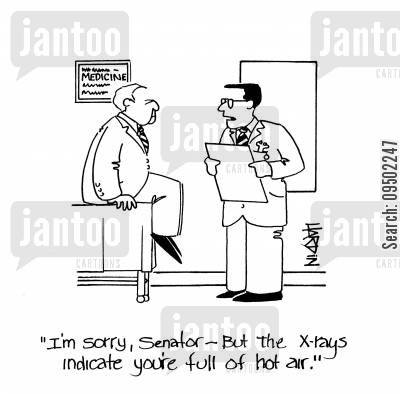
Cartoon – Mediocrity Rewarded


http://www.sacbee.com/opinion/op-ed/soapbox/article179847606.html

With the turmoil and chaos caused by the ceaseless efforts of Congress and the Trump administration to shred the Affordable Care Act, shouldn’t our legislators show more urgency to provide health security for Californians?
On Monday, an Assembly select committee will hold its first hearing “to determine the best and quickest path forward toward universal health care,” in the words of Assembly Speaker Anthony Rendon.
However, the committee has no authority to act on legislation. It is essentially a discussion group designed to give the appearance of moving forward on reform, rather than act on an existing bill, Senate Bill 562, which would guarantee health care for all Californians without huge out-of pocket costs hurting so many.
A legislative study has already concluded that a Medicare for all/single-payer approach, as SB 562 advances, is superior to all other models of health care financing.
Further, a study released in June documented the bill’s additional cost to the state budget is closer to $100 billion, not the misleading $400 billion cited by opponents. The study also offered financing proposals under which nearly all families and businesses would pay less for health care than they do now.
It is also troubling that select committee co-chairmen Jim Wood, a Healdsburg Democrat, and Joaquin Arambula, a Fresno Democrat, are the two of the three largest Assembly recipients of campaign contributions from the health care and insurance industries.
Unlike the powerless committee, SB 562 has the enormous advantage of having already passed the state Senate in June. The Assembly can take it up immediately early next year with any amendments members want to propose.
Further delays leave Californians at the mercy of the Trump administration. Consider the latest executive orders to encourage the sale of insurance plans that evade the extensive protections established by California legislators, and to cancel subsidy payments to insurers to sabotage the ACA marketplaces.
Premiums in California for “silver” plans, by far the most common under Covered California, are going up by 25 percent on average. Anthem Blue Cross rates are jumping by 37 percent, and it is pulling out of about half of California counties.
The specific impact on individuals and families varies depending on where you live, your income, how much coverage you want, and who your current insurer is. Or you may need to shop around for a non-silver plan – all with differing levels of coverage, deductibles and co-pays and that may or may not include your doctor, hospital, or other providers in its network.
Or Congress may or may not pass supplemental legislation to reverse Trump’s orders, which he may or may not support, with its own set of uncertain impacts. Everyone clear?
There’s a fix that would end Californians’ anxiety over their health coverage and cost, and establish protection for all. The people are ready. Earlier this month, nearly 1,000 activists attended 100 events in all 80 Assembly districts to talk to their neighbors about SB 562, and 10,000 people signed petitions urging its approval.
Concord resident Emily Chandler was among them. She told us she pays $800 a month for insurance but sometimes avoids going to the hospital because she can’t afford the co-pays and deductibles. She is one of 15 million Californians who, even under the ACA, are without coverage or who don’t get the care they need due to rising costs.
Californians don’t need a committee that can do little more than talk. They need real relief, SB 562.
https://www.axios.com/keeping-the-alexander-murray-health-care-bill-in-context-2498670199.html

As debate continues about a bipartisan fix for the Affordable Care Act marketplaces, Drew Altman’s latest Axios column describes the scale of the problems in the ACA marketplaces and the public’s confusion about whether they are impacted. He says that the news media, experts and policy makers can do more to put the marketplace problems and fixes in context as debate evolves.
Reality check: Many people will think it affects their insurance when, in actuality, it will have no impact on the vast majority of Americans who get their coverage outside of the relatively small ACA marketplaces.
The chart based on our new Kaiser Tracking Poll shows the confusion. Just 23% of the American people know that rising premiums in the ACA marketplaces affect only people who buy their own insurance. More than seven out of 10 wrongly believe rising premiums in the marketplaces affect everyone or people who get coverage through their employer.
The public will be susceptible to spin and misrepresentation of the limited goals of Alexander-Murray: a bipartisan effort to stabilize the marketplaces by funding the cost-sharing reduction subsidies, providing more resources for open enrollment outreach, and expediting state waivers.
President Trump has added to the confusion. He recently pronounced the ACA “dead”, adding, “there is no such thing as Obamacare anymore.” Possibly that’s because he wishes it was dead. More likely, he was referring to the problems in the ACA marketplaces, which he has exaggerated.
Like thinking your whole house is falling down when just a part of the foundation needs shoring up, both he and the American people have an inaccurate picture of where the marketplaces fit in the ACA and where the ACA fits in the health system.
A few facts:
Some conservatives in Congress will hold out for repeal, and they’ll resist any legislation that they view as propping up Obamacare. But for everyone else, it’s important to understand the problem and get the facts.

An undocumented 17-year-old caught in a legal standoff with the federal government must further delay plans for an abortion after an appeals court ruled on Friday that the Department of Health and Human Services had 11 days to find a sponsor to take custody of the teenager.
The decision by the United States Court of Appeals for the District of Columbia Circuit could put her health at risk, doctors say, especially now that she is about 15 weeks pregnant.
“While first-trimester abortion is over 10 times safer than childbirth, the risks gradually increase in the second trimester to those of childbirth,” Dr. Nancy L. Stanwood, the chief of family planning at the Yale School of Medicine, said in an email. Forcing her to wait, she added, “harms her physical health, period.”
Further complicating matters, the teenager only has about a month to get an abortion in Texas, where she is being held. The state has banned abortion after 20 weeks of pregnancy unless there is a medical emergency.
The teenager, referred to as Jane Doe in court documents, found out she was pregnant last month after she was apprehended while entering the United States without her parents.
She decided to end her pregnancy, but Texas law requires a minor to get parental consent or a judicial waiver to do so. She obtained a waiver, but the government prevented her from going to any abortion-related appointments, the American Civil Liberties Union said in court documents, and forced her to visit a religiously affiliated crisis pregnancy center where she was asked to view a sonogram.
An undocumented 17-year-old being held by the federal government is seeking an abortion.
President Trump has worked to restrict abortions since his first days in office by expanding the so-called global gag rule, which withholds American funding from international organizations that discuss or perform abortions; taking aim at Planned Parenthood funding; and appointing several leaders who are anti-abortion, including E. Scott Lloyd, the director of the Office of Refugee Resettlement at the health department, and one of the defendants in the Jane Doe case.
The federal government said that it was not its role to facilitate abortion, and that the teenager still had the option of returning to her home country.
“Ms. Doe has options for leaving federal custody — either by requesting a voluntary departure to her home country (which the federal government is willing to expedite if requested) or by being placed in the custody of a sponsor,” the defendants stated in a memorandum on Tuesday. “Given these options, the government is not causing Ms. Doe to carry a pregnancy to term against her will.”
On Wednesday, a federal judge ordered the government to allow the teenager to get an abortion.
Tanya S. Chutkan, the United States District Court judge who initiated the temporary restraining order, said she was “astounded” by the government’s position.
“She can leave the country or she cannot get her abortion, those are her options?”
The government next argued for the right to appoint the teenager with a sponsor, which would release her from government custody, and said in court documents that the process of securing a sponsor would not unduly burden the teenager’s right to an abortion.
On Friday, the appeals court agreed.
The health department has until Oct. 31 to find a suitable sponsor; if it does, Jane Doe would be able to have an abortion. If she is not released to a sponsor by then, the government has the option of appealing once more.
The 11-day timeline to find a sponsor “seems far-fetched,” said Brigitte Amiri, one of the A.C.L.U. lawyers representing the teenager.
Sponsors are typically family members, according to the health department’s website, who help care for a child who has entered the United States illegally without their parents — often because the child is fleeing an abusive or violent situation.
The vetting process, which includes a background check, can take months, Ms. Amiri said, and earlier attempts to find a sponsor for Jane Doe were unsuccessful.
“They kicked the can down the road, and in this case they kicked the woman down the road,” Dr. Stanwood said. “They are just delaying her care to no end but their own ideology.”
A spokesman for the Administration of Children and Families, which is part of the health department, said in a statement that the care of minors like Jane Doe was important.
“For however much time we are given, the Office of Refugee Resettlement and H.H.S. will protect the well-being of this minor and all children and their babies in our facilities, and we will defend human dignity for all in our care,” the statement said.
The teenager will be 16 weeks and five days pregnant at the end of October, according to the nonprofit legal organization Jane’s Due Process, which has been working with the A.C.L.U. If the appeals process continues into November, the teenager will reach the 20-week mark, which would prevent her from having an elective abortion in Texas.
The sooner the teenager can have the abortion, “the safer it will be for her,” said Dr. Hal C. Lawrence, the executive vice president of the American Congress of Obstetricians and Gynecologists, who practiced obstetrics for nearly three decades.
As the uterus gets bigger, he added, the walls of the uterus get thinner, which increases the possibility of perforation and puts women at risk of additional blood loss during an abortion.
Health risks aside, delaying an abortion can cause emotional trauma.
“Women don’t just wake up one morning and decide they’re going to have an abortion,” Dr. Lawrence said. “And so to make her continue to struggle and be denied access to something which is legal — all that does is increase the psychological stress for her, and that’s not healthy.”
The United States has one of the highest rates of maternal mortality in the developed world, and abortion has been shown to be safer for women than childbirth.
The A.C.L.U. is considering several options, including further appeals.
For the teenager, the process has been exhausting, Ms. Amiri said.
“She talks about feeling very tired.”

If a stake could be driven through the vampire heart of the nation’s opioid epidemic, it might look something like this: Four tiny spines, each smaller than a matchstick, sunk into a drug addict’s upper arm.
These implants remain beneath the skin for months, delivering a continuous dose of a drug called buprenorphine, which blunts the euphoria of an opioid high. Ideally, its manufacturer says, patients will get the implants replaced every six months, helping achieve the lasting sobriety that currently eludes an estimated 2.5 million Americans who are addicted to heroin or other opioids.
As the addiction crisis grows, implants that deliver buprenorphine, naltrexone and opioid-blocking drugs like them might offer light in an otherwise oppressive darkness. One recent study found that nearly 86 percent of the people who used the buprenorphine implant refrained from using opioids during a six-month window. And in Russia, more than half of heroin-addicted patients who got a naltrexone implant were abstinent over a six-month clinical trial.
But here in Southern California — a region known as Rehab Riviera because there are so many drug and alcohol recovery centers — implants might also be a new way to turn an illicit buck.
In one of the latest twists on the profit-before-patient mindset so common in the addiction treatment industry, addicts are demanding to be paid for agreeing to get implants, knowing that rehab centers and the doctors who surgically insert the devices can bill insurance providers thousands of dollars per patient, according to professionals in the rehab industry.
“Hey Bud. I have at least me and 3 other people looking to come … and all 4 of us want the implant,” said a text from an addict to an executive with New Existence Treatment Center in Fountain Valley, according to screen shots of a text exchange reviewed by the Southern California News Group.
“If I can get others with the same insurance any chance I could possible (sic) make little something, I got nothing… ”
Requested payouts for agreeing to the treatment, according to an apparently unsent text on the addict’s phone, were $700 for his implant plus $300 for each additional person he recruited to get implants.
Dylan Walker, one of New Existence’s owner-operators, was trading texts with the addict, and said he did nothing irregular. “If you actually read them, nowhere in there does it say I’m paying clients to get the implant,” Walker said when contacted about the exchange.
Later, in a prepared statement, the company said Walker simply offered encouragement and support to a former client, nothing more.
“New Existence has not and will not engage in any unlawful or unethical treatment or business practice such as payments to clients or other organizations for procedures or treatments,” it said by email.
“Unfortunately, the addiction treatment industry is fraught with questionable practices, and we have encountered similar requests or demands in the past—which have all been rejected.”
New Existence — a non-medical enterprise — also said it is carefully reviewing its own policies and procedures “to ensure that our communication with clients regarding treatment are clear, making sure that they understand their treatment plan as it relates to their own recovery process.”
Other addiction professionals say such demands aren’t unusual. Paying addicts to get implants – and other forms of insurer-covered treatments – is at least widespread enough to prompt some addicts to make the request.
“Does it surprise me? No. That’s part of toxic behavior.,” said Cynthia Moreno Tuohy, executive director of the National Association for Alcoholism and Drug Abuse Counselors.
The requests amount to, “Give me money to help me help you get money,” she said, and they constitute a basic corruption of how the industry should work.
“In our code of ethics, you can’t do that.”
Probuphine — the brand name of the implant that delivers buprenorphine — was developed by Braeburn Pharmaceuticals of New Jersey with partner Titan Pharmaceuticals in San Francisco. Company officials didn’t say if they’ve heard of the shakedown proposed by the addict, but promised to probe further.
“We take all reports of potential misconduct, violations of internal Braeburn policy or applicable laws, very seriously,” said Braeburn spokeswoman Nancy Leone by email.
Officials with BioCorRx, the Anaheim company that’s working on FDA approval for implants delivering naltrexone, said they have received demands for money directly from addicts.
“We have an 800 number and people just flat-out ask, ‘How much will you pay me to get your implant?’ ” said Brady Granier, the company’s chief executive. “We tell them we don’t treat people, and the people we work with don’t do that. It shouldn’t be happening.
“It’s a form of patient-brokering,” he added. “And it gives what we do a bad name.”
Naltrexone implants are inserted into the abdomen and last several months. They’ve been widely used in Europe for years and have been prescribed in the U.S. as well, even without the FDA’s official stamp of approval – which is usually required before health insurers will agree to pay for them.
The chatter is that some illicit implants are imported from overseas, Granier said.
“There’s a black market for them. Patients who are considering this should always ask their doctor, ‘Where are you getting your implants?’”
Probuphine is, for now, the only long-acting FDA-approved implant for opioid addiction. It got the green light last year, hit the market in January, and lasts six months.
A single Probuphine implant costs $5,000, and billings for follow-up care can run thousands more. It’s covered by most private and public health insurance plans and, in a recent statement, the FDA backed such coverage, saying “expanded use and availability of medication-assisted treatment is a top priority of federal effort to combat opioid epidemic.”
Since most insurance companies don’t cover naltrexone implants yet, those are often billed as surgeries, insiders said.
Health insurance officials confirmed that they’ve heard of irregularities connected to anti-opioid implants. Many insurers and treatment providers are embroiled in lawsuits over alleged billing fraud on other fronts, and insurers claim they’ve seen all manner of creative billings in the addiction treatment industry.
“We have heard anecdotally of a California facility that makes its own implants… for use with its clients,” said Mark Slitt, spokesman for Cigna. “We would not cover that.”
Ashton Abernethy of AVA medical billing, a Costa Mesa company that works with behavioral health centers, said she started hearing about pay-for-implants scams over the last 18 months or so.
Abernethy, who said she works with rehab operators to help them understand the law, said the implant situation reminds her of the “sweaty palms” surgeries of about a decade ago. In those operations, doctors paid people with generous insurance policies to undergo unnecessary surgeries. Authorities later said the schemes generated $154 million in fraudulent billing.
The Southern California News Group recently investigated the addiction industry and found it peppered with financial abuses that bleed untold millions from public and private pockets, can upend neighborhoods and often fails to set addicts on a path to sobriety. The revolving door between detox centers, treatment facilities, sober living homes and, often, the streets generates huge money for operators who know how to game the system. And even obvious fixes prohibiting patient brokering can be hard to enact.
Some professionals in the industry, frustrated by what they see as abuses, are trying to force change from within.
David Skonezny created “It’s Time for Ethics in Addiction Treatment,” a closed Facebook group for industry professionals that has more than 2,000 members. It’s a destination for people to challenge themselves and have honest dialogue about ethics in the industry, he said, and where people are calling out what they deem as questionable behavior.
News of the pay-for-implant texts recently created a social media firestorm.
“Changing the face of addiction treatment needs to happen, and I’ve jumped on the grenade to do that,” said Skonezny, a certified drug and alcohol counselor who has served on the board of directors for California Consortium of Addiction Programs and Professionals.
“I’m ether in the process of doing really good work, or committing career suicide.”
Walter Ling, professor of psychiatry and founding director of the integrated Substance Abuse Programs at UCLA, says most people don’t really understand how much time drug addicts think about getting drugs.
It’s on their minds constantly.
When the freeway collapsed during the 1994 Northridge quake, he said, the panic for some addicts wasn’t about houses falling; it was about being unable to get to the local methadone clinic, where they could get at least a substitute for heroin.
The power of long-acting anti-opioid implants, he said, is that they can interrupt that pattern.
“Anything that can free (addicts) from the constant preoccupation with (their drug of choice) allows them to think about getting a life,” said Ling.
Implants can offer a consistency that’s lacking in other medications aimed at preventing relapse, he said. Methadone, the best known anti-opioid drug, must be taken daily and essentially marries an addict to a methadone clinic. Naltrexone blocks the effects of opioids by turning off pleasure receptors, and patients often hate it. Buprenorphine, Ling said, strikes something of a middle ground.
The current delivery systems for most of these drugs are pills or under-the-tongue film strips that a patient must keep in the mouth for 15 minutes, one or more times a day, to get the full dose. Addicts often grow weary of the routine and drop out. Pills and strips also become a commodity on the street, bought and sold from one addict to another.
Injectable drugs taken weekly or monthly, and implants, offer potential solutions to those problems. The addict isn’t making a daily decision about taking the anti-opioid, reducing the odds of relapse though not entirely wiping it out. Also, injections and implants can be invisible, meaning sobriety doesn’t include the stigma of visiting a methadone center or popping pills every day.
The manufacturers claim this helps addicts keep jobs, take care of their families and lead productive lives.
Ling is inclined to agree. He was the lead researcher on a study published in the Journal of the American Medical Association in 2010, which found that buprenorphine implants were indeed effective in treating opioid dependence over the six months following implantation.
“Of particular clinical importance are the favorable urinalysis toxicology results and the good patient retention—with 65.7% of patients who received the active implants completing 24 weeks of treatment without experiencing craving or withdrawal symptoms that necessitated withdrawal from the study,” the study said.
Naltrexone implants worked wonders as well. “The implant device, which releases a steady dose of naltrexone continuously for two months, averted relapse to heroin use three times as effectively as daily oral doses of the medication,” said the National Institute on Drug Abuse.
Drug abusers are notoriously ambivalent, said study co-leader Dr. George Woody, a professor of psychiatry at the University of Pennsylvania, in a NIDA statement. Just because they decide to quit using heroin one week doesn’t mean they’ll be motivated to quit a week later. The rationale for extended-release implants is to protect against that ambivalence.
The implants’ success in preventing relapse cuts a marked contrast to traditional social-based treatment approaches. Addicts have a relapse rate between 40 and 60 percent, according to the U.S. Surgeon General’s most recent probe, and it can take as long as 8 or 9 years to achieve sustained recovery.
Taking medication is the best guarantee that you don’t die from an overdose and actually stay off drugs, Ling said. “You can’t get a life if you can’t stay off drugs. And you can’t stay off drugs for long if you can’t get a life.”
Michael M. Miller, past president of the American Society of Addiction Medicine and medical director of the Herrington Recovery Center at Rogers Memorial Hospital in Wisconsin, also likes the idea of making it easier for an addict to get medicine for treatment, but says implants are only one way to do that. He is on the manufacturer’s physicians advisory committee for Probuphine, a paid position, but has not yet prescribed it.
“Implants probably have a role, but probably a fairly small role,” Miller said. “The 30-day injectables are going to have tremendous impact.”
On the street, stories about addicts who’ve cut implants out of their skin so they can get high are not uncommon, and some physicians worry about potential complications.
Both Miller and Ling said many in the addiction field resist the idea of using drugs as a long-term treatment. That patients might need to be on medication for the rest of their lives to manage their addiction makes physicians and patients uncomfortable; Ling chalks it up to a strain of Puritanism that runs through American culture.
Moreno Tuohy, executive director of the NAADAC, the Association for Addiction Professionals, believes that medication is one piece of the treatment puzzle, but that counseling is essential to address the psychological, social and spiritual aspects of an addict’s behavior.
Medications may make patients more available to do the work they need to do in counseling to fully recover, she said. She also predicted that the number of medications designed to fight opioid and other addictions is going grow considerably over the next few years.
“The hope is it will help people to reduce cravings for marijuana and cocaine and other drugs, and become more available to comprehensive treatment,” Moreno Tuohy said. “That’s the goal, not just (short-term) recovery.”
http://www.sacbee.com/news/politics-government/capitol-alert/article180299536.html
The two leading Democrats for California governor on Sunday split over how to achieve universal health care, with Lt. Gov. Gavin Newsom defending his support for a government-run, single-payer system and former Los Angeles Mayor Antonio Villaraigosa dismissing as “pie in the sky” plans that don’t include viable financing methods.
At a union-sponsored health care forum, Villaraigosa credited the Assembly speaker for sidetracking a universal health bill, Senate Bill 562, in Sacramento, because it didn’t include a funding mechanism. He supports the concept, but argued the state’s immediate focus should be on protecting the 5 million people who could lose their coverage if Republicans and President Donald Trump succeed in repealing Obamacare.
“As governor, you gotta make the tough choices, you can’t just say ‘I want pie in the sky,’ because that doesn’t put food on people’s tables,” he said, advocating for a public option that allows people to buy into the existing Medi-Cal program.
“What I’ll never do is sell you snake oil,” added Villaraigosa. “The fact of the matter is we don’t have a plan yet.”
Newsom, a proponent of advancing the bill, cast the issue as one of leadership and commitment. He contended there is considerable “mythology” about the $400 billion annual price tag of enacting the system because the state currently spends about $368 billion a year on health care in California, nearly two-thirds of it borne by taxpayers.
“A single-payer system drives down the cost of health care; drives down the cost of prescription drugs through economies of scale; and provides more effective, efficient and universal access for those that are uninsured,” Newsom said, pointing to double-digit increases in Obamacare here. He said the financing will be worked out as the legislative process moves forward.
“It’s a question of leadership,” he added. “This is what they said about Social Security and Medicare: ‘You can’t do it …’ I’m not going to wait around for the debate to unfold in Washington, D.C. Sure, I support Medicare for all, but you got to shape the debate in California.”
The exchange between Newsom and Villaraigosa came at the forum hosted by the National Union of Healthcare Workers, which also included Democrats Delaine Eastin, a former state school’s chief, and Treasurer John Chiang.
Chiang largely sidestepped the debate over universal care, offering that the state should take an incremental approach to health care. He wants to see more “effectiveness and efficiency” in the current system.
“We have to figure out how to scale-up, the time frame we’re going to scale-up,” he said, adding, “We don’t have to go all in to provide all the services all at once. Let’s make sure that what we are implementing we can scale-up appropriately.”
Eastin, like Newsom, believes single-payer would cost “slightly more” now but far less in the long run.
“The fact of the matter is people are dying in California because we do not have affordable health care coverage for everybody,” she said, calling the solution “realistic,” and saying it could be paid for with a gross receipts tax and a partial income tax increase.
She added: “There’s nothing California can’t do if we put our minds to it.”
The single-payer measure, driven largely by the California Nurses Association, has divided Democrats and is emerging as a litmus test for 2018. Newsom, endorsed by the nurses’ union, has never trailed in public polls and fundraising, while Villaraigosa has been the second-place Democrat.
The Republicans in the race, John Cox and Travis Allen, did not attend the forum, though the host National Union of Healthcare Workers, representing 14,000 workers in California, said they were invited. After Sunday’s forum, the union voted to endorse Newsom. Eastin was runner-up.


![]()