This Week’s Other Looming Health Care Crisis

https://newrepublic.com/article/144979/weeks-looming-health-care-crisis

The Republicans’ latest Obamacare repeal attempt may fail, but two vital programs that serve 18 million Americans are set to expire.

This week, 18 million of the most vulnerable people in America will wait nervously to see if Republicans in Washington will axe their health coverage. I’m not talking about the repeal of Obamacare. Two other programs expire at the end of this week, and without their reauthorization, millions of impoverished children and the desperately poor will be cut off from the only source of health care coverage they could ever hope to obtain. It’s an example of how Obamacare has overwhelmed every other health care public policy issue, and the results could be catastrophic.

As of Monday morning, we’re still not sure that there will even be a Senate vote on the latest repeal effort, Cassidy-Graham. With two Republicans (Rand Paul and John McCain) firmly opposed and one more, Susan Collins, all but against it, there seems to be no path to the necessary 50 votes. Even Ted Cruz begged off on Sunday. But Republicans have backed themselves into such a corner with their base, promising repeal for seven years, that the leadership keeps plugging away. That’s likely to continue until the September 30 deadline under current reconciliation rules.

This uncertainty is toxic for other important measures that face the same deadline. As of last year, 8.9 million children, mostly those whose families earn less than 200 percent of the poverty line, get covered through the Children’s Health Insurance Program (CHIP), which also pays for thousands of births and postpartum care services for low-income pregnant women. CHIP operates like Medicaid, as a state-federal partnership, and federal funding must be reauthorized by the end of the month.

Children wouldn’t be cut off right away; it depends on how states manage their programs. But at least ten, including California and its two million enrollees, would see fairly immediate impacts, including enrollment freezes and a shortfall in paying for care. The Senate Finance Committee announced an agreement on a five-year extension last week, but with the Cassidy-Graham mess, it’s unclear if they’ll get the floor time to pass it. And the House hasn’t acted at all.

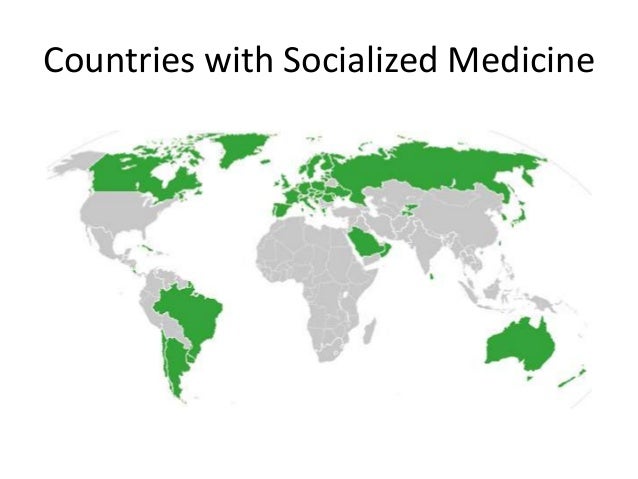
But that’s not all. Enhanced funding for thousands of community health centers, which have provided care for underserved communities since being established during Lyndon Johnson’s War on Poverty, also faces a Saturday expiration date. Community health centers are the dirty little secret of the U.S. system—a safety net that looks as much like Britain’s National Health Service as anything. In most cases, anyone can enter a center for care, regardless of ability to pay or even immigration status. More than single payer, this is actually socialized medicine.

It’s also astonishingly popular. If no action is taken this week, 70 percent of current funding levels for community health centers would be lost, likely forcing the closure of 2,800 facilities nationwide and the loss of 50,000 provider and staff jobs. Twenty-five million Americans use these centers each year, nearly three-quarters of them below the poverty line. An estimated nine million would be left with no medical home if funding expires.

These clinics serve a diverse set of communities—downtrodden urban areas and low-density rural regions with no other health care providers. One in ten Montanans get some health care from a community health center. Four hundred thousand Tennesseans use them, and almost that many South Carolinians. With that deep a funding cut, all of these facilities, in red states and blue states, are at some level of risk, forced to bar new patients, scale back services like dental care or drug treatment, or shut down. And local papers from California to North Carolina are raising the alarm.

Maybe no other major issue could get 70 senators from both parties on a letter of support, but Democrat Debbie Stabenow and Republican Roy Blunt did it for community health center funding last week. For all the ideological hot air, Democrats and Republicans are perfectly thrilled to support something as centrally planned and disruptive to the marketplace than any single payer system. Independent Bernie Sanders and Republican Bill Cassidy will be debating health care on CNN on Monday night, but both of them signed this letter to expand a government-funded health care provider network. (Sanders was actually instrumental in getting five years of enhanced community health center funding into the Affordable Care Act. Congress extended the funding in 2015, but only through September.)

Despite this rare bipartisan support, nothing has been done to extend the funding. A five-year extension has been introduced in the House, but no floor time has been scheduled. Consumed with the war over Obamacare, Congress has let this enormously successful program get lost in the shuffle.


Put together the patients at risk from expiring CHIP funding and community health center funding, and you get 18 million. And this population of Americans, which includes the homelesspoor pregnant women, the uninsured, the addicted, and the undocumented, is by and large more vulnerable to loss of health care access as those at risk in Obamacare repeal.

Obamacare has taken on a meaning that goes far beyond its actual function. It has helped to dramatically lower the uninsured rate, no doubt. But it’s still just part of a series of programs that assist people with coverage. Allow any one of those to falter and the whole system buckles. Obamacare could be working spectacularly, but without CHIP or community health center funding, the nation’s health care system would sink into absolute crisis.

Maybe you believe, as I do, that such a Rube Goldberg delivery system for health care makes no logical sense. In fact, the looming CHIP/community health center deadline serves as a good argument for a single-payer system where no one part of the program can fall through the cracks so easily. But that’s not where we are this week. We’re staring down the barrel of a health care catastrophe, and congressional leaders are busy trying to salvage campaign promises and play to their most ideological of supporters.

Medicaid Has A Bull’s-Eye On Its Back, Which Means No One Is Entirely Safe

http://khn.org/news/medicaid-has-a-bulls-eye-on-its-back-which-means-no-one-is-entirely-safe/?utm_campaign=KHN%3A%20First%20Edition&utm_source=hs_email&utm_medium=email&utm_content=56665328&_hsenc=p2ANqtz–jvGnchtUjK6wqfwtrlprJ5BzhHvyK_pxMcOnRWk1VUYBKzAt-i10s3Z-tSObu1Q3YZ4uRmvRvDmo2oj1lc5IskCe0tA&_hsmi=56665328

Image result for Kaiser Health News: GOP Health Bill Changes Go Far Beyond Preexisting Conditions


When high levels of lead were discovered in the public water system in Flint, Mich., in 2015, Medicaid stepped in to help thousands of children get tested for poisoning and receive care.

When disabled children need to get to doctors’ appointments — either across town or hundreds of miles away — Medicaid pays for their transportation.

When middle-class older Americans deplete their savings to pay for costly nursing home care, Medicaid offers coverage.

The United States has become a Medicaid nation.

Although it started as a plan to cover only the poor, Medicaid now touches tens of millions of Americans who live above the poverty line. The program serves as a backstop for America’s scattershot health care system, and as Republicans learned this year in their relentless battle to replace the Affordable Care Act, efforts to drastically change that can spur a backlash.

The latest Republican proposal — by Sens. Lindsey Graham (S.C.) and Bill Cassidy (La.) — is being pummeled by doctors, insurers, hospitals and patient advocates because it would scrap the health law’s Medicaid expansion and reduce federal funding for Medicaid. Senate leaders are trying to get a vote before Sept. 30, when special budget rules would allow the package to pass with only 50 votes.

Today, Medicaid is the nation’s largest health insurance program, covering 74 million, or more than 1 in 5 Americans. Over the next weeks, Kaiser Health News will explore the vast reach of the program. Twenty-five percent of Americans will be on Medicaid at some point in their lives — many are just a pink slip away from being eligible.

Medicaid funding protects families from having to sell a home or declare bankruptcy to pay for the care of a disabled child or elderly parent. It responds to cover disaster relief, public health emergencies and programs in schools that lack other sources of funding.

Millions of women who don’t qualify for full Medicaid benefits each year obtain family planning services paid for by Medicaid. These women have incomes as high as triple the federal poverty rate, or over $36,000 for an individual. And thousands of women, who otherwise don’t qualify for the program, get treated each year for breast and cervical cancers through Medicaid.

“Instead of cutting Medicaid, [lawmakers] increased public awareness of its value and made it even harder to cut in the future,” said Jonathan Oberlander, professor of health policy and management at the University of North Carolina-Chapel Hill and a supporter of the federal health law. The Medicaid cuts passed the House, but the ACA overhaul legislation fell short in the Senate in July.

Medicaid is the workhorse of the health system, covering:

  • 39 percent of all children.
  • Nearly half of all births in the country.
  • 60 percent of nursing home and other long-term care expenses.
  • More than one-quarter of all spending on mental health services and over a fifth of all spending on substance abuse treatment.

Unlike Medicare beneficiaries, who keep that insurance for life, most Medicaid enrollees churn in and out of the program every few years, depending on their circumstances.

Such numbers underline the importance of Medicaid, but also provoke alarm among conservatives and some economists who say the U.S. cannot afford the costs over the long run.

Bill Hammond, director of health policy of the fiscally conservative Empire Center for Public Policy in Albany, N.Y., said Medicaid has been a big help for those it was designed to cover — children and the disabled. But it has grown so big that the cost hurts state efforts to pay for other necessary public services, such as education and roads. “I can’t think of any other anti-poverty program that reaches so many people. … It’s too expensive a benefit.”

“We need to transition people to get coverage in the private sector,” he said, noting how millions on the program have incomes above the federal poverty level.

It May Be The Person Down The Block

Joana Weaver, 49, of Salisbury, Md., who has cerebral palsy, has been on and off Medicaid since birth. For the past few years, it’s paid for home nursing services for six hours a day to help her get dressed, bathed and fed. That’s kept her out of a nursing home and enabled her to teach English part time at a local community college.

“For me, Medicaid has meant having my independence,” Weaver said.

Like Weaver, many people getting Medicaid today are not easily typecast. They include grandmothers — one-quarter of Medicaid enrollees are elderly people or disabled adults.

Or the kid next door. About half of Medicaid enrollees are children, many with physical or mental disabilities.

Many of the rest — about 24 million enrollees — are adults under 65 without disabilities who earn too little to afford health insurance otherwise. About 60 percent of non-disabled adult enrollees have a job. Many of those who don’t work are caregivers.

“It’s the mechanic down the street, the woman waiting tables where you go for breakfast and people working at the grocery store,” said Sara Rosenbaum, a health policy expert at George Washington University in Washington, D.C.

While all states rely on Medicaid, it’s used more in some places than others because of varying state eligibility rules and poverty rates. As of August, about 44 percent of New Mexico residents are insured by Medicaid. In West Virginia and California, the rate is nearly 1 in 3.

peak or walk. It also covers costs for his wheelchair, walker and home health care. (Nick Krug/Lawrence Journal-World)

Jane and Fred Fergus, in Lawrence, Kan., said Medicaid has been a cornerstone in their lives since their son, Franklin, was born eight years ago with a severe genetic disability that left him unable to speak or walk. He is blind and deaf on one side of his body.

Although the family has insurance through Fred’s job as a high school history teacher, Franklin was eligible for Medicaid through an optional program that states use to help families let their children be cared for at home, rather than moving to a hospital or nursing home. Medicaid pays all his medical bills, including monthly transportation costs to Cincinnati Children’s Hospital, where for the past 18 months he has been receiving an experimental chemotherapy drug to help shrink tumors blocking his airway, Jane Fergus said. It also covers his wheelchair, walker and daily nursing care at home.

“We have such great health care for him because of Medicaid,” his mother said.

Jane Fergus was never politically active until this year, when she feared that the GOP plans to cut Medicaid funding would reduce services for her son.

“If there is a silver lining in all this debate, it’s that we have been given a voice, and people in power are being educated on the role of Medicaid,” she said.

Moving Beyond Its Roots

Medicaid was born in a 1965 political deal to help bring more support for President Lyndon Johnson’s dream of Medicare, the national health insurance program for the elderly.

Over the past 40 years and in particular since the 1980s, Medicaid expanded beyond its roots as a welfare program. In 1987, Congress added coverage for pregnant women and children living in families with incomes nearly twice the federal poverty level (about $49,200 today for a family of four).

In 1997, Congress added the Children’s Health Insurance Program to help cover kids from families with incomes too high for Medicaid.

And since September 2013, Obamacare allowed states to expand the program to anyone earning under 138 percent of poverty (or $16,394 for an individual in 2016), adding 17 million people.

In addition, more than 11 million Medicare beneficiaries also receive Medicaid coverage, which helps them get long-term care and pay for Medicare premiums.

“Medicaid is plugging the holes in our health system,” said Joan Alker, executive director of the Georgetown University Center for Children and Families, “and our health system has a lot of holes.”

But that comes at a steep price. 

A Blessing And A Curse

With increasing enrollments and health costs steadily rising, the cost of Medicaid has soared. Federal and state governments spent about $575 billion combined last year, nearly triple the level of 2000.

Those dollars have become both a blessing and a curse for states.

The federal government matches state Medicaid spending, with Washington paying from half to 74 percent of a state’s costs in 2016. Poorer states get the higher shares.

The funding is provided on an open-ended basis, so the more states spend the more they receive from Washington. That guarantee protects states when they have sudden enrollment spikes because of downturns in the economy, health emergencies such as the opioid crisis or natural disasters such as Hurricane Katrina.

The program is the largest source of federal funding to states. And Medicaid is often the biggest program in state budgets, after public education.

“Medicaid is the elephant in the room for health care,” said Jameson Taylor, vice president for policy for the Mississippi Center for Public Policy, a free-market think tank. He said states have become dependent on the federal funding to help fill their state budget coffers. While the poorest states, such as Mississippi, get a higher percentage of federal Medicaid dollars, that still often isn’t enough to keep up with health care costs, he said.

Extensive Benefits

Medicaid provides significant financing for hospitals, community health centers, physicians, nursing homes and jobs in the health care sector.

But the revenue stream flows further. Billions in annual Medicaid spending goes to U.S. schools to pay for nurses; physical, occupational and speech therapists; and school-based screenings and treatment for children from low-income families, as well as wheelchairs and buses to transport kids with special needs.

Medicaid also often covers services that private health insurers and Medicare do not — such as non-emergency transportation to medical appointments, vision care and dental care. To help people with disabilities stay out of expensive nursing homes, Medicaid pays for renovations to their homes, such as wheelchair ramps, and personal care aides.

Rena Schrager, 42, of Jupiter, Fla., who has severe vision problems, has relied on Medicaid  for more than 20 years. Although she often has difficulty finding doctors who will accept Medicaid’s reimbursements — which are often lower than private insurance and Medicare — she is grateful for the coverage. “When you do not have anything else, you are glad to have anything,” Schraeger said.

As it’s grown, Medicaid has become more popular, another reason why politicians are cautious to curtail benefits or spending.

A recent survey by the Kaiser Family Foundation showed three-fourths of the public, including majorities of Democrats (84 percent) and Republicans (61 percent), hold a favorable view of Medicaid. That’s nearly as high as Americans’ views on Medicare. (Kaiser Health News is an editorially independent program of the foundation.)

But it may still have a bull’s-eye on its back.

“The fact that the House passed a bill to cut $800 billion from Medicaid and it came one vote short to passing the Senate shows Medicaid is stronger than maybe many Republican leaders anticipated,” said Oberlander. “But politically it is still in a precarious position.”

A closer look at how the revised health bill would benefit key senators’ states

https://www.washingtonpost.com/news/powerpost/wp/2017/09/25/revised-health-bill-gives-states-limited-leeway-while-steering-more-money-to-alaska-maine/?_hsenc=p2ANqtz-_clpt8SgNxZ9kwl4KEWIyIxO-je4y4txwZTcf-IInlxUuZJsK0VGVNSt2v8TXrZ7Ec4rx3Jmad_zexDD63e8n4EmPw2A&_hsmi=56665328&utm_campaign=KHN%3A%20First%20Edition&utm_content=56665328&utm_medium=email&utm_source=hs_email&utm_term=.06260e61626c

Image result for Kaiser Health News: GOP Health Bill’s Changes Go Far Beyond Preexisting Conditions

The revised Republican health-care bill that senators unveiled Monday would partly even out wide gaps between states that would win and lose financially, providing more generous funding to states of some reluctant GOP lawmakers, but would give states less freedom to unwind federal health insurance rules.

The new version of the Cassidy-Graham legislation eliminates what had been one of the measure’s most controversial features, which would have enabled states to get federal permission to let insurers charge higher prices to customers with preexisting medical conditions. In addition, states now would not be able to allow health plans to impose annual or lifetime limits on coverage, as the original bill would have done.

Yet for the health-care standards that the bill would let states ignore if they wanted, the latest legislative language no longer would require states to get formal permission from the government through a waiver process. Instead, states would simply have to explain to federal officials what they intend to do. The standards that could be sidelined include the benefits that health plans sold to individuals and small businesses must cover and limits on how much more plans may charge older customers than younger ones.

While still giving states block grants for their programs and much more freedom to create their own rules than under the Affordable Care Act, this second draft of the plan would be less punitive financially than the first one for states that have most significantly expanded their residents’ access to insurance under the 2010 law. At the same time, the figures provide no indication that the bill’s chief sponsors have abandoned their plan to make steep cuts to Medicaid through a per-capita cap. Such a move would end up cutting federal funding by billions of dollars by 2026.

The plan update emerged late Sunday after its primary sponsors, GOP Sens. Bill Cassidy (La.) and Lindsey O. Graham (S.C.), worked through the weekend on changes designed to both bolster support on the right and win over a handful of centrists who have been balking.

The latest version would steer more money to states with key senators in a few ways.

One provision would direct $500 million in funding to states like Alaska — whose senior senator, Lisa Murkowski (R), is viewed as a crucial potential holdout — that have been granted waivers under a specific part of the ACA. Section 1332 aims to give states more flexibility in implementing the law, in order to set up a reinsurance program to help lower premiums on a state’s individual insurance market. With this provision included, Alaska will get to keep the federal funds it has been slated to receive.

Another part of the revised bill would give one-fourth of a $6 billion contingency fund to states with the lowest-density population — Alaska among them.

Separately, the law provides $750 million for states that expanded Medicaid after Dec. 31, 2015. That language means additional financial assistance for Montana and Cassidy’s home state of Louisiana.

Another addition to the plan, perhaps intended to appeal to another skeptical Republican, Maine Sen. Susan Collins, would require states to demonstrate that their health-care rules meet several federal standards, including parity for mental health care, reconstructive surgery after mastectomies and minimal hospital stays for newborns, among others.

To even out the checkerboards of winners and losers among states, the bill’s new version substantially revises the formula that would determine the allotment of money through block grants starting in 2020. Among other changes, the revision would spread the change over a decade, rather than the original half-dozen years.

Two of the states that now would fare the worst, Oregon and Minnesota, would lose 17 percent and 15 percent, respectively, of their federal funding between 2020 and 2026 relative to the current law. The two states have only Democrats in the Senate and in the governor’s mansion. It is a topic that is likely to come up on Monday during a Senate Finance Committee hearing on the bill; Sen. Ron Wyden (D-Ore.) is the panel’s ranking member.

The revised Cassidy-Graham legislation doesn’t change the total sum the federal government would spend on the block grants from 2020 to 2026. Instead, it tries to smooth over the formula of how the money would be distributed in an effort to put the states on a more equal footing.

Independent analysts had estimated a wide variation in block grant funding that states could get under the initial version of Cassidy-Graham: Mississippi would get 148 percent more relative to current law, while New York would get 35 percent less, according to an analysis by the Kaiser Family Foundation.

The range in state funding would now be narrower. South Dakota would see the largest funding increase at 88 percent, Oregon the greatest decrease.

The latest version notably retains more funding for states represented by key holdout senators. Kaiser had estimated that Maine would get 8 percent more under the initial Cassidy-Graham; it would get 43 percent more under the revised bill, according to the state-by-state summary.

But the state funding estimates don’t take into consideration the bill’s additional cuts to regular Medicaid spending. If those were considered, states like Alaska would still be losing out on federal funds overall. And the GOP estimates also assume that states would slash their own funding for coverage and then factor that into the final number as “state savings.”

Everyone Says We Must Control Exorbitant Drug Prices. So, Why Don’t We?

http://khn.org/news/everyone-says-we-must-control-exorbitant-drug-prices-why-dont-we/?utm_campaign=KHN%3A%20First%20Edition&utm_source=hs_email&utm_medium=email&utm_content=56665328&_hsenc=p2ANqtz-9USOT0grPw1hzokGXo1o2yZpkeK_yElBlZuogjpoOqpU54jPwx69fYfzoFtMPrwagSQbNEBdDCEjNHni7S4JYPKxtmxQ&_hsmi=56665328

Of all the promises President Donald Trump made for the early part of his term, controlling stinging drug prices might have seemed the easiest to achieve.

An angry public overwhelmingly wants change in an easily vilified industry. Big pharma’s recent publicity nightmare included thousand-percent price increases and a smirking CEO who said, “I liken myself to the robber barons.” Even powerful members of Congress from both parties have said that drug prices are too high.

But any momentum to address prescription drug costs — a problem that a large number of Americans now believe government should solve — has been lost amid rancorous debates over replacing Obamacare and stalled by roadblocks erected via lobbying and industry cash.

“There is a very aggressive lobby that is finding any and all means to thwart any reform to a system that has produced very lucrative profits,” said Ameet Sarpatwari, an epidemiologist and lawyer at Harvard Medical School who follows drug legislation. “Everything that’s coming out is being hit and hit hard — even stuff that’s commonsensical.”

Those in Congress concerned with health policy have spent much of the year advancing proposals to overhaul the Affordable Care Act, none of which would affect pharmaceutical pricing. The latest Republican proposal, by Senators Lindsey Graham of South Carolina and Bill Cassidy of Louisiana, is no different.

Meanwhile, more than two dozen bills aimed at curbing drug costs have been introduced in this or the previous Congress, according to the Drug Pricing Lab, a Memorial Sloan Kettering Cancer Center program that has catalogued ideas for reducing prices. Many have bipartisan support.

Proposals include importation from other developed countries, where regulations keep prices down; allowing government to negotiate the price of Medicare-covered drugs; speeding approval of cheaper generics; requiring notification before raising drug prices; and restricting consumer drug ads.


GOP Health Bill’s Changes Go Far Beyond Preexisting Conditions

http://khn.org/news/gop-health-bills-changes-go-far-beyond-preexisting-conditions/?utm_campaign=KHN%3A%20First%20Edition&utm_source=hs_email&utm_medium=email&utm_content=56665328&_hsenc=p2ANqtz–ZI38jB-Q3DBjlVthIR8_nnmgcoxfyJLZ9FCxu25Vns-FVgJBWtw1tRz0B56_htHMObxO9FiyR2pBssUiWbtjvN-hZeg&_hsmi=56665328

Image result for Kaiser Health News: GOP Health Bill Changes Go Far Beyond Preexisting Conditions

The latest GOP effort to “repeal and replace” the Affordable Care Act is getting a lot of attention, even if its passage seems unlikely. But there is far more to the measure than its changes to rules regarding preexisting health conditions.

In fact, the bill proposed by Sens. Lindsey Graham (R-S.C.) and Bill Cassidy (R-La.) would disrupt the existing health system more than any of the measures considered so far this year, according to supporters and critics.

For backers of the bill, that disruption is a good thing. But others are appalled. As insurance industry analyst Robert Laszewski put it in a note to clients this week, “Would you rather lose your Republican Senate seat because you couldn’t pass an Obamacare repeal-and-replace plan or because you blew up the health insurance system?”

Some of those alterations have generated little discussion but would have major impacts. Here are four unheralded changes:

— The Bill Caps Federal Funding To Medicaid

Much focus has been placed on the bill’s funding formula, which would take money from states that expanded the Medicaid program for the poor. Less notice has been paid to the fact that this bill, like some other GOP options over the summer, would, for the first time, cap overall federal Medicaid funding. The federal government has provided an open-ended funding match since the program’s creation in 1965 — meaning the federal government has provided its share of whatever states spend to care for low-income children, pregnant women, seniors and people with disabilities. More than 70 million people are covered by Medicaid, including those added as a result of the ACA.

Republicans have been pushing unsuccessfully to limit the federal government’s funding of Medicaid to states since the 1980s.

State Medicaid directors — including both Republicans and Democrats — are alarmed at the idea that something of such magnitude could be done with so little debate or consideration. “Graham-Cassidy would completely restructure the Medicaid program’s financing, which by itself is three percent of the nation’s Gross Domestic Product and 25 percent of the average state budget,” said a statement from the group.

The Congressional Budget Office estimated in June that an earlier version of the cap would reduce federal Medicaid spending 35 percent by 2036. As a result, said CBO, states would “need to … decide whether to commit more of their own resources, cut payments to health care providers and health plans, eliminate optional services, restrict eligibility for enrollment, or adopt some combination of those approaches.”

“There won’t be enough money to do what’s authorized under current law,” said Jessica Schubel of the left-leaning think tank the Center on Budget and Policy Priorities.

— The Bill Gives Unprecedented Power To The Secretary Of Health And Human Services

Republicans complained bitterly about the power delegated by Congress to the secretary of Health and Human Services in the ACA. But conservative analyst Chris Jacobs pointed out that the Graham-Cassidy bill gives the HHS secretary more power still.

The bill creates a dizzyingly complex formula for the funds now being spent on the ACA, which is intended to draw money away from wealthier states (that mostly expanded Medicaid under the health law) toward poorer ones (that mostly did not). But there is a huge loophole, noted Jacobs. The bill gives the HHS secretary authority to change the formula on his or her own.

“That’s a trillion-dollar loophole that leaves HHS bureaucrats with the ultimate say over how much money states will receive,” Jacobs wrote.

And, he said, it’s the opposite of “federalism,” or giving states more authority, which the bill’s sponsors claim to be advancing.

“Draining the swamp shouldn’t involve distributing money from Washington out to states, whether under a simple formula or executive discretion,” he wrote. “It should involve eliminating Washington’s role in doling out money entirely.”

— The Bill Cuts Off All ACA Funding After 2026

The bill would lump together all funds being spent under the health law to help people pay premiums, out-of-pocket health costs and expand Medicaid to non-disabled adults and redistribute those funds to the states in the form of block grants. States could then use that money for almost anything health-related.

What few people have noticed, however, is that those block grants end abruptly after 2026. Originally, many thought this was because of congressional budget rules that limit new programs to no more than 10 years.

In fact, those rules only say that a program cannot add to the deficit after 10 years. The block grant is paid for by ongoing taxes generated from the ACA, so there is no budget requirement to end the block grant.

The reason seems to be a desire to require Congress to come back and revisit the program. A spokesman for Cassidy said the program “just has to be reauthorized in 2026 just like the CHIP program.” CHIP is the Children’s Health Insurance Program, also created in a budget bill in 1997. Congress was supposed to reauthorize that program by the end of September, although it looks as if lawmakers will miss that deadline, despite bipartisan support.

Others, however, worry that cutting the money off after 2026 means Congress could no longer use the current funding mechanism. Instead, lawmakers would have to come up with massive cuts to other programs or new tax increases if they wanted to continue providing the money for health care.

— The Bill Could Roil The Individual Insurance Market In Some States By Banning Abortion Coverage In Private Health Plans.

In keeping a promise to anti-abortion lawmakers, the bill would prohibit all private insurance plans receiving any federal funds from providing abortion coverage.

As part of a delicate compromise that got the ACA enacted in 2010, states were given the option to ban abortion coverage in plans on their health exchanges. Half of them did.

But some states, notably California, New York and Oregon require plans they regulate to offer coverage of elective abortions.

The problem is that the deadline for insurers to opt into coverage under the ACA is next Wednesday. If Congress were to pass the bill after that, it is unclear what would happen to those plans. In California, the requirement for abortion coverage is based on the state’s Constitution, so it would be possible that no plans could be offered to people who are eligible for federal help.

“There aren’t clear answers” to what would happen if the bill becomes law in its current form and takes effect in January, said Debra Ness, president of the National Partnership for Women and Families, a reproductive rights advocacy group. “I think it’s going to create chaos.”