Podcast: What The Health? Why Is This Stuff So Complicated?

http://khn.org/news/podcast-what-the-health-why-is-this-stuff-so-complicated/?utm_campaign=KFF-2017-The-Latest&utm_source=hs_email&utm_medium=email&utm_content=53992096&_hsenc=p2ANqtz-9RVk6LAwQmr5-jA8mfluajQXfLARSbMy-cQ-M_J_-lMgbPPRpVB4WsULvrM_pItwrsk17rWr6mzfTqzH0oB_DXLx1awg

Image result for Podcast: What The Health? Why Is This Stuff So Complicated?

Julie Rovner of Kaiser Health News, Joanne Kenen of Politico, Margot Sanger-Katz of The New York Times and Paige Winfield Cunningham of The Washington Post discuss the latest on the Senate’s effort to “repeal and replace” the Affordable Care Act, and why it is so difficult to make popular changes, such as requiring insurers to cover people with preexisting health conditions.

What Are the Implications for Medicare of the American Health Care Act and the Better Care Reconciliation Act?

What Are the Implications for Medicare of the American Health Care Act and the Better Care Reconciliation Act?


An important question in the debate over proposals to repeal and replace the Affordable Care Act (ACA) is what might happen to the law’s many provisions affecting the Medicare program. The American Health Care Act (AHCA), which was passed by the House of Representative on May 4, 2017, and the Better Care Reconciliation Act (BCRA), released by Senate Republicans on June 22, 2017, would leave most ACA changes to Medicare intact, including the benefit improvements (no-cost preventive services and closing the Part D coverage gap), reductions to payments to health care providers and Medicare Advantage plans, the Independent Payment Advisory Board, and the Center for Medicare and Medicaid Innovation.

However, both bills would repeal the Medicare payroll surtax on high-income earners that was added by the ACA, effective January 2023. That provision, which took effect in 2013, provides additional revenue for the Part A trust fund, which pays for hospital, skilled nursing facility, home health and hospice benefits. The Part A trust fund is financed primarily through a 2.9 percent tax on earnings paid by employers and employees (1.45 percent each). The ACA increased the payroll tax for a minority of taxpayers with relatively high incomes—those earning more than $200,000/individual and $250,000/couple—by 0.9 percentage points.

In addition to repealing the ACA’s Medicare payroll surtax, both bills would repeal virtually all other tax and revenue provisions in the ACA, including the annual fee paid by branded prescription drug manufacturers, which would decrease revenue to the Part B trust fund. The bills would also reinstate the tax deduction for employers who receive Part D Retiree Drug Subsidy (RDS) payments, which would increase Medicare Part D spending.

According to the Congressional Budget Office, the provision in the AHCA and the BCRA to repeal the Medicare payroll surtax would reduce revenue for Part A benefits by $58.6 billion between 2017 and 2026. Proposed changes to the ACA’s marketplace coverage provisions and to Medicaid financing in both bills would also increase the number of uninsured, putting additional strain on the nation’s hospitals to provide uncompensated care. As a result, Medicare’s “disproportionate share hospital” (DSH) payments would increase, leading to higher Part A spending between 2018 and 2026 of more than $40 billion, according to CBO.

Altogether, changes to Part A spending and financing in the AHCA and BCRA would weaken Medicare’s financial status by depleting the Part A trust fund two years earlier than under current law, moving up the projected insolvency date from 2028 to 2026, according to Medicare’s actuaries (Figure 1).

Politics Aside, We Know How to Fix Obamacare

President Obama’s Affordable Care Act marketplaces were supposed to give consumers choices of health plans from insurers that compete to keep premiums down. But fewer insurers are participating, and premiums are increasing sharply.

Fixing this problem will obviously be politically difficult with a Republican-controlled Congress that has vowed to “repeal and replace.” President-elect Donald J. Trump has also said he wants to get rid of the Affordable Care Act, although he amended that recently by saying he’d like to keep some elements. Replacing the law, without a Senate supermajority, would also be politically difficult.

From a policy standpoint, however, some solutions to problems facing the marketplaces are ones that Republicans have endorsed before: for Medicare.

The number of insurers participating in the Obamacare marketplaces is falling. This year, 182 counties had only one insurer offering plans. Next year, that will be true of nearly 1,000 counties, or almost one-third of the total. An average marketplace will offer 17 fewer plans in this fall’s open-enrollment period than last year’s. Fewer choices make it harder for consumers to find plans that meet their needs, like including doctors and hospitals they prefer and covering the drugs they take.

Shrinking choice isn’t the only problem facing the marketplaces. On average, the most popular type of plan will cost 22 percent more next year than this year. However, in some regions, premium increases are much larger; residents of Phoenix will see a 145 percent rise. (In some regions, increases are low; Columbus, Ohio, is facing only a 3 percent increase.)

Insurers’ exits and rising premiums are related. Both are happening because the number of enrollees and their health care needs are not what insurers expected. One piece of evidence that this occurred is that the Obamacare marketplace plans attracted more older people than the administration’s initial projection. Another factor: In states that did not expand their Medicaid programs, some sicker, higher-cost consumers that would otherwise be Medicaid-eligible are in marketplace plans.

If insurers attract too few consumers with little or modest health needs and, instead, attract a larger proportion of sicker ones, health care costs outstrip premium revenue. In the worst case, an insurance company throws up its hands and exits the market. Some insurers that have left Obamacare markets stated they did so because they could not earn enough money to keep up with costs.

Increasing premiums might close the revenue-cost gap. However, premium increases can further discourage consumers, particularly healthier ones, from enrolling, worsening the problem.

As competition decreases, the remaining insurers have greater market power to increase premiums. States with the fewest insurers have the largest premium increases while those with more insurers have more modest premium growth. These facts are consistent with findings from both government and non-government organizations.

A study done in part by Leemore Dafny, a health economist now with the Harvard Business School, also illuminates the competition-premium connection. She and co-authors found that premiums in the first year of the marketplaces were 5.4 percent higher just because one national insurer opted out. Another study, published in Health Affairs, found that premiums fall by 3.5 percent with the addition of another insurer.

“Marketplaces will only succeed if enough insurers participate, and many are running away from what they perceive as a high-risk, low-reward market opportunity,” she said.

All of this — insurer withdrawals and sharply escalating premiums — was avoidable and is fixable. We know how to draw insurers into markets, keep them there, and limit premium growth. We can do so by subsidizing plans more and by limiting their risk of loss. We’ve done both before.

After King v. Burwell: Next Steps for the Affordable Care Act

Click to access 2000328-After-King-v.-Burwell-Next-Steps-for-the-Affordable-Care-Act.pdf

Image result for the urban institute

In this paper we have argued that the ACA has already achieved some major milestones. The law has
reduced the number of uninsured Americans by about 15 million people. It has reformed the nongroup
insurance market, no longer allowing insurers to discriminate against high-risk individuals.

Furthermore, the marketplace has been structured to assure considerable competition and has resulted
in surprisingly moderate premiums in 2014 and 2015. Health care growth has been slow by historical
standards, in part because of policies adopted in the ACA. In contrast to fears of widespread employer
dropping of insurance coverage, there appears to have been no loss in employer-sponsored insurance.
Finally, there have been no adverse effects on employment.

But at the same time, there are many reasons to believe the law is underfunded. The original
budgetary cost for the ACA’s coverage expansion was under $1 trillion, with financing coming from a
combination of cuts in Medicare and Medicaid and new taxes. The amount that many individuals are
expected to pay in premiums is still relatively high as a percentage of income. Further, premium
subsidies were tied to silver-level (70 percent AV) plans, a metal tier that has relatively high deductibles
and other forms of cost-sharing. The high premiums coupled with high cost-sharing not only can lead to
substantial financial burdens for some people, but also may have an adverse effect on enrollment.

Further, the premium tax credit caps are indexed to increase over time as medical costs grow faster
than general inflation, meaning that household financial burdens will increase over time as well.
Another problem is that families that include a worker who has an affordable employer offer are
typically not eligible for financial assistance in the marketplaces, even if the cost of family coverage
through the employer is very high. Finally, as of this date, 21 states are not participating in Medicaid,
leaving large numbers of very low income individuals without coverage.

In addition, the administrative functions in the law have been underfunded considerably. IT systems
continue to need upgrades and ongoing operational support. Efforts at education, outreach, and
enrollment assistance are in need of more federal financial support. Finally, increased support is needed
at the federal and state levels for oversight and enforcement of insurance regulations; the premise of
the law is that we can build upon a regulated private insurance market and doing so requires adequate
resources.

Given this set of problems, we propose reducing the amount of nongroup insurance premiums that
individuals are expected to pay at each income level to make coverage more affordable. We would tie
premium tax credits to gold plans rather than to silver (80 percent AV rather than 70 percent) and
3 8 ADDRESSING UNDERINVESTMENT IN THE AFFORDABLE CARE ACT
improve cost-sharing subsidies for low-income people. Further, we propose eliminating the indexing of
premiums tax credits so that their value does not erode over time. We would fix the family glitch by
allowing family members to obtain subsidized coverage through the marketplaces even if one of the
adults has an affordable offer of single coverage. We would modify the ACA’s affordability standard to
make it consistent with the highest nongroup premium tax cap that we propose and the employersponsored
insurance firewall exemption level.

Next, we would address the reluctance of the 21 states to expand Medicaid up to 138 percent of
FPL by giving all states the option of extending coverage up to 100 percent of FPL. Many states that
have ideological reasons for opposing expansion of Medicaid are more comfortable covering individuals
below the poverty level in public insurance programs, and thus this option may induce many of the
remaining states to participate. It may also result in many states that are already covering individuals up
to 138 percent of FPL reducing coverage levels to those technically in poverty. Moving some current
Medicaid enrollees into marketplace plans clearly comes with trade-offs. For example, some consumers
would have modest increases in out-of-pocket costs, although our improved subsidy schedule would
limit that exposure. All enrollees would be subject to open enrollment period requirements, which
Medicaid does not have. Some states provide additional services through Medicaid (e.g., transportation
to providers) that may not be covered in marketplace plans, but some people would gain access to a
broader set of providers than they have in the Medicaid program. States with Medicaid expansions are
clearly experiencing larger increases in coverage than nonexpansion states (Long et al. 2015), and if the
approach moves more states to participate, it would go a long way toward redressing the indefensible
inequity of subsidizing higher-income individuals while providing no assistance to many of the nation’s
poorest residents.

Taken together, these measures designed to improve affordability would increase enrollment to
levels at least commensurate with original projections and likely to even higher levels. We also propose
additional funds to support IT system development and ongoing improvements, support for state
education, outreach and enrollment assistance efforts, and for increased oversight and enforcement of
federal and state insurance regulations.

Our preliminary estimate of the total cost of these reforms is $453–559 billion over the 10-year
period 2016–2025, with $78 billion of this amount not requiring additional revenues to finance it as
noted previously. We estimate that improving the premium and cost-sharing subsidies would cost $221
billion. Fixing the family glitch would add another $117 billion, although fixing this problem through
federal regulations means having to raise revenue for only a fraction of that cost. The option to extend
Medicaid to 100 percent of FPL would cost $100–200 billion in new Medicaid and subsidy costs,
ADDRESSING UNDERINVESTMENT IN THE AFFORDABLE CARE AC T 3 9
depending on how nonexpanding and expanded states respond to the new option. A rough estimate for
increasing the financing of administrative functions (IT, outreach and enrollment, oversight and
enforcement of insurance regulations) is an additional $15–21 billion. Although a large sum taken
together, these additional investments would add only 0.20 to 0.24 percent of GDP to the cost of the
program. The current costs of the coverage expansions in the program have been estimated to be 0.74
percent of GDP. Even expenditures of 0.94–0.98 percent of GDP to solve a major national problem do
not seem excessive. As we have pointed out, national health expenditures over the period 2014–2019
were projected in 2014 to be $2.5 trillion less than originally projected in 2010, and thus these
proposed investments would cost substantially less than national savings resulting from lower than
expected national health expenditures.

We propose several ways in which these costs could be paid for. The first option is to extend
Medicaid drug rebates to all dual eligibles, providing $103 billion over 10 years. Increases in cigarette
and alcohol taxes, a second option, have been estimated by CBO to result in $34–66 billion,
respectively, over 10 years. Increasing the Medicare hospital insurance tax on wages by 0.2 percent
would yield another $160 billion, a third financing option. Finally, eliminating the excise or “Cadillac” tax
and replacing it with a cap on the employer-sponsored insurance tax exclusion for health care costs
above a certain threshold would yield a large sum of money. For example, a cap at the 50th percentile of
employer-based insurance costs would yield $537 billion over 10 years, even after accounting for
added Medicaid and subsidy costs resulting from some employer dropping of coverage. If a mix of the
other aforementioned revenue sources or others not mentioned here were used, nowhere near this
much money would be required from the employer exclusion. Setting the cap, for example, somewhere
between the 70th–75th percentile of employer-based insurance costs and combining that revenue with
some of the other possible revenue sources would yield sufficient funds.

We have not attempted to address all of the important issues related to the ACA and health
insurance affordability here. For example, low-income workers with access to employer-based
coverage deemed affordable under the ACA are not currently provided financial assistance, yet many
face high cost-sharing requirements that could limit their access to necessary care. Providing costsharing
subsidies to this population is another area worthy of analysis and policy development. Some
controversial components of the ACA which do not play a fundamental role in the coverage expansions
could be debated as possible trade-offs for further investments like those proposed here. Such
components include the employer mandate and the Independent Payment Advisory Board (IPAB). As
we have shown elsewhere, the employer mandate contributes little to coverage but has resulted in
considerable business opposition to the law overall. Given IPAB’s limited authority to control Medicare
4 0 ADDRESSING UNDERINVESTMENT IN THE AFFORDABLE CARE ACT
costs and the slowdown in Medicare cost growth to levels below the targets which would trigger action
by the IPAB, it may be another candidate for tradeoffs.

However, it is essential that policymakers preserve the structural pillars of the ACA while taking
steps necessary to redress the underinvestment in the commitments it represents. Affordability of
insurance coverage remains a significant barrier for many of the remaining uninsured and some of those
already covered. Both premiums and out-of-pocket costs for the entire family unit must be considered
in combination to ensure effective access to necessary medical care. Although the ACA has made
substantial advances in this regard, we have further to go to ensure that the law meets its objectives of
providing access to adequate and affordable coverage for all Americans. Failing to do so will likely
inhibit the law from meeting its insurance coverage goals over time and will leave many low-income and
middle-income Americans with heavy health care financial burdens.

And while affordability remains a substantial barrier to coverage, one cannot overestimate the
importance of a sufficiently funded administrative structure to support the processes of enrolling
individuals in coverage and ensuring that the consumer protections promised by the ACA are
implemented effectively. Private insurance markets provide choices in cost-sharing options, provider
networks, and benefit design that many consumers value. However, these options require sufficient
numbers of well-trained assisters to ensure the health insurance programs reach the intended
populations and allow them to make effective insurance decisions; a smoothly operating IT system with
an easily managed consumer interface and an underlying set of complex functions serving government,
insurers, and assisters of different types; and an effective level of oversight and enforcement such that
competition between insurers flourishes on quality and efficiency instead of on the history of enrolling
individuals with the best possible health care risks.

It is too much to expect that a single piece of legislation could address the many challenges of our
health care system. All developed countries continue to modify their health care policies over time,
addressing issues and concerns as they are identified. The ACA has been a critical first step in improving
the US system. The proposals outlined here represent important subsequent steps that can be
implemented well within the national health expenditures originally envisioned when the ACA was
passed. The hard work of reform has begun and it has accomplished much in a short period of time, but
there is more to do.

Key Proposals to Strengthen the Affordable Care Act

https://tcf.org/content/report/key-proposals-to-strengthen-the-aca/

Figure 1.

chart

Executive Summary

Though not yet six years old, the Affordable Care Act (ACA) has accumulated a record of remarkable accomplishments. Despite uncompromising political opposition; widespread public misunderstanding; serious underfunding; numerous lawsuits, three of which have so far made it to the Supreme Court; and major technological failures at launch, the ACA has largely succeeded in its principal task—enrolling tens of millions of people in health insurance coverage. Indeed the period from 2010 to 2015 may be the most successful five years in the modern history of health policy.

The ACA has already achieved many significant accomplishments:

  • Hospital expenditures for uncompensated care have plummeted by $7.4 billion, with the decline particularly great in states that embrace the ACA’s Medicaid expansion.3
  • Health care prices have grown at an annual rate of 1.6 percent since the ACA was adopted, roughly in line with overall inflation and the slowest rate for any comparable period for the past half century.4 Economic conditions have contributed to this favorable trend, but the ACA also played a helpful role.
  • Public health care expenditure growth has markedly slowed, which suggests the change extends beyond transient economic patterns associated with the Great Recession. The ACA is now projected to reduce budget deficits far more than was projected at the bill’s passage.5 Between January and March 2015 alone, the Congressional Budget Office (CBO) and the Joint Committee on Taxation reduced their estimated costs of ACA’s 2015–2025 coverage provisions by $142 billion.6 Medicare expenditure growth has fallen markedly below original projections. In 2008, for example, CBO’s projected that Medicare’s net mandatory outlays would be $759 billion in calendar year 2018. CBO now projects that Medicare will spend only $574 billion in that same year, 24 percent less than predicted before the ACA (see Figure 2). State expenditures associated with the ACA have also been restrained, with lower Medicaid expenditure growth observed within states that embraced the ACA’s Medicaid expansion than in their non-expansion counterparts.

Bipartisan Legislation to Lower Premiums and Stabilize Insurance Markets

https://www.americanprogress.org/issues/healthcare/news/2017/06/29/435208/bipartisan-legislation-lower-premiums-stabilize-insurance-markets/

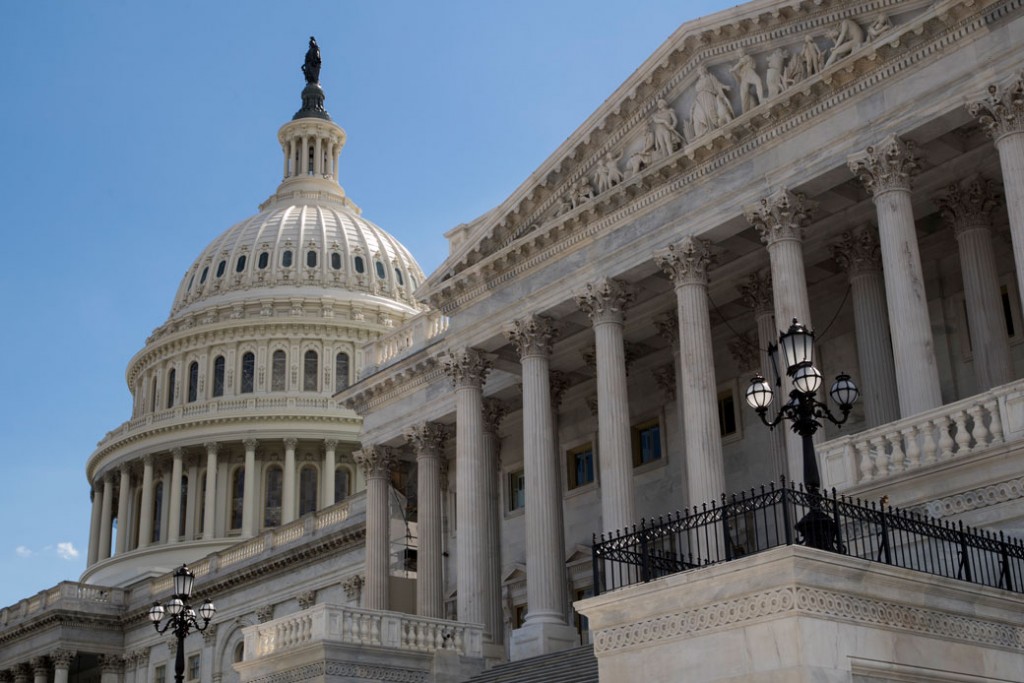
The Senate and Capitol Dome are seen on Capitol Hill in Washington, Monday, June 26, 2017.

In the wake of Senate Republicans’ decision to delay consideration of their health care repeal bill, the “Better Care Reconciliation Act (BCRA), it is clear that their partisan approach has little support and would inflict widespread harm on the American people. This moment is an inflection point where Senate Republicans can choose one of two paths: They can continue to pursue repeal, or they can work with Senate Democrats on a bipartisan basis to stabilize insurance markets.

In its letter of opposition to the BCRA, the American Medical Association (AMA) said that the bill violates the principle of “first, do no harm” on “many levels.” A bill that primarily guts Medicaid to finance tax cuts for the rich is not one designed to fix any problem with the insurance markets. In fact, the nonpartisan Congressional Budget Office (CBO) assessed that the BCRA will do just the opposite; the elimination of the individual mandate will cause premium rate shock in 2018 and insurance markets will collapse in some areas after 2019.

Bipartisan legislation would be simple and easy to put together—it would consist of four pages of legislative text that Senate Republicans have already written as part of the BCRA. It would easily command supermajorities because many Democrats and Republicans would support a bill that fixes the ACA, not destroys it—proving that the majority party can govern and restoring some faith in the Senate as an institution. Most importantly, it would work; the legislation would implement evidence-based policies that have been proven to work in Alaska and Maine.

In this brief, the Center for American Progress is proposing specific legislation, the Market Stability and Premium Reduction Act, included in the Appendix of this column. The Center for American Progress urges senators to chart a new course and work together on a bipartisan basis to first, do no harm, and second, resolve uncertainty in insurance markets.