

Last week was business as usual for the U.S. health system as other events grabbed the lion’s share of media attention:
- Healthcare affordability and fraud were frequent mentions as GOP candidates railed against socialized medicine and industry’s lack of competition at the 2-day ‘Trumpalooza’ event in Dallas.
- An apocalyptic prediction released on X by Evan Hubinger, a former Anthropic alignment lead, that ‘there’s a 10% chance that RSI (recursive self-improvement) AI could kill all humans in the next decade’ prompted social media frenzy and calls for AI regulation.
- Wars in Iran and Ukraine continued.
- The Jewish High Holy Days began with celebrations of Rosh Hashanah Friday just after 9-11 commemorations concluded across the land.
- And the August CPI report from the Bureau of Labor Statistics showed prices elevated as the Iran war’s energy shock spiked an inflation and prompted concern the Fed might raise interest rates at its meeting this week.
With the exception of continued commentary about the Lindsay Clancy’s mistrial and post-partum psychosis defense, the healthcare system was virtually unscathed last week. For many in healthcare, ‘out of sight, out of mind’ is OK. It allows the system to operate without distraction from unwelcome criticism—disdain for media coverage has long been the preferred modus operandi in healthcare, preferring instead its own PR, ads and behind the scenes advocacy to keep things in order to its liking. It isn’t working.
Reality: The U.S. healthcare industry is not the crown jewel of our national pride. At the opening ceremony of the 2012 Olympic Games in London, the Danny Boyle-produced tribute to the National Health Service opened the games. A similar sentiment about the U.S. system is unimaginable. In its place, a dark cloud hovers above U.S. healthcare today. It is the industry’s biggest threat. The eminent cloud burst will wrack havoc on every provider, every investor, every user and every taxpayer in the U.S. unless preparedness is taken seriously.
It did not form overnight: it’s been building for 30 years but it darker and more threatening today than ever before. Here’s why:
- Systemic arrogance: For decades, Americans have been told our health system is the envy of the world. We’ve embraced the industry hubris—the best doctors, the best hospitals. the newest drugs, the latest technology and most modern facilities and so on. But through these decades, costs have soared while population health and longevity have declined. Better ways to diagnose, treat, and deliver services are confined to privately-funded organizers whose shareholders see financial upside, while the less lucrative needs are left to public programs and do-gooders to bootstrap. Benign neglect for educating the U.S. population about how the health system works, how it’s organized and financed, how to use it is is the system’s original sin. It was designed so that dependence on the system via doctors, insurance, hospitals and drug companies was its foundational presumption. Evidence shows done right; it works. But it hasn’t. It declares its exceptionalism while hiding its business practices to avoid scrutiny. It rejects self-care deeming it only applicable to simple problems and presumes its concept of value always keeps ‘high quality’ distant from ‘low price’ in the public psyche. And it reinforces politics and policies that keep primary care, preventive health and social services for lower income and older populations subordinate to specialty services. Ironically, its workforce—25 million strong—that’s been warning of the cloud burst loudest. They think compensation for health executives is excessive, un-deserved and contributing to the storm.
- Corporatization-driven wealth: The industry’s business practices have created massive wealth for some. 45 of the Fortune 500 companies is an investor-owned healthcare corporation. The industry’s executive class is among the highest paid compared to peers in other industries and the differential between the industry’s working class and its senior managers is the highest of all industries. Physicians have protected the profession’s distinction as the U.S. highest paid career even after accounting for the three-fold median gap between primary care and some surgical specialties. Polls show the majority of voters aren’t sure what ‘not-for-profit’ means or if it matters. Investing in healthcare is a safe bet, especially when overall market conditions are less welcoming. That’s the secret sauce that let’s the industry maintain prominence in wealth creation for risk takers, high compensation for its managers, executives and surgeons and carry grow in the aggregate faster than GDP and household wages. It’s a business, not a calling, for its management ranks, their advisors and private funders, because corporatization produces sizeable wealth for some.
- Blame and Shame Advocacy: The major trade associations in healthcare have contributed to the cloud’s growing intensity. Protection of their members’ interests has takes precedent over the overall sustainability of the health system. That’s understandable: their Boards expect no less from their CEOs and teams. Thus, blame and shame advocacy is a priority over coalition building for systemic reform. But voters, employers and lawmakers increasingly recognize the obvious, no trade group in healthcare effectively represents the system as a whole. Short-term wins on proposed regulations, spending authorizations and policy shifts threatening to a specific tribe are their domain. It’s for others to fix the system even as the cloud gets darker.
Political campaigns obscure facts and oversimplify solutions to complex challenges like fixing the health system. Protecting the status quo in healthcare is what its insiders want and it’s why they’re on defense.
Paul
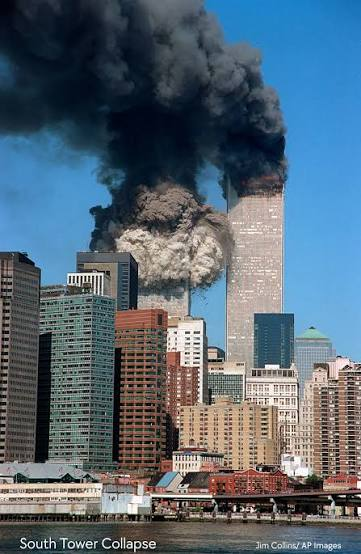
PS On 9/11/01, I was in Harry Jacobson’s conference room at Vanderbilt Medical Center discussing plans for our new Center for Integrative Health. The pictures of planes crashing into the World Trade Center, souls jumping to their deaths, fire-fighters running toward danger and dusty New Yorkers in zombi-like bewilderment are etched forever in my memory. It makes faith and family more meaningful and industry issues less. But in those days and after, our country seemed, if only for short while, united for a purpose. That spirit is needed for transformational change to the health system. It’s collapsing like the twin towers.

