Big Insurers Are Pouring Millions Into the 2026 Midterms

Today, the Center for Health and Democracy updated the Health Insurance Influence Tracker, a publicly available tool examining how the health insurance industry uses political contributions to build power in D.C. Since 1999, the companies captured in the tracker, representing vertically-integrated for-profit corporations like UnitedHealth Group, CVS/Aetna, Cigna, and Elevance and several of the trade associations representing them, have donated more than $100 million to campaigns, including $34.9 million to current members of Congress.

For additional information and analysis on the Health Insurance Influence Tracker, see CHD’s report here.

So far in the 2026 cycle, big insurers and their largest PR and lobbying groups – AHIP, the Blue Cross Blue Shield Association (BCBSA) and the Pharmaceutical Care Management Association (PCMA), which represents insurers’ pharmacy benefit managers – have donated more than $11 million toward campaigns and campaign committees, putting them on track to exceed recent election cycle totals of $15-$17 million. What we found is that the insurance industry is donating strategically to almost every ideological group: bipartisan giving dedicated to strengthening the corporate-friendly branches of each party. With health care shaping up to be one of the biggest issues in the midterms, the industry’s involvement shows the tactics they’re using to stop reform momentum before it can take hold in a new Congress.

Total Contributions by the Health Insurance Lobby by Cycle

Grey columns are contributions through May 31 of election year. Orange columns are full-cycle contribution total.

The 2026 Cycle: What We’re Tracking So Far

Corporate health insurers have been busy in the 2026 cycle, donating $11.91 million so far, of which $5.73 million went directly to sitting members of Congress. Many of the same patterns from past cycles are repeated here; so far since the 2024 election, ten members have received more than $70,000 from the health insurance companies, all members of Congressional or party leadership.

Similarly, we can see how insurers are making strategic bets on potential future leaders or swing votes. Senators like Maggie Hassan, currently the ranking member on the Senate Finance Committee’s Subcommittee on Health, and Brian Schatz, widely reported to be seeking a higher position in Senate leadership, have seen thousands in donations this cycle, despite not being up for re-election for another two years.

Intra-Party Influence

Insurers donated heavily to incumbents in battleground races, but have also quietly poured money into primaries, wading into several intra-party fights this cycle.* Donations to more moderate candidates, like Democrats Haley Stevens in Michigan and Angie Craig in Minnesota, and Republicans John Cornyn in Texas and Kevin Hern in Oklahoma, fit with the overall party giving: moderate party groups, the New Democrat Coalition, Blue Dogs, Republican Main Street, and Tuesday Group are continuing to see disproportionate generosity from these companies.

However, even in primaries with multiple progressives, health insurers are staking out a side, which illustrates an important difference between paying lip service to progressive health policies like Medicare for All and truly fighting for them. In Colorado’s first congressional district, incumbent Representative Diana DeGette, the ranking member of the House Energy & Commerce Committee’s Subcommittee on Health, and her opponent, Melat Kiros, both say they support Medicare for All, with Representative DeGette being a longtime cosponsor of the bill. Theoretically, support of the Medicare for All Act, a bill that would prohibit private insurance from duplicating the medical and prescription coverage offered by Medicare, is an existential threat to the health insurance industry and the candidates would not garner financial or other support from their PACs. Yet in this race, as in many others, the incumbent continued to receive significant donations from insurance PACs, suggesting that the PACs see the incumbent, although they put their name on the Medicare for All bill, as someone they would be able to count on if the legislation were to gain traction. DeGette was ultimately defeated by Melat Kiros, who made rejecting all corporate PAC money a centerpiece of her campaign.

Introducing The Health Insurance Influence Tracker

Introducing The Health Insurance Influence Tracker

The Center for Health & Democracy Education Fund has released the first campaign contribution tracker covering the health insurance lobby.

Voters in Missouri’s first district faced a similar choice last week. In 2024, when Wesley Bell challenged Cori Bush for the seat, the insurance industry stayed out of the primary altogether, and only two PACs donated a joint $5,000 to Bell’s general campaign in September of that year, standard for a new member without relevant committee assignments. During this cycle, the health insurance lobby poured $31,000 from six different PACs into his campaign (former Representative Bush does not accept any corporate PAC money), a clear signal of which of the two, both co-sponsors of the Medicare for All legislation, insurers believe will least harm their bottom lines. Bell won the primary with 59% of the vote.

The Health Insurance Influence Tracker only includes incumbent members of the 119th Congress. Any analysis of challengers was conducted using Schedule B data sourced from fec.gov


Wage Rule could shake up hospital hiring

A Trump administration plan to overhaul wage levels for visa holders is jolting hospitals and long-term care facilities that are heavily reliant on foreign-born workers.

Why it matters: 

It’s the latest immigration-related policy change to loom over the health care workforce, coming after President Trump’s $100,000 H-1B visa fee and the suspension of certain immigrants’ work authorization renewals.

  • The latest move could further drive up costs for providers already struggling with staffing shortages, thin margins and growing patient demand, because many health jobs can’t be outsourced or automated.

Driving the news: 

The Department of Labor wants to change the formula for calculating what it considers “fair minimum pay” for workers on certain visas, like H-1Bs, and green card sponsorship jobs.

  • The administration says the change would make it harder for companies to use visa programs to obtain cheaper labor and undercut American workers.
  • But the rule could have an outsized effect on health systems, testing labs, nursing homes and research institutions that sponsor foreign-trained workers.
  • There’s special concern about rural health providers that rely heavily on foreign-born clinicians to fill gaps in care in underserved areas.

Critics say the change won’t adequately account for regional wage differences or experience levels.

  • They also warn a higher wage requirement will force employers to raise pay for U.S. workers to comply with labor laws — and make it unsustainable to hire foreign-born talent.

The big picture: 

The U.S. health care system is heavily dependent on a foreign-born workforce. Immigrants make up about 16% of registered nurses nationwide, per a KFF analysis.

  • They make up 28% of the U.S. long-term care workforce, KFF found.
  • “This has the potential to significantly limit the sector’s ability to provide timely and quality health care services to those in need, both now and in the future,” Dana Ritchie, associate vice president of the American Health Care Association and National Center for Assisted Living, wrote in public comments on the proposal.

Zoom in: 

Lynn Bruder, the CEO of staffing firm Nucleus Healthcare, said wage rates for visa-holding nurses on the lower end of the pay scale could jump 25% to 35% in certain markets, or from about $40 an hour to more than $50 an hour.

  • “The likely outcome is continued reliance on significantly more expensive agency staffing solutions and reduced ability for hospitals to build stable, long term workforce pipelines,” Bruder wrote in comments about the rule.

The other side: 

The Department of Labor declined to comment. But visa programs have long been criticized for suppressing wages across many industries.

  • The changes would force employers to pay an estimated $6.5 billion in additional wages and increase the average certified wage by approximately $14,000 per year, according to the proposed rule.
  • “These proposed revisions aim to better align prevailing wage levels with the wages paid to U.S. workers,” the Labor Department wrote.
  • The window for public comments on the proposal closed this week.

The bottom line: 

Health care providers say the administration is treating hospitals and nursing homes like any other employer, even though the workforce is being squeezed by an aging population and rising demand for care.

  • “Larger hospital systems may be able to absorb this increase, but you’ll see employers who are much smaller or mid-sized won’t,” Ann-Rose Johnson-Lewis, director of legal services at WorldWide HealthStaff Solutions, told Axios.
  • “You’ll see rural heath care systems not be able to absorb that. We’ll see a reduction in the workforce, fewer new hires and, ultimately, the broader economy will see the consequence of that.”

SCOTUS upholds Obamacare preventive care mandate 

https://nxslink.thehill.com/view/6230d94bc22ca34bdd8447c8o3k52.isr/aae298b7
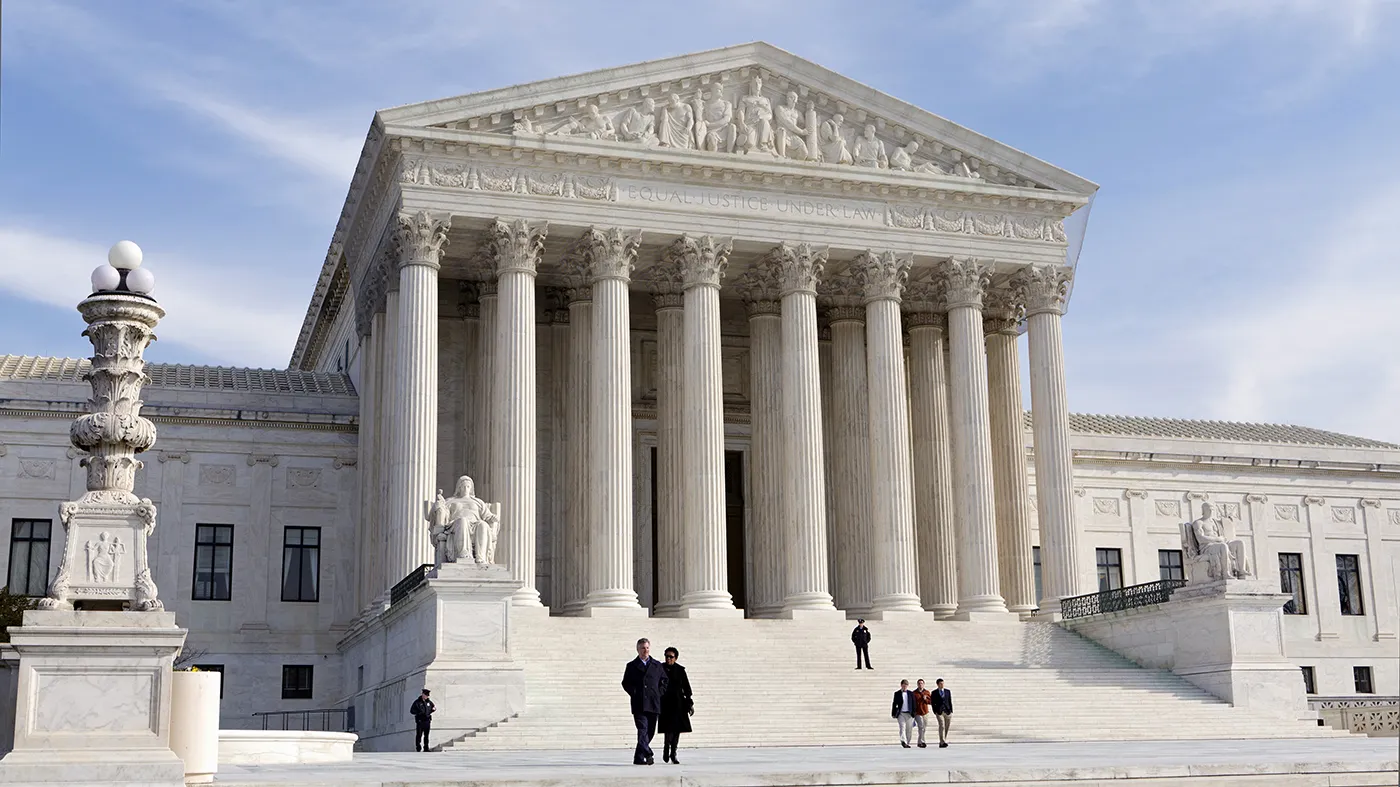
The Supreme Court on Friday upheld a key Affordable Care Act requirement that insurance companies cover certain preventative measures recommended by an expert panel.  
Justices upheld the constitutionality of the provision in a 6-3 decision and protected access to preventative care for about 150 million Americans.   

The justices found that the secretary of the Department of Health and Human Services has the power to appoint and fire members of the U.S. Preventative Services Task Force (USPSTF).   

The cases started when a small business in Texas and some individuals filed a lawsuit against the panel’s recommendation that pre-exposure prophylaxis (PreP) for HIV be included as a preventative care service.   

They argued that covering PreP went against their religious beliefs and would “encourage homosexual behavior, intravenous drug use, and sexual activity outside of marriage between one man and one woman.”  

The plaintiffs further argued that the USPSTF mandates are unconstitutional because panel members are “inferior officers” who are not appointed by the president or confirmed by the Senate.   

While the panel is independent, they said that since their decisions impact millions of people members should be confirmed.   

A U.S. district judge in 2023 ruled that all preventative-care coverage imposed since the ACA was signed into law are invalid and a federal appeals court judge ruled in agreement last year.   

The Biden administration appealed the rulings to the Supreme Court, and the Trump administration chose to defend the law despite its long history of disparaging Obamacare.   

Though public health groups celebrated the ruling Friday, some noted another potential outcome.  

“While this is a foundational victory for patients, patients have reason to be concerned that the decision reaffirms the ability of the HHS secretary, including our current one, to control the membership and recommendations of the US Preventive Services Task Force that determines which preventive services are covered,” Anthony Wright, executive director of Families USA, said in a statement.  

“We must be vigilant to ensure Secretary Kennedy does not undo coverage of preventive services by taking actions such as his recent firing of qualified health experts from the CDC’s independent vaccine advisory committee and replacing them with his personal allies.” 

2016 Edelman Trust Barometer – Leadership in a Divided World

Click to access 2016-Edelman-Trust-Barometer-Global-_-Leadership-in-a-Divided-World1.pdf

Image result for 2016 Edelman Trust Barometer Leadership in a Divided World