Today, the Center for Health and Democracy updated the Health Insurance Influence Tracker, a publicly available tool examining how the health insurance industry uses political contributions to build power in D.C. Since 1999, the companies captured in the tracker, representing vertically-integrated for-profit corporations like UnitedHealth Group, CVS/Aetna, Cigna, and Elevance and several of the trade associations representing them, have donated more than $100 million to campaigns, including $34.9 million to current members of Congress.
For additional information and analysis on the Health Insurance Influence Tracker, see CHD’s report here.
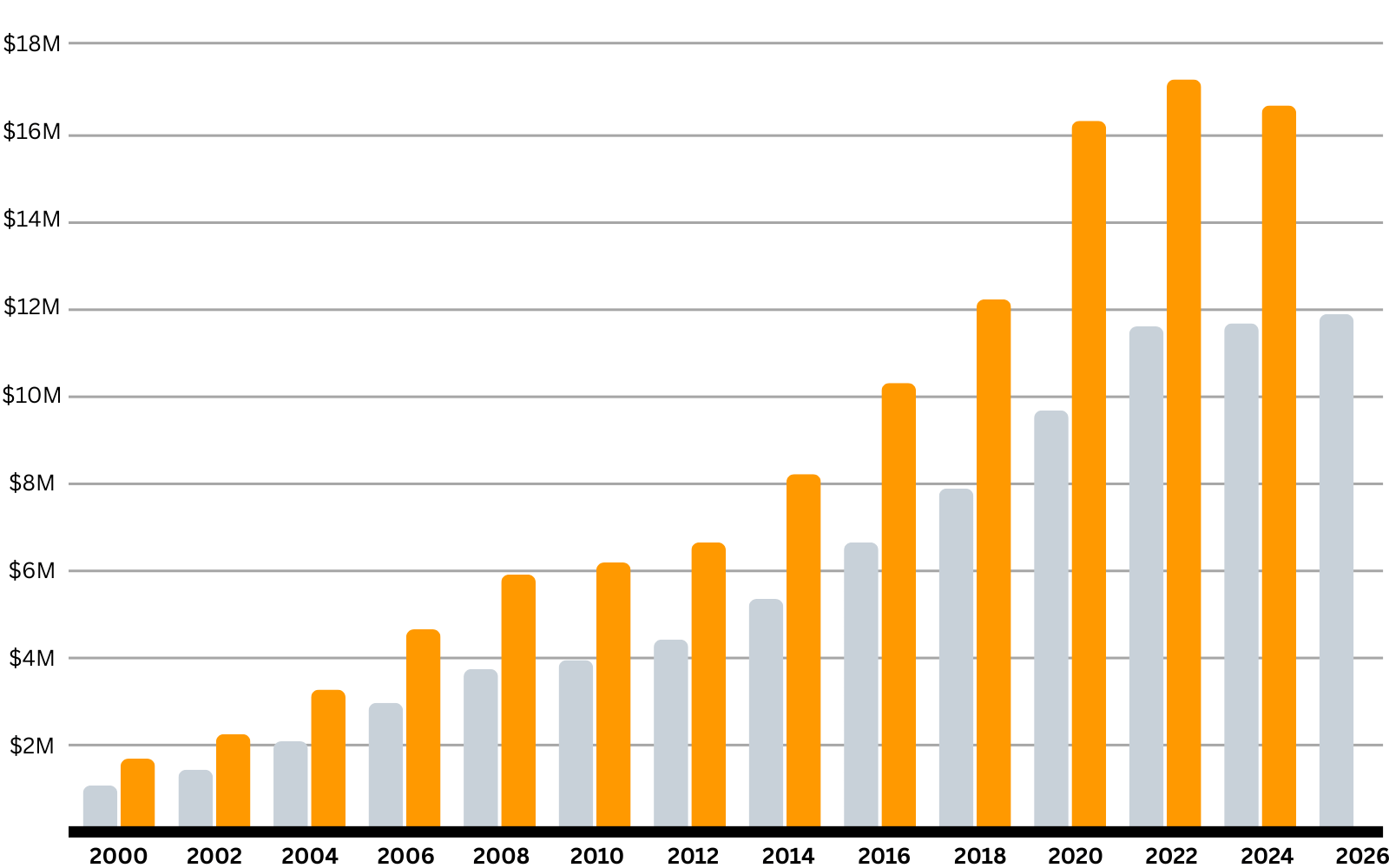
So far in the 2026 cycle, big insurers and their largest PR and lobbying groups – AHIP, the Blue Cross Blue Shield Association (BCBSA) and the Pharmaceutical Care Management Association (PCMA), which represents insurers’ pharmacy benefit managers – have donated more than $11 million toward campaigns and campaign committees, putting them on track to exceed recent election cycle totals of $15-$17 million. What we found is that the insurance industry is donating strategically to almost every ideological group: bipartisan giving dedicated to strengthening the corporate-friendly branches of each party. With health care shaping up to be one of the biggest issues in the midterms, the industry’s involvement shows the tactics they’re using to stop reform momentum before it can take hold in a new Congress.
Total Contributions by the Health Insurance Lobby by Cycle
The 2026 Cycle: What We’re Tracking So Far
Corporate health insurers have been busy in the 2026 cycle, donating $11.91 million so far, of which $5.73 million went directly to sitting members of Congress. Many of the same patterns from past cycles are repeated here; so far since the 2024 election, ten members have received more than $70,000 from the health insurance companies, all members of Congressional or party leadership.
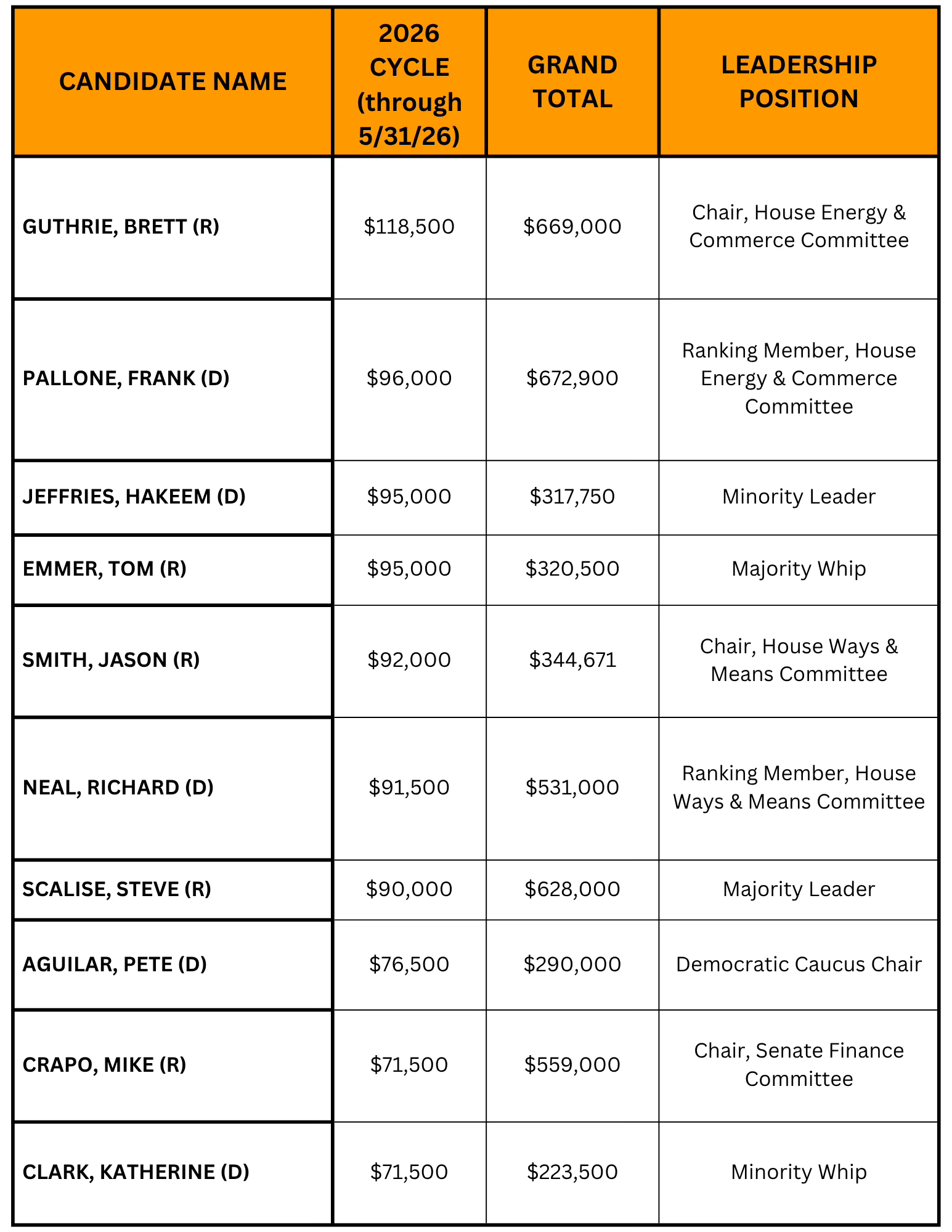
Similarly, we can see how insurers are making strategic bets on potential future leaders or swing votes. Senators like Maggie Hassan, currently the ranking member on the Senate Finance Committee’s Subcommittee on Health, and Brian Schatz, widely reported to be seeking a higher position in Senate leadership, have seen thousands in donations this cycle, despite not being up for re-election for another two years.
Intra-Party Influence
Insurers donated heavily to incumbents in battleground races, but have also quietly poured money into primaries, wading into several intra-party fights this cycle.* Donations to more moderate candidates, like Democrats Haley Stevens in Michigan and Angie Craig in Minnesota, and Republicans John Cornyn in Texas and Kevin Hern in Oklahoma, fit with the overall party giving: moderate party groups, the New Democrat Coalition, Blue Dogs, Republican Main Street, and Tuesday Group are continuing to see disproportionate generosity from these companies.
However, even in primaries with multiple progressives, health insurers are staking out a side, which illustrates an important difference between paying lip service to progressive health policies like Medicare for All and truly fighting for them. In Colorado’s first congressional district, incumbent Representative Diana DeGette, the ranking member of the House Energy & Commerce Committee’s Subcommittee on Health, and her opponent, Melat Kiros, both say they support Medicare for All, with Representative DeGette being a longtime cosponsor of the bill. Theoretically, support of the Medicare for All Act, a bill that would prohibit private insurance from duplicating the medical and prescription coverage offered by Medicare, is an existential threat to the health insurance industry and the candidates would not garner financial or other support from their PACs. Yet in this race, as in many others, the incumbent continued to receive significant donations from insurance PACs, suggesting that the PACs see the incumbent, although they put their name on the Medicare for All bill, as someone they would be able to count on if the legislation were to gain traction. DeGette was ultimately defeated by Melat Kiros, who made rejecting all corporate PAC money a centerpiece of her campaign.
Introducing The Health Insurance Influence Tracker
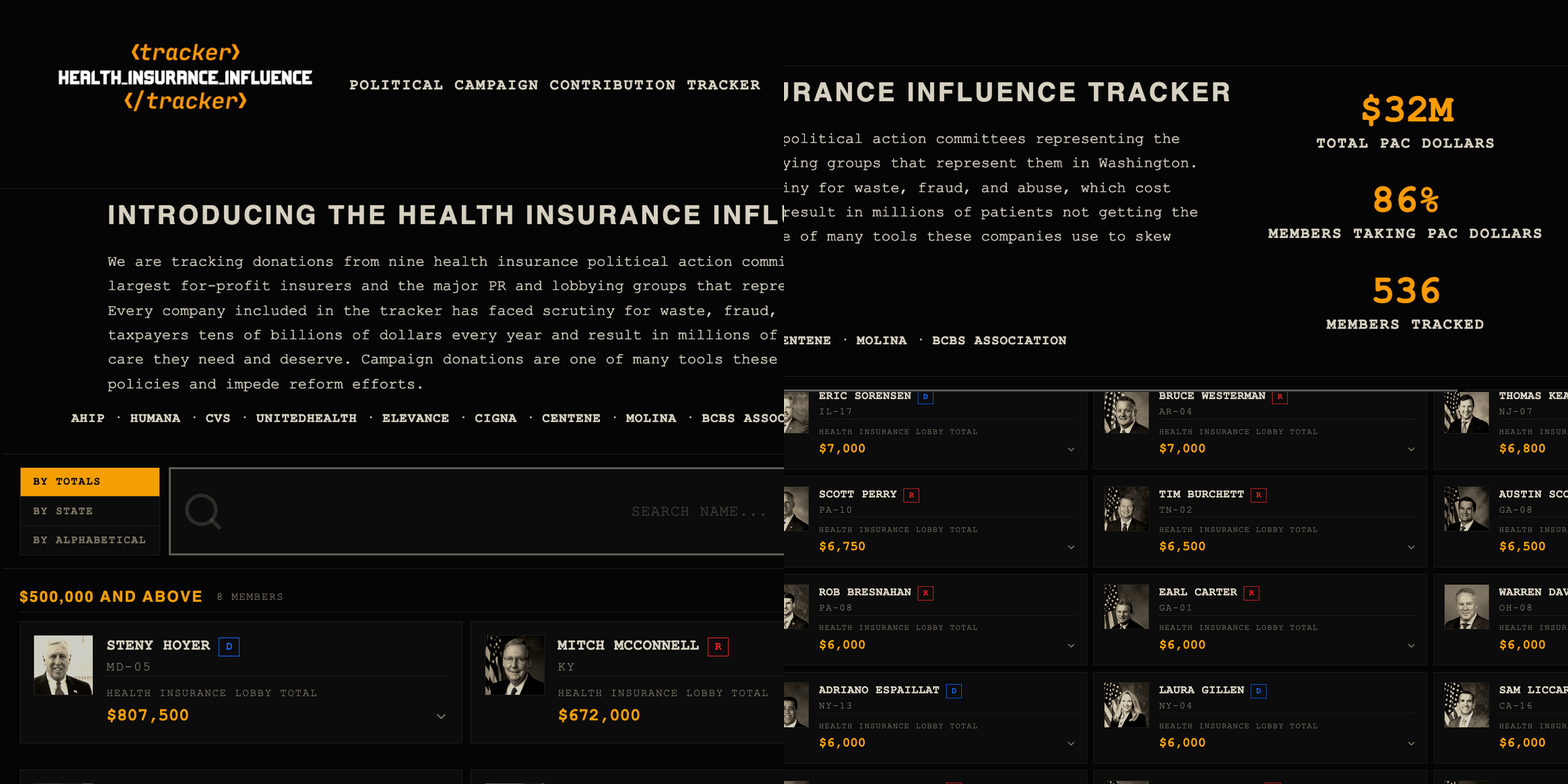
The Center for Health & Democracy Education Fund has released the first campaign contribution tracker covering the health insurance lobby.
Voters in Missouri’s first district faced a similar choice last week. In 2024, when Wesley Bell challenged Cori Bush for the seat, the insurance industry stayed out of the primary altogether, and only two PACs donated a joint $5,000 to Bell’s general campaign in September of that year, standard for a new member without relevant committee assignments. During this cycle, the health insurance lobby poured $31,000 from six different PACs into his campaign (former Representative Bush does not accept any corporate PAC money), a clear signal of which of the two, both co-sponsors of the Medicare for All legislation, insurers believe will least harm their bottom lines. Bell won the primary with 59% of the vote.
The Health Insurance Influence Tracker only includes incumbent members of the 119th Congress. Any analysis of challengers was conducted using Schedule B data sourced from fec.gov