

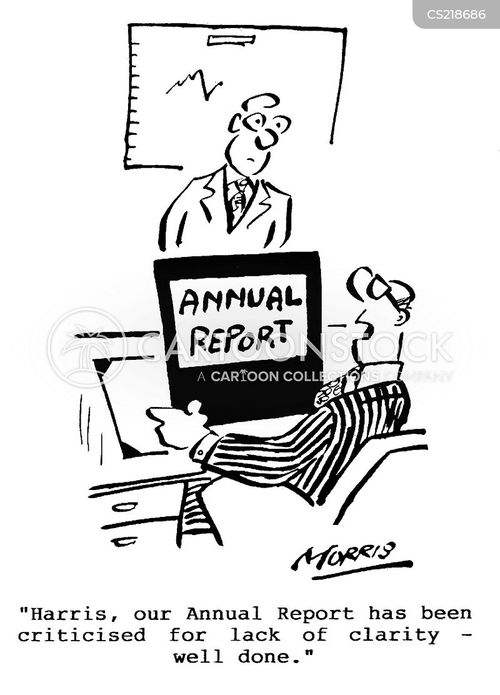
Cartoon – Lack of Clarity

A Florida man is capitalizing on the Trump administration’s sudden legal reversal in an attempt to get off the hook for accusations of Medicare fraud.
Philip Esformes, who operated about 20 nursing homes in the Miami area, was arrested in 2016 and charged with committing $1 billion in Medicare fraud through a complex kickback scheme.
How it works: Some of the specific charges against Esformes stem from parts of the Affordable Care Act. They are, his lawyers say, among the specific sections of law that Judge Reed O’Connor invalidated when he threw out the entire ACA.
My thought bubble: This seems like the kind of thing a good prosecutor will probably find a way to wriggle out of. It also seems like the kind of thing career lawyers at DOJ would have caught, if they had been allowed to shape DOJ’s position in the ACA case.
The Single Biggest Factor in Long-Term Organizational Success

“What ultimately constrains the performance of your organization is not its business model, nor its operating model, but its management model.” (The Future of Management, Gary Hamel)
Factors of organizational success:
Jim Collins says the key factors for success include:
Managers:
“Gallup finds that the quality of managers and team leaders is the single biggest factor in your organization’s long-term success.” (It’s the Manager)
Organizations ask, “How do managers get more out of people?”
“Ironically, the management model encapsulated in this question virtually guarantees that a company will never get the best out of its people. Vassals and conscripts may work hard, but they don’t work willingly.” Gary Hamel
Boss to coach:
The BEST managers are coaches, not bosses. Jim Clifton and Jim Harter say there are three requirements of coaching.
3 tips for shifting from boss to coach:
#1. Understand the dance between freedom and intervention.
Give high performers freedom. Intervene when performance lags.
Intervention isn’t oppression or punishment. It might mean weekly one-on-ones, instead of monthly.
#2. Overcome the most difficult shift.
Solving problems for talented people devalues their talent. Over-helpfulness sucks the life out of talented people. Stop giving quick answers.
Coaches help people find their own answers. The old style of management, when people were tools, is to give them answers and expect conformity.
#3. Practice accountability that energizes people.
Accountability that energizes is self-imposed. We need to rise above the false notion that we can force people into high performance.
Noticing is healthy accountability. Walk around noticing performance as it relates to expectation.
Work that isn’t noticed goes down in value.
What factors enhance long-term organizational success?
How might managers bring out the best in people?
How Medi-Cal’s Fiscal Balancing Act Could Soon Become More Challenging

Many Californians know that Medi-Cal is our state’s health coverage program for residents with low incomes, including children, people with disabilities, and workers who may not get affordable health insurance through their jobs.
What many Californians don’t realize — call it Medi-Cal’s best-kept secret — is that even with the program’s rising enrollment and costs in recent years, Medi-Cal’s financial impact on our state’s General Fund (the account that receives most state tax revenues) has been relatively small. This matters because General Fund dollars support an array of vital services in addition to Medi-Cal, many of which — such as income supports and subsidized childcare for low-income working families — also promote Californians’ health and well-being. If Medi-Cal had claimed a larger share of General Fund revenues over the past decade, fewer state dollars would have been available to support other critical public supports and services.
This article first looks at how our state has expanded Medi-Cal to meet the health care needs of one in three Californians while minimizing the program’s impact on the General Fund. It then highlights key Medi-Cal financing issues on the horizon that could hamper state policymakers’ efforts to continue balancing Medi-Cal’s funding needs with those of other important public services. This article is adapted from a presentation I gave at the February 25 Medi-Cal Explained briefing hosted by the California Health Care Foundation.
Medi-Cal, California’s Medicaid program, has seen enrollment and expenditures grow substantially since 2007–08 (PDF), the last fiscal year before the Great Recession sent California’s economy and state budget into a tailspin. Enrollment for the current fiscal year (2018–19) is expected to be 13.2 million, about double the 2007–08 level. Total Medi-Cal spending is anticipated to reach $98.5 billion, roughly $53 billion (114%) higher than in 2007–08. (All 2007–08 expenditures are adjusted for inflation.)
State General Fund dollars accounted for only $3 billion of this $53 billion increase in Medi-Cal spending between 2007–08 and 2018–19. This relatively small jump in General Fund support for Medi-Cal is remarkable in light of periodic concerns that the program is putting the squeeze on California’s General Fund budget. Instead, Medi-Cal’s spending growth has largely been supported with non-General Fund sources of revenue. Specifically, the remainder of the $53 billion spending increase between 2007–08 and 2018–19 — around $50 billion — came from federal funds ($35.3 billion) and other non-federal funds, such as state taxes paid by managed care organizations (MCOs) and fees paid by hospitals ($14.2 billion). Since 2007–08, federal funding for Medi-Cal has increased by 129%, while other non-federal funds have grown by more than 1,600%.
The substantial increase in non-General Fund support for Medi-Cal has been driven by several factors, including:
What about General Fund support for Medi-Cal as a percentage of the total General Fund budget? Medi-Cal’s share of the General Fund has increased by just seven-tenths of a percentage point over the past decade — from 13.63% in 2007–08 to an estimated 14.35% in 2018–19. Yes, Medi-Cal receives a slightly larger slice of the General Fund “pie” than it did 2007–08. But this increase has been modest given the substantial benefit experienced by millions of Californians newly covered by the program. As a result, more state dollars have been available for other public services and systems than if General Fund support for Medi-Cal had risen at a much faster pace.
Over the past decade, state policymakers have deftly balanced the needs of a growing Medi-Cal program with those of other public services and systems. However, Medi-Cal faces a number of near-term financing issues that could make this balancing act more challenging in the coming years. These financing issues include:
One of the biggest challenges — and opportunities — that California lawmakers and the governor face each year is allocating the state’s limited General Fund revenues among many vital priorities. The financing issues that Medi-Cal is facing — and how these issues are resolved — will help to determine whether policymakers can continue improving the Medi-Cal program while also ensuring that other vital public services are adequately funded.
https://www.healthcaredive.com/news/scale-blessing-or-burden-for-statewide-acos/551206/

Scale can smooth out quality variation and assuage providers’ fears of taking on risk. But it’s not a catch-all solution.
A handful of accountable care organizations are moving to cover an entire state, but not everyone thinks bigger is better when it comes to population health management.
Caravan Health, a company that works with ACOs, last week announced the launch of its second statewide program, this time in Florida. In the model, any of the 200-some Florida Hospital Association facilities that want to participate can join together to provide coordinated care.
The bid is meant to bolster care quality for Medicare beneficiaries while lowering costs and risk for participating facilities. But some experts say the larger scale, like rampant consolidation, could be more like an anchor weighing down an ACO instead of a beam propping it up.
“At the end of the day, success or failure is based on success in managing the quality of care,” Michael Abrams, partner at Numerof & Associates told Healthcare Dive. “While there may be some bigger numbers involved, I think the safety angle that they’re selling may not be all it’s cracked up to be.”
Caravan has no plans to back down on the model, however, and plans to roll out two more statewide ACOs in the next couple of weeks.
ACOs existed before the Affordable Care Act, but in 2011 HHS released new rules under the landmark law aimed at helping providers coordinate care through the population health management programs. Since then, the number of ACOs have grown dramatically, from an estimated 32 to more than 1,000 in 2018, according to Leavitt Partners.
A statewide all-payer ACO in Vermont has seen some success, but Caravan’s model and its efforts are some of the first to leverage the programs over a much larger population.
The Florida ACO, created in partnership with the FHA, is the second from Kansas City-based Caravan. The first, in Mississippi, was launched in January. Under the program, hospitals have access to Caravan’s population health management model to build primary care capacity and monitor quality results.
Mississippi currently has 29 providers participating in the program, managing care for roughly 130,000 Medicare patients in 22 locations. Its operations include hiring and training population health nurses throughout the state, annual wellness visits, chronic care management and more.
It’s potentially a good business playbook for both parties. The hospital association captures a revenue stream that’s not dependent on their membership — increasingly important in these days of sharp provider headwinds — and Caravan is granted access to the Medicare lives of a couple hundred hospitals in the state.
The need for population health management is especially acute in Mississippi, which ranks last or close to last in every leading health outcome, according to the state Department of Health. Florida and Mississippi couldn’t be farther apart when it comes to their primary care infrastructure, a factor linked to ACO success. According to the NCQA database, Florida has 894 patient-centered medical homes. Mississippi has 74.
“With population health, we improve the health of our state so it’s a win-win all the way around,” Paul Gardner, the director of rural health at the Mississippi Hospital Association told Healthcare Dive.
And Caravan, which currently works with more than 225 health systems and 14,000 providers, touts its track record with its programs. In 2017, its ACOs beat nationwide ACO performance with savings of $54 million and quality scores of 94%, a spokesperson said.
By comparison, studies have yielded mixed results when it comes to ACO success elsewhere.
An April report from Avalere found the Medicare Shared Savings Program, a CMS model to foster ACOs in Medicare, missed federal cost-savings projections from 2010 by a wide margin and raised federal spend by $384 million.
But a National Association of ACOs analysis retorted that MSSP ACOs saved $849 million in 2016 alone, and a whopping $2.66 billion since 2013 (higher than CMS’ $1.6 billion estimate). And an early 2017 JAMA Internal Medicine analysis found ACO savings only increase with time.
The threat of financial loss is a leading obstacle to participation in ACOs. Smaller ACOs are more likely to experience widely variable savings and losses simply due to change, Caravan representatives say, while larger ACOs deliver more predictable and sustainable results.
“The only way we can create certainty around our income is to have processes and accountability and the infrastructure, but you’ve also got to have to scale,” Caravan CEO Lynn Barr told Healthcare Dive. Barr said that since Caravan’s 2014 inception, the company has found having 100,000 Medicare lives or more in an ACO yields larger savings than the roughly 80-85% of ACOs with only 20,000 lives or fewer.
As the owner of the ACOs, Caravan assumes 75% of the financial risk for providers. Barr said that evens out to a maximum risk of $100 per patient.
By comparison, in the basic track of the Medicare Shared Savings Program, the maximum risk for providers is $400 per patient. In the enhanced model it’s $1,500. “With our model, if people follow it and have 100,000 lives, there’s no reason they would ever write a check,” Barr said.
That is one of the selling features of the statewide ACO: It can be a mitigating factor for hospitals that might feel too exposed on their own, Abrams said.
But the threat of risk could still prove too much. CMS finalized new rules for shared savings ACOs in December, shaving down the amount of time they had before they were forced to assume downside risk from six year to two years for new ACO participants or three years for new, low-revenue ACOs.
And some critics say it’s a safe bet that the losses incurred by any one organization are not going to be spread across the other parties in the ACO, especially given the shortened timeline. As the deadline for assuming more risk approaches, Caravan could see attrition among providers who don’t feel ready.
“I think this is very, very, very challenging,” nonprofit primary care advocacy Patient-Centered Primary Care Collaborative Director Ann Greiner told Healthcare Dive. “Most of the hospital leadership has not been working under these kinds of conditions.”
And ACOs are all about a connection to the community, which might prove difficult to foster across an entire state.
“You’ve got to leverage people at the community level and have those relationships with the patient and, in the ideal world, know where to refer,” Greiner said. “At the state level, that’s pretty far removed.”
The scale of large ACOs makes them much more difficult to manage, experts say. ACOs have a single set of policies that, in an organization involving more parties, needs to be adopted in one form or another that’s acceptable to all participating providers.
That’s done by majority, Barr said. Each participating provider has a single vote and the overall vote binds the ACO board’s decision on waiver approval, discharge standards, shared savings distribution plans and more.
But in an ACO with a lot of differently cultured and structured providers — academic hospitals, teaching hospitals, acute care, research, small, medium, large etc. — it can get a lot more complicated, Abrams said. For example, if 100 FHA hospitals opt into the new Caravan Health model, that’s 100 variations in acute care policy, physician compensation and all else involved in managing cost and quality operations, and 100 different voices strongly advocating to keep doing things the way they’ve always done them.
“Some issues are just working through the details,” Gardner from the Mississippi Hospital Association said. “In some of your larger systems, that’s getting the medical staff all pulled together and singing off the same sheet of music.”
The more homogeneous the ACO organizations are, the easier it will be to get them to buy in to the various policies and procedures that need to be put in place for operations to flow smoothly. “You can’t outsource that,” Abrams said. “The most you can do is get guidance from someone who’s perhaps been around this block about how to handle it.”
Barr maintains Caravan standardizes the most important factors.
“Nurses are critical to this model,” Barr said. “That’s what everyone’s doing the same.” Caravan has found that after nurses are trained in population health management over three to six months, each dollar the company spends on that provider produces two dollars in savings.
And, after Caravan puts the population health management infrastructure in place, the providers themselves helm the ship with a steering committee, leveraging data to see what differentiates them from the next community and making slight adjustments to course-correct.
Hospitals will face two challenges: taking in the coordinated framework given to them by Caravan and translating it into behavioral change, Abrams said. The success of the overall ACO will depend on the latter as “those who can’t do that successfully will probably self-select out when it comes time to take on risk.”
The question is whether Caravan can really deliver on some of the promises it’s explicitly making.
“The truth is that hospitals who haven’t had the infrastructure to manage their cost and quality are not better off in terms of consolidation and a position in a larger ACO,” Abrams said. “So an ACO comprised of multiple small hospitals and independent hospitals can’t expect savings proportionate to their aggregate size.”
With more statewide ACOs on the way, it’s important Caravan (and partnering providers) work out any kinks in the model sooner rather than later.
“This is not like bringing in a plumber to fix your faucet,” Abrams said. “At the end of the day, an organization stands on its own.”

The ruling is a blow to the Trump administration’s efforts to circumvent the ACA, which ramped up significantly with the administration’s filing this week seeking complete repeal of the law. Another hit to those efforts came down Wednesday when a different federal judge struck down Medicaid work requirements in Arkansas and Kentucky.
The renewed fight comes as Democrats lining up for a 2020 presidential run are pushing for more progressive policies than have previously gained public traction. Some Democratic contenders are making Medicare for all and other single-payer models a central part of their platforms as healthcare shapes up to be a major issue for the next presidential election.
Experts have argued extended use of AHPs could siphon away young and healthy people looking for minimum coverage at a lower cost. If they choose AHPs they upset the balance on risk pools for more comprehensive coverage. Also, many consumers don’t understand the tradeoff and could be surprised by what isn’t covered when they are in need.
But even though the plans aren’t required to meet ACA standards, some that have formed have been adamant they provide adequate coverage, including the 10 essential ACA benefits. The plans are less obstructive to the regulatory environment than short-term health plans, which have also been granted more leeway under the Trump administration.
Land O’Lakes, for example, which said it was the first to offer an AHP under the more relaxed rules, said its plan covered essential benefits and pre-existing conditions, as well as “broad network coverage.”
The Society of Actuaries has said as many as 10% of people in ACA plans could leave for AHPs, which would also drive up premiums for plans in the individual market. Avalere predicted about 3.2 million people would shift and premiums would rise by 3.5%.
Supporters of AHPs decried the judge’s decision Thursday. Kev Coleman, founder of AssocationHealthPlans.com, said in a statement the ruling will hurt small businesses throughout the country.
“Thousands of employees and family members within the small business community have already enrolled in association health plans — which help lower health care costs — since they first became available last fall,” he said. “They have provided a means by which broad benefits may be accessed at more economical prices. While I do not believe today’s ruling will survive appeal, I believe Judge Bates’ decision is an unnecessary detour on small businesses’ path toward more affordable health coverage.”

What seemed like a topic that was always in the distant future is now upon us: accounting standards update (ASU) No. 2016-02, Leases(ASC 842).
Under previous rules, lessees typically accounted for lease transactions as off-balance sheet operating leases or on-balance sheet finance leases. Under the new standard, lessees will have to recognize nearly all leases on the balance sheet.
ASU 2016-02 comes on the heels of Revenue Recognition (ASC 606) and presents another wide-reaching and major change to the accounting world. Under ASU 2016-02, balance sheets will swell as nearly all leases will now be capitalized. Overall the ASU is very complex; however, below are some frequently asked questions that we are seeing from our clients and the industry. Like most things, the devil is in the details, but the below Q&A can provide high-level answers to these burning questions.
ASU 2016-02 is effective for public companies in 2019 and private companies in 2020.
The general accounting for finance leases remains largely unchanged compared to the legacy presentation of capital leases.
On the balance sheet, the finance leased asset is typically recorded as part of property, plant and equipment (PP&E), and the lease liability is recorded as funded debt. From a profit and loss perspective, the leased asset is depreciated over the shorter of the term or asset’s useful life, and interest expense is front-loaded as the lease obligation is amortized.
Operating leases take on an entirely new look under ASC 842 in that a right-of-use (ROU) asset and liability are recorded by calculating the present value (PV) of the lease payments using the appropriate discount rate.
Balance sheet presentation of a ROU asset is classified as a long-term asset on a separate line item outside of PP&E. Furthermore, the ROU lease obligation will need to be separated into short-term and long-term liabilities that are aside from funded debt. The profit and loss components of a ROU asset and corresponding liability are amortized under the straight-line method and presented together as rent or lease expense.
Under ASC 842, neither amortization of the ROU obligation nor the ROU asset is considered interest expense or depreciation expense, leaving EBITDA unchanged from accounting for operating leases under the prior lease standards.
There will continue to be two types of leases: finance (formerly known as capital) and operating. However, both will require recognition of an asset and a liability on the balance sheet. The differentiation between the two types of leases will play a significant role as to balance sheet classification but does not come without significant analysis in determining what type of lease it actually is.
Finance leases will no longer be evaluated using the “bright-line” tests. Rather, they will be evaluated using principles-based criteria, which aim to evaluate the underlying substance of the lease. The principles-based criteria certainly involve a level of subjectivity; however, the finance lease classification applies should any of the following be met:
If the lease does not meet the above criteria, it will be considered an operating lease.
From the lessor’s point of view, not much changes. In contrast, lessees will now be required to capitalize all leases with terms greater than 12 months.
Think about this: Prior to this standard, airlines had not been recording their airplanes on their balance sheets! The standard provides better clarity to users of the financial statements via recognition and measurement of a company’s leased assets and associated liabilities that have historically been tucked away in a footnote disclosure.
This is where things can get tricky! To determine the PV, lessees should use the implied rate in the lease contract (if known) or the company’s incremental borrowing rate. This rate is based on what rate the company would obtain if financing 100% of the underlying asset using similar terms and pledging the asset as collateral.
Knowing that this is often difficult to determine, private companies are afforded an election to use the risk-free rate (e.g., Treasury bill). However, this comes with caution as it typically results in a higher PV, leading to a larger corresponding asset and liability to be booked.
The footnote disclosure under current standards doesn’t afford financial statement users with many details on either type of lease; however, this is changing. Under ASC 842, the disclosure will provide the reader with both quantitative and qualitative information as to how the lease classification was determined. This information will help the reader comprehend significant judgments and assumptions that were used in evaluating leases under the principles-based criteria.
With operating leases now on the balance sheet, various financial metrics, including those commonly used in loan covenants, are sure to change. The measures of working capital, quick ratio, current ratio and any metrics related to debt (i.e., funded debt) will need to be reviewed carefully to understand how newly capitalized leases will influence results.
In calculations involving EBITDA, the change should not impact results as interest and depreciation (associated with finance leases) are added back, and operating leases (presented as rent or lease expense) are commonly excluded from the benchmark.
Needless to say, it will be imperative to be proactive with your banker. Covenants should be analyzed to determine the impact of the new standard. Some lenders are changing agreements to use updated metrics, while some are simply adding wording to the covenant calculation that says, “Under GAAP in place as of the date of this agreement.” That may seem to simplify things; however, it may also require you to keep two sets of books and records, which can get complicated.
The first step is to digest the change in standards and the ripple effect that will come from capitalizing substantially all leases. This will involve an evaluation of the appropriateness of systems, procedures and controls necessary to accumulate and track pertinent lease information. Determination will need to be made as to adoption of ASC 842, which is available on a modified retrospective basis or through a cumulative effect adjustment as of the beginning of the year of adjustment.
A proactive approach to the change in lease accounting is certain to help reduce the burden and headaches of another significant change in accounting standards. If you haven’t done so already, you should start your process in a variety of ways, including knowledge transfer sessions, the evaluation of lease contracts and interpreting the impacts on financial statement presentation and disclosures.

The last few years have seen a rise in technologies that promise to change the world as we know it. Blockchain is one of the technologies at the center of this universe. We’ve seen headlines like, “Audit dead in a decade?”, “Blockchain isn’t so bad …,” and “Blockchain will start to become boring.” Blockchain is going to change how business is conducted today and into the future, just like any other business application. The billion-dollar questions are how and when. Let’s start with blockchain fundamentals.
Fundamentals
Blockchain, as most know it, is a public, decentralized distributed ledger that can store and confirm all transactions recorded to the ledger. Wait, what? Let’s break down that sentence into what it means to you and my mother. Public simply means available for anyone to use. Decentralized means reducing the power any one party may have over the other and in the end being less likely to find our data being at the mercy of a single institution. Distributed ledger is the avenue used to store and share valuable data and could be anything from a home deed to digital currency.
Public vs. Private
Many think of blockchain transactions as being available to the public, similar to bitcoin. But what happens when I transfer my bitcoin to a public exchange, conduct business on that exchange and withdraw my bitcoin? The business that was conducted on the exchange is not public information, just like stock trades in your brokerage account.
Blockchain provides the opportunity for public and private ledgers to work together and provide the best of both worlds. Imagine paying your employees through blockchain, whereby the transactions are recorded within your private general ledger, and the payroll taxes, retirement funds, and health insurance information are recorded within a consortium (hybrid) ledger. In a case like this, only invited parties would have access to participate in respective ledgers, and then payments would be remitted on a public ledger in the form of bitcoin to those respective vendors.
What Happens to Your Auditors?
I’ve seen the headlines, read the articles and contemplated my career when they say, “Your job will be gone in five years.” Here is a direct quote from an accounting professor: “The distributed ledger reduces the need for audit by 97%. Audits in the future will be competed on the basis of productivity, which will essentially mean who has the fastest hardware and software. And fraud, in the classical sense, will be all but impossible.”
Wow, our professor has overestimated that everyone and every business will be on a gigantic, public, decentralized distributed ledger where anything is possible! That would require an unbelievable amount of trust in a system in less than 10 years that leads to everything being verifiable. I’m not ready to hand over all of my data to a decentralized system where my cash inflows and outflows, including my daily coffee habits, are public knowledge. Are you?
For blockchains to eliminate auditors, there must be a problem within the current state according to the public, a return on investment for the investor and commitment to 100% adoption by all companies. Audits will continue to evolve, as they have over the last several years; that is a statement you cannot argue with. However, the assumption that all transactions are recorded, categorized correctly and authorized is why accounting professionals are still needed. For example, the argument that you didn’t pay your taxes because you were unaware of your obligation doesn’t fly with the IRS; ignorance in this case will be no different.
Data analytics is a great example of a similar “game changer” that has been discussed and highly touted over the last 5-10 years. While some companies have jumped on board, many others are still hesitant to employ these strategies. Similarly, ask lawyers their thoughts on LegalZoom, which first started offering legal service products to the public in 2001. The last time I checked, lawyers haven’t disappeared, right? In fact, a counterargument could be made that they are doing more work than before LegalZoom to help correct their client’s intentions. In other words, blockchain will change how business is conducted; however, it will not be perfect and will not be nearly as fast as many are implying.
This implementation timeline is another concept that many are not fully aware of. There are some significant barriers to overcome, the largest being the sheer computing capability necessary for blockchain to operate effectively. People mine bitcoin, and it takes weeks to make a coin. The more secure the “chain,” the longer it takes to register something on the ledger. That makes sense, right? If the lock is more complex, it will take longer to open it. Currently, without quantum computing, it would take over 100% of the electrical grid capacity to power the computers to do everything blockchain promises to accomplish.
Three Areas Where Blockchain May Make Your Life Easier in the Future
In summary, blockchain will change the general concept of how we think of accountants. As routing tasks are automated, the role of accountants will become more and more focused on advisory and analysis, rather than traditional “ticking and tying.”
The burning question is when. Depending on who you ask, you may get a very different timeline, so what is the answer? Generally speaking, we overestimate the amount of technological change that is going to occur in the next 2-5 years, and we underestimate the amount of technological change that is going to occur in the next 10-20 years. Blockchain is no different. Stay tuned.


 HENRY KOTULA