Another coronavirus variant linked to growing share of cases, several large outbreaks, in California

Coroner Elizabeth Napoles, right, of the Los Angeles County Department of Medical Examiner, works with National Guardsmen, helping to store the bodies of covid-19 victims last week. 

Health officials stress they haven’t determined whether the variant might be more contagious or resistant to vaccines.

coronavirus variant first identified in Denmark has ripped through Northern California — including outbreaks at nursing homes, jails and a hospital in the San Jose area — prompting state and local officials to investigate whether it may be more transmissible.

California officials disclosed the rise of the variant Sunday night after genetic monitoring linked it to a fast-growing share of new cases, as well as to the outbreaks in Santa Clara county, which includes San Jose.

This rising variant is distinct from the highly contagious mutation discovered by Britain, which has also been found in California, and which federal health officials project could become the dominant strain in the United States by March based on its proven higher transmissibility.

Experts stress that they need to look more closely at the circumstances of the Northern California outbreaks, as well as at the latest variant — this one, known as L452R — before declaring it more contagious or more dangerous than the virus already broadly circulating.

The L452R variant was first detected in northern Europe in March and has since been confirmed in more than a dozen states, including California in May. The discovery did not garner much attention at the time because all viruses change constantly as they replicate. But public health authorities deem some variants to be “of concern” if evidence suggests they might be more contagious, potentially deadlier or resistant to vaccines.

California publicized the latest variant at a late Sunday news conference after researchers identified it in about 25 percent of samples collected between Dec. 14 and Jan. 3, a surge from 3.8 percent of samples collected in the preceding three-week period.

“That is suggestive, and it’s a little worrisome,” Charles Chiu, a virologist at the University of California at San Francisco said at the briefing. But Chiu stressed it was too early to conclude the variant is more infectious because scientists do not know whether their sampling was representative or whether the variant’s increase might be due to random chance, or even a series of superspreader events.

Officials urged people to follow public health guidelines to minimize the risk of contracting the variant as new daily cases in the hard-hit state plateau at more than 38,000, while deaths average more than 515 daily.

“It’s too soon to know if this variant will spread more rapidly than others,” said Erica Pan, California’s state epidemiologist, “but it certainly reinforces the need for all Californians to wear masks and reduce mixing with people outside their immediate households to help slow the spread of the virus.”

Genetic sequencing of viruses is still limited in the United States, preventing health officials from having a real-time picture of all the strains of coronavirus spreading across the country and their prevalence.

California’s preliminary data is based on fewer than 400 samples that overwhelmingly came from the state’s north. Southern California is the heaviest hit part of the state, with deaths in Los Angeles County reaching one every seven minutes and ICU beds and oxygen running out, although hospitalizations have begun to plateau. Environmental regulators on Sunday temporarily lifted limits on cremations because of a backlog in Los Angeles County.

The L452R strain in California raised alarms because it is associated with several large outbreaks in Santa Clara County, including one at a hospital that infected at least 90 people and killed one staff member. Officials at Kaiser Permanente San Jose Medical Center said a staff member wearing an inflatable Christmas tree costume to spread holiday cheer likely spread coronavirus-laden droplets instead.

A Kaiser Permanente employee died and dozens of others contracted the coronavirus after a staffer appeared at the San Jose medical center wearing an inflatable, air-powered holiday costume on Christmas Day.

Sara Cody, Santa Clara’s top public health official, described that episode as a “very unusual outbreak with a lot of illnesses, and it seemed to spread quite fast.” The county is working with state health officials and the CDC to investigate what happened, she said.

Cody cautioned that the outbreak could have been driven by factors unrelated to the variant, such as changes in ventilation or personal protective equipment practices at the hospital.

“The takeaway is not that we need to start worrying about this,” Cody said Sunday. “The takeaway is, this is a variant that’s becoming more prevalent, and we need to lean in and understand more about it.”

County officials on Monday disclosed other places where the variant had been found as a result of aggressive genetic sequencing, “including cases associated with the Kaiser outbreak, skilled nursing facility outbreaks, cases in jails and shelters, and specimens from testing sites in the community,” according to a statement. “This suggests that the variant is now relatively common in our community.”

Chiu, the virologist who conducted the genetic sequencing, said a deeper investigation must be done to determine if the strain is more transmissible like the one found in the United Kingdom.

He also raised concerns that a mutation associated with the variant might make it more resistant to vaccines because it occurs in a critical part of the spike protein that is targeted by the vaccines,but he added that the virus must be grown in a lab and tested more fully before any conclusions can be drawn.

“Mutations happen all the time,” said William Hanage, an epidemiologist at the Harvard T.H. Chan School of Public Health. “Some of them take off and the great majority of them don’t. The main reason why we are paying attention to this is because this mutation has previously been noted as being of particular concern in terms of diminishing the efficacy of the immune response.”

Carlos del Rio, a professor of medicine and global health at Emory University, said the rising prevalence of the variant shows the urgent need for more genetic sequencing in the United States and for greater compliance with public health measures such as wearing masks and avoiding crowds.

“We really need to hunker down because if you are really concerned about mutations, stop transmission,” del Rio said. “The more mutations you see, the more uncontrolled transmission you will see.”

After starting the new year with record-high cases, deaths and hospitalizations, the United States is starting to see signs of slowing spread despite fears of a post-holiday surge that would continue through January. The seven-day average of new infections has slowed since last Tuesday, and hospitalizations have started to plateau, according to Washington Post tracking.

Still, Scott Gottlieb, a former Food and Drug Administration commissioner, warned that the advent of more transmissible variants could reverse that progress.

“As current epidemic surge peaks, we may see 3-4 weeks of declines in new cases but then new variant will take over,” Gottlieb tweeted Sunday, referring to the British variant. “It’ll double in prevalence about every week. It’ll change the game and could mean we have persistent high infection through spring until we vaccinate enough people.”


The United States could hit half a million covid-19 deaths by mid-February

“It took 12 weeks for the death toll to rise from 200,000 to 300,000. The death toll has leaped from 300,000 to almost 400,000 in less than five weeks,” The Post’s  Marc Fisher, Lori Rozsa, Mark Kreidler and Annie Gowen report. 

Yet despite the massive death toll and the changes to daily life caused by the pandemic, the individual deaths are largely invisible.  

“Coronavirus victims who die in the hospital often spend their final days cut off from family and friends, their only human contact coming from medical personnel hidden behind layers of protective gear. Even those who die at home often decline in quarantine, keeping a lonely vigil over their body’s fight,” my colleagues write.

The numbers are expected to quickly rise. Rochelle Walensky, the incoming director of the Centers for Disease Control and Prevention, told “Face The Nation” on Sunday that she anticipated half a million deaths by mid-February.

“That doesn’t speak to the tens of thousands of people who are living with a yet- uncharacterized syndrome after they’ve recovered. We still yet haven’t yet seen the ramifications from holiday travel, holiday gathering in terms of high rates of hospitalizations,” Walensky added.

Here are six key ways Biden is promising to fight the coronavirus pandemic

By the time President-elect Joe Biden takes the oath of office on Wednesday, more than 400,000 Americans will have died of covid-19 — a dismal milestone in the deadly pandemic.

Yet the crucial task he faces  rapidly distributing coronavirus vaccines to the American public  is one that most experts one year ago didn’t think would even be an option by this point. Few expected multiple vaccines to be approved within a year — a record for vaccine development, by any measure. And although the rollout has been criticized, Israel and Great Britain are the only major nations the United States lags in vaccinations per capita and its daily rate of immunizations has more than doubled in the past two weeks.

“You have my word: We will manage the hell out of this operation,” Biden said in a speech on Friday, announcing his own vaccination plan. 

Regardless of whether one views the vaccine effort up to this point as a failure or success, this much is true: Biden and his new administration will face an enormous task, not only in getting the vaccines distributed but also in ramping up testing, convincing Americans to follow public health recommendations and responding to the economic fallout from the pandemic. 

Here are six key promises Biden is making about his pandemic response:

1. Administer 100 million doses of coronavirus vaccine during the first 100 days of his administration.

Biden previously cited this as a goal. He reiterated it Friday while rolling out a broader plan for coronavirus vaccinations

The plan would require a rate of 1 million immunizations per day — and the United States isn’t too far away from that goal right now. Nearly 800,000 Americans are getting shots every day on average. That’s a considerable improvement from two weeks ago, when the daily rate was closer to 350,000.

The 100-shot goal is “absolutely a doable thing,” Anthony S. Fauci, direct of the National Institute for Allergy and Infectious Disease, told NBC’s Chuck Todd yesterday.

“The feasibility of his goal is absolutely clear; there’s no doubt about it,” Fauci said. “That can be done.”

But top Biden advisers are also cautioning ramping up immunizations will be gradual and will require lots of coordination.

“The first days of that 100 days may be substantially slower than it will be towards the end,” Michael Osterholm, a member of Biden’s covid-19 task force, told Stat News. “It’s not going to occur quickly … you’re going to see the ramp-up occurring only when the resources really begin to flow.”

2. Set up mass vaccination clinics.

By the end of his first month in office, Biden has promised to open 100 federally managed clinics to administer shots. According to his vaccination plan, these sites would be set up by the Federal Emergency Management Agency. The federal government would reimburse states for sending National Guard members to help run them.

Biden says he also wants to deploy mobile units to rural and underserved areas, along with boosting the role already being played by pharmacies in distributing shots. 

This approach would diverge significantly from how things are being done now, with the Trump administration leaving it up to hospitals, doctors, pharmacies and state public health departments to administer the shots. Some cities and states have set up large vaccination sites, but many haven’t.

“Overall, the president-elect’s plan lays out a more muscular federal role than the Trump administration’s approach, which has relied heavily on each state to administer vaccines once the federal government ships them out,” Anne Gearan, Amy Goldstein and Laurie McGinley report.

“Many of the elements — such as seeking to expand the number of vaccination sites and setting up mobile vaccination clinics — were foreshadowed in a radio interview Biden gave last week and in an economic and health ‘relief plan’ he issued Thursday, which contains a $20 billion request of Congress to pay for a stepped-up campaign of mass vaccination,” our colleagues add.

3. Allow federally qualified health centers to directly access vaccines.

These community health centers — which receive higher government reimbursements but are required to accept all patients regardless of their ability to pay — are a core part of the nation’s safety net for low-income Americans.

Biden’s plan proposes a new program “to ensure [federally qualified health centers] can directly access vaccine supply where needed,” although here, too, it’s unclear exactly how that might work.

Under the Trump administration’s plan, these centers have been asked to enroll with state health departments as vaccine providers. States were then supposed to communicate to the federal government how many doses were needed and where they should go.

How well this is actually working is “all over the map,” said Amy Simmons Farber of the National Association of Community Health Centers. She said supplies vary from county to county and many health centers have received their supplies with little notice, making it challenging to prioritize and plan.

Farber declined to comment on the Biden plan, saying she doesn’t have a lot of details about it. But she’s “very encouraged by the recognition of the important role health centers have played in fighting the pandemic and the need to adequately resource them.”

4. Use the Defense Production Act to ensure plenty of vaccine supplies.

Several times over the course of the pandemic, President Trump has invoked the Defense Production Act, which allows the president to require companies to prioritize contracts deemed essential for national security.

Ventilator tubes are attached to a covid-19 patient at Providence Holy Cross Medical Center in Los Angeles. 

He has used the DPA to speed the production of coronavirus tests and ventilators, and to keep meatpacking plants open. But he hasn’t invoked the authority to compel faster production of the supplies needed for packaging and administering the vaccine.

Biden says he will invoke DPA to ensure a steady stream of these supplies, which include glass vials, stoppers, syringes, needles and the capacity for companies to rapidly fill vaccine vials and finish packaging them.

5. Sign executive actions to combat the virus.

Biden has promised a raft of executive actions in his first ten days as president, laid out over the weekend in a memo from incoming White House Chief of Staff Ron Klain. They’ll include a number of pandemic-related orders.

On Inauguration Day, Biden intends to issue a mask mandate on federal property and for interstate travel, while encouraging all Americans to wear masks for what he’s calling a “100 Day Masking Challenge.”

The following day, Thursday, he’ll sign executive orders aimed at helping schools and businesses reopen safely, expanding testing, protecting workers and establishing clearer public health standards. And on Friday, Biden will direct his Cabinet secretaries to take immediate action to deliver economic relief to families.

“President-elect Biden will take action — not just to reverse the gravest damages of the Trump administration — but also to start moving our country forward,” Klain wrote.

6. Launch a vaccine education campaign.

The memo says Biden will run a “federally-run, locally-focused public education campaign.”

“The campaign will work to elevate trusted local voices and outline the historic efforts to deliver a safe and effective vaccine as part of a national strategy for beating covid-19,” it says.

But the transition team hasn’t detailed how the education campaign might differ from one launched by the Trump administration last month. 

The Department of Health and Human Services said it plans to spend $250 million on efforts to promote vaccine awareness. It kicked off the effort with a $150,000 buy on YouTube for ads that feature Fauci and Food and Drug Administration Commissioner Stephen Hahn. 

Vaccine reserve was exhausted when Trump administration vowed to release it, dashing hopes of expanded access

https://www.washingtonpost.com/health/2021/01/15/trump-vaccine-reserve-used-up/

Eric Feigl-Ding on Twitter: "BREAKING—We are out of vaccine reserves! Trump  HHS Sec Azar announced this week that the govt would begin releasing  #COVID19 vaccine doses held in reserve for 2nd shots—but

States were anticipating a windfall after federal officials said they would stop holding back second doses. But the approach had already changed, and no stockpile exists.

When Health and Human Services Secretary Alex Azar announced this week that the federal government would begin releasing coronavirus vaccine doses that had been held in reserve for second shots, no such reserve existed, according to state and federal officials briefed on distribution plans. The Trump administration had already begun shipping out what was available, starting at the end of December, taking second doses for the two-dose regimen directly off the manufacturing line.

Now, health officials across the country who had anticipated their extremely limited vaccine supply as much as doubling beginning next week are confronting the reality that their allocations will remain largely flat, dashing hopes of dramatically expanding access for millions of elderly people and those with high-risk medical conditions. Health officials in some cities and states were informed in recent days about the reality of the situation, while others were still in the dark Friday.

Because both of the vaccines authorized for emergency use in the United States are two-dose regimens, the Trump administration’s initial policy was to hold back second doses to protect against manufacturing disruptions. But that approach shifted in recent weeks, according to the officials, who spoke on the condition of anonymity because they were not authorized to discuss the matter.

Operation Warp Speed, which is overseeing vaccine distribution, stopped stockpiling second doses of the Pfizer-BioNTech vaccine at the end of last year, those officials were told. Shipping of the last reserve doses of Moderna’s supply, meanwhile, began over the weekend.

The shift, in both cases, had to do with increased confidence in the supply chain, so Operation Warp Speed leaders felt they could reliably anticipate the availability of doses for booster shots — required three weeks later in the case of the Pfizer-BioNTech product and four weeks later under Moderna’s protocol.

But it also meant there was no stockpile of second doses waiting to be shipped, as Trump administration officials suggested this week. Azar, at a briefing Tuesday, said, “Because we now have a consistent pace of production, we can now ship all of the doses that had been held in physical reserve.” He explained the decision as part of the “next phase” of the nation’s vaccination campaign.

Those in line for their second shots are still expected to get them on schedule because second doses are prioritized over first shots and states are still receiving regular vaccine shipments. But state and local officials say they are angry and bewildered by the shifting directions and changing explanations about supply. Their anxiety was deepened by projections that a highly contagious virus variant would spread rapidly throughout the United States and as daily covid-19 deaths averaged 3,320 this week.

The health director in Oregon, Patrick M. Allen, was so disturbed that he wrote Azar on Thursday demanding an explanation. In his letter, he recounted how Gustave F. Perna, the chief operating officer of Operation Warp Speed, had “informed us there is no reserve of doses, and we are already receiving the full allocation of vaccines.”

“If true, this is extremely disturbing, and puts our plans to expand eligibility at grave risk,” Allen wrote. “Those plans were made on the basis of reliance on your statement about ‘releasing the entire supply’ you have in reserve. If this information is accurate, we will be unable to begin vaccinating our vulnerable seniors on Jan. 23, as planned.”

HHS spokesman Michael Pratt confirmed in an email that the final reserve of second doses had recently been released to states but did not address Azar’s comments, saying only, “Operation Warp Speed has been monitoring manufacturing closely, and always intended to transition from holding second doses in reserve as manufacturing stabilizes and we gained confidence in the ability for a consistent flow of vaccines.”

But the explanations by the federal government were conflicting. The 13 million doses made available for states to order this week — for delivery next week — represented “millions more” than in previous weeks, Pratt said. He also said states have not requested the full amount they have been allocated.

Guidance circulated Friday among HHS officials acknowledged, however, that “the notion that there is a large bolus of second doses that will be released to jurisdictions is not accurate.” And state and municipal health officials said their allocations for next week had increased only marginally, if at all.

Chicago Public Health Commissioner Allison Arwady said her city’s share had gone from about 32,000 doses to 34,000 doses. “I have stopped paying a whole lot of attention to what is being said verbally at the federal level right now,” she said.

Nirav Shah, the director of Maine’s Center for Disease Control and Prevention, said he learned only Friday, by calling his state’s designated contact at Warp Speed, that the reserve no longer existed.

Maine still plans to broaden vaccination next week to those 70 and older. “Who is in line will not change,” Shah said. “The velocity of that line will change because this bolus of doses that we intuited was coming based on Azar’s comments is not coming.”

In an email that reached some state officials Friday morning, Christopher Sharpsten, an Operation Warp Speed director, called it a “false rumor” that “the federal government was holding back vaccine doses in warehouses to guarantee a second/booster dose.”

In fact, that information had come fromAzar, who said Tuesday that the “next phase” of the country’s vaccination campaign involved “releasing the entire supply we have for order by states, rather than holding second doses in physical reserve.”

Azar’s comments Tuesday followed a Jan. 8 announcement by President-elect Joe Biden’s transition team that his administration would move to release all available doses rather than holding half in reserve for booster shots. Biden’s advisers said the move would be a way to accelerate distribution of the vaccine, which is in short supply across the country.

Azar initially said the Biden plan was shortsighted and potentially unethical in putting people at risk of missing their booster shots. When he embraced the change four days later, however, he did not say that the original policy had already been phased out or that the stockpile had been exhausted. Trump administration officials and Biden’s team alike have sought to reassure the public that increasing the pace of immunizations would not endanger booster shots.

Azar also signaled to states that they would soon see expanded supply, urging them to begin vaccinating adults 65 and older and those under 64 with high-risk medical conditions. Officials in some states embraced that directive, while others said that suddenly putting hundreds of thousands of additional people at the front of the line would overwhelm their capacity.

In subsequent conversations with state and local authorities, federal officials sought to temper those instructions, said people who participated in the conversations. Perna, for instance, spoke directly to officials in at least two of the jurisdictions receiving vaccine supply, explaining that allocations would not increase and that they did not have to broaden eligibility as they had previously been told, according to a health official who was not authorized to discuss the matter.

The revised instructions led some state and local officials to hold off on changes. One state health official noted that the updated eligibility guidance announced Tuesday did not appear on the website of the CDC, even though it was stated as federal policy by Azar and by Robert R. Redfield, the CDC director, in their remarks. Under the original recommendations, adults 65 and older and front-line essential workers were to comprise the second priority group, known as Phase 1b, after medical workers and residents and staffers of long-term-care facilities.

There was additional confusion from another change Azar announced this week — making allocation of doses dependent on how quickly states administer them. He originally said that would not take effect for two weeks.

But Connecticut Gov. Ned Lamont (D) on Thursday tweeted that federal officials had notified him that the state would receive an additional 50,000 doses next week “as a reward for being among the fastest states” to get shots into arms. West Virginia, meanwhile, which is moving at the fastest clip, according to CDC data, did not get any additional doses, said Holli Nelson, a spokeswoman for the state’s National Guard.

In a sign that the incentive structure may not be long-lived, a senior Biden transition official, speaking on the condition of anonymity to address ongoing deliberations, said this week that the team did not look kindly on a system that “punishes states.”

Biden has said he wants to see 100 million shots administered within his first 100 days — an aim that will depend on quickly accelerating the pace of immunization. Together, Pfizer and Moderna have agreed to sell 200 million doses to the United States by the end of March, which is enough to fully vaccinate 100 million people.

2 months to slow the new spread

How does coronavirus spread: Community spread and COVID-19

🚨New CDC warning: The highly contagious variant B.1.1.7 originally detected in the U.K. could become the dominant strain in the U.S. by March.

Why it matters: The variant is estimated to be 30% to 50% more transmissible than other forms of the virus, threatening efforts to push the U.S. past its record high case count.

  • The variant is in 12 states, but has been diagnosed in only 76 of the 23 million U.S. cases reported to date, the AP reports.
  • It’s likely that the variant is more widespread than currently reported.

The big picture: Americans are exhausted and burned out, and COVID wariness is slipping.

  • So far, the variants do not appear to be resistant to the existing vaccines or cause more severe disease.
  • But the health care system is on the brink in places like Southern California.
  • Another spike in cases could lead us to a very dark place.

The bottom line: There’s no evidence that this variant is transmitted differently, so keep up the masks and social distancing.

Go deeper … The coronavirus variants: What you need to know.

CDC warns highly transmissible coronavirus variant to become dominant in U.S.

The highly contagious variant of the coronavirus first seen in the United Kingdom will become the dominant strain in the United States within about two months, its rapid spread heightening the urgency of getting people vaccinated, the Centers for Disease Control and Prevention predicted Friday in its most sobering warning yet about mutations in the virus.

In every scenario explored by the CDC, the U.K. strain, which British researchers estimate is roughly 50 percent more transmissible than the more common coronavirus strain, will account for a majority of cases in the United States by some point in March.

The CDC released modeling data to back up its forecast showing a rapid spike in infections linked to the U.K. strain. The agency said the emergence of these mutation-laden variants requires greater efforts to limit viral spread — immediately, even before the U.K. variant becomes commonplace.

So far, no variant is known to cause more severe illness, although more infections would inevitably mean a higher death toll overall, as the CDC made clear in an informational graphic released Friday: “MORE SPREAD — MORE CASES — MORE DEATHS,” it said.

The CDC report “speaks to the urgency of getting vaccines out. It’s now a race against the virus,” said William Hanage, an epidemiologist at the Harvard T.H. Chan School of Public Health.

Scientists both in and out of government have stressed the need for the public to stick to proven methods of limiting viral spread, such as wearing a mask, social distancing, avoiding crowds and having good hand hygiene.

“We know what works and what to do,” CDC scientist Jay Butler said Friday.

The emergence of highly contagious variants has grabbed the full attention of scientists, who in recent weeks have warned that these mutations require closer surveillance. The CDC and its partners in private and academic laboratories are ramping up genomic sequencing efforts to gain better awareness of what is already circulating. Experts think there could be many variants containing mutations worth a closer look.

“This is a situation of concern. We are increasing our surveillance of emerging variants. This virus sometimes surprises us,” Butler said.

Mutations could limit the efficacy of vaccines or therapeutic drugs such as monoclonal antibodies. Scientists believe vaccines will probably remain effective because they produce a robust immune system response, but such reassurances have been paired with cautionary notes about how much remains unknown.

The coronavirus mutations are not unexpected, because all viruses mutate. There are now several “variants of concern” receiving close scrutiny, including ones identified first in South Africa and Brazil, and U.S. officials have said genomic surveillance is still ramping up here and that there may be other variants in circulation, not yet identified, that are enhancing transmission.

“We’re going forward with the assumption that these three variants that we know about now are not going to be the only variants that emerge that are of concern to us,” Greg Armstrong, head of the CDC’s strain surveillance program, said Friday.

The CDC model suggests that the level of pain and suffering in March, when the new variant is expected to be dominant, depends on actions taken today to try to drive down infection rates. Because the threshold for herd immunity depends in part on how infectious a virus is, the emergence of a more transmissible strain can prolong efforts to crush a pandemic.

The emergence in recent weeks of mutation-laden variants has alarmed the CDC and the scientific community because of accelerating infections in Britain, Denmark, Ireland and other countries where the variant named B.1.1.7 has been spreading.

“Increased SARS-CoV-2 transmission might threaten strained healthcare resources, require extended and more rigorous implementation of public health strategies, and increase the percentage of population immunity required for pandemic control,” the CDC wrote. “Taking measures to reduce transmission now can lessen the potential impact of B.1.1.7 and allow critical time to increase vaccination coverage.”

It is unclear if the winter surge in the United States is at a peak, but the numbers are staggering, with more than 200,000 new infections confirmed every day on average.

This is not the first warning from the CDC about variants of the virus, but it is the first to offer a plausible timeline for when and to what degree the mutations seen recently could complicate efforts to end the pandemic.

It shows that vaccination, performed rapidly, is critical to crushing the curve of viral infections. Without vaccines, under one CDC scenario, the country could be dealing with even greater levels of infections in May than in January.

But if public health agencies can ramp up to 1 million vaccinations a day, the CDC model forecasts that daily new infections will decline in the next few months — even with the extra boost from the highly contagious U.K. variant. It has been identified in 12 states, the CDC said Friday, and the agency has informed officials nationwide that they should assume the variant is present in their state.

The CDC and unaffiliated scientists have said they see no evidence that this particular variant is driving the winter surge in cases. So far, it has been involved in fewer than 0.5 percent of infections nationwide, testing data suggests.

Friday’s sobering CDC forecast is based on simple models and has limitations, the agency acknowledged.

The model looks at just the B.1.1.7 variant and does not consider the impact of other variants already discovered or not yet identified. The variants in South Africa and Brazil could prove to be even more problematic, though they have not been spotted so far in the United States. Researchers have noted the disastrous spike in cases in Manaus, Brazil, in recent weeks, despite the high percentage of the population believed to have been previously infected — a situation that raises suspicions, not confirmed by data, that some people who had recovered are becoming re-infected by the new strain.

The CDC model treats the country as a single unit even though the virus is spreading at different rates locally and regionally. No one knows, even at the national level, the current “R,” the reproduction number, of the common coronavirus variant. That’s the number of people an infected person will infect, on average.

The CDC model used plausible reproduction rates of 1.1 (faster spread right now) and 0.9 (slower). The CDC then used British data to project that the U.K. variant is 50 percent more transmissible than the common variant. The model assumes that between 10 and 30 percent of the population has been infected already and recovered and now has immunity.

“It would be foolish to say that this is never going to end, and we might as well stop trying,” the CDC’s Butler said Friday. “But there is reason to be concerned. We’re not out of the woods on this pandemic yet. We need to continue to press ahead.”

More than 10 percent of the U.S. Congress has tested positive

Which Members of Congress Have Tested Positive for the Coronavirus - The  New York Times

At least 60 sitting members of Congress — more than one in 10 — have tested positive for the coronavirus or are believed to have had Covid-19 at some point since the pandemic began. The list includes 44 Republicans and 16 Democrats.

That’s a higher proportion than the general population. As of Wednesday, a bit fewer than one in 14 Americans are known to have had the virus, according to a New York Times database, though many more cases have probably gone undetected.

Five House members have reported positive tests since the attack on the Capitol last week, when many lawmakers were holed up in a secure location together and some refused to wear masks — a situation that angered several Democrats, including Representative Pramila Jayapal of Washington, one of those who has since tested positive. Congress’s attending physician warned members afterward that it was possible they were exposed while sheltering and recommended that they get tested.

Congress has struggled to stem the spread within its ranks in recent weeks. Most members who have tested positive have done so since the election in November, as coronavirus cases have surged across the country.

Representative Jake LaTurner, Republican of Kansas, said he received word just after the attack on the Capitol last Wednesday that he had tested positive, and did not return to the House floor for a vote early on Thursday.

Representative Gus Bilirakis of Florida and Representative Michelle Steel of California, both Republicans, were absent from the House floor when the mob entered the Capitol because each had received positive test results earlier that morning. Representative Chuck Fleischmann, Republican of Tennessee, said on Sunday that he had tested positive after exposure to Mr. Bilirakis, with whom he shares a residence.

Covid-19 Live Updates: Distracted by D.C. Political Crisis, U.S. Sets Daily Record for Virus Deaths

Moving a Covid-19 victim from a hospital morgue in Baltimore last month.

More than 4,400 people in the country died of the coronavirus on Tuesday, the day before lawmakers were set to charge President Trump with inciting last week’s violence at the Capitol.

RIGHT NOW

More than 10 percent of the U.S. Congress has tested positive.

The fallout from the Capitol siege has overshadowed the surging U.S. virus death toll.

As America slogs through this grimmest of winters, there is no relief in the daily tabulations of coronavirus-related deaths: More than 4,400 were reported across the United States on Tuesday, according to a New York Times database, a number once unimaginable.

Yet even as Covid-19 touches thousands of families, the nation is distracted by the political crisis gripping Washington in the last days of the Trump administration.

Tuesday’s death count, which set another daily record, represented at least 1,597 more people than those killed in the terrorist attacks of Sept. 11, 2001.

The U.S. death toll, already the world’s highest by a wide margin, is now about 20,000 shy of 400,000 — only a month after the country crossed the 300,000 threshold, a figure greater than the number of Americans who died fighting in World War II.

But much of the nation’s attention is focused on the fallout from the Capitol siege, prompted in part by President Trump’s efforts to prevent Congress from certifying Joseph R. Biden Jr.’s victory in the November election.

On Wednesday, the House will vote to formally charge Mr. Trump with inciting violence against the country. House lawmakers have formally notified Vice President Mike Pence that they will impeach the president if Mr. Pence and the cabinet do not remove Mr. Trump from power by invoking the 25th Amendment.

As people in the country wait to see how Mr. Trump’s tenure will end, they have also focused on the stories of the five people who were left dead after last week’s rampage — in particular, the death of Brian D. Sicknick, a Capitol Police officer who was overpowered by the mob and struck on the head with a fire extinguisher.

“Brian is a hero,” his brother Ken Sicknick said. “That is what we would like people to remember.”

Each coronavirus death is no less painful to the families and friends who have lost loved ones. Among the latest victims are a revered basketball coach, a travel writer who loved country winters and an architect who had survived the Holocaust.

The health Secretary Alex M. Azar II tried to highlight the urgency of the crisis on Tuesday as the Trump administration said that it would release all available vaccine doses and instructed states to immediately begin inoculating every American 65 and older.

“This next phase reflects the urgency of the situation we face,” he said. “Every vaccine dose that is sitting in a warehouse rather than going into an arm could mean one more life lost or one more hospital bed occupied.”

Recovered coronavirus patients should still get the vaccine, experts say

Research suggests most people who recovered from covid-19 are immune for at least eight months. Yet epidemiologists are largely still urging this population to get the vaccine if it’s their turn in line. 

Official guidance says vaccines should be offered regardless of whether people were previously infected. 

That’s per the Centers for Disease Control and Prevention, which also says the vaccine is safe for people who have had a prior infection. Former CDC director Thomas Frieden said he’d advise most people to get the vaccine, even if they’ve had covid-19.

But Frieden added that he doesn’t think it’s wrong for someone in a low-risk group who’d already had the illness to defer if they thought someone else could use the dose. 

The limits on vaccine supply bolster the argument that recovered people should let others go first. 

As administration of the vaccine bottlenecks across the country, the pressure is on to get the shots in as many arms as quickly as possible. 

Researchers at the University of Colorado Boulder found that prioritizing people who don’t already have natural immunity could allow health officials to get more impact from limited supplies, especially in areas where many people have already been infected, according to a modeling study that has not been peer reviewed

The researchers found that you would need to vaccinate 1 in 5 elderly people in New York to bring death rates down by 73 percent. But you can get the same result vaccinating only 1 in 6 people if you prioritize people who don’t already have antibodies to the virus, according to Kate Bubar, a PhD student in applied mathematics and quantitative biology, who co-authored the study.

And although a previous covid-19 infection isn’t a guarantee of immunity, it’s pretty good protection on its own.Researchers have found that eight months after infection, about 90 percent of patients show lingering, stable immunity. 

Still, risk can vary from person to person.  

“If I were over 70 or otherwise ill, I would certainly take the vaccine even if I’d had [covid-19]. If I were 30 and healthy, I should not be getting it now (unless a health care worker), but if for some reason I did get offered it I would probably decline,” Marc Lipsitch, an infectious-disease specialist at the Harvard T.H. Chan School of Public Health, said in an email.  

Some epidemiologists worry about the logistics of trying to weed out people with natural immunity.

It could complicate the process as health providers are already struggling to get the vaccine distributed quickly. So far around 6.7 million people have been vaccinated, even though 22.1 million doses have been distributed, according to a Washington Post analysis.

Eleanor Murray, an assistant professor of epidemiology at Boston University School of Public Health, worried that trying to verify someone’s past illness would add bureaucratic hurdles. 

“Confirming whether or not someone has had COVID already adds an unnecessary layer of red tape onto vaccine prioritization. Given that the prioritization is designed to get vaccine first to those people who are most likely to get infected and/or get very sick from infection, it makes sense to reduce the barriers to vaccinating this group as much as possible,” Murray said. 

Murray also cautioned that we don’t know how long people’s natural immunity lasts and that it could vary from person to person. This uncertainty may be an added reason to encourage people to get the vaccine.

There’s also a risk that telling people who had covid-19 to hold off on getting the vaccine could end up feeding into anti-vaxxer narratives. Some experts are reluctant to discourage anyone from getting the vaccine if they are eligible, especially given that vaccine hesitancy is widespread. 

There’s already a problem with people being offered the vaccine but not getting it. 

In Santa Rosa County, Fla., only about 40 percent of emergency responders who are eligible to get the vaccine have gotten it or signed up to do so soon. In New York, where around 30 percent of health care workers have declined the vaccine, the state’s Gov. Andrew Cuomo (D) has threatened that anyone who skips a dose now won’t be eligible for a priority vaccine later. 

The low participation rate is concerning, especially at long-term care centers. 

But not everyone who turns down a vaccine is a hardcore anti-vaxxer, Frieden cautions. He says that there is a “movable middle” of people. They aren’t going to be camping out overnight to get an early vaccine, but they may be convincible if costs and other barriers are low. Frieden says it’s crucial to keep a door open for those people, for instance, seeing whether they might be willing to schedule a shot three weeks from now instead of immediately. 

The slow pace of vaccinations has sparked a heated debate over how to stretch supplies.

A vocal group of experts has pushed for officials to consider giving as many people as possible the first dose of the two-shot regimen, even if it means risking a delayed second dose. President-elect Joe Biden has announced his incoming administration will take this approach, sending all doses out the door as quickly as possible instead of holding half back. 

“The plan, announced Friday by the Biden transition team, pivots sharply from the Trump administration’s strategy of holding in reserve roughly half the doses to ensure sufficient supply for people to get a required second shot,” our colleagues reported.

But some epidemiologists, including Frieden, argue that distribution is a bigger problem than supply at this point. Although he said he supports releasing most vaccines, he worries that some of the debates about how to stretch supply are “distractions” from the real obstacles of administration, which he blames in part on a lack of a coordinated federal plan for getting shots into arms. 

“What Operation Warp Speed has generally done is said, ‘We’re responsible for getting the drugs to the states, and after that, it’s their problem,’ ” Frieden said. “That’s a way to facilitate finger pointing; that’s neither a plan nor a solution.” 

Can Your Employer Require You to Get a COVID-19 Vaccine?

https://www.aarp.org/work/working-at-50-plus/info-2020/employer-require-covid-vaccine/

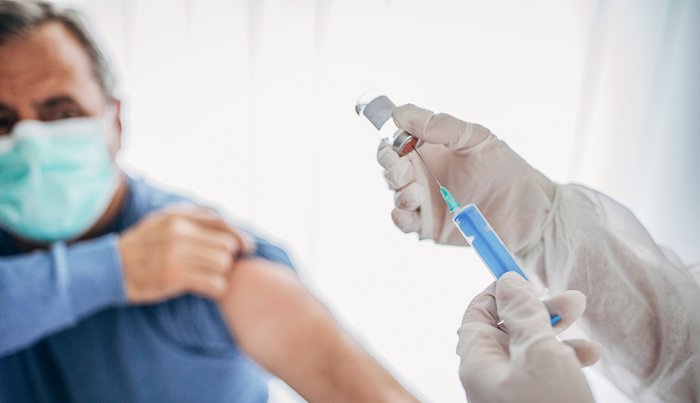
A man is about to get a vaccine

Workers have rights, but the answer is more complicated than you think.

En español | With millions of people out of work and millions of others forced to work from home, the pandemic has reshaped the nation’s labor force. And it’s not done yet. As the unemployed look ahead to getting hired and remote employees prepare for a return to the workplace, many are contemplating the same question: Could they eventually be required to get a COVID-19 vaccination if they want to keep their jobs?

The question has become more urgent since the U.S. Food and Drug Administration (FDA)  granted Pfizer and BioNTech’s coronavirus vaccine emergency use authorization on Dec. 11. The short answer: Yes. An employer can make a vaccination a requirement if you want to continue working there. But there are significant exceptions for potential concerns related to any disability you may have and for religious beliefs that prohibit vaccinations. And experts say that employers are more likely to simply encourage their workers to get immunized rather that issue a company-wide mandate.

On Dec. 16, the Equal Employment Opportunity Commission (EEOC) confirmed that a COVID-19 vaccination requirement by itself would not violate Americans with Disabilities Act (ADA). That law prohibits employers from conducting some types of medical examinations.

“If a vaccine is administered to an employee by an employer for protection against contracting COVID-19, the employer is not seeking information about an individual’s impairments or current health status and, therefore, it is not a medical examination,” the EEOC says.

But some employees may be exempted from mandatory vaccinations based on potential concerns related to any disability you may have and for religious beliefs that prohibit vaccinations. And experts say that employers are more likely to simply encourage their workers to get immunized rather that issue a company-wide mandate.

“Employment in the United States is generally ‘at will,’ which means that your employer can set working conditions,” says Dorit Reiss, a law professor at the University of California, Hastings, who specializes in legal and policy issues related to vaccines. “Certainly, employers can set health and safety work conditions, with a few limits.”

Those restrictions generally are tied to the federal Americans with Disabilities Act (ADA) and Title VII of the Civil Rights Act of 1964. If employees have medical reasons or sincerely held religious beliefs that prevent them from taking a potential coronavirus vaccine, employers could be legally required to give the workers some reasonable alternative to continue to work, Reiss says.

The EEOC guidance notes that even if an employer finds that a worker who cannot be vaccinated due to disability poses a risk to the workplace, the employer cannot exclude the employee from the job — or take any other action — unless there is no way to provide a reasonable accommodation that would reduce this risk to others.

“That might be a [wearing a] mask, a working from home, or a working separately from other people alternative. As long as it’s not too significant a barrier for the employer,” Reiss says. “If you can achieve the same level of safety as the vaccine via mask, or remote working, you can’t fire the employee. You need to give them an accommodation.”

Vaccine recommendations vs. requirements

The potential medical and religious accommodations are just two of the factors employers will have to consider when deciding whether to put a vaccination requirement in place. Experts say that given all the different concerns employers will need to balance with a potential COVID-19 vaccine, many might choose to simply recommend their workers get immunized rather than make vaccination a condition of employment.

For example, employers also need to weigh any liability issues a vaccination requirement might raise. Some federal lawmakers already have raised concerns that employers are vulnerable to lawsuits from workers and customers who might have contracted COVID-19 at the business. A mandate that all their employees get inoculated could complicate the risks for companies.

“It’s a treacherous area for employers,” says Jay Rosenlieb, an employment law attorney at the Klein DeNatale Goldner law group in California. “The reason it’s treacherous for employers is liability that arises from requiring a vaccine where the vaccine goes sideways and creates harm to the employee. That’s going to probably be a workers compensation claim against the employer. And, of course, some kind of claim against the vaccine manufacturer. There’s a lot of weighing that goes on here.”

L.J. Tan, chief strategy officer for the Immunization Action Coalition — an advocacy group that supports vaccinations — says that because potential COVID-19 vaccines are largely being developed in the same manner as earlier vaccines, researchers have the benefit of past scientific experience to better ensure that a vaccine for this coronavirus will be safe. But he noted that the speed of the development of a COVID-19 vaccine — compressed into months rather than the usual years — and the politics that have accompanied it add to the reasons employers may be unwilling to make vaccination a requirement.

“One of the challenges we’re going to be dealing with, obviously, especially now is that there is a shadow of politics over the vaccine,” Tan says. “As a result, there’s some fear about whether the vaccine can be safe, whether it can be approved appropriately. Because of that shadow, I think it’s going to be extremely difficult for an employer to make COVID-19 vaccination a condition of employment.”

Vaccine requirement more likely in health care, other high-risk jobs

The industry most likely to require COVID-19 vaccinations for workers is health care, where most employers already require workers to get a flu shot annually. In fact, interim guidance from the Centers for Disease Control and Prevention (CDC) on which groups might be among the first to have access to a coronavirus vaccine placed “healthcare personnel likely to be exposed to or treat people with COVID-19” at the top of the list.

But once enough doses of a vaccine have been produced for distribution to the broader public, some employers might start to consider a mandate.

“For example, essential workers in retail stores or in food production plants, such as a meat-packing plant, seem to be at high risk,” Reiss says. “Those employers could reasonably require [a COVID vaccination], because remember, if an employee doesn’t vaccinate, it’s not just a risk to them. It’s a risk to other employees, and — if it’s a customer-facing business — a risk to the customers. So, in high-risk places, I think it’s reasonable.”

Some companies may make inoculation voluntary but make it as easy as possible for workers to get the shot. For instance, Ford already has purchased twelve of the ultracold freezers required to store doses of Pfizer’s vaccine so it can provide the shot to employees who want it.

For those workers who might be told to get a vaccination, remember to raise any concerns you might have with your employer.

“Ask for reasonable accommodation and have a discussion with the employer as to whether there might be reasonable alternatives such as work from home or such as continued use” of personal protective equipment, Rosenlieb says.

If vaccination requirements do become more common, both workers and their employers will have to find ways to balance personal concerns with public safety.

“On one hand, [vaccine requirements] do limit the autonomy of workers that have reservations,” Reiss says. “On the other hand, they also protect workers by making the workplace safer from the disease. So, it’s not just a mandate to limit your rights. A mandate can also protect your right to a safe work environment.