How Insurers Are Using the Courts to Rewrite the No Surprises Act

A wave of coordinated lawsuits is transforming the No Surprises Act’s arbitration system into a battlefield where insurers seek to intimidate physicians, rewrite the law and consolidate control.

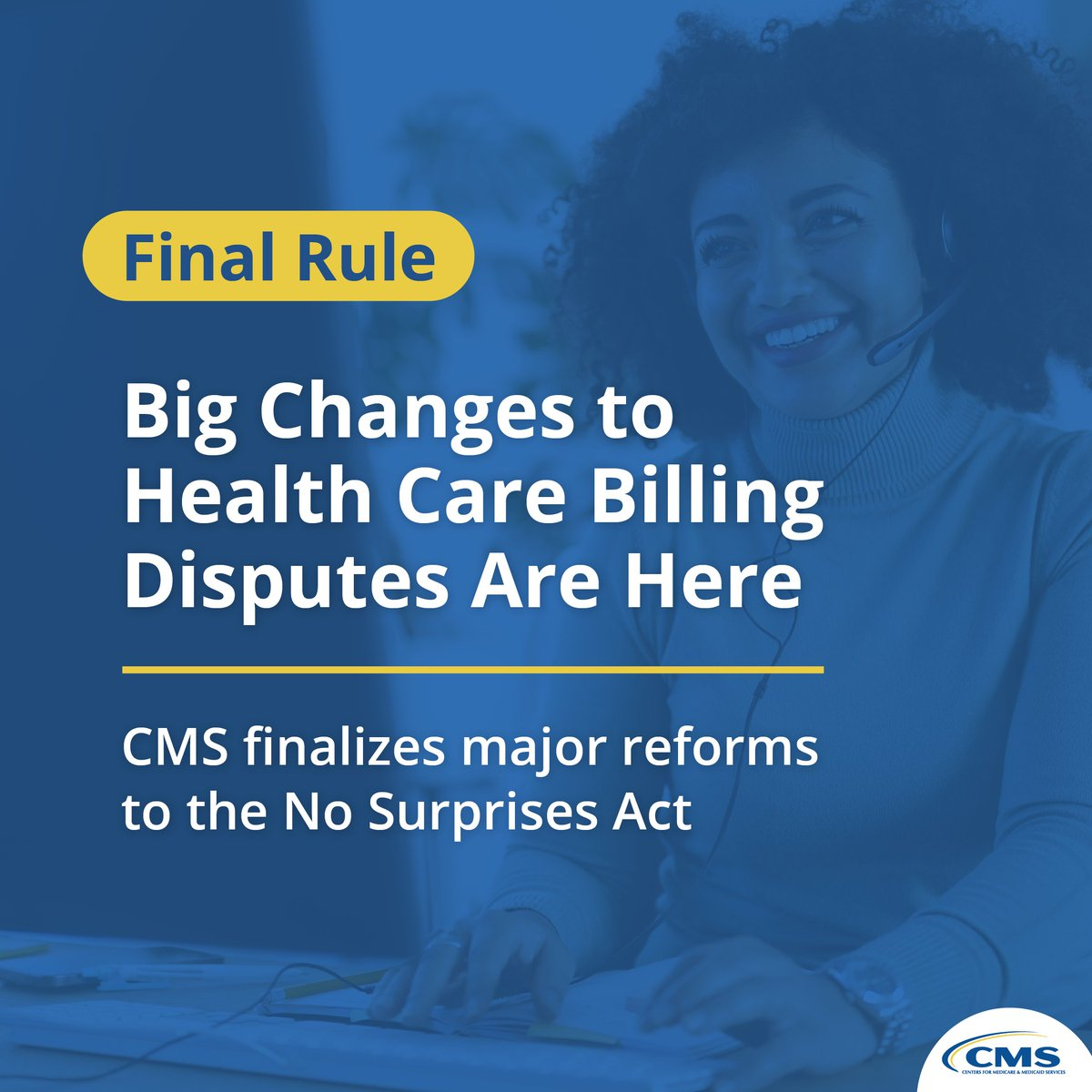
As I have written, Congress passed the No Surprises Act (NSA) to safeguard patients from unforeseen medical expenses and establish a neutral, independent dispute resolution (IDR) process for payment conflicts between insurers and out-of-network providers. That design was meant to replace brinkmanship with an independent referee. What Congress designed as a neutral arbitration system is now being challenged by Big Insurance through coordinated litigation designed to narrow, intimidate, and ultimately reshape the law.

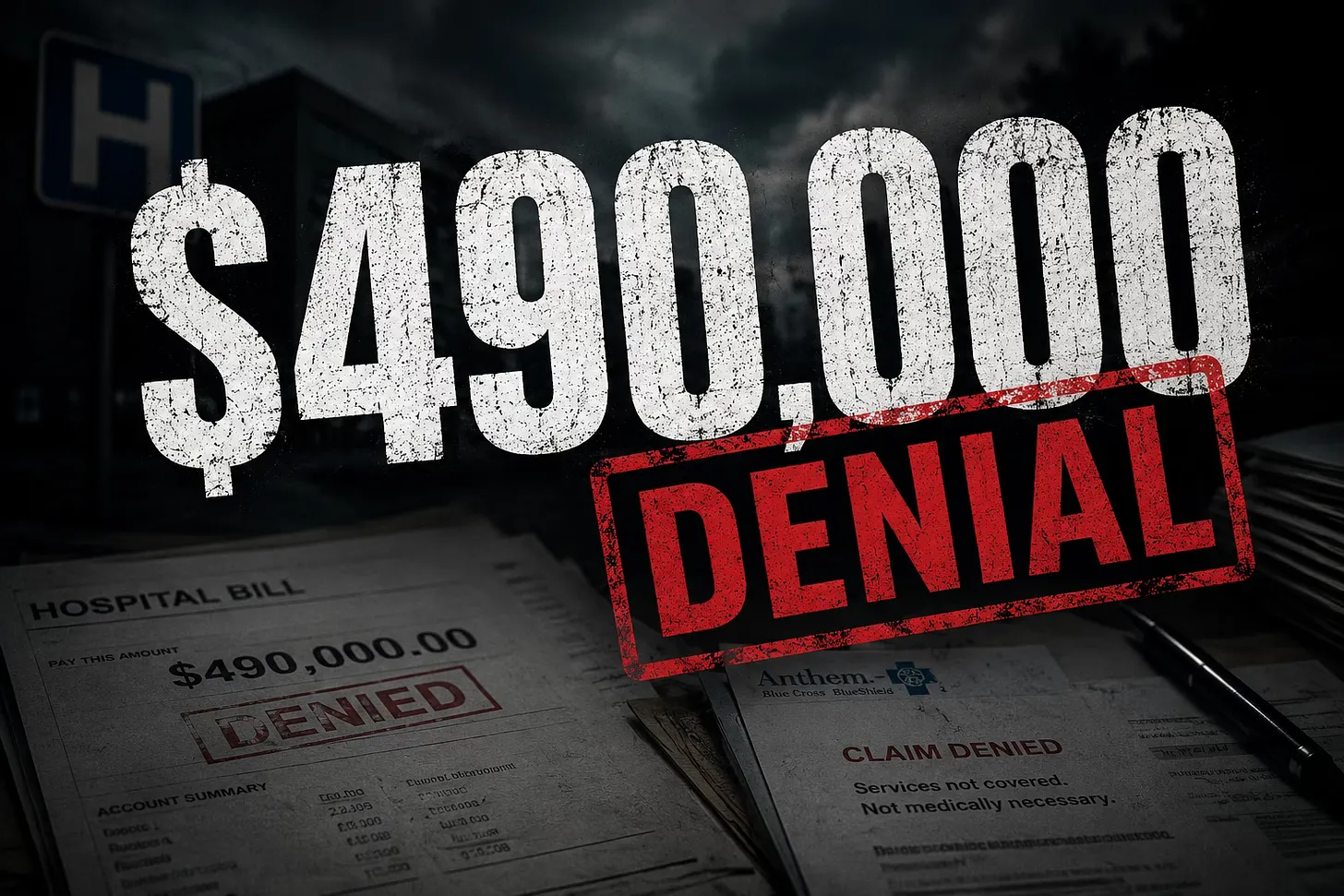
Major insurance conglomerates — including UnitedHealthcare entities, Elevance/Anthem affiliates and Blue Cross Blue Shield plans — have launched a coordinated series of federal lawsuits against providers, hospitals, and revenue-cycle vendors who have used IDR at scale. Employing nearly identical language, legal arguments, and allegations, these lawsuits are not isolated ordinary litigation. It is lawfare.

Narratively, these suits recast lawful engagement in the NSA’s IDR process as “abuse,” but functionally they are designed to intimidate physicians from seeking NSA protection. A Pennsylvania suit from UnitedHealthcare against NorthStar Anesthesia presents the most urgent and perilous threat to independent physicians. If Unitedhealthcare prevails, insurers will be able to obtain judgments of fraud against physicians who incorrectly file NSA disputes. The effects of this will be catastrophic for independent physician practices, who cannot afford to litigate against billion dollar behemoths that have armies of lawyers on staff and retainer.

If successful in these efforts, the insurers will further weaken physician practices and make them ripe for acquisitions, continuing the dangerous path of vertically integrated insurance corporations – and the further decimation of independent physician practices.

The “Flooding” Myth

The lawsuits all start in a similar fashion. Each one claims that the defendant “abused” federal legislation “designed to protect patients from unexpected medical bills” and asserts that “the IDR process has not functioned as intended.” This wording appears verbatim in cases filed months apart, across different jurisdictions, against completely different defendants. Insurers adopt the same basic allegation: providers or billing companies “flooded,” “overwhelmed,” or unleashed an “avalanche” of IDR disputes that insurers assert were ineligible.

Those characterizations are based on bad data. Before the NSA went into effect, the Departments of Health and Human Services, Labor, and Treasury projected that the independent dispute resolution (IDR) process would see roughly 17,000 disputes annually. In reality, the system received nearly hundreds of thousands of disputes in its first year. That mismatch didn’t happen by accident. The departments based their projections on New York’s experience with a state arbitration system, scaling the state’s dispute numbers nationally. But New York’s law relied on an independent benchmark called FAIR Health that sharply reduced disputes. This is a structural feature the federal law does not have.

A more realistic comparison was available at the time: Texas. Unlike New York, Texas operated an arbitration system without an external benchmark making it a better comparison for the federal No Surprises Act. In its first year, the Texas system received nearly 49,000 arbitration requests for a population of just under six million people. That experience should have been a clear signal that arbitration volume would be far higher than federal projections suggested. Insurers have used this modeling error to their rhetorical advantage in their litigation.

Racing in the Wrong Direction

New data shows the U.S. is moving backward on coverage, not forward—raising a harder question: is the problem affordability, or priorities?

Will the U.S. ever provide health care for all its citizens?

The prospects are dim for enacting a system that provides services for the county’s entire population the way Europeans have done for decades. As the head of the German pharmaceutical association in Berlin once told me in an interview, “In the German system, nothing comes between us and our principle of solidarity.” I asked, “Even your profits?” “Not even our profits,” he replied.” Imagine any health care executive in the U.S., where the bottom line reigns supreme, daring to say a thing like that.

That interview with the German pharmaceutical executive came to mind again as I read the latest study from the Commonwealth Fund, which should be required reading for anyone interested in health policy and the future of the American system. The report by the Fund’s senior scholar, Sara Collins, said the Trump administration has “made it harder than ever for Americans to get good health insurance,” a conclusion that needs to be shared far and wide.

The administration itself predicts these changes will reduce enrollment in the Affordable Care Act marketplaces next year by 1.2 to 2 million people. The U.S. is falling backward in providing health care for all, a project that prompted Dr. Martin Luther King Jr. to observe long ago, “Of all the forms of inequality, injustice in health care is the most shocking and inhumane.”

At the Commonwealth Fund, Collins noted that those losses are on top of other changes expected to leave another 7.5 million people uninsured. Even though members of Congress hostile to the Affordable Care Act failed to repeal the act during Trump’s first term, Collins points out they still inflicted damage by whittling away at some of the law’s provisions. She reports that last year a majority of the public supported the Affordable Care Act’s enhanced premium tax credits, established in 2021. Republicans, however, did not pass legislation to extend those credits that helped millions of Americans, who now face annual premium increases of $750 to more than $4,000.

Does the destruction of the hard-won Affordable Care Act mean that a country as rich as ours cannot afford to pay for medical care like the rest of the world’s developed countries do, or does it mean those with clout don’t want those without to have health care? I am inclined to believe the latter.

That was not the only damage caused by the Trump administration. For example, a new rule for marketplace coverage increased out-of-pocket costs, eliminated special enrollment periods for those with low incomes, and put new restrictions on auto enrollment. In addition insurers raised premiums by 20% or more in many cases, hoping that those people who are healthy would not drop coverage and leave them with sick, and more costly, health plan enrollees. Such a strategy would be unheard of in countries with national health systems, where everyone is entitled to care.

“The Trump administration’s latest actions on the ACA marketplaces continue to make it as difficult and costly as possible for those with low and moderate incomes to get good health insurance and care they need,” Collins reported. “This will lead to more people with low and moderate incomes uninsured, underinsured, less healthy, and saddled with medical debt.”

Is this what Americans want for their health care system?

The Insurance Industry’s Old Trick: Flooding the Zone

Nearly 47,000 comments hit regulators. Most weren’t written by seniors — they were engineered by insurers and their front groups.

When the federal government opened a public comment period earlier this year on Medicare Advantage payment rates for 2027, which were far lower than what private health insurers had expected from the Trump administration, something remarkable happened. Comments poured in at a record-breaking pace — nearly 47,000 in all, an all-time high for a Medicare rate notice.

Regulators took notice. A senior CMS official, perhaps trying to lighten the mood, joked that the flood of input might be “another innovation related to AI.”

It was a good line. But the reality was less amusing.

According to an analysis earlier this month by KFF Health News, about 82% of the more than 16,400 publicly available comments were identical to a letter that appeared on the website of a secretive advocacy group called Medicare Advantage Majority — a “dark money” organization that does not reveal its funders, other than to say it is “dedicated to protecting and strengthening Medicare Advantage” and is “powered by hundreds of thousands of local advocates nationwide.”

The letter warned that without higher reimbursements, seniors would face higher costs and fewer benefits. It was signed by thousands of people who almost certainly believed they were speaking for themselves. They were speaking for the industry.

The extent of the deception ran deeper than form letters. KFF Health News found at least one case that illustrates the tactic’s recklessness. Corenia Branham, a 90-year-old widow and cancer survivor in West Virginia, said she never submitted any comment to CMS — yet four form letters appeared online under her name. Branham, who isn’t even on Medicare Advantage, was unambiguous about her views: “I wouldn’t recommend it to nobody.” A spokesperson for Medicare Advantage Majority claimed she had responded to an ad on Facebook. Whether she understood that doing so would put her name on federal regulatory comments is another matter entirely.

Alongside the comment flood, insurers and MA associations funded research, launched ads, rounded up signatures, and met with government officials, submitting a barrage of comments arguing the proposed rule would be disastrous for payers and the seniors they serve. The Better Medicare Alliance, backed by the nation’s largest health insurers, led the charge. So did AHIP, the industry’s primary lobbying group. (And don’t believe for a minute that Medicare Advantage Majority wasn’t funded by the industry, too. In my old career in the insurance business I used to work with Washington propaganda shops to help set up front groups like that.)

The advertising blitz was impossible to miss if you spent any time in Washington. If you visited Washington’s Union Station in recent months and checked the monitor listing train departure times, you would be hard pressed to miss the large electronic billboards around them from an organization called the Coalition for Medicare Choices, another front group, featuring worried-looking seniors warning against cuts to Medicare Advantage. Despite billing itself as a grassroots organization, the Coalition for Medicare Choices was founded out of the same offices as AHIP. The Better Medicare Alliance — whose membership includes UnitedHealth, Humana, and Aetna — ran its own paid media campaign. The group spent over $13.5 million on ads, while yet another dark-money group added $2 million more.

What looked like a nationwide groundswell of concerned seniors was, in large part, a carefully coordinated pressure campaign designed to move our tax dollars — tens of billions of them – to insurance conglomerates that operate private Medicare Advantage plans.

This playbook is not new. It has a name: astroturfing. The term was coined in 1985 by Texas Senator Lloyd Bentsen, who described a “mountain of cards and letters” sent to his office demanding his support for a bill favorable to the insurance industry. “A fellow from Texas can tell the difference between grass roots and AstroTurf,” Bentsen famously said. “This is generated mail.”

Forty years later, the insurance industry is still running the same play — only now with the tools of the internet, AI-assisted drafting, Facebook ads, and front groups bearing names designed to sound like patient advocates.

I know this tactic well. I helped write the playbook.

For years, as a senior executive at one of the country’s largest health insurers, I watched — and participated in — campaigns that manufactured the appearance of public support for industry-friendly policies. The goal was always the same: to make regulators and lawmakers believe that ordinary Americans were rising up in defense of private insurance, when in fact it was the industry pulling the strings. We called it grassroots outreach. It was anything but.

Shooting the Messenger: The Campaign to Discredit MedPAC

Flooding the CMS comment docket with form letters was only one front in the industry’s pressure campaign. Another target was the independent agency whose numbers made the strongest case for reform: the Medicare Payment Advisory Commission, better known as MedPAC.

MedPAC is a nonpartisan congressional advisory body with no financial stake in the outcome of Medicare policy. As we reported earlier, MedPAC’s January 2026 status report estimated that Medicare Advantage overpayments are projected to be $76 billion — or 14% more — above what spending would be in traditional Medicare for the same beneficiaries this year. That finding was politically inconvenient for the industry, so the industry set about undermining it.

The Wall Street Journal published an op-ed calling MedPAC’s methodology into question, with the editorial board going so far as to call for MedPAC to be defunded. Industry-backed lobbying groups like the Better Medicare Alliance and the Healthcare Leadership Council – an outfit formed by Humana founder David Jones and other top industry executives in the late 1980s to shape federal policy – amplified the editorial and supported legislation that would dictate how MedPAC’s staff can conduct research.

Wall Street stagflation chatter rises

Flared jeans are in style, an oil crisis is driving pain at the pump, and unemployment is rising: It’s not 1978, but it kinda feels that way.

The big picture: 

Talk of stagflation is rising on Wall Street, as investors fret the dreaded pairing of high inflation and high unemployment is making a comeback.

Zoom in: 

On Monday alone, at least six notes from investment managers and Wall Street analysts warned of “stagflationary” concerns.

  • Media outlets have run with this.
  • Last Friday, Chicago Fed President Austan Goolsbee noted that rising unemployment on top of an oil price shock creates “exactly the kind of stagflationary environment that’s as uncomfortable as any that faces a central bank,” per the Wall Street Journal.

Flashback: 

Analysts and media started tossing out the “s” word when inflation revved up back in 2021.

  • The term “stagflation” really took off the next year, when Russia invaded Ukraine, spiking energy prices. Everyone then predicted a recession that never materialized.

State of play: 

Today is different for two reasons. First, the job market is more sluggish than it was a few years ago.

  • Second, the oil shock from the Iran war is potentially magnitudes larger than from the Russian war, taking 20% of global supply oil off the board.
  • “Disruption to the Strait of Hormuz creates a far larger potential supply shock that extends beyond oil,” Skylar Montgomery Koning, a macro strategist with Bloomberg, wrote in a note.
  • “Shipping flows more broadly are being disrupted. That is pushing up energy and food costs, lifting inflation and squeezing growth.”
  • “This stagflationary mix is particularly toxic for markets, as it increases the risk that bonds and equities sell off together.”

Reality check: 

It’s not the 1970s. Economists believe the Iran war will slow economic growth and cause an increase in inflation, but not to the extremes seen back then.

  • “If you want the word ‘stagflation’ with a very little ‘s,’ you could,” says David Kelly, chief global strategist at JPMorgan Asset Management.
  • He recently revised his economic growth projections slightly downward this year due to the war. And he is projecting slightly higher inflation.
  • The difference between now and the 1970s is, back then, higher prices led to wage increases, which led to more inflation in a wage-price spiral that got out of hand, he says. Workers just don’t have the power for that today.
  • “This is probably just going to slow the economy down, rather than trigger some long wave of inflation,” says Michael Madowitz, principal economist at the progressive Roosevelt Institute.

The bottom line: 

This is not your father’s economic shock. Yesteryear’s bell bottoms would look a bit weird if you trotted them out today.

Healthcare Workforce Modernization Needed

Last week, the war in Iran intensified and Kristi Noem’s tenure as DHS Secretary came to an unceremonious close. Perhaps lost in the noise was the February jobs report issued Friday by the U.S. Bureau of Labor Statistics. It showed a surprising decline in job growth prompting speculation the economy might have taken a downward turn. Some headlines….

  • Payrolls unexpectedly fell by 92,000 in February; unemployment rate rises to 4.4% (CNBC)
  • Employers Cut Jobs in Sign of a Shakier Economy (New York Times)
  • Paychecks keep rising for American workers, providing boost to household budgets (Fox Business):
  • The U.S. economy lost 92,000 jobs in February, stoking labor market worries (NBC News)
  • The US economy lost 92,000 jobs in February and the unemployment rate rose to 4.4% (CNN)

Anticipation that the jobs report portends bad news for the economy followed the news cycle all day and through the weekend. And a few, like Axios, went further: “The surprise to many was where the biggest since job growth especially in healthcare and social assistance had buoyed the labor market for 3 years.” Others attributed the decline to hangovers from recent nursing strikes (USC Keck, Kaiser Permanente, MarinHealth) and layoffs by many health systems.

To industry insiders, the BLS jobs report’s capture of declines in healthcare hiring was no surprise. Operating cost reduction has been a strategic imperative in every hospital, long-term care, ancillary and medical group since the pandemic (2020). In tandem, investments in workforce productivity enhancements via technology-enabled workforce redesign and performance-based compensation have elevated human resource management to C-suite status in most organizations. It’s understandable:

Healthcare is capital intense: it needs appropriations from government and in-flows from employers and individual taxpayers to pay its bills. Most of that pays for its labor costs. Today, most Board agenda include updates on labor relations, human resource management issues and workforce adequacy—it’s standard fare. And all weigh options to outsource and devour progress reports from HR management on AI-enabled investments anticipated to reduce labor costs.

Healthcare is highly regulated, especially in workforce activities, and labor-management relationships impact organizational performance and reputation. Every sector in healthcare is regulated by combinations of federal, state and local rules, laws and agency directives that define roles, responsibilities, decision-rights and constraints of its workforce. It’s complicated by the politics of healthcare which avoids policy changes that threaten protections sought by each labor cohort in healthcare. Protecting funding and restricting infringement on scope of responsibility by unwanted outsiders is the primary rationale for professional society’ advocacy efforts. In hospital and long-term care settings, the healthcare workforce is a cast-system that keeps doctors at the top of the pyramid, licensed mid-levels in the middle and everyone else below. In other healthcare settings, executive-level designations dominate hierarchies, and in some Boards play roles in workforce structure and compensation schemes. Workforce modernization in most healthcare settings is acknowledged as a critical need but most default to layoffs and fail to enact a comprehensive strategy.

Looking ahead, technology will alter the status quo for workforce modernization efforts in healthcare:

1-Less dependence on physician recommendations. Might patients access customized clinical decision support tools more widely in the future and make more choices themselves (especially if incentives support self-care)? Might other sources of clinical counsel be more accurate, more accessible and less costly in the future, prompting acceptance (trust and confidence) by patients? Physicians and other caregivers will play key roles, but in concert with tools and processes that enable consumer engagement.

2-More access to verifiable cost, price and value information. The underlying costs and prices for healthcare services are unknown to their caregivers at the points of care so the majority of transactions require pre-authorization by a third-party adjudicator with payments that follow. Physicians bear no responsibility for advising patients about costs and prices: theirs is exclusively the domain of clinical counsel. Thus, labor costs in healthcare presume third party payments, middlemen, incapable self-care and work rules that reinforce old ways and torpedo better ways of work. Might the role and scope of insurer activity be integrated with delivery so that “costs and quality” are directly accountable to providers? Might primary and preventive health hubs (physical + behavioral + nutrition + prophylactic dentistry + self-care enablement + insurance) become the centerpieces of community health replacing traditional insurers and hospitals? Where will the workforce choose to work?

Per the Healthcare Workforce Coalition (www.healthcareworkforce.org), healthcare workforce shortages are a near and present danger to the U.S. health system: shortages of physicians, nurses and allied health professionals are significant, especially in rural areas. The 18-million who constitute the healthcare workforce today are being told to work harder with less. It’s no secret.

In the Affordable Care Act (2010), Title 5 (Section 5101), healthcare workforce modernization was authorized: “The purpose of this title is to improve access to and the delivery of health care services for all individuals…” Subtitle B authorized creation of a 15-member National Health Care Workforce Commission to recommend modernization policies. It would have coordinated workforce initiatives across federal agencies (HRSA, CMS, MedPAC, MACPAC, GAO, et al) along with states and private sector operators to address long-term issues and short-term execution challenges. The Commission never met because its funding was not authorized by Congress.

If the overall economy is dependent on healthcare to produce an appropriate share of job growth while reducing overall costs, modernizing its workforce is key. It must include unpaid caregivers, licensed and unlicensed providers and technology-enabled solution providers—not just traditional licensed professional groups and their academic partners. That’s not going to happen in the current political environment where each sector’s primary focus is protecting reimbursement and guarding against scope of practice threats.

The health system needs transformation. Workforce modernization is where to start.

Paul

P.S. My journey as a heart patient continues to teach me just how far we have to go as a “system.” Understanding what I have been billed for, by whom, when and why is like reading Russian. As best I can see, $267,490.30 has been charged by the hospital and 13 different doctors who’ve treated me in some way.  How much I end up spending after rehab et al remains a mystery but it’s not remotely close to the hospital’s “price estimator” tool. Little wonder consumers are frustrated about healthcare costs pushing its affordability to the top of their Campaign 2026 concerns.

New Deductible Rules Allow for $31,000 Out-of-Pocket Maximum

Trump’s proposal would revive “catastrophic” plans with deductibles as high as $31,000 — shifting even more costs onto patients with cancer, chronic illness, and medical emergencies.

On Friday, Erica Bersin – who has two chronic illnesses, including multiple sclerosis – wrote about the challenges of finding a decent and affordable health plan in the ACA marketplace. As a sole proprietor, the only plan with a manageable premium ($330 a month) came with a $10,000 deductible. MS drugs are expensive and many people with the disease have to pay hundreds and sometimes thousands of dollars out of their own pockets before their coverage kicks in. Sadly, the way the ACA plans are structured, Americans with chronic conditions – and others who are diagnosed with cancer or have a heart attack or other acute medical event and have no option for coverage other than the ACA marketplace – are penalized financially far more than the rest of us..

But instead of helping those folks out, the Trump administration is proposing to change the marketplace in ways that will make a $10,000 deductible seem like a bargain. Say hello to a $31,000 family deductible. And even if you’re covered by an employer-sponsored plan and in no imminent danger of being enrolled in a plan like that, know that their reappearance (they were outlawed 16 years ago), will push your premiums even higher than they already are. That’s because hospitals and physician practices know people enrolled in those plans will not be able to pay their bills. They’ll have no option but to increase their prices to cover the additional bad debt.

Health insurance policies with deductibles that high were prevalent before the Affordable Care Act was enacted in 2010. When I was a health insurance executive, I knew some insurers were selling policies with family deductibles north of $50,000. Not only that, many of them had annual and lifetime caps and wouldn’t pay for any care related to a preexisting condition.

They were officially called “catastrophic” plans. Patient and consumer advocates had a more appropriate name for them: junk plans. They were outlawed by the ACA, and I thought they had been buried for good. Unfortunately, the Trump administration is bringing them back to life.

I’m sure my former colleagues in the health insurance business went to work immediately getting those plans ready to sell once again to unsuspecting customers. That’s because they can be very, very profitable. Imagine having to pay $50,000 – or even $31,000 – out of your own pocket every year before your insurer will cover the care your doctor says you need. Cigna, where I worked, as well as Aetna and UnitedHealthcare, the country’s biggest health insurers, sold plans like that and collected billions in premiums every month but paid little if anything out in claims during a given year.

When I first testified before Congress, I was one of three people at the witness table, and all of us knew a lot about those plans – including Nancy Metcalf, who was senior program editor at Consumer Reports at the time. She in particular knew about the many shortcomings of those plans because she had heard horror story after horror story from people who had enrolled in a junk plan. She urged lawmakers to outlaw them – or at least make insurers put warning labels on them so people would know what they were buying and how little protection those plans provided. As Nancy testified:

Consumers need to be told, in big letters, what their policy’s out-of-pocket limit is, and right next to it, in equally big letters, if there are any expenses that don’t count towards that. They need to know approximately what their out-of-pocket costs will be for expensive treatments such as cancer chemotherapy, or heart surgery, or infusions of patented biologic drugs. They need, in other words, a fighting chance not to be ripped off by junk insurance.

As Reed Abelson of The New York Times reported last week, the administration’s proposal “involves a type of plan known as a catastrophic or skinny policy. While they may be appropriate for someone who is young and healthy, a sudden emergency room or unexpected hospital stay could cost thousands of dollars in unforeseen bills. People with chronic medical conditions also might have to pay for much – if not all – of their care out of their own pockets.”

Commonwealth Fund president Joseph Betancourt pointed out in the Times’ story that people are already struggling to pay for their medical care:

There’s no doubt that we have an affordability crisis. As we move forward to shifting more of the burden to patients, there’s a chance to really exacerbate the crisis.

Abelson noted that under the proposed rule change, insurance companies could not only sell the catastrophic plans on a multiyear basis once again, they could also sell plans that do not offer an established network of hospitals and doctors. “Those plans,” she wrote, “would instead pay a fixed amount for a doctor’s visit or procedure, and patients would have to pay any difference in price.”

Abelson also warned of another risk associated with sky-high deductibles: Because their premiums are lower, they “will end up being used as the benchmark for the level of subsidies in a given market. People who want a traditional plan with an established network could end up paying more because they receive a lower subsidy.”

As I mentioned, all of us will likely pay more for our coverage when these plans become legal again next year. As BenefitsPro reported last month – quoting the CEO of Community Health Systems, a big hospital chain – most patients who are currently in ACA plans with lower but still high deductibles and coinsurance requirements can’t pay very much of the “big out-of-pocket bills” hospitals have to send them.

It’s only going to get worse.

The $10,000 Deductible and the Myth of ‘Affordable’ Care

How disappearing ACA subsidies, soaring premiums, and bureaucratic chaos nearly left a consultant with multiple sclerosis uninsured.

The business of health care is not broken; it is working exactly how it was intended. It was designed for people to pay in just in case something happens and then not to pay out when it does. It was intended to “maximize shareholder value.”

About 22 million Americans received enhanced premium subsidies in 2025. According to The Urban Institute and The Commonwealth Fund, it’s estimated that “7.3 million people will leave the ACA marketplace in 2026” due to the loss of the subsidies. About 5 million people will go uninsured, rather than find insurance elsewhere.

Some people have said their premiums and deductibles are doubling or even tripling with tens of thousands in deductibles before coverage kicks in. While absolutely imperfect, we must keep the Affordable Care Act intact for everyone otherwise the cost of Medicare, Medicaid, and private and employer-based insurance will skyrocket, resulting in millions of people losing coverage due to lack of affordability.

Accessible insurance is a huge part of living a healthy life. Because of this, we need to expand coverage and make it fair for everyone. The goal should be for every single person in the U.S. to have head-to-toe health care.

My Story

As a single-person LLC consultant, I have navigated the New York State Exchange (ACA) for years. It is the most expensive Exchange in the country for those who do not qualify for subsidies. If subsidies are received, an increase in income requires repayment via federal tax returns the following year.

For 2025, I resigned myself to a catastrophic plan at $330 per month with a $10,000 deductible, as other options approached $1,000 monthly. While applying in November 2024, my temporarily being in-between projects / contracts was interpreted by the NYS Exchange as being unemployed, which led me to unexpectedly qualify for Medicaid. The state market assured me that this was correct for consultants in my situation, and they “saw it all the time.”

However, during open enrollment in October 2025, I was informed that despite meeting the income threshold, I no longer qualified for either Medicaid or financial assistance / subsidies. The catastrophic plan doesn’t seem to exist now, and the “least expensive” option is $675 with poor / limited coverage. After four months, dozens of phone calls, six people (including an aide in my state assembly member’s office), and about 100 hours of everyone’s time, I have health insurance this year, for now.

Living with two chronic illnesses, including multiple sclerosis, my experience with a “government run” system over the last year has led me to believe that, for the most part, it works. Health care should be a right of birth, not a privilege for the rich.

This is just one person’s story. The rise in health care costs impacts everyone, but especially lower income Americans. You can see some of their fears, here.

CBO’s Updated Projections of the Hospital Insurance Trust Fund’s Finances

The Congressional Budget Office regularly updates the Congress on our projections of the Hospital Insurance (HI) Trust Fund’s financial position as well as changes in our outlook on that position. This blog post serves as that update.

The HI trust fund is used to pay for benefits under Medicare Part A, which covers inpatient hospital services, care provided in skilled nursing facilities, home health care, and hospice care. The fund derives its income from several sources. Over the next 30 years, about three-quarters of its annual income comes from the Medicare payroll tax and roughly one-eighth comes from income taxes on Social Security benefits. The rest comes from other sources.

Budget Projections

We estimate that the HI trust fund’s balance is exhausted in 2040. The balance generally increases through 2031, but spending begins to outstrip income in the following year.

That projection is based on our demographic projections published in January 2026, our economic and 10-year budget projections published on February 11, 2026, and our long-term budget projections that extend those earlier projections. It does not account for any effects, including effects on the economy or the budget, of the Supreme Court’s ruling on tariffs on February 20, 2026 (Learning Res., Inc. v. Trump, Nos. 24-1287, 25-250, slip op. (S. Ct. Feb. 20, 2026)).

As required by the Deficit Control Act, our projections reflect the assumption that benefits would be paid as scheduled even after the HI trust fund was exhausted. If the balance of the fund was exhausted and the fund’s spending continued to outstrip its income, total payments to health plans and providers for services covered under Part A would be limited by law to the amount of income credited to the fund. Total benefits would need to be reduced (in relation to the amounts in our baseline projections) by an amount that rises from 8 percent in 2040 to 10 percent in 2056, we estimate. It is unclear what changes the Centers for Medicare & Medicaid Services would make to operate the Part A program under those circumstances.

We estimate that the HI trust fund’s actuarial balance measured over a 25-year period is negative: an actuarial deficit of 0.30 percent of taxable payroll (or 0.13 percent of gross domestic product, or GDP).

The actuarial balance is a single number that summarizes the fund’s current balance and annual future streams of revenues and outlays over a certain period. It is the sum of the present value of projected income and the current trust fund balance minus the sum of the present value of projected outlays and a year’s worth of benefits at the end of the period. A present value is a single number that expresses a flow of current and future income or payments in terms of an equivalent lump sum received or paid today. And taxable payroll is the total amount of earnings—wages and self-employment income—subject to the payroll tax.

To eliminate the actuarial deficit, lawmakers would need to take action. They could increase taxes, reduce payments, transfer money to the trust fund, or take some combination of those approaches. The estimated size of the change needed—0.30 percent of taxable payroll—excludes the effects of changes in taxes or spending on people’s behavior and the economy. Those effects, which would depend on the specifics of the policy change, would alter the size of the tax increase, benefit reduction, or transfer needed to eliminate the actuarial deficit.

Changes in Our Projections Since March 2025

The year in which the HI trust fund’s balance is exhausted in our current projections, 2040, is 12 years earlier than in our most recent estimate of that date, which was published in March 2025. Measured in relation to taxable payroll, the trust fund’s 25-year actuarial deficit is 0.17 percentage points greater in the current projections than in last year’s. (Measured in relation to GDP, the actuarial deficit is 0.07 percentage points greater than we projected last year.) Those changes are driven largely by projections of less income to the fund. Projections of greater spending also contribute to the changes.

Our projections of income to the HI trust fund are less this year than last year for three main reasons:

  • First, revenues from taxing Social Security benefits are smaller in the current projections because of changes put in place by the 2025 reconciliation act (Public Law 119-21), which lowered tax rates and created a temporary deduction for taxpayers age 65 or older.
  • Second, we decreased our projections of revenues from payroll taxes to account for projections of lower earnings.
  • Finally, we now project interest income credited to the trust fund to be smaller than estimated last year because of the smaller trust fund balances in this year’s projections.

Spending is projected to be greater mainly because of an increase in expected spending per enrollee. Per-enrollee spending in Medicare Part A’s fee-for-service program in 2025 and bids in 2026 by providers of Medicare Advantage plans were both higher than we expected, leading to projections of greater per-enrollee spending in both programs.

Projections of the HI trust fund’s balances are sensitive to small changes in projections of its spending and income. As a result, those estimates are highly uncertain.

HHS takes another swing at drug discount overhaul

The Trump administration is doubling down on efforts to revamp the federal discount drug program — a major flashpoint between Big Pharma and hospitals.

Why it matters: 

The so-called 340B program has been mired in litigation, most recently over administration efforts to let drugmakers carry out price reductions through rebates instead of cutting prices at the front end.

  • After a court halted the attempt on procedural grounds, federal health officials this month laid the groundwork to reintroduce changes that providers say could cost them hundreds of millions of dollars.

Driving the news: 

The Health Resources and Services Administration last week issued a notice soliciting feedback on whether and how to make hospitals and clinics in the program pay full price up front for the medications.

  • Drugmakers would then rebate the price difference later, after verifying that a facility qualifies for a discount.
  • The agency is asking hospitals for financial data to back up industry claims that such a change would threaten facilities’ cash flows and create administrative hassles as they contend with federal Medicaid cuts.

Context: 

A federal court in Maine ruled late last year that the Department of Health and Human Services, which HRSA is part of, didn’t solicit enough stakeholder feedback before proposing its initial rebate model.

  • HHS “cannot fly the plane before they build it,” Judge Lance Walker wrote in response to a lawsuit from the American Hospital Association and other hospital groups.
  • HHS scrapped the pilot in January and dropped its appeal of the decision.
  • The new notice it sent this month “suggests a sense of urgency in advancing a new rebate model proposal,” lawyers at Quarles & Brady wrote in a blog post.
  • Still, HHS would need to formally propose and gather comment on any future model, and has committed to giving providers at least 90 days’ notice before starting the new system.

Where it stands: 

The drug industry trade group PhRMA sees the rebate model as a way to add needed transparency to federal drug discounts, spokesperson Alex Schriver said in a statement to Axios.

  • “We’re heartened by the administration’s efforts to ensure that the program operates as it’s intended,” CEO Steve Ubl told reporters last week.
  • Pharmaceutical companies have been trying to move in the direction of rebates themselves over the past couple of years, arguing that many providers are gaming the system and getting 340B program discounts as well as Medicaid rebates for drugs.
  • Courts have blocked individual companies like Bristol Myers Squibb and Johnson & Johnson from switching to rebates from up-front discounts.

The other side: 

Hospitals are planning to respond to the information request, but they’re holding out hope that HHS will drop the rebate idea altogether.

  • HHS should “recognize that imposing hundreds of millions of dollars in costs on hospitals serving rural and underserved communities is not a sound policy,” Aimee Kuhlman, AHA vice president of advocacy and grassroots, said in a statement.
  • AHA and other hospital groups last week sent a letter to the administration asking to extend the comment period and potentially laying the groundwork for another legal challenge if that isn’t granted.
  • Community health centers, meanwhile, are urging Congress to pass a bill that exempts them from rebate experiments.

The bottom line: 

The administration isn’t giving up on the rebate idea. That will only add to the controversy over a program that covers more than $81 billion in annual drug purchases.