Trump’s (overlooked) plans for employer coverage

https://www.axios.com/vitals-2495705081.html

Image result for pre existing conditions

Trump’s executive order will likely include a provision making it easier for employers to set aside some money, tax-free, to help their workers pay insurance premiums. This one hasn’t gotten as much attention yet as some of the other policies Trump is expected to pursue, but it’s a big deal — one insurers fear could push more people into a shaky market.

The details: Employers already can set aside some pre-tax dollars to help cover employees’ health care costs. Trump’s executive order will likely expand those programs so that they can be used to help employees cover the premiums for an individual insurance policy, an insurance industry official told me.

The reactions:

  • Insurers are afraid this will give employers an incentive to stop offering traditional health benefits: Why go to all the trouble of finding and offering a health care plan if you can just offer your workers some money to go buy their own?
  • “That would be survivable, I think,” if the individual market were more stable, the official said. But because that market is shaky, insurers are nervous.
  • Another fear: Employers might be able to offer coverage to their younger employees, while using these new funds to shift older workers, who tend to have higher health care costs, into the individual market.

The unknowns: Dumping workers into the individual market, even with help paying their premiums, would likely trigger penalties under the Affordable Care Act’s employer mandate, the insurance official said. That might be a disincentive to use these new options — if the Trump administration were planning tough enforcement of the employer mandate.

The bottom line: Other sections of Trump’s executive order will likely pull healthy people out of the individual market; this one could push unhealthy people into it. Insurers are uneasy about both sides of that equation, and say they haven’t had a chance to offer the policy feedback previous administrations would have sought out.

What else to expect from Trump’s executive order

Here’s a quick rundown of what else to expect from today’s executive order:

  • The order itself probably won’t fill in the details of how its policy changes would work. Look for broad outlines, with the nitty-gritty coming separately — probably in the form of a proposed rule from the Labor Department.
  • Although the public will technically have an opportunity to comment on that proposed rule, the insurance industry official told me the final version is largely already written.

The policy:

  • Association health plans: Trump will likely make it easier for individuals (for example, a group of freelancers) to band together and buy insurance like a large employer would.
  • New associations will likely need some form of approval before they can start buying insurance, but insurers don’t expect that process to be much more than a rubber stamp.
  • Short-term plans: Trump is expected to let people hang onto short-term, stopgap policies for a full year; they’re currently limited to three months. Those plans don’t cover much and don’t have to comply with many of the ACA’s consumer protections.
  • Total impact: Insurers and independent policy experts fear that both of those measures would weaken the individual market by pulling healthy people out of it and into skimpier, cheaper coverage.

Altarum: Hospital spending growth rate lowest in 28 years

http://www.healthcaredive.com/news/altarum-hospital-spending-growth-rate-lowest-in-28-years/504580/

Dive Brief:

  • Altarum’s Center for Sustainable Health Spending’s latest Health Sector Economic Indicators reported overall national health spending growth decreased in the second quarter. Spending increased by 4% in the quarter, which was less than the 4.6% that Altarum predicted for the quarter.
  • A major reason for the slower spending growth was connected to hospital second-quarter spending growth, which was only 1.3% rather than the expected 4% growth rate.
  • Overall, year-over-year hospital spending increased by 1.1% in July. Hospital spending increased in June by 0.8%, which was the slowest growth rate year-over-year since January 1989.

Dive Insight:

A growth in the number of insured individuals and less hospital utilization are slowing hospital spending growth, according to Altarum. Overall, the researchers found health spending growth between May and July was slower than GDP growth; health spending accounted for 18% of the GDP.

The news of slowed hospital spending growth will please payers, who for years have created policies and designed plans to nudge members toward lower cost services rather than hospitals. These plans charge less for services at a primary care physician, urgent care center or standalone imaging center rather than a hospital. Plus, services that once required hospitalizations are now being performed as outpatient procedures.

In recent months, health insurance companies have looked to go further to reduce hospital utilization. Anthem, a major Blues insurer in 14 states, has led the way recently in creating policies to push members into getting care at less expensive locations rather than hospitals. Anthem said it will no longer pay for MRIs and CT scans at hospitals in 13 states unless Anthem deems it’s an emergency. Instead, the payer wants members to go less to expensive freestanding imaging centers.

Anthem also recently announced it would no longer cover emergency department (ED) visits that it deems unnecessary in Missouri. Anthem has the same policy in Kentucky and Georgia which it may expand to more states. Anthem said the Kentucky policy has been in place since 2015 and has only denied a small percentage of ED claims.

Also, the CMS is proposing to make costs more site neutral by paying services at off-campus hospital outpatient departments at 25% of regular outpatients rates. The same proposal also includes a small increase (1.75%) for outpatient payments.

All of these changes hope to further reduce hospital spending growth, while forcing hospitals to find ways to improve margins despite less utilization. Altarum’s report shows payers’ efforts are working as hospital spending growth was the slowest major healthcare category over the past year.

Despite seeing the smallest spending increase, hospitals still account for the highest percentage of health spending. In July, hospitals made up 32% of health spending, which easily outdistanced physicians and clinical services (20%). Home healthcare, which had the biggest rate increase (6.6%), still only accounted for 3% of overall health spending.

Analysis: Is healthcare spending growth past the ACA bump?

http://www.healthcaredive.com/news/analysis-is-healthcare-spending-growth-past-the-aca-bump/507073/

Image result for us healthcare spending


BREAKING: Trump undercuts ACA with new plan options

http://www.healthcaredive.com/news/trump-healthcare-executive-order/507148/

Image result for pre existing conditions

Dive Brief:

  • President Donald Trump signed an executive order Thursday that rolls back a number of Affordable Care Act (ACA) provisions that set minimum requirements for health plans.
  • The order will allow small businesses and groups of people to band together and buy insurance as an association. The association health plans (AHP) available to them do not have to meet the requirements of the ACA, such as protection for people with pre-existing conditions and essential health benefits.
  • In addition, the order expands the use of short-term plans that also have looser requirements and allows plans to be sold across state lines.

Dive Insight:

Broadly, the executive order loosens the requirements health plans must meet and shifts regulation away from federal levels. This could lower out-of-pocket costs for people who don’t use much care, but would likely result in major cost increases for people with pre-existing conditions.

The biggest concern with offering these plans is that it would lead payers to cherry pick young, healthy people who are less expensive for payers. But separating them from people who will need services creates an unbalanced risk pool. That can quickly lead to prohibitive out-of-pocket costs for people who have a pre-existing condition or who unexpectedly need high-cost care.

There are still several steps to be taken before the order could have a real impact. HHS and the Department of Labor have been instructed to write new regulations which will go through the regular notice and comment process. The specifics of those regulations will be important to how the order ultimately plays out. Also, the order will almost certainly see a legal challenge. Still, it signals that Trump’s White House is ready to find ways of undercutting the ACA despite the high-profile legislative failures earlier this year.

It’s far from the first sign, though. HHS has drastically cut back efforts to promote this year’s open enrollment period, which begins Nov. 1. The ACA’s overall advertising budget was slashed by 90%, community groups that receive federal funding to help people enroll have been devastated by cuts and HHS recently barred regional directors from participating in enrollment events.

Short-term plans are inexpensive for people who are healthy, but they can exclude people with pre-existing conditions. They have previously been allowed for a limited stretch, such as three months, but extending that time and allowing these plans to count toward the individual mandate will mean an unstable risk pool.

Allowing plans to be sold across state lines is a staple of conservative health policy, but there is little reason to believe it would actually lower costs. There are also many unanswered questions about how these plans would be relegated.


Trump’s executive order would mean cheaper insurance premiums for healthy Obamacare customers

http://www.washingtonexaminer.com/trumps-executive-order-would-mean-cheaper-insurance-premiums-for-healthy-obamacare-customers/article/2637105

Image result for underinsured


President Trump is expected to sign an executive order on Obamacare this week that would allow people to buy cheaper health insurance with fewer regulations, targeting healthcare goals that eluded congressional Republicans all year.

The full details of the executive order have not been released, but enough information has been reported to reveal its overall framework. Trump would direct the Departments of Labor, Treasury and Health and Human Services to make changes to regulations so more people could band together to buy “association health plans” which would allow individuals or small businesses to band together, such as members of a Chamber of Commerce, to buy plans sold across state lines. The order also would allow people to buy short-term health insurance plans for longer than the Obama administration allowed and would encourage the use of health savings accounts.

Both association health plans and short-term plans are less expensive than Obamacare plans because they offer limited coverage. They don’t guarantee same-cost coverage, or any coverage, for people with pre-existing illnesses and they do not cover a broad range of medical care, from addiction treatment to maternity care.

Critics have referred to the plans as “junk insurance,” warning that expanding access to them would take customers back to the days before the passage of Obamacare, formally known as the Affordable Care Act. They also warn that providing such options would peel more people from Obamacare’s exchanges, leaving an even sicker — and costly — population with Obamacare plans.

But people who don’t receive federal help paying for their premiums, meaning people who make more than $48,240 for an individual or $98,400 for a family of four, and who do not have a pre-existing illness, may look to use one of the options. Many of those customers are facing double-digit premium increases in 2018. The number of people who have unsubsidized health insurance is pegged at anywhere from 6 to 9 million people. Some will face insurance that is so expensive that under Obamacare they will not be required to pay the law’s penalty if they decide not to get coverage.

The executive order could offer an alternative, but it’s not clear how quickly the plans will become available to customers. Open enrollment for Obamacare begins Nov. 1 and runs through Dec. 15, and officials at the different agencies may not be able to change regulations in time for the start of 2018. The White House declined to provide details about the timeline for implementing the executive order.

Kathy Bakich, national health compliance practice leader at Segal Consulting, said the association health plan regulations may take longer than the short-term plans because the administration may have to propose new rules and take public comments, which could take months. The original rules took more than a decade to create, she said.

“There is a legitimate need in the marketplace for new types of systems to allow small employers to band together,” she said. “Whether this is the right way to do it is a tough question.”

It’s not clear how far the changes to the regulations can go. Depending on how they are written, they raise potential openings for fraud or for insolvency if claims exceed an association’s ability to pay them out, because states won’t be able to regulate plans that are sold elsewhere to crack down on problems or revoke licensing. Bakich raised the possibility of another option, known as reinsurance, that would inject federal funding into the exchanges so that higher-cost claims were paid for while others who have coverage would not see premium increases, but there is little appetite among most Republicans for such a proposal.

Instead, association health plans have been pushed even among House members, who passed a bill to allow more of them earlier this year.

“Unlike larger organizations, America’s small businesses are limited in their ability to negotiate for lower healthcare costs for their millions of employees,” said Rep. Virginia Foxx, R-N.C., chairwoman of the House Education and the Workforce Committee. “It’s time to level the playing field. That’s why the committee advanced and the House passed common-sense legislation to allow small businesses to band together through association health plans.”

Trump had been discussing the idea of association health plans with Sen. Rand Paul, R-Ky., for months. On Tuesday he said on Twitter that he was moving to act because Congress “can’t get its act together on healthcare.” Paul chimed in as well, sharing Trump’s tweet and calling it a “great plan” and a “big deal for millions of Americans.”

“Sen. Paul brought this idea to President Trump as a way to fix many problems in the individual market without more regulations and spending,” Doug Stafford, chief strategist for Paul’s political action committee, said in an email. “They have worked on this for quite some time now and are pleased it will be enacted soon.”

The association health plans could allow members of different industries to band together or allow individuals to join in. The proposal has been billed as one that would allow people to buy insurance across state lines because health plans could be located in states with fewer regulations, which would make them less expensive.

The proposal on short-term plans may be easier to tackle. The Obama administration changed the rules for short-term plans in fall 2016, saying they could be offered for only 90 days at a time, meaning that a customer’s deductible would renew if he were to purchase a plan again at a later date. Prior to that, insurers stretched the definition of “short-term,” with some providing coverage for as long as 364 days. It’s not clear what the difference in pricing will be, but in 2016 the average price for an Obamacare premium was $393 a month and short-term plans averaged about $124 a month. By 2017 unsubsidized premiums for mid-level Obamacare plans had risen across the country by an average of 22 percent and are expected to rise in the double-digits again next year.

Insurers have said that the increases are a result of uncertainty over how the Trump administration or Congress would change Obamacare, but also from incurring losses from selling the plans, which younger, healthier and cheaper enrollees haven’t flocked to.

Obamacare, Bakich said, left a gap in terms of dealing with people who don’t think they can afford the robust coverage and also say they don’t want a wide range of services.

“They just want to be protected from bankruptcy and buy the catastrophic plan and be protected from losing everything in a medical crisis,” she said.

Kev Coleman, head of research and data for HealthPocket, a website that helps consumers compare and buy health plans, said he is a proponent of allowing short-term plans to be used for a longer period, saying that industry data show people use them for about six months and that they are meant to be transitional.

Short-term plans and Obamacare plans have locked in rates with states for 2018 and that will not change the individual market, he said.

He also disputed that the short-term plans would be destabilizing to the Obamacare exchange, noting that the Obama-era regulations went into effect in April and that the number of people who used them previously were small. Data from 2015 peg customers at 148,100.

“This market has been around for decades and it hasn’t been a destabilizing force,” Coleman said.

Larry Levitt, senior vice president for special initiatives at the Kaiser Family Foundation, said on Twitter that people who don’t receive subsidies but who have pre-existing illnesses such as cancer or diabetes would be particularly vulnerable because the short-term and association plans wouldn’t cover their medical needs.

“Short-term insurance plans can offer inexpensive coverage to currently healthy people, but they would exclude people with pre-existing conditions,” he wrote. “If healthy people can enroll in short-term plans and avoid the individual mandate penalty, the ACA marketplaces could collapse. Anything that creates a parallel insurance market for healthy people will lead to unaffordable coverage for sick people.”

But Coleman said working within the existing Obamacare system hasn’t worked.

“Politicians interested in optimizing the health of ACA risk pools would be well-advised to work backwards from consumers’ insurance priorities in order to arrive at a compelling market solution,” Coleman said. “You can’t achieve healthy risk pools without a product that has broad appeal.”

Changes in 2017 Federal Navigator Funding

Data Note: Changes in 2017 Federal Navigator Funding

Image result for ACA Navigators

The Affordable Care Act (ACA) created Navigator programs to provide outreach, education, and enrollment assistance to consumers eligible for coverage through the Marketplaces and through Medicaid and requires that they be funded by the marketplaces.  For the past two years, the Centers for Medicare and Medicaid Services (CMS) has funded Navigator programs in the 34 states that use the federal marketplace through a multi-year agreement that was expected to continue for the current budget year.  In August, CMS officials announced significant reductions to Navigator funding for the 2018 budget year.  These funding reductions coming so close to the start of the 2018 open enrollment period will affect the help many Navigators can provide to consumers seeking to enroll in coverage.

This data note analyzes funding changes and discusses the implications for Navigators and consumers.  It presents results of a Kaiser Family Foundation online survey of federal marketplace (FFM) Navigator programs conducted from September 22, 2017 – October 4, 2017 about 2017 funding awards (for the 2018 open enrollment period), the relationship between funding amounts and program performance, and the likely impact of funding changes on programs and the consumers they serve. It also includes insights from a roundtable meeting of more than 40 Navigators co-hosted by the Robert Wood Johnson Foundation and Kaiser Family Foundation held on September 15, 2017, as well as analysis of administrative data.

BACKGROUND

In 2015, CMS signed three-year agreements with Navigator organizations to provide consumer assistance to residents of federal marketplace states.  The multi-year agreements promoted continuity and experience among Navigator professionals.  Multi-year agreement also spared CMS and Navigators the time and expense involved in reissuing grants during critical weeks leading up to open enrollment.  Under the agreements, Navigator programs in the FFM states are required to set goals and report performance data throughout the year relating to specific duties and activities.

Funding amounts under the multi-year agreements have been determined annually — $60 million for the first budget year (which runs September through August), and $63 million for the second budget year.  CMS notified continuing programs of the grant amount available to them for the coming year in late spring; programs then submitted work plans, budgets, and performance goals based on that amount.  Once CMS approved these plans, final awards were made in late August.

In May 2017, continuing Navigator programs were notified of available third-year funding amounts, which totaled $60 million, with grants for most programs similar to the year-two funding amount. In June, programs submitted their work plans and budgets corresponding to these amounts. The Navigator programs expected final Notice of Awards (NOA) by September 1, 2017.

On August 31, one day prior to the end of the second budget period of the grants, CMS announced it would reduce Navigator funding by more than 40%. CMS issued a bulletin stating that funding for the third year would be based on program performance on its enrollment goals for the second budget period.  On September 13, 2017, two weeks into the third budget year of the grant, FFM Navigator programs received preliminary NOAs for third-year funding, which totaled $36.8 million, or 58% of the year-two awards. (See Appendix A for funding awards by program.)

DISCUSSION

The Administration’s decision to reduce funding for Navigator programs comes at a challenging time for consumers who rely on coverage through the marketplaces. High-profile insurer exits from the marketplaces, rising premiums, and uncertainty over the federal commitment to funding the cost sharing subsidies are likely sowing confusion among consumers about whether coverage and financial assistance remain available. This confusion, coupled with a shortened open enrollment period, increases demand for the consumer education and in-person enrollment assistance Navigators provide. At a time when more help may be needed, the funding reductions are likely to reduce the level of in-person help available to consumers during this fall’s open enrollment and throughout the 2018 coverage year.

Navigator programs generally report that they do not understand the basis for the funding decisions, and our survey results suggest that there is not a clear link between funding and performance of programs relative to goals on the measures they are required to track and self-report. This ambiguity makes it difficult for programs to plan for the future.

Both the magnitude of the reductions and the timing has caused disruption to Navigator program planning and operations.  Programs plan to adopt various strategies in response to the reductions, including reducing their geographic service area and cutting services, such as outreach and assisting with complex cases. Three programs report they will terminate operations, leaving consumers in their states with very limited access to in-person help. While consumers may be able to turn to other assister programs or brokers, less in-person assistance will be available in some areas, especially for people with complex situations or who live in remote or rural communities.

How Have Health Insurers Performed Financially Under the ACA’s Market Rules?

http://www.commonwealthfund.org/publications/issue-briefs/2017/oct/health-insurers-perform-financially-aca-market

Image result for How Have Health Insurers Performed Financially Under the ACA's Market Rules?

Abstract

  • Issue: The Affordable Care Act (ACA) transformed the market for individual health insurance, so it is not surprising that insurers’ transition was not entirely smooth. Insurers, with no previous experience under these market conditions, were uncertain how to price their products. As a result, they incurred significant losses. Based on this experience, some insurers have decided to leave the ACA’s subsidized market, although others appear to be thriving.
  • Goals: Examine the financial performance of health insurers selling through the ACA’s marketplace exchanges in 2015 — the market’s most difficult year to date.
  • Method: Analysis of financial data for 2015 reported by insurers from 48 states and D.C. to the Centers for Medicare and Medicaid Services.
  • Findings and Conclusions: Although health insurers were profitable across all lines of business, they suffered a 10 percent loss in 2015 on their health plans sold through the ACA’s exchanges. The top quarter of the ACA exchange market was comfortably profitable, while the bottom quarter did much worse than the ACA market average. This indicates that some insurers were able to adapt to the ACA’s new market rules much better than others, suggesting the ACA’s new market structure is sustainable, if supported properly by administrative policy.

Background

The Affordable Care Act (ACA) created an entirely new marketplace for individual health insurance through three key reforms: a prohibition against charging more for premiums based on subscribers’ health status or risk, providing substantial subsidies for millions of people to purchase individual coverage, and an “exchange” structure that facilitates comparison shopping among insurance plans. In addition, the ACA limits the percentage of premiums insurers can devote to profit and administrative expenses and requires state or federal regulators to evaluate any rate increases requested by insurers.

Because the ACA transformed the market so fundamentally, it is no surprise that the transition was not entirely smooth.1 Because insurers lacked experience with these market conditions, they were uncertain about how to price their products2 and some had significant losses.3 A number of newly established insurers that focused on the individual market went out of business entirely4 and a substantial number of others decided to leave the individual market.5Others, however, appear to be thriving.6

Overall, insurers lost money in the ACA’s individual market in each of the first three years. To date, 2015 has been the worst year, but some insurers did better than others.7 To better understand this varied financial performance, this issue brief analyzes financial data for 2015 reported by insurers from 48 states and D.C. to the Centers for Medicare and Medicaid Services (CMS).8 It is important to analyze marketwide financial performance because the experience in particular states or among specific insurers may not represent conditions generally. Lessons from better-performing parts of the market in the ACA’s most difficult year could help improve areas with worse performance and encourage the adoption of policies that avoid future market turmoil.

We focus on data for “qualified health plans” (QHPs) — that is, products that insurers are certified to sell through the ACA’s “marketplace” exchange. Although insurers also sell QHPs outside the exchanges, premium subsidies are available only for plans sold on the exchanges. Thus, the exchanges account for over three-fourths of QHP sales.9 For insurers to be willing to participate in the exchanges, they must be able to achieve adequate financial results. In turn, their participation is critical to providing coverage and choice to the millions of Americans who are eligible for subsidized insurance.

Based on our analysis of “credible” insurers (i.e., those with more than 1,000 members), we find that QHPs suffered losses of 10 percent overall in 2015. The top quarter of insurers had profits of 7 percent while the bottom quarter had losses of 37 percent. This indicates that some insurers were able to adjust to the ACA’s new market rules much better than others. Because financial performance has improved substantially since then,10 the ability of some insurers to achieve acceptable results even in the ACA’s worst year confirms analyses by the Congressional Budget Office and the former White House Council of Economic Advisors that the ACA’s market structure is sustainable, if properly supported by administrative policy.11

Study Findings

Variation in Profitability

We identified 214 insurers across different states in 2015 with more than 1,000 members in QHPs. Overall, these insurers’ marketplace plans did not fare well in 2015. As shown in Exhibit 1, across the ACA market as a whole, insurers lost almost 10 percent of premiums from their QHP products, amounting to a loss of $33 per member per month (pmpm). This compares with a 6 percent loss overall in 2014 (or $19 pmpm; data not shown). Losses were large in 2015, even after accounting for substantial reinsurance payments of $45 pmpm (or 13% of premium) that insurers received to help offset higher-cost patients. Without these reinsurance payments, losses would have totaled $78 pmpm.

Although insurers’ losses were substantial, they were not as dismal as some pessimistic analysts had projected.12Moreover, some insurers did substantially better than the market overall. Dividing insurers into quartiles based on profitability,13 the top quarter generated rather handsome profits overall of 7 percent, amounting to $25 pmpm — $58 pmpm better than the market average. These profits resulted from two key factors: somewhat higher QHP premiums of $20 pmpm over the market average, coupled with somewhat lower net medical costs of $39 pmpm less than the market average. Better-performing insurers received the same amount of help from reinsurance and risk adjustment as the average insurers. This illustrates that although their medical claims were somewhat lower than the market average, the better-performing insurers did not have substantially healthier enrollees.14 Instead, they appear to have done a better job of either anticipating QHP subscribers’ true medical costs or of controlling those costs (or both).

In contrast, QHP insurers in the bottom quartile did substantially worse on both premiums charged and medical costs incurred. Their net medical costs were $66 pmpm greater than the market average (or $105 more than the best-performing quartile) and their premiums were $14 pmpm lower than the market average. It appears that the premiums of worse-performing insurers failed to anticipate the extent of medical claims their QHP subscribers would generate. These higher claims were partially offset by reinsurance and risk-adjustment payments totaling $68 pmpm — an amount that is 51 percent higher than the market average — but this was not sufficient to offset premiums that were substantially underpriced. Thus, the bottom quartile had an overall loss of 37 percent of premiums — or $120 pmpm, which was three-and-a-half times more than the average loss.

Change in Profitability

To further understand how insurers’ experiences differed in 2015, we analyzed how QHP financial performance changed from 2014 to 2015 (Exhibit 2). Focusing on the 175 insurers who had at least 1,000 members in each year, we divided insurers according to whether they were profitable or unprofitable in 2015.

Among the more than two-thirds of insurers that were unprofitable in 2015, losses increased substantially from 2014: from 10 percent to 17 percent of premium. More than two-thirds of these insurers were also unprofitable in 2014 and their loss levels were similar each year (20% of premium, data not shown). Thus, the increased losses overall were driven by the 38 insurers that went from an 11 percent profit in 2014 to a 9 percent loss in 2015 (data not shown).

Profitable insurers in 2015 were also profitable in 2014, on the whole, but their operating margins dropped, from 8 percent to 5 percent. Three-quarters of these insurers were also profitable in 2014. The group that became profitable in 2015 did so mainly because — in contrast with other insurers — their medical claims declined slightly (data not shown).

Overall, insurers with financial losses did worse in 2015 because net medical costs increased (by 13%, or $40 pmpm) and because their premium increase was only modest (4%, or $13 pmpm). Insurers that had a loss in 2014 increased their premiums 6 percent while those that went from being profitable in 2014 to having a loss in 2015 kept their premiums the same, despite increasing medical costs (data not shown).

Net medical costs for insurers with losses increased primarily because of a 32 percent reduction (or $23 pmpm) in offsetting reinsurance and risk-adjustment payments, and, to some degree, because of a 5 percent increase ($17 pmpm) in gross medical costs. The same pattern was also true for profitable insurers in 2015: their 10 percent increase ($27 pmpm) in net medical costs was due more to the 23 percent decrease ($15 pmpm) in offsetting reinsurance and risk-adjustment payments than to the 4 percent ($12 pmpm) increase in gross medical costs.

In sum, it does not appear that losing insurers suffered substantially from a simple increase in medical claims. Instead, their modest premium increases failed to correct for the previous year’s losses or to anticipate reductions in cost-reducing reinsurance and risk-adjustment payments. Competitive pressures on the exchanges may have caused these insurers to keep their premium increases in check. As for anticipating net medical costs, when insurers set their premiums for 2015, actuaries had only a few months of experience from 2014 on which to base their projections and they did not have the results from the ACA’s reinsurance and risk-adjustment programs. Thus, actuaries lacked the information they needed to make more precise estimates.

It also appears that unprofitable insurers simply were not able to offer prices that could compete well with profitable insurers. On average, the premiums for unprofitable insurers were $20 pmpm less than profitable ones — both in 2014 and 2015 — despite having net medical expenses that were from $41 to $55 greater on a pmpm basis. From these data, we cannot determine to what extent these greater medical expenses are the result of differences in subscribers’ underlying health risks or to differences in insurers’ ability to manage and control health care spending.

Discussion

The fundamental reforms of the Affordable Care Act — subsidizing coverage, establishing insurance exchanges, and making insurance available to people with preexisting conditions — changed market conditions in ways that insurers initially had difficulty predicting.15 Our analysis shows that these difficulties worsened in the second year of full ACA market reforms: insurers suffered a 10 percent loss overall in 2015 compared to a 6 percent loss in 2014 for their qualified health plans.

Our findings, along with other analyses,16 show that this decline was not because of substantially greater medical costs per person. Instead, because insurers had not yet had enough experience under the new market conditions when they filed their rates for 2015, many underpriced their products relative to their members’ health risks. It appears now that this underpricing was a short-term issue. As insurers gained more experience in the reformed market, their financial performance in the ACA’s individual market improved substantially in 2016 and many or most appear to be on their way to profitability in 2017.17

Moreover, insurers in the top quarter of the market in 2015 fared much better than the market average and those in the bottom quarter did much worse. This is a sign of inevitable market “shake out,” as some insurers learn that they are not as well positioned to compete in the new market as are others.18 As worse-performing insurers either leave the market or change their strategies, overall financial performance is improving substantially. Even if some insurers continue to struggle financially, the ability of many to achieve acceptable results in the ACA’s worst year to date suggests — along with other recent evidence19 — that the ACA’s market structure is inherently sustainable in the long run.

Long-run sustainability depends, however, on insurers being able to maintain profitability. As the new administration shifts its regulatory policies and Congress contemplates ACA replacements, new threats to market stability have emerged.20 It was difficult for insurers to achieve profitability when they were unable to predict and accurately price for the impact of changing market rules and implementation policies. As insurers regain their footing after a rocky transition, it would be unfortunate to reintroduce or aggravate elements of uncertainty and instability that they have only recently overcome.

California Suing Trump Administration Over Rollback Of Birth Control Rule

https://www.huffingtonpost.com/entry/california-trump-birth-control_us_59d80b87e4b0f6eed35065d4

Image result for Fifth Amendment Equal Protection

“The California Department of Justice will fight to protect every woman’s right to healthcare, including reproductive healthcare.”

Becerra’s suit comes hours after Trump’s administration announced a new rule that will allow all employers to opt out of including birth control in their health care plans, rolling back an Obama-era mandate that guaranteed 62 million women access to contraception at no cost.

“Donald Trump wants businesses and corporations to control family planning decisions rather than a woman in consultation with her doctor. These anti-women’s health regulations prove once again that the Trump Administration is willing to trample on people’s rights,” Becerra said in a statement Friday. “The California Department of Justice will fight to protect every woman’s right to healthcare, including reproductive healthcare. We’ll see the Trump Administration in court.”

In announcing the decision, the administration argued the coverage requirement created a “substantial burden” on employers’ free exercise of religion as protected by the U.S. Constitution. The new regulations will allow any employer to deny coverage for contraception on religious and/or moral grounds.

This, Becerra argues, violates the Constitution as well as federal law.

The complaint makes the case that the rollback violates the First Amendment’s Establishment Clause by allowing employers to use their religious beliefs to deny women a health care benefit.

Becerra also argues the regulations violate the Fifth Amendment’s Equal Protection Clause.

The new rules “specifically target and harm women,” reads the complaint. “The [Affordable Care Act] specifically contemplated disparities in health care costs between women and men, and specifically sought to rectify this problem by giving women cost-free preventative services. The new [regulations] undermine this action and is discriminatory to women.”

 The suit also contends the rules violate the federal Administrative Procedure Act, which requires a notice and comment period for major policy changes, and that the new rules will harm the state of California by burdening it with additional costs to fill coverage gaps.

“Millions of women in California may be left without access to contraceptives and counseling and the State will be shouldering that additional fiscal and administrative burden as women seek access for this coverage through state-funded programs,” reads the complaint.

Becerra filed the suit Friday in the U.S. District Court for the Northern District of California.

The American Civil Liberties Union filed a similar suit Friday, also arguing the rules violate the Establishment and Equal Protection clauses.

“The Trump administration is forcing women to pay for their boss’s religious beliefs,” ACLU senior staff attorney Brigitte Amiri said in a statement.

Women’s health groups have also pushed back on the move, noting the low unintended pregnancy rates, as well as low abortion rates, since the birth control coverage mandate went into place.

How Trump is planning to gut Obamacare by executive order

https://www.vox.com/policy-and-politics/2017/10/8/16439492/trump-obamacare-association-health-plans

Image result for aca repeal


With a repeal bill off the table, the Trump administration has drafted an executive order that could blow a huge hole in the Affordable Care Act, according to a source with direct knowledge of the plan.

The order would, in effect, exempt many association health plans, groups of small businesses that pool together to buy health insurance, from core Obamacare requirements like the coverage of certain essential health benefits. It would potentially allow individuals to join these plans too, which would put individual insurance marketplaces in serious peril by drawing younger and healthier people away from them.

The draft order is also said to broaden the definition of short-term insurance, which is also exempt from the law’s regulations. Together, these changes represent a serious threat to Obamacare: President Trump seems ready to open more loopholes for more people to buy insurance outside the health care law’s markets, which experts anticipate would destabilize the market for customers who are left behind with higher premiums and fewer insurers.

“This appears to be a backdoor way of undermining the Affordable Care Act,” Kevin Lucia, who studies the markets at Georgetown University, said of the alleged changes.

It’s possible that the order could change before Trump signs it, or never be signed at all, as has happened with other executive orders in the past. The details of the order as described, though, generally match up with what had been expected after Trump said he would soon issue an executive order on health care. Association health plans have been a priority for Sen. Rand Paul (R-KY), who has urged Trump to expand them.

The White House declined to comment when Vox inquired about the pending order. A senior administration official detailed the outline of the executive order to the Wall Street Journalon Saturday evening, which aligns with the description provided to Vox.

On Tuesday morning, Trump promised that his forthcoming actions would provide “great HealthCare to many people.”

But experts have warned they could significantly destabilize the Obamacare markets.

Association health plans, explained

An association health plan, as Vox’s Sarah Kliff has previously explained, is a way for a group of small businesses pool together to buy insurance, giving them more purchasing power and access to cheaper premiums. A group of bakeries, for example, might form a bakers association and purchase health coverage together. The most famous examples have been farm bureaus, which allowed independent farming businesses to band together and get insurance.

Before Obamacare, national associations could pick and choose which states’ insurance rules they wanted to follow and use those rules to guide the plans they offered nationwide. The bakers association could choose to follow the rules for, say, the Alabama insurance market, which mandates coverage of relatively few benefits, for all its bakeries in New York, a state with many mandates.

The result was often health insurance that skirted state rules and was a better deal for businesses with young and healthy employees, who are likely to prefer skimpier health plans. The former insurance regulator described the situation prior to the ACA to Kliff as being “a race to the bottom, with some associations offering lower-cost plans that covered virtually nothing.”

Obamacare changed these rules. Association health plans were treated as small businesses and were therefore required to cover all of the law’s mandated benefits.

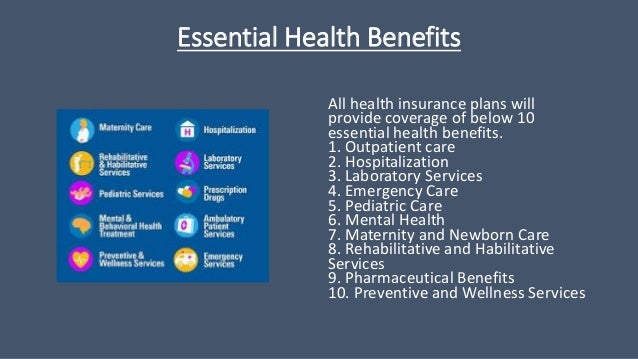
Essential health benefits, mandating that insurers cover everything from hospital care to prescription drugs to maternity care, are central to the ACA’s insurance protections: They prevent plans from crafting their coverage to attract mostly young and healthy customers at the expense of older and sicker people, which had been one of the primary problems with the association health plan model before the law.

How Trump’s executive order could damage Obamacare

Requiring association health plans to follow the same rules as small businesses was one of the many ways the Affordable Care Act cracked down on skimpy health plans. Trump is now looking to roll back those changes.

Under the draft executive order as described, new regulations would allow association health plans to be considered large employers when it comes to health insurance. Large employers are not subjected to the same rules as individual or small-group plans under Obamacare. Most notably, they do not have to cover all of the law’s essential health benefits or meet the requirement that insurance cover a minimal percentage of a person’s medical bills.

If that change were made, association health plans would be freed to craft skimpier (and cheaper) health plans that appeal only to businesses with younger and healthier employees. Small businesses left in Obamacare’s marketplace would likely face higher costs and fewer options as the market became less attractive to insurers.

“It will destroy the small-group market,” Tim Jost, a law professor at Washington and Lee University who generally supports Obamacare, told me. “We’ll be back to where we were before the Affordable Care Act.”

The draft order did not specify whether individuals would also be allowed to buy into these associations health plans, as some Republicans like Paul want. But, according to the source, the regulations resulting from the order could potentially be written to allow self-employed people to buy into the now-deregulated association market, which would be an even bigger blow to Obamacare.

The self-employed individuals likely to flee the law’s markets for association plans would probably be younger and healthier, leaving behind an older, sicker pool for the remaining Obamacare plans. That has the makings of a death spiral, with ever-increasing premiums and insurers deciding to leave the market altogether.

“The ability for individuals to purchase health insurance through an association really puts the individual market at risk and destabilizes it over the long term,” Lucia said. “When you have market segmentation, it over time leads to higher premiums and it becomes less attractive to carriers.”

Trump is also eyeing short-term coverage to undercut the health law

Trump’s executive order would also expand what’s called short-term limited duration insurance. These short-term policies typically have higher out-of-pocket costs and cover fewer services than traditional insurance. They were designed for people who, for example, expect to be out of work and therefore without insurance for a limited period of time.

That kind of coverage is totally free from the health care law’s insurance regulations: the mandate to cover essential health benefits, the prohibition on charging sick people more than healthy people or denying people coverage based on their medical history, and so on.

Short-term insurance had previously been allowed to last as long as 364 days. The Obama administration, in an effort to curtail the use of such coverage to circumvent the health care law, shortened it to three months. Trump’s draft order would reverse that rule, once again allowing people to buy this non-Obamacare coverage for almost an entire year, my source said.

The effect would be much the same as the changes to association health plans: Healthier people would be the consumers most likely to use this escape hatch to find cheaper, if far less comprehensive, coverage outside of Obamacare — though they would still be subject to the law’s individual mandate, as short-term insurance is not considered sufficient.

“If you allow them to sell 364-day policies, or policies that are renewable, that’s just going to suck a lot of the healthy people out of the individual market,” Jost said.

And here, again, fewer healthy people in the Obamacare market means higher costs to insurers, which leads to higher premiums and possibly more insurers dropping out.

“Consumers are going to face a less stable, less competitive individual market,” Lucia said.

The ultimate impact on Obamacare will depend on the final language of the executive order Trump signs. But based on the draft described to me, Trump is readying the devastating blow to the health care law that congressional Republicans have so far failed to deliver.

Trump could make waves with health-care order

Trump could make waves with health-care order

Image result for essential health benefits

President Trump’s planned executive order on ObamaCare is worrying supporters of the law and insurers, who fear it could undermine the stability of ObamaCare.

Trump’s order, expected as soon as this week, would allow small businesses or other groups of people to band together to buy health insurance. Some fear that these association health plans would not be subject to the same rules as ObamaCare plans, including those that protect people with pre-existing conditions.

That would make these plans cheaper for healthy people, potentially luring them away from the ObamaCare market. The result could be that only sicker, costlier people remain in ObamaCare plans, leading to a spike in premiums.

“If this executive order is anything like the rumors then it could have a huge impact on stability of the individual insurance market,” said Larry Levitt, a health policy expert at the Kaiser Family Foundation.

Andy Slavitt, a former top health-care official in the Obama administration, warned that insurers could drop out of the Affordable Care Act markets because of the order.

“I am now hearing that the Executive Order may cause insurers to leave ACA markets right away,” Slavitt tweeted on Sunday.

Slavitt argues the order is part of Trump’s broader effort to undermine ObamaCare. He said the order could accomplish through executive action what Congress failed to do through legislation.

But supporters say Trump’s move could unleash the free market and lower prices for consumers.

Sen. Rand Paul (R-Ky.) has been pushing for the order, arguing it is something Trump can do without Congress to give people an alternative to ObamaCare.

“This is something I’ve been advocating for six months,” Paul said on MSNBC in late September.

“I think it’s bigger than Graham-Cassidy, it’s bigger than any reform we’ve even talked about to date, but hasn’t gotten enough attention,” Paul added, referring to the failed Republican repeal-and-replace bill co-sponsored by Sens. Lindsey Graham (R-S.C.) and Bill Cassidy (R-La.).

Paul said allowing more people to band together to purchase health insurance gives them more leverage to lower premiums than when people are buying coverage on their own.

The National Federation of Independent Businesses (NFIB), which has long opposed ObamaCare, supports expanding association health plans and has been advocating for action.

“Allowing people more affordable arrangements is not a bad thing,” said Kevin Kuhlman, director of government relations at the NFIB. He said fears about undermining ObamaCare markets are “overblown.” His group is waiting to review the details of the order, which he said he expects to be issued on Thursday.

Association health plans already exist, but Trump’s order could allow them to expand and get around ObamaCare rules, creating plans that are only for healthy people.

Experts pointed to the Tennessee Farm Bureau, which currently offers an association health plan in the state that, through a loophole, does not have to follow ObamaCare rules.

The plan has about 73,000 enrollees and may be one of the reasons that Tennessee’s ObamaCare market has struggled, according to researchers at Georgetown University.

There is still much uncertainty about the order. Many observers doubt that Trump has the power to change much on his own.

Tim Jost, a health law expert at Washington and Lee University, said it is hard to imagine how the White House could find the legal authority to expand association health plans to individuals. The move would likely draw legal challenges.

A more likely action, Jost said, would be to expand association health plans so that it is easier for small groups to form them. That could destabilize the small group insurance market but would be a less sweeping step than expanding association health plans to individuals.

Given the limits on his authority, Trump is likely to direct agencies, including the Department of Health and Human Services and the Department of Labor, to issue guidance or regulations. Those additional steps will prolong the process.

Insurers are worried about the potentially destabilizing effects of the order. Lobbyists said insurers had begun quietly working on the issue and talking to the administration but do not yet know how far-reaching the effects would be.

It is possible there could be legal challenges to the regulations. The order would change the interpretation of a 1974 law called the Employee Retirement Income Security Act. That interpretation could be challenged in court, for example if the order sought to allow individuals, not just small groups, to join association health plans.

“There will likely be challenges,” said Kevin Lucia, a professor at Georgetown University’s Center for Health Insurance Reforms.

Lucia said the planned order, in combination with other steps the Trump administration is taking, like cutting back on outreach efforts, “really undermines the future of the individual market.”

A sicker group of enrollees remaining in the ObamaCare plans poses problems.

The changes “will lead to less [insurers] playing in this market and potentially a sicker risk pool which translates to higher premiums,” Lucia said.

Cori Uccello, senior health fellow at the American Academy of Actuaries, said that one aspect to watch in the order is when the changes will take effect. Insurers have already set their prices and made plans for 2018.

“Anything that applied to 2018 would be incredibly destabilizing,” she said. “It would still be destabilizing in 2019 but people would know ahead of time.”