Prime Therapeutics, Walgreens to form pharmacy alliance

http://www.startribune.com/prime-therapeutics-walgreens-to-form-pharmacy-alliance/391668561/?utm_campaign=KHN%3A+Daily+Health+Policy+Report&utm_source=hs_email&utm_medium=email&utm_content=33586061&_hsenc=p2ANqtz-9d7iwEibFZJhiCy1h9AlZtlpbUsiu3vnoBo60-Y6XqHsa_BjvyfXFttdlW1O7LJuq7BXesmeLO57bnx7tal-1aewPieg&_hsmi=33586061

itemprop

Prime Therapeutics deal would integrate pharmacy, Blue plan.

Eagan-based Prime Therapeutics has formed a strategic alliance with drugstore giant Walgreens that would combine the companies’ specialty and mail-order pharmacy businesses.

In addition, health plan subscribers with pharmacy benefits managed by Prime Therapeutics would have preferred access to Walgreens pharmacies as part of the agreement announced Monday.

Financial terms were not disclosed, but Prime officials believe it could spur growth that pushes the firm beyond its position as the country’s fourth-largest pharmaceutical benefits manager (PBM).

Prime Therapeutics is owned by 14 Blue Cross and Blue Shield insurance companies, so the agreement with Walgreens brings together two of the country’s strongest brands in health care, said Jim DuCharme, the chief executive of Prime Therapeutics, in an interview.

“Nobody in the industry has integrated and connected the health plan — the Blue plan — with the retail pharmacy network, with the PBM, for unification of data, technology and overall drug cost reduction,” DuCharme said. “So, that’s probably the most unique feature of this strategic alliance.”

Health insurers hire PBMs to manage the pharmacy benefit portion of health plans. That means everything from negotiating prices with drug companies to structuring formularies that stipulate patient co-payments for different medications.

PBMs assemble a network of retail pharmacies where health plan subscribers can get their prescriptions at the lowest cost. The companies also directly fill prescriptions for patients through mail-order pharmacies as well as specialty pharmacies focused on high-cost and complex medications.

A timeline of eye-popping drug prices

http://www.usatoday.com/story/news/2016/08/25/timeline-eye-popping-drug-prices/89335852/

Image result for epipen

The firestorm over steep price increases for the EpiPen — which can rescue people having life-threatening allergic reactions  — is just the latest in a long line of controversies over high prescription drug prices. A decade ago, much of the concern over prescription drug prices involved new high-tech cancer drugs, used by only a few thousand patients a year. In recent years, the prices for decades-old generic drugs have soared, as well, as pharmaceutical companies purchase the rights for drugs with no competition.

Here’s a recap of some of the most eye-popping prices.

Pfizer’s Involvement in EpiPens Could Complicate Drug Price Debate

https://morningconsult.com/2016/08/26/pfizers-involvement-in-epipens-could-complicate-drug-price-debate/

cnythzl/iStock.com

Mylan Pharmaceuticals has come under intense fire for massive price hikes of EpiPens over the last week, facing scrutiny from lawmakers and industry groups. It is less well known, however, that while Mylan markets and prices the drug, Pfizer Inc. actually manufactures the drug and has seen increased revenues from EpiPens over the last few years.

The financial relationship between the two drug companies is unclear, and Pfizer declined to elaborate. Mylan did not respond to a request for further comment about EpiPens or how the two companies divide revenues.

“Meridian Medical Technologies is the contract manufacturer of EpiPen and takes great pride being able to supply a high quality and life-saving product. The terms of our supply agreement are confidential,” said Rachel Hooper, a Pfizer spokeswoman. Meridian Medical Technologies is a Pfizer subsidiary.

The EpiPen outrage centers around a 400 percent hike for the dispenser, used for emergency allergic reactions, since 2009, even though the product remains unchanged. It now costs as much as $600 for a pack of two EpiPens, which must be replaced every 12 to 18 months.

There’s a simple fix for Obamacare’s current woes: the public option

http://www.vox.com/2016/8/18/12520820/public-option-health-care-obamacare

THE REALITY IS THAT COMPETITION AMONG PRIVATE INSURERS HAS NEVER LIVED UP TO THE RHETORIC PUT FORTH BY THE INDUSTRY OR FREE MARKET FUNDAMENTALISTS

This week, Aetna announced it would stop selling insurance plans in all but four Obamacare exchanges, the state-run markets set up under the 2010 Affordable Care Act. Aetna, which now covers more than 800,000 people in 15 exchanges, said it had been hemorrhaging money on the plans. (A fight with the government over an acquisition of the insurance company Humana may have played a role, too.)

Aetna’s exit, following similar departures by UnitedHealth and Humana, means that a growing number of US counties — 20 to 25 percent, according to the Kaiser Family Foundation — now have only a single private insurer offering coverage on the exchanges, a development that essentially eliminates consumer choice. One county in Arizona now has no insurers. Even before Aetna’s decision, more than half of state exchanges had four or fewer insurers, with DC, Vermont, Connecticut, and Rhode Island having only two.

It’s enough to make a frazzled health care consumer in one of those feeble markets wish there were another option — perhaps even (dare one say it?) a public option. Does the phrase ring a bell? That’s the health care policy that some policymakers pushed to include in the 2010 law.

Obamacare CEO Kevin Counihan counterstrikes after Aetna’s ACA exit

http://www.fiercehealthcare.com/payer/obamacare-ceo-kevin-counihan-counterstrikes-aetna-s-aca-exit

hhshhs

In the aftermath of Aetna’s ACA exchange exit, which leaves places like Pinal County, Arizona, with no insurers scheduled to offer plans in 2017, Obamacare CEO Kevin Counihan says HHS has already revved up its efforts to recruit insurers to fill in the gaps, according to an interview with Politico.

Insurers, including most recently the Dallas-based insurer Scott & White Health Plan, say sicker, more expensive populations mean they’re losing money on government-created marketplaces. Aetna, Scott & White, UnitedHealth and Humana have all said they can’t afford to keep offering the plans.

This week, Aetna dropped out of 68 percent of the exchanges in which it was operating.

But the insurance market–a market based in risk, after all–will always be dynamic. That was the case even before healthcare reform. “This is the nature of the industry,” Counihan toldPolitico.

According to University of Chicago economist Robert Kaestner, these exits are entirely normal.

“I don’t think it’s a particularly unusual situation where the firms are leaving the market,” Kaestner told Salon. “The fact that firms can leave and enter markets means the markets are, in fact, quite competitive.”

ACA Marketplaces: Stressed but Fixable

http://www.commonwealthfund.org/publications/blog/2016/aug/aca-marketplaces-stressed-but-fixable?omnicid=EALERT1087751&mid=henrykotula@yahoo.com

Negative headlines in the past few weeks seem to suggest deep trouble for the Affordable Care Act’s (ACA) marketplaces. Several insurance plans have requested double-digit premium increases for 2017—and Aetna is the third major insurer to announce it is pulling out of several state marketplaces next year. But how concerned should we be about these developments and are there policy options to consider?

This year, premium requests by carriers have been higher on average than last year. Part of the reason for the increase is the phase-out of the law’s reinsurance program, which reimbursed carriers for high claims costs. The program has lowered premiums by as much as 14 percent, and without it carriers are raising their premiums to compensate. But even if final premiums in many plans are higher, most people who will enroll in marketplace plans this year will not pay much more than they did in 2015. This is because more than 80 percent of marketplace enrollees receive tax credits to help pay their premiums, which means most of the increase will be absorbed by the credits. Marketplace customers are also highly price-sensitive and will likely shop for the best deal. Last year, people who received tax credits through the federal marketplace experienced an average premium increase of only 4 percent.

Why A Single-Payer Healthcare System Is Inevitable

http://www.huffingtonpost.com/entry/why-a-single-payer-healthcare-system-is-inevitable_us_57bb38d0e4b0b51733a4e665?&utm_campaign=KHN%3A+Daily+Health+Policy+Report&utm_source=hs_email&utm_medium=email&utm_content=33278487&_hsenc=p2ANqtz–pFhM1yVmgKE5kBJSkJqgzGm6EX86cVbU_jxP8glbnNrQH2CY9ktk8qbzIisOdLEgV0JX5fgsxqoDwrFym5ZxmTnCJOw&_hsmi=33278487

The best argument for a single-payer health plan is the recent decision by giant health insurer Aetna to bail out next year from 11 of the 15 states where it sells Obamacare plans.Aetna’s decision follows similar moves by UnitedHealth Group, the nation’s largest health insurer, and by Humana, another one of the giants.

All claim they’re not making enough money because too many people with serious health problems are using the Obamacare exchanges, and not enough healthy people are signing up.

The problem isn’t Obamacare per se. It lies in the structure of private markets for health insurance – which creates powerful incentives to avoid sick people and attract healthy ones. Obamacare is just making this structural problem more obvious.

In a nutshell, the more sick people and the fewer healthy people a private for-profit insurer attracts, the less competitive that insurer becomes relative to other insurers that don’t attract as high a percentage of the sick but a higher percentage of the healthy.

Eventually, insurers that take in too many sick and too few healthy people are driven out of business.

If insurers had no idea who’d be sick and who’d be healthy when they sign up for insurance (and keep them insured at the same price even after they become sick), this wouldn’t be a problem. But they do know – and they’re developing more and more sophisticated ways of finding out.

New York Hospitals Facing Fiscal Code Blue

http://www.bloomberg.com/politics/articles/2016-08-22/new-york-city-hospitals-seen-unwilling-to-take-stronger-medicine?utm_campaign=KHN%3A+Daily+Health+Policy+Report&utm_source=hs_email&utm_medium=email&utm_content=33278487&_hsenc=p2ANqtz–Ua5Q-PC5Hs3i1ni8bTaDNOfHhzF8R8meSEL9ZdWL6LejSQMUC3wLCDN9J_cuBB9IHRmZmF7BdmyqhMlNtFPa8KBOrzA&_hsmi=33278487

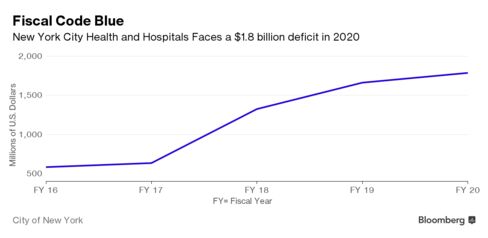
New York City’s public hospitals are in critical condition with rising costs and plummeting revenue. There’s no dispute about that diagnosis. The problem is with Mayor Bill de Blasio’s proposed cure, according to health policy makers, hospital administrators and budget watchdogs.

As NYC Health + Hospitals President Ram Raju describes it, the largest U.S. municipal-healthcare provider is an ailing system of 11 hospitals that’s losing revenue because of increased competition from non-profit hospitals for Medicaid patients and drastic cuts in federal and state aid for indigents.

His prescription: shift its 40,000-plus employees into a system of neighborhood clinics and transform campuses into affordable housing and long-term care, build enrollment of its MetroPlus insurance plan and persuade federal and state governments to spend more. That aid is projected to fall by almost $1 billion -– from $2.2 billion in FY16 to $1.4 billion in 2020.

Aetna CEO’s $131 Million Parachute Biggest Among Health Targets

http://www.bloomberg.com/news/articles/2015-06-17/aetna-ceo-s-131-million-parachute-biggest-among-health-targets


Aetna Inc. CEO Mark Bertolini has the most to gain among top executives at the three U.S. health insurers seen as targets in a potential wave of industry consolidation. Bertolini could receive $131.3 million should he lose his job in a takeover, according to data compiled by Bloomberg. Cigna Corp. Chief Executive Officer David Cordani would get $58.7 million, while Humana Inc. CEO Bruce Broussard’s so-called golden parachute is valued at $26.1 million.

The five biggest publicly traded insurers are all eyeing potential combinations after a two-year lull in big managed-care deals. Anthem Inc. has explored a takeover of Cigna and Humana, and Aetna and Cigna have considered buying Humana, Bloomberg has reported. The Wall Street Journal has said UnitedHealth Group Inc. might be interested in Aetna or Cigna.

We “expect this merger frenzy will culminate in a ‘Big Three’ that is a more efficient industry landscape,” Ana Gupte, an analyst at Leerink Partners, said Tuesday. Humana is likely to be acquired by Aetna or Anthem for $200 to $225 a share, she wrote.

The change-in-control payouts are meant to keep investor interests in mind.

“These protections provide a certain level of comfort for executives to put aside their personal issues and think, ‘What’s in the best interest of shareholders?’” said Yonat Assayag, a partner at ClearBridge Compensation Group, an executive pay consulting firm. “The amounts may seem large, but the cost compared to the value that’s created for shareholders is usually a very small percentage.”

Healthcare Hypocrite of the Week: Aetna’s Mark Bertolini

http://medcitynews.com/2016/08/hypocrite-aetna-mark-bertolini/?utm_source=hs_email&utm_medium=email&utm_content=33097793&_hsenc=p2ANqtz-8tHuz1OyW0jad1rYHbmCrWm51PA21pdsKB9af25xlqpvHnWr2o1T0b7LutMzmXzy521UtBFmUcZw75t8pNJcQYSG5Uvw&_hsmi=33097793

Mark Bertolini

Mark Bertolini, CEO of Aetna

It’s only Thursday, but it’s probably safe to announce that the winner of Healthcare Hypocrite of the Week is Aetna Chairman and CEO Mark Bertolini. And it’s not because Elizabeth Holmes and Martin Shkreli have managed to stay out of the news for a while.

Despite calling the Affordable Care Act business a “good investment” as recently as April, Bertolini has decided to pull Aetna out of most of the public health insurance exchanges. Initially, he cited the ACA risk pools as being unsustainable — in other words, too many old people with chronic illnesses and not enough young and spry customers to mitigate the risk. But as it turns out his actions may have been prompted by a desire to get even when the insurer didn’t get its way on a business deal.

On Monday, Aetna announced that it was pulling out of public individual insurance exchanges in all but four states. For the 2017 plan year, the Hartford, Connecticut-based insurer will only participate in the exchanges in 252 counties in Delaware, Iowa, Nebraska and Virginia. The reason? The company said it lost $200 million on individual plans in the second quarter and $430 million since the Obamacare insurance mandate took effect in 2014.