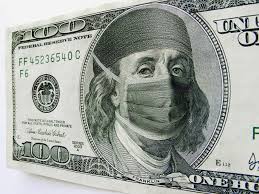
How hospitals got richer off Obamacare

http://www.politico.com/interactives/2017/obamacare-non-profit-hospital-taxes/

After fending off challenges to their tax-exempt status, the biggest hospitals boosted revenue while cutting charity care.

decade after the nation’s top hospitals used all their advertising and lobbying clout to keep their tax-exempt status, pointing to their vast givebacks to their communities, they have seen their revenue soar while cutting back on the very givebacks they were touting, according to a POLITICO analysis.

Hospitals’ behavior in the years since the Affordable Care Act provided them with more than 20 million more paying customers offers a window into the debate over winners and losers surrounding this year’s efforts to replace the ACA. It also puts a sharper focus on the role played by the nation’s teaching hospitals – storied international institutions that have grown and flowered under the ACA, while sometimes neglecting the needy neighborhoods that surround them.

And it reveals, for the first time, the extent of the hospitals’ behind-the-scenes efforts to maintain tax breaks that provide them with billions of dollars in extra income, while costing their communities hundreds of millions of dollars in local taxes.

One example of the hospitals’ efforts to remain tax-free: the soaring, minutelong TV commercial that popped up on stations across Western Pennsylvania in 2009 by the University of Pittsburgh Medical Center, the area’s flagship hospital and one of the largest teaching hospitals in the country.

“UPMC is proud to be part of our city’s past, present and, more importantly, its future,” the narrator enthuses, as the camera pans around Pittsburgh scenes of priests, grocery-store workers, even a ballet dancer before coming to rest on the sprawling medical campus — one of the five largest in the world.

At the time, Congress was considering not only whether to remove tax-exempt status for teaching hospitals, a cause of Sen. Chuck Grassley (R-Iowa), but also whether to add requirements forcing hospitals to do more for the low-income, urban communities in which so many of the top hospitals are located. And local leaders in many states were attempting to claw back billions of dollars in forgone tax revenue — a battle that would soon break out between UPMC and the mayor of Pittsburgh, too.

But the hospitals, aided by their good-neighbor initiative, prevailed. The ACA did nothing more to force the hospitals to share their revenue with their neighbors or taxpayers generally.

The result, POLITICO’s investigation shows, is that the nation’s top seven hospitals as ranked by U.S. News & World Report collected more than $33.9 billion in total operating revenue in 2015, the last year for which data was available, up from $29.4 billion in 2013, before the ACA took full effect, according to their own financial statements and state reports. But their spending on direct charity care — the free treatment for low-income patients — dwindled from $414 million in 2013 to $272 million in 2015.

To put that another way: The top seven hospitals’ combined revenue went up by $4.5 billion per year after the ACA’s coverage expansions kicked in, a 15 percent jump in two years. Meanwhile, their charity care — already less than 2 percent of revenue — fell by almost $150 million per year, a 35 percent plunge over the same period.

Revenue up, charity care down

While operating revenue increased under Obamacare for not-for-profit hospitals like the Cleveland Clinic and UCLA Medical Center, the amount of charity health care they provided fell. For example, while UCLA saw operating revenue grow by more than $300 million between 2013 and 2015, charity care fell from almost $20 million to about $5 million.

56 hospital, health system outlook and credit rating actions in June

http://www.beckershospitalreview.com/finance/56-recent-hospital-health-system-credit-outlook-rating-actions-in-june.html

The following hospital and health system rating and outlook changes and affirmations took place in June, beginning with the most recent.

Trump Budget, Revised AHCA, Credit Negatives for NFP Hospitals

http://www.healthleadersmedia.com/finance/trump-budget-revised-ahca-credit-negatives-nfp-hospitals?spMailingID=11188911&spUserID=MTY3ODg4NjY1MzYzS0&spJobID=1180412845&spReportId=MTE4MDQxMjg0NQS2#

Image result for hospital credit ratings

The one-two punch of massive cuts to Medicaid that are proposed in both the new budget and the House Republicans’ revised American Healthcare Act would result in cuts of close to $1 trillion over 10 years, analysis shows.

Cutting Medicaid by more than $860 million over the next decade would be a credit negative for states and not-for-profit hospitals, both of which would be left scrambling for alternative funding to cover the loss, according to a new report from Moody’s Investors Service.

Last week the Trump administration unveiled a budget proposal that includes $610 billion in cuts to core Medicaid services, and an additional $250 million in reductions to Medicaid expansion programs created under the Affordable Care Act.

The following day, the Congressional Budget Office released its scoring of the revised American Health Care Act – the Republican plan to repeal and replace the Patient Protection and Affordable Care Act and estimated that it would reduce Medicaid spending by $834 million through 2026.

“The proposals significantly change the longstanding Medicaid financing system and are credit negative for states and not-for-profit hospitals,” Moody’s said in an issues brief.

For states that don’t have the luxury of ignoring budget imbalances, the changes would increase pressure to either kick people off Medicaid, increase the state share of Medicaid funding, or cut payments to hospitals and other providers, Moody’s says.

Hospitals, particularly those serving a high mix of Medicaid patients, could expect to see reimbursement cuts and more cases of uncompensated care as Medicaid patients lose the coverage they’d gained under the ACA’s expansion.

Medicaid is already a significant budget burden for states, consuming between 7% to 34% of state revenue and averaging 16%.

Under the ACA, bad debt expense at not-for-profit hospitals in states that expanded Medicaid eligibility declined on average by 15% to 20% since 2014, enhancing these hospitals’ cash flow. Similarly, the gains in insurance coverage lowered the nationwide uninsured rate to approximately 11%, with uninsured rates even lower in states that expanded their Medicaid rolls, Moody’s says.

“Although the budget would give states limited new flexibility to adjust their Medicaid programs, the measure overall reflects a significant cost shift away from federal funding to states,” Moody’s says. “This cost shift is significant and would force states to make difficult decisions about safety-net spending for hospitals that serve large numbers of indigent patients.”

S&P report: ACA individual market is fragile, but not in a ‘death spiral’

http://www.fiercehealthcare.com/aca/s-p-report-aca-individual-market-fragile-but-no-death-spiral

Wall Street

Based on 2016 results and enrollment so far in 2017, the Affordable Care Act’s individual market is not in a “death spiral” as some have claimed—but it also isn’t on very stable footing, according to a new report from Wall Street analysts.

The report, from the ratings agency Standard & Poor’s, noted that 2016 brought the first signs that the ACA’s marketplaces could be manageable for insurers after a rough 2014 and 2015.

For example, the weighted average of the medical loss ratios of Blue Cross Blue Shield plans included in the analysts’ study dipped below 100% for the first time last year. That’s a positive sign, but insurers with MLRs above 90% still generally face an underwriting loss after factoring in administrative costs, suggesting more room for improvement.

This year, the analysts believe that meaningful premium increases, product and network changes, as well as “regulatory fine-tuning” of ACA rules, will get insurers closer to breaking even. But it will take another year or two of improvements for most to get to their target profitability levels.

Notably, the premium hikes insurers put in place didn’t result in a major drop in enrollment—and potential death spiral—the analysts wrote. In fact, open-enrollment signups dropped only slightly from 2016 to 2017, in part because the ACA’s subsidies increase along with premiums.

Looking ahead, the analysts expect premiums to rise in 2018, but “at a far lower clip” than they did this year. If the ACA’s rules stay largely intact, they predict low-single-digit growth in individual market membership next year, with most counties continuing to have at least one insurer. Recent insurer exits, however, might leave certain counties with no options on the exchanges.

But the analysts note that their predictions for the rest of this year and 2018 won’t hold if there is a major legislative overhaul of the marketplaces, like an ACA repeal. In addition, much depends on whether insurers will get clarification about cost-sharing subsidies, and whether the Trump administration will continue to conduct enrollment outreach and enforce the individual mandate.

The market still needs time to mature, the report argues, and “every time something new (and potentially disruptive) is thrown into the works, it impedes the individual market’s path to stability.”

US For-profit Hospital Outlook Holds Stable

http://www.healthleadersmedia.com/finance/us-profit-hospital-outlook-holds-stable?spMailingID=10772724&spUserID=MTY3ODg4NTg1MzQ4S0&spJobID=1140471104&spReportId=MTE0MDQ3MTEwNAS2

Moody’s foresees modest revenue growth, flat margins over the next 12 to 18 months; Profit margins will stabilize after a significant drop between 2015 and 2016.

The outlook for the for-profit hospital industry remains stable over the near term, with earnings expected to grow in the low-single digits over the next 12 to 18 months, while volume and pricing trends will continue to be modestly positive, Moody’s Investors Service says.

“Positive same-facility revenue growth and flat margins drive our stable outlook for the US for-profit hospital sector,” Moody’s Senior Vice President Jessica Gladstone said in a media release Thursday.

“Aggregate EBITDA will grow between 2.5% and 3.5% over the next year or so. Margins will hold steady as company-specific actions offset multiple industry challenges, including higher wage and benefits expense stemming from nursing shortages and increased physician employment.”

Gladstone says many companies’ margins will benefit as they integrate acquisitions and divest less-profitable hospitals and other facilities.

Moody’s projects patient volumes to increase 1% to 2% over the next 12 to 18 months, with declining unemployment and an aging population among the macro trends that will spur demand for healthcare.

However, structural shifts in payer programs that to reduce utilization and the cost of care by shifting patients to lower-cost settings will offset these positive trends, Moody’s says.

Higher private payer rates will be the main driver of revenue growth over Moody’s outlook period. Medicare rates for inpatient services will rise, though cuts to laboratory and outpatient reimbursement and reduced Medicaid disproportionate share hospital payments will constrain growth.

Hospitals will continue to employ specialist physicians and make capital improvements for more profitable procedures, contributing to pricing growth.

Moody’s maintains stable outlook on for-profit hospital sector

http://www.beckershospitalreview.com/finance/moody-s-maintains-stable-outlook-on-for-profit-hospital-sector-033117.html

OR Efficiencies

Moody’s Investors Service has maintained its stable outlook on the U.S. for-profit hospital sector for 2017, as it expects higher reimbursement rates from private payers to drive revenue growth.

Over the next 12 to 18 months, Moody’s expects for-profit hospitals to benefit from a 1 to 2 percent rise in patient volumes. The debt rating agency said the increase will be driven by higher demand for healthcare services due to decreasing unemployment and an aging population. However, programs that aim to reduce utilization and cost of care will offset this positive trend, according to Moody’s.

The debt rating agency expects higher private payer rates to drive revenue growth at for-profit hospitals. Moody’s said this growth will be constrained by cuts to laboratory and outpatient reimbursement and reduced Medicaid disproportionate share hospital payments.

“Positive same-facility revenue growth and flat margins drive our stable outlook for the U.S. for-profit hospital sector,” said Moody’s Senior Vice President Jessica Gladstone. “Margins will hold steady as company-specific actions offset multiple industry challenges, including higher wage and benefits expense stemming from nursing shortages and increased physician employment.”

Many for-profit hospital operators are divesting less-profitable facilities and integrating acquisitions, which will benefit their margins, according to Ms. Gladstone.

5 health systems with strong finances

http://www.beckershospitalreview.com/finance/5-health-systems-with-strong-finances-032117.html

Here are five health systems with strong operational metrics and solid financial positions according to recent reports from Fitch Ratings, Moody’s Investors Service and S&P Global Ratings.

Note: This is not an exhaustive list. Health system names were compiled from recent credit rating reports and are listed in alphabetical order.

1. Froedtert Health has an “AA-” rating and positive outlook with S&P. The system has healthy financial metrics, and its market share in a competitive service area is improving, according to S&P. The debt rating agency expects Froedtert’s financial profile to remain consistent over the next one to two years.

2. St. Joseph, Mich.-based Lakeland Hospitals has an “AA-” rating and stable outlook with Fitch. The health system has a strong financial profile and leading market position, according to Fitch.

3. Mercy Health has an “Aa3” rating and stable outlook with Moody’s. The St. Louis-based system’s balance sheet measures and financial performance have improved in the last three years, according to Moody’s. The debt rating agency expects Mercy Health’s operating margins to continue to improve.

4. Seattle Children’s Healthcare System has an “Aa2” rating and stable outlook with Moody’s. The system has strong balance sheet measures and operating performance, according to Moody’s. The debt rating agency expects Seattle Children’s Healthcare System’s overall profitability to remain strong and its debt coverage measures to improve.

5. Richmond-based Virginia Commonwealth University Health System has an “Aa3” rating and stable outlook with Moody’s. The health system has solid operating performance and a strong credit profile, according to Moody’s. The debt rating agency expects the health system to sustain cash flow margins at close to current levels and maintain its liquidity.

Fitch: Changes to Medicaid in ACA repeal bill pose risks for hospitals

http://www.beckershospitalreview.com/finance/fitch-changes-to-medicaid-in-aca-repeal-bill-pose-risks-for-hospitals.html

Image result for hospital credit ratings

House Republicans’ proposed ACA repeal and replacement plan, known as the American Health Care Act, calls for changes to Medicaid that expose states and hospitals to new fiscal risks, according to a Fitch Ratings report.

The AHCA would eliminate Medicaid’s entitlement structure and restructure the program’s federal funding to a per-capita cap system on Jan. 1, 2020. This change is intended to slow Medicaid spending growth. The Kaiser Commission on Medicaid and the Uninsured estimates switching to a per-capita cap system would reduce federal spending on Medicaid by $1 trillion (or 26 percent) over 10 years. This reduction would require states to make significant budgetary changes and could result in reduced reimbursement for hospitals, according to the report.

The AHCA calls for the government to freeze expanded Medicaid programs on Jan. 1, 2020, and restrict funding only to people who were enrolled in the expanded programs as of Dec. 31, 2019. Under the ACHA, states that expanded Medicaid “will be faced with a unique policy predicament of denying Medicaid access to individuals who would otherwise qualify beginning in 2020, or taking on significant costs they had anticipated would be bored largely by the federal government,” according to Fitch.

Moody’s: GOP’s American Health Care Act is credit negative for nonprofit hospitals

http://www.beckershospitalreview.com/finance/moody-s-gop-s-american-health-care-act-is-credit-negative-for-nonprofit-hospitals.html

OR Efficiencies

If House Republicans’ proposed ACA repeal and replacement plan, known as the American Health Care Act, were to become law in its current form it would be credit negative for nonprofit hospitals, according to Moody’s Investors Service.

The components of the AHCA most likely to negatively affect hospitals are transitioning federal Medicaid payments to a per-capita payment to the states, the Medicaid expansion freeze in 2020 and how subsidies are calculated for individuals who purchase insurance on the exchanges, according to Moody’s.

Under the legislation, the uninsured rate would rise, which would cause hospitals’ bad debt and uncompensated care costs to increase, according to Moody’s.

The AHCA’s retention of Medicaid expansion and elimination of scheduled disproportionate share cuts for states that did not expand Medicaid would have a positive impact on nonprofit hospitals, according to Moody’s. However, the rating agency said the positive effects are not enough to compensate for the credit negative components of the AHCA.

3 Republican concepts for replacing the ACA — and what they mean

http://www.healthcaredive.com/news/3-republican-concepts-for-replacing-the-aca-and-what-they-mean/437475/

The bottom line

These policy ideas popular among conservatives could certainly push health insurance costs down for some — like those with few healthcare needs and reliable income — but they also would undoubtedly offer fewer benefits to those with low incomes and high healthcare costs.

“The value of the policies that insurers are offering is going to go down under all these options,” Blumberg said. “They’re going to end up attracting the higher needs population and they can’t sustain that.”

Hospitals would see significant revenue losses if millions lose coverage under repeal of the ACA and are unable to afford new coverage under the replacement plans the GOP has put forward. Some executives have warned they would have to cut vital services, such as behavioral health.

A report prepared for the American Hospital Association found that hospital revenues would decrease nearly $400 billion between 2018 and 2026 with ACA repeal. The plans put forward by Republicans would barely dent that projection, experts say.


Hospital revenues are projected to decrease by $400 billion between 2018 and 2026 under ACA repeal, according to the AHA.


The leaders of the American Hospital Association and Federation of American Hospitals have written to President Donald Trump asking him not to repeal the ACA without an adequate replacement.

“Losses of this magnitude cannot be sustained and will adversely impact patients’ access to care, decimate hospitals’ and health systems’ ability to provide services, weaken local economies that hospitals help sustain and grow, and result in massive job losses,” they wrote. “As you know, hospitals are often the largest employer in many communities, and more than half of a hospital’s budget is devoted to supporting the salaries and benefits of caregivers who provide 24/7 coverage, which cannot be replaced.”

Republicans continue to debate whether, how and when to replace the ACA. Just as the reform law had major impacts on the industry, the process of finding alternatives will have significant consequences as well.