


Cartoon – My Lack of Work Ethics
7 Core Behaviors for Honorable Leadership – Does This Include Everything?

“7 Core Behaviors for Honorable Leadership” – does the Honor Code include all the important elements for a foundation of honorable leadership?

The problem was that bank employees were pushed to sell products and services to customers whether they wanted them or not, in violation of the company’s stated values, and often this meant opening up accounts and issuing credit cards without customers knowing about it.
And to add insult to injury, even employees who called the company’s ethics hotline that was set up to report issues just like this one were fired for doing so.
Yes, Wells Fargo’s stated company values are 180 degrees opposite of what employees were actually told to do.
If you look at Wells Fargo’s statement of values, it all sounds pretty good:
Our values should guide every conversation, decision, and interaction. Our values should anchor every product and service we provide and every channel we operate. If we can’t link what we do to one of our values, we should ask ourselves why we’re doing it. It’s that simple.
All team members should know our values so well that if our policy manuals didn’t exist, we would still make decisions based on our common understanding of our culture and what we stand for. Corporate America is littered with the debris of companies that crafted lofty values on paper but, when put to the test, failed to live by them. We believe in values lived, not phrases memorized. If we had to choose, we’d rather have a team member who lives by our values than one who just memorizes them.
We have five primary values that are based on our vision and provide the foundation for everything we do:
- People as a competitive advantage
- Ethics
- What’s right for customers
- Diversity and inclusion
- Leadership
Those values sound good, but in the case of Wells Fargo, they were total BS.

This week’s question is about what defines our ethics – “Is our ethics based on who we are or what we do?” Some people would argue that we have a persona, a manner, that is either ethical or not. Others would say that it is our decisions and actions that define how ethical we are, and therefore our ethicality changes from moment to moment.
Instead of trying to decide which perspective is right, we would be well advised to take our lead from Aristotle. He conveyed in his famous quote “we are what we repeatedly do” that our ethical persona and actions cannot be separated.

Investors are shifting the goalposts for business accountability beyond the traditional quarterly reports on revenue, profit and growth. As well as traditional reporting, forward-thinking investors now want to see how a business maximizes its human capital without creating any associated harm or risk within the organization or in the wider community.
This new focus is called human governance, and over the next few years it’s set to become as important a measure of corporate performance as traditional reporting has been over decades past.
Human governance manifests itself through ensuring the entire extended workforce can maximize its own personal value, and through this, a business is able to maximize its own value. This maximization of value comes about through the broader expectations the community has for business. While profit remains important, the community – and now investors – are also putting value on how sustainable an organization’s operations are, how well it treats its employees, and the broader contributions the business makes to society as a whole.
This new focus on maximizing human value also has significant ramifications for the HR operation within an organization. Gone are the days of HR being policy and governance police, the home of hiring, firing and vetting staff performance.
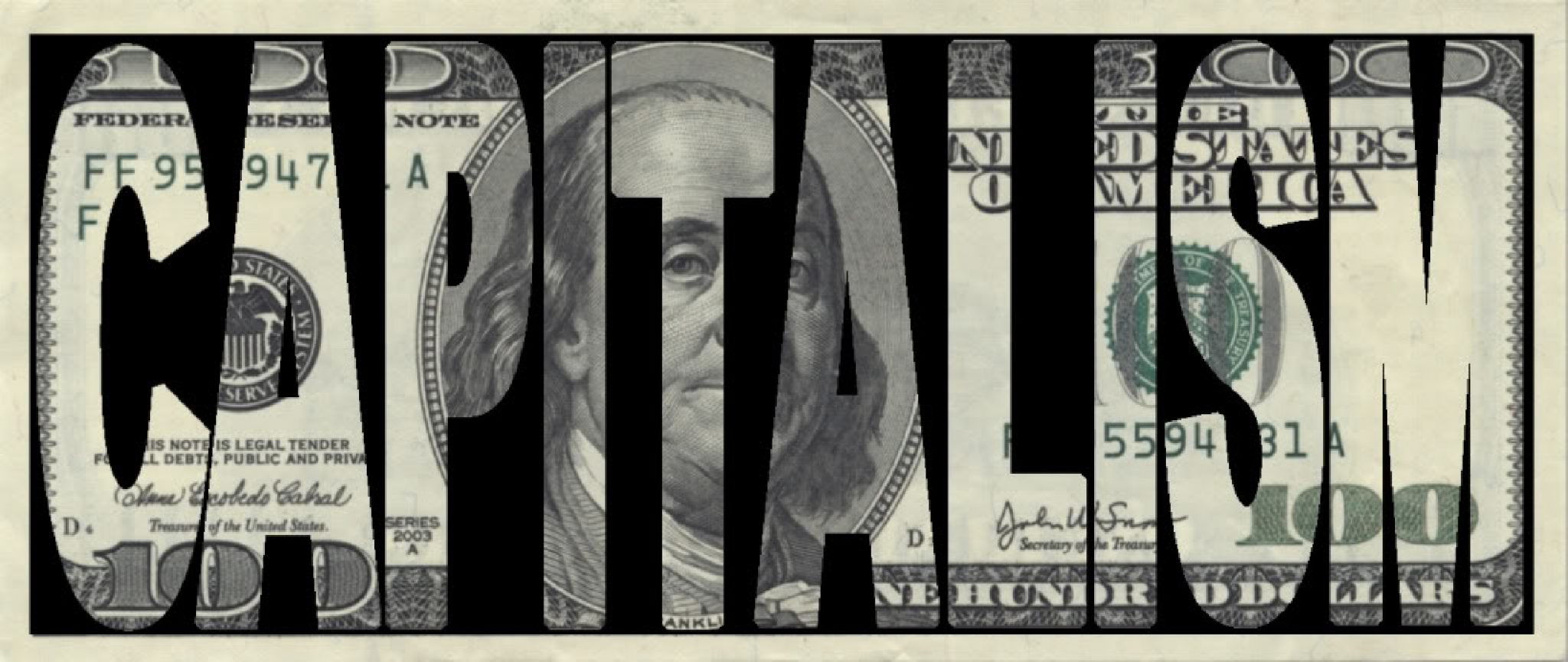
As usual, the answer is a clear “No” and “Yes,” and resolving the question raises much deeper issues than one executive’s personal culpability. The answer depends on what definition of capitalism one deems appropriate. As the European economist André Sapir has noted, there are actually four distinct brands of capitalism in the Western economy, of which the version practiced in the United States and some other Anglo-Saxon countries—sometimes also referred to as “savage capitalism”—is but one.
The clearest version of raw Anglo Saxon capitalism, and one quoted widely to this day, was offered by the late Nobel Laureate economist Milton Friedman in his classic book “Capitalism and Freedom.” There he proposed that the one and only social obligation to society that the CEO of an investor-owned, for-profit company is “to maximize its profits while engaging in ‘open and free competition without deception and fraud.’” (Quoted in Thomas Carson’s “Friedman’s Theory of Corporate Social Responsibility.”) On that view, any corporate action that is legal is ipso facto ethical.
Ms. Bresch can argue that with her aggressive pricing policy on EpiPen she was merely owning up to this doctrine of Anglo-Saxon capitalism. Her board of directors may or may not have known about that policy with regard to this particular product, one of many the company sells. Here Ms. Bresch also can point out that she is in good company in the drug industry. Many drug companies beyond the poster-boys for what is now decried as “price gouging”—Valeant Pharmaceuticals International and Turing Pharmaceuticals—have adopted raw Anglo-Saxon capitalism as the intellectual foundation for their pricing policies by steadily raising prices on long existing drugs, year after year, or even quarter after quarter.

Since I am in the trust business, I pay attention to the Edelman Trust Barometer when it comes out in February each year. Richard Edelman and his associates have been publishing a compendium of statistics on trust each year for more than 15 years.
Using online surveys, they measure the level of trust in 28 countries and categorize it into four sectors: Business, Government, Non-Government Organizations, and Media. For example, in the Business sector the question they ask is “Do you trust Business to do what is right?” Note: they intentionally leave the specific definition of what is “right” up to the person who is responding.
The sampling is also split between what they call “informed publics” (college educated populations with incomes in the top 25% and who follow the news daily) and they also survey the mass population who are less educated and often do not follow international trends closely.
I usually spend a couple days absorbing the latest information each year and updating my summary charts. It is good to keep abreast of the trends in trust around the world. There is an interesting trend in the worldwide information on trust that is particularly evident in the USA.


 HENRY KOTULA