Molina still considering returning to Obamacare in Utah and Wisconsin

https://www.washingtonexaminer.com/policy/healthcare/molina-still-considering-returning-to-obamacare-in-utah-and-wisconsin

Heath Overhaul Texas 080118


Health insurer Molina is considering providing Obamacare plans in Wisconsin and Utah for 2019, after taking a one-year hiatus from these states, company executives said in an earnings call Wednesday.

Molina left these states for 2018 after suffering $230 million in overall losses and undertaking 1,500 planned layoffs. Company executives said in April that they would consider re-entering the market, and on Wednesday they said they were still evaluating how the plans are performing in the states where they still have Obamacare customers.

“I’m inclined to say that we would re-enter, but we have until the end of the summer to decide,” said Joseph Zubretsky, the company’s CEO.

Roughly 409,000 people are still enrolled in Molina’s Obamacare plans, and premiums for these customers increased by an average of 55 percent from 2017 to 2018, though many of them received subsidies from the federal government to cover the cost.

Zubretsky said that the current prices on their plans were “no longer corrective” but were priced about right in order to cover medical claims. Molina has customers on Obamacare plans in California, Florida, New Mexico, Michigan, Ohio, and Texas. It also has plans in Washington state but scaled back its participation by reducing the number of counties in which it offered plans.

“The strategy was to maintain [enrollment] and grow profits,” Zubretsky said of 2018, adding that re-entering Utah or Wisconsin would likely increase growth in enrollment for 2019.

Molina scaled back during a time of uncertainty, when President Trump had not yet announced he would be cutting off payments to insurers known as cost-sharing reduction subsidies, which under Obamacare help insurers offer lower out-of-pocket prices to their low-income customers. Though the payments were ended, many insurers have restructured their plans to make up for the loss by raising premiums, a move that shifts more expenses to the federal government and offers cheaper prices to Obamacare customers who get subsidies.

Early filings show that Obamacare customers will have more options for coverage in 2019, largely because of this strategy employed by insurers.

Molina’s overall performance is improving. Net income for the second quarter of 2018 was $202 million, compared with a net loss of $230 million for the second quarter of 2017. The company’s business focuses on managed care plans in Medicare and Medicaid.

Though Molina is a relatively small insurer, it drew headlines for enthusiastically embracing Obamacare. The company’s former chief executive, J. Mario Molina, was a major industry supporter of Obamacare and he has been a vocal critic of Republican efforts to repeal and replace the law. He and his brother, former Chief Financial Officer John Molina, were fired from their positions in May 2018 after poor first-quarter financial results.


Stabilizing and strengthening the individual health insurance market

https://www.brookings.edu/research/stabilizing-and-strengthening-the-individual-health-insurance-market/?utm_campaign=Economic%20Studies&utm_source=hs_email&utm_medium=email&utm_content=64960143

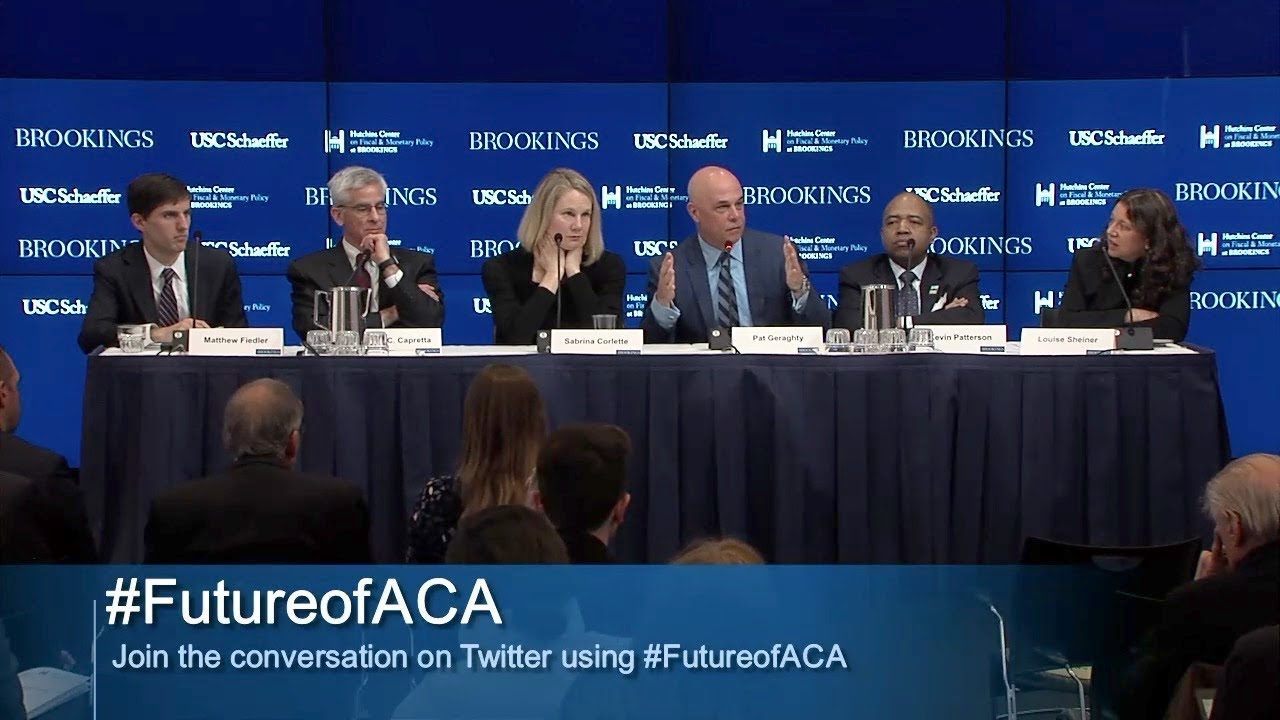
Image result for Stabilizing and strengthening the individual health insurance market

Stability has long been an issue for the individual health insurance market, even before the Affordable Care Act. While reforms adopted under the ACA initially succeeded in addressing some of these market issues, market conditions substantially worsened in 2016.

Insurers exited the individual market, both on and off the subsidized exchanges, leaving many areas with only a single insurer, and threatening to leave some areas (mostly rural) with no insurer on the exchange. Most insurers suffered significant losses in the individual market the first three years under the ACA, leading to very substantial increases in premiums a couple of years in a row.

For a time, it appeared that rate increases in 2016 and 2017 would be sufficient to stabilize the market by returning insurers to profitability, which would bring future increases in line with normal medical cost trends. However, Congress’s decision to repeal the individual mandate and the Trump Administration’s decision to halt “cost-sharing reduction” payments to insurers, along with other measures that were seen as destabilizing, created substantial new uncertainty for market conditions in 2018.

This uncertainty continues into 2019, owing both to lack of clarity on the actual effects of last year’s statutory and regulatory changes, and to pending regulatory changes that would expand the availability of “non-compliant” plans sold outside of the ACA-regulated market. These uncertainties further complicate insurers’ decisions about whether to remain in the individual market and how much to increase premiums.

In “Stabilizing and strengthening the individual health insurance market: A view from ten states” (PDF), Mark Hall examines the causes of instability in the individual market and identifies measures to help improve stability based off of interviews with key stakeholders in 10 states.

The condition of the individual market

In the states studied—Alaska, Arizona, Colorado, Florida, Iowa, Maine, Minnesota, Nevada, Ohio, and Texas—opinions about market stability vary widely across states and stakeholders.

While enrollment has remained remarkably strong in the ACA’s subsidized exchanges, enrollment by people not receiving subsidies has dropped sharply.

States that operate their own exchanges have had somewhat stronger enrollment (both on and off the exchanges), and lower premiums, than states using the federal exchange.

A core of insurers remain committed to the individual market because enrollment remains substantial, and most insurers have been able to increase prices enough to become profitable. Some insurers that previously left or stayed out of markets now appear to be (re)entering.

Political uncertainty

Premiums have increased sharply over the past two to three years, initially because insurers had underpriced relative to the actual claims costs that ACA enrollees generated. However, political uncertainty in recent years caused some insurers to leave the market and those who stayed raised their rates.

Insurers were able to cope with the Trump administration’s halt to CSR payments by increasing their rates for 2018 while the dominant view in most states is that the adverse effects of the repeal of the individual mandate will be less than originally thought. Even if the mandate is not essential, many subjects viewed it as helpful to market stability. Thus, there is some interest in replacing the federal mandate with alternative measures.

Because most insurers have become profitable in the individual market, future rate increases are likely to be closer to general medical cost trends (which are in the single digits). But this moderation may not hold if additional adverse regulatory or policy changes are made, and some such changes have been recently announced.

Many subjects viewed reinsurance as potentially helpful to market conditions, but only modestly so because funding levels typically proposed produce just a one-time lessening of rate increases in the range of 10-20 percent. Some subjects thought that a better use of additional funding would be to expand the range of people who are eligible for premium subsidies.Actions to restore stability

Concerns were expressed about coverage options that do not comply with ACA regulations, such as sharing ministries, association health plans, and short-term plans. However, some thought this outweighed harms to the ACA-compliant market; thus, there was some support for allowing separate markets (ACA and non-ACA) to develop, especially in states where unsubsidized prices are already particularly high.

Other federal measures, such as tightening up special enrollment, more flexibility in covered benefits, and lower medical loss ratios, were not seen as having a notable effect on market stability.

Measures that states might consider (in addition to those noted above) include: Medicaid buy-in as a “public option”; assessing non-complying plans to fund expanded ACA subsidies; investing more in marketing and outreach; “auto-enrollment” in “zero premium” Bronze plans; and allowing insurers to make mid-year rate corrections to account for major new regulatory changes.

Conclusion

The ACA’s individual market is in generally the same shape now as it was at the end of 2016. Prices are high and insurer participation is down, but these conditions are not fundamentally worse than they were at the end of the Obama administration. For a variety of reasons, the ACA’s core market has withstood remarkably well the various body blows it absorbed during 2017, including repeal of the individual mandate, and halting payments to insurers for reduced cost sharing by low-income subscribers.

The measures currently available to states are unlikely, however, to improve the individual market to the extent that is needed. Although the ACA market is likely to survive in its basic current form, the future health of the market—especially for unsubsidized people—depends on the willingness and ability of federal lawmakers to muster the political determination to make substantial improvements.

Read the full paper here


SHORT-TERM HEALTH PLANS ALLOWED UP TO 3 YEARS

https://www.healthleadersmedia.com/finance/short-term-health-plans-allowed-3-years

A final rule expands access to non-ACA-compliant plans, which the Trump administration has touted as cheaper alternatives to full coverage.


KEY TAKEAWAYS

Only about 200,000 people are expected to exit the ACA exchange market as a result of the final rule.

Gross premiums for marketplace plans are expected to rise 1% next year attributable to this policy change.

The administration notes that ‘these products are not for everyone,’ so buyers should review their options carefully.

Beginning this fall, consumers will be allowed to buy short-term limited-duration health plans renewable for up to three years, the Trump administration announced Wednesday morning with a newly finalized rule.

The policy change expands access to lower-grade coverage options the Obama administration had restricted to three months, without a renewal option, in light of the Affordable Care Act. The looser rules finalized Wednesday allow terms up to 12 months, renewable up to 36 months.

While critics contend the short-term options will pull younger healthier beneficiaries out of ACA-compliant exchange plans, driving up premiums for sicker populations left behind, the administration says any negative effects will be minimal and outweighed by the market benefits of having more options.

James Parker, MBA, a former Anthem executive who serves as director of the Health and Human Services Office of Health Reform and as one of four key senior advisors to HHS Secretary Alex Azar, said the administration doesn’t expect a mass exodus from the ACA exchanges to these short-term options.

“What we do believe, however, is that there will be significant interest in these policies from individuals who today are not in the exchange and, in many cases, have been priced out of coverage as insurance premiums have significantly increased over the past four to five years,” Parker said during a call with reporters Tuesday evening.

Randy Pate, a deputy administrator of the Centers for Medicare & Medicaid Services who oversees individual and small-group markets as director of the Center for Consumer Information and Insurance Oversight, said the administration expects about 600,000 people to enroll in the short-term plans next year as a result of the expanded access. Only an estimated 200,000 will leave the exchange market as a result of the final rule, he said.

This shift is expected to increase gross premiums for marketplace plans by 1% next year, with net premiums decreasing by 6%, Pate said during the call.

  • The wrong direction? When the administration announced its plans earlier this year to expand access to short-term coverage options, American Hospital Association President and CEO Rick Pollack called it “a step in the wrong direction for patients and health care providers.” If consumers are unaware of the limits on their skimpy coverage, it could ultimately drive bad debt for hospitals, he said.
  • Disclosure requirements beefed up: The final rule includes additional language to make sure consumers know what they are buying, Pate said. “We fully recognize these products are not necessarily for everyone, but we do think they will provide an affordable option to many, many people who have been priced out of the current market under the Obamacare regulation,” he said.
  • There’s an opportunity for insurers. As consumers gain interest in their short-term options, insurers will have an opportunity to meet the rising demand. “The impact is going to vary depending on the insurer, whether this is a business they have been in in the past and whether they have been longing to get back into it when consumer interest reached an acceptable level,” Christopher Holt, director of healthcare policy with D.C.-based think tank American Action Forum, told HealthLeaders Media. “There also could be some who see it as a new opportunity to claim a share of the marketplace they’re not reaching.”
  • But insurers have some skepticism. Matt Eyles, president and CEO of America’s Health Insurance Plans, wrote a letter to HHS in April. “We are concerned that substantially expanding access to short-term, limited duration insurance will negatively impact conditions in the individual health insurance market, exacerbating problems with access to affordable comprehensive coverage for all individual market consumers,” Eyles wrote.
  • Trump administration boosters: Beyond simply opening a door to longer short-term plans, the Trump administration has touted these and other non-ACA-compliant options as viable rescue mechanisms for individuals squeezed by rising premiums. Navigators, who have been tasked in past years with helping people sign up for exchange coverage, will now be encouragedto provide information on short-term and association health plans as well.
  • States can block: The final rule released Wednesday addresses the federal government’s definition of short-term limited-duration health insurance, but states retain the authority to impose stricter regulations, Pate said. They can limit or even ban the plans altogether.

While lawmakers seem to have backburnered their aspirations for broad healthcare reform in the near-term, Parker said the administration will continue taking incremental steps to improve affordability of coverage.


Reinsurance in Wisconsin expected to stabilize individual market

https://www.healthcarefinancenews.com/news/reinsurance-wisconsin-expected-stabilize-individual-market?mkt_tok=eyJpIjoiTVdJMVlUVmtNMlppTUdZNSIsInQiOiJublwvXC83VVdcL2dcL1U3a3FHNGNMRHppSldoOThiRGtNQXk4UFJyZE5FUkRQeWZWZEQ1NDMxT3FZeGRhZjdGOUlnQUtaQTUyeEMrcnBSaDNKQjZLWEIzRkVCaFlNelNXSmI1R1ZrZFdOcXlzTWVUcGk3OXl5WnNRZDlaTjhjN09WM3MifQ%3D%3D

Under the Wisconsin Health Care Stability Plan, the state pays for 50 percent of the cost of claims between $50,000 and $250,000.

Wisconsin has received a federal waiver to leverage $200 million to implement a state-based reinsurance program to cover high-cost claims in the individual health insurance market.

Reinsurance covers a portion of the most expensive claims. The move helps to stabilize the individual market by reducing insurer claim costs and decreasing premiums.

Insurers don’t have the uncertainty that a small number of high-risk individuals could dramatically increase their expenses because there aren’t enough healthy consumers to balance out the risk pool.

Under the Wisconsin Health Care Stability Plan, the state pays for 50 percent of the cost of claims between $50,000 and $250,000.

The Department of Health and Human Services and the Department of the Treasury on Sunday approved the 1332 state innovation waiver under the Affordable Care Act. The five-year program starts Jan. 1, 2019 and ends Dec. 21, 2023.

The approved waiver allows the state to have access to $200 million in reinsurance funding. The federal government will pay an estimated $166 million and the state, $34 million.

The program is budget neutral to the federal government. The money comes from savings from premium tax credits. The federal waiver allows the premium tax credits to be passed through to the state, rather than going directly to the consumer.

Consumers will see the savings in an expected 3.5 percent drop in their premiums in the individual market, starting in 2019, according to a released statement from the Centers for Medicare and Medicaid Services and Wisconsin Governor Scott Walker. This compares to a 44 percent rate hike on premiums in 2018.

Walker submitted the waiver request for the state’s Health Care Stability Plan in April.

In an unrelated waiver request, Wisconsin has asked to impose work requirements as a condition of Medicaid beneficiaries receiving coverage.

While CMS Administrator Seema Verma and HHS Secretary Alex Azar have reportedly said that a judge’s decision in Kentucky barring work requirements will not stop the Trump administration from considering similar waivers, Wisconsin’s request awaits federal approval.

Last month, a federal judge blocked Kentucky’s plan to implement a work requirement waiver. In light of the action, CMS decided to reopen Kentucky’s 30-day federal public comment through August 18.


Individual market enrollment dropping amid premium increases

Individual market enrollment dropping amid premium increases

Individual market enrollment dropping amid premium increases

Enrollment in the individual health insurance market — the market for people who don’t get coverage through work — has declined 12 percent in the first quarter of 2018, compared to the same period last year, according to a new analysis released Tuesday.

The analysis from the Kaiser Family Foundation showed enrollment in the individual market grew substantially after the implementation of the Affordable Care Act (ACA) and remained steady in 2016, before dropping by 12 percent in 2017.

There were 17.4 million people enrolled in the individual market in 2015, compared to 15.2 million in 2017 and 14.4 million in the first quarter of 2018.

The study notes that much of the decline is concentrated in the off-exchange market, where a number of enrollees are not eligible for ObamaCare subsidies and therefore not protected from significant premium increases in 2017 and 2018.

In this market, enrollment numbers dropped by 38 percent from the first quarter of 2017 to the first quarter of 2018.

The Trump administration last year canceled key ObamaCare subsidies for insurers, leading insurers to increase premiums substantially.

The anticipation of the repeal of ObamaCare’s individual mandate has also contributed to premium increases.

While ObamaCare enrollees who receive subsidies are mostly shielded from these increases, those who don’t are left to pay the full price.

“While the vast majority of exchange consumers receive subsidies that protect them from premium increases, off-exchange consumers bear the full cost of premium increases each year,” the analysis notes.

“In 2017, states that had larger premium increases saw larger declines in unsubsidized ACA-compliant enrollment, suggesting a relationship between premium hikes and enrollment drops.”

Despite the rises in premiums, enrollment in the ObamaCare exchanges has remained stable. There were 10.6 million people on the exchanges in the first quarter of this year, compared to 10.3 million in the first quarter of last year.


California’s ACA Rates To Rise 8.7% Next Year

California’s ACA Rates To Rise 8.7% Next Year

Premiums in California’s health insurance exchange will rise by an average of 8.7 percent next year, marking a return to more modest increases despite ongoing threats to the Affordable Care Act.

The state marketplace, Covered California, said the rate increase for 2019 would have been closer to 5 percent if the federal penalty for going without health coverage had not been repealed in last year’s Republican tax bill.

The average increase in California is smaller than the double-digit hikes expected around the nation, due largely to a healthier mix of enrollees and more competition in its marketplace. Still, health insurance prices keep growing faster than wages and general inflation as a result of rising medical costs overall, squeezing many middle-class families who are struggling to pay their household bills.

The 8.7 percent increase in California ends two consecutive years of double-digit rate increases for the state marketplace.

“It’s not great that health care costs are still increasing that much, but the individual market is not sticking out like a sore thumb like it has in other years,” said Kathy Hempstead, senior adviser at the Robert Wood Johnson Foundation. “It’s falling back to earth.”

The future may be less bright. An estimated 262,000 Californians, or about 10 percent of individual policyholders in and outside the exchange, are expected to drop their coverage next year because the ACA fines were eliminated, according to the state. Peter Lee, executive director of Covered California, warned that the exodus of healthier consumers will drive up insurance costs beyond 2019 — not just for individual policyholders but for California employers and their workers.

“We are paying, in essence, a surcharge for federal policies that are making coverage more expensive than it should be,” Lee said in an interview. “There will be more of the uninsured and more uncompensated costs passed along to all of us.”

Critics of the Affordable Care Act say it has failed to contain medical costs and left consumers and taxpayers with heavy tabs . Nearly 90 percent of Covered California’s 1.4 million enrollees qualify for federal subsidies to help them afford coverage.

Foiled in its attempt to repeal Obamacare outright, the Trump administration has taken to rolling back key parts of the law and has slashed federal marketing dollars intended to boost enrollment. Instead, the administration backs cheaper alternatives, such as short-term coverage or association health plans, which don’t comply fully with ACA rules and tend to offer skimpier benefits with fewer consumer protections.

Taken together, those moves are likely to draw healthier, less expensive customers out of the ACA exchanges and leave sicker ones behind.

Nationally, 2019 premiums for silver plans — the second-cheapest and most popular plans offered — are expected to jump by 15 percent, on average, according to an analysis of 10 states and the District of Columbia by the Avalere consulting firm. Prices vary widely across the country, however. Decreases are expected in Minnesota while insurers in Maryland are seeking 30 percent increases.

In California, exchange officials emphasized, consumers who shop around could pay the same rate as this year, or even a little less.

Christy McConville of Arcadia already spends about $1,800 a month on a Blue Shield plan for her family of four, opting for “platinum” coverage, the most expensive type. Her family doesn’t qualify for federal subsidies in Covered California.

She’s worried about further increases and doesn’t want to switch plans and risk losing access to the doctors she trusts. “We’re getting right up to the limit,” McConville said.

Amanda Malachesky, a nutrition coach in the Northern California town of Petrolia, said the elimination of the penalty for being uninsured makes dropping coverage more palatable. Her family of four pays almost $400 a month for a highly subsidized Anthem Blue Cross plan that has a $5,000 deductible.

“I’ve wanted to opt out of the insurance model forever just because they provide so little value for the exorbitant amount of money that we pay,” said Malachesky, who recently paid several hundred dollars out-of-pocket for a mammogram. “I’m probably going to disenroll … and not give any more money to these big bad insurance companies.”

Covered California is aiming to stem any enrollment losses by spending more than $100 million on advertising and outreach in the coming year. In contrast, the Trump administration spent only $10 million last year for advertising the federal exchange across the 34 states that use it.

Also, California lawmakers are looking at ways to fortify the state exchange. State legislators are considering bills that would limit the sale of short-term insurance and prevent people from joining association health plans that don’t have robust consumer protections.

However, California hasn’t pursued an insurance mandate and penalty at the state level, which both health plans and consumer advocates support. New Jersey and Vermont have enacted such measures.

Lee said it’s up to lawmakers to decide whether a state mandate makes sense.

David Panush, a Sacramento health care consultant and a former Covered California official, said some lawmakers may be reluctant to push the idea, even in deep-blue California.

“The individual mandate has always been the least popular piece of the Affordable Care Act,” he said.

Despite the constant uncertainty surrounding the health law, many insurers nationally are posting profits from their ACA business and some plans are looking to expand further on the exchanges.

In California, the same 11 insurers are returning, led by Kaiser Permanente and Blue Shield of California. Together, those two insurers control two-thirds of exchange enrollment. (Kaiser Health News, which publishes California Healthline, is not affiliated with Kaiser Permanente.)

The Covered California rate increases are fairly uniform across the state. Premiums are climbing 9 percent across most of Southern California as well as in San Francisco. Monterey, San Benito and Santa Cruz counties faced the highest increase at 16 percent, on average.

The rates are subject to state regulatory review but are unlikely to change significantly. Open enrollment on the exchange starts Oct. 15.

The ACA’s expansion of coverage has dramatically cut the number of uninsured Californians. The proportion of Californians lacking health insurance fell to 6.8 percent at the end of last year, down from 17 percent in 2013, federal data show.


How Would State-Based Individual Mandates Affect Health Insurance Coverage and Premium Costs?

https://www.commonwealthfund.org/publications/fund-reports/2018/jul/state-based-individual-mandate?omnicid=EALERT%25%25jobid%25%25&mid=%25%25emailaddr%25%25

How Would State-Based Individual Mandates Affect Health Insurance Coverage and Premium Costs?


ABSTRACT

  • Issue: The Tax Cuts and Jobs Act of 2017 eliminated the financial penalty of the Affordable Care Act’s individual mandate. States could reinstate a similar penalty to encourage health insurance enrollment, ensuring broad sharing of health care costs across healthy and sick populations to stabilize the marketplaces.
  • Goal: To provide state-by-state estimates of the impact on insurance coverage, premiums, and mandate penalty revenues if the state were to adopt an individual mandate.
  • Methods: Urban Institute’s Health Insurance Policy Simulation Model (HIPSM) is used to estimate the coverage and cost impacts of state-specific individual mandates. We assume each state adopts an individual mandate similar to the ACA’s.
  • Findings and Conclusion: If all states implemented individual mandates, the number of uninsured would be lower by 3.9 million in 2019 and 7.5 million in 2022. On average, marketplace premiums would be 11.8 percent lower in 2019. State mandate penalty revenues would amount to $7.4 billion and demand for uncompensated care would be $11.4 billion lower. The impact on coverage and on premiums varies in significant ways across states. For example, in 2019, the number of people uninsured would be 19 percent lower in Colorado and 10 percent lower in California if they implemented their own mandates. With mandates in place, average premiums would be 4 percent lower in Alaska and 15 percent lower in Washington.

Background

One of the Affordable Care Act’s central aims was to reform insurance markets by sharing health care risks and costs more broadly across the healthy and sicker populations. Strategies to accomplish this goal include modified community rating, guaranteed issue, and benefit standards, with the greatest changes made to nongroup insurance markets. Spreading risks tends to decrease costs for people with medical needs and increase them for healthy people. As a consequence, financial incentives to become and remain insured regardless of health status are necessary to ensure the risk pool is large and stable. The ACA established the individual responsibility requirement — also referred to as the individual mandate — to require most people to enroll in minimum essential health care coverage or pay a tax penalty. The Tax Cut and Jobs Act of 2017 sets the ACA’s penalties for individuals who remain uninsured to $0, beginning in 2019.

The Congressional Budget Office (CBO) estimated that eliminating the individual mandate penalties would lead to an additional 3 million uninsured people in 2019.1 It also estimated that premiums in the nongroup insurance market will increase by 15 percent between 2018 and 2019. Because of the elimination of mandate penalties, fewer healthy people are estimated to enroll in nongroup insurance; thus, the average nongroup insurance enrollee will be more likely to have higher health care expenses. As a result, premiums will be higher. Other pending changes, such as expansion of short-term, limited-duration plans, are expected to worsen the nongroup risk pool and increase premiums as well. The changes, taken together, may lead to some insurers ending or limiting their participation in ACA-compliant nongroup insurance markets.2 Acting on these concerns, some states have considered or passed legislation to implement state-specific individual mandates.3 New Jersey enacted its individual mandate on May 30, 2018;4 Massachusetts did so in 2006, well before the passage of the ACA.

This analysis provides estimates of the effects of state-specific individual mandates on insurance coverage, nongroup insurance premiums, federal and state government spending (including penalty revenue to states), and demand for uncompensated care. Findings are provided nationally as if every state adopted its own individual mandate and for 48 states and the District of Columbia (but excluding Massachusetts and New Jersey because they have their own mandates under current law), assuming each state adopts a penalty structure similar to that of the ACA. We do not anticipate every state taking this approach, but present findings this way for ease of exposition and as a reference point for understanding the effects of the mandate. (A full description of our methods is available below.)

Key Findings

Our central estimates assume that state mandates are implemented in each state as soon as the federal penalties are eliminated in 2019. The effect of a mandate grows over time as health care costs grow relative to incomes; we show some of our results in 2022 to illustrate this. State mandates would have two central effects. First, more people would retain insurance coverage to avoid the penalty. Second, premiums in the nongroup market would be lower because the insurance pool will not lose healthy people that would otherwise drop their coverage without a mandate. As a result, even more people will enroll because of the lower premiums.


CALIFORNIA’S ACA RATES TO RISE 8.7% NEXT YEAR

https://www.healthleadersmedia.com/finance/californias-aca-rates-rise-87-next-year

Image result for california aca


About 10% of individual policyholders in and outside the exchange are expected to drop their coverage next year because the ACA fines were eliminated.

Premiums in California’s health insurance exchange will rise by an average of 8.7 percent next year, marking a return to more modest increases despite ongoing threats to the Affordable Care Act.

The state marketplace, Covered California, said the rate increase for 2019 would have been closer to 5 percent if the federal penalty for going without health coverage had not been repealed in last year’s Republican tax bill.

The average increase in California is smaller than the double-digit hikes expected around the nation, due largely to a healthier mix of enrollees and more competition in its marketplace. Still, health insurance prices keep growing faster than wages and general inflation as a result of rising medical costs overall, squeezing many middle-class families who are struggling to pay their household bills.

The 8.7 percent increase in California ends two consecutive years of double-digit rate increases for the state marketplace.

“It’s not great that health care costs are still increasing that much, but the individual market is not sticking out like a sore thumb like it has in other years,” said Kathy Hempstead, senior adviser at the Robert Wood Johnson Foundation. “It’s falling back to earth.”

The future may be less bright. An estimated 262,000 Californians, or about 10 percent of individual policyholders in and outside the exchange, are expected to drop their coverage next year because the ACA fines were eliminated, according to the state. Peter Lee, executive director of Covered California, warned that the exodus of healthier consumers will drive up insurance costs beyond 2019 — not just for individual policyholders but for California employers and their workers.

“We are paying, in essence, a surcharge for federal policies that are making coverage more expensive than it should be,” Lee said in an interview. “There will be more of the uninsured and more uncompensated costs passed along to all of us.”

Critics of the Affordable Care Act say it has failed to contain medical costs and left consumers and taxpayers with heavy tabs . Nearly 90 percent of Covered California’s 1.4 million enrollees qualify for federal subsidies to help them afford coverage.

Foiled in its attempt to repeal Obamacare outright, the Trump administration has taken to rolling back key parts of the law and has slashed federal marketing dollars intended to boost enrollment. Instead, the administration backs cheaper alternatives, such as short-term coverage or association health plans, which don’t comply fully with ACA rules and tend to offer skimpier benefits with fewer consumer protections.

Taken together, those moves are likely to draw healthier, less expensive customers out of the ACA exchanges and leave sicker ones behind.

Nationally, 2019 premiums for silver plans — the second-cheapest and most popular plans offered — are expected to jump by 15 percent, on average, according to an analysis of 10 states and the District of Columbia by the Avalere consulting firm. Prices vary widely across the country, however. Decreases are expected in Minnesota while insurers in Maryland are seeking 30 percentincreases.

In California, exchange officials emphasized, consumers who shop around could pay the same rate as this year, or even a little less.

Christy McConville of Arcadia already spends about $1,800 a month on a Blue Shield plan for her family of four, opting for “platinum” coverage, the most expensive type. Her family doesn’t qualify for federal subsidies in Covered California.

She’s worried about further increases and doesn’t want to switch plans and risk losing access to the doctors she trusts. “We’re getting right up to the limit,” McConville said.

Amanda Malachesky, a nutrition coach in the Northern California town of Petrolia, said the elimination of the penalty for being uninsured makes dropping coverage more palatable. Her family of four pays almost $400 a month for a highly subsidized Anthem Blue Cross plan that has a $5,000 deductible.

“I’ve wanted to opt out of the insurance model forever just because they provide so little value for the exorbitant amount of money that we pay,” said Malachesky, who recently paid several hundred dollars out-of-pocket for a mammogram. “I’m probably going to disenroll … and not give any more money to these big bad insurance companies.”

Covered California is aiming to stem any enrollment losses by spending more than $100 million on advertising and outreach in the coming year. In contrast, the Trump administration spent only $10 million last year for advertising the federal exchange across the 34 states that use it.

Also, California lawmakers are looking at ways to fortify the state exchange. State legislators are considering bills that would limit the sale of short-term insurance and prevent people from joining association health plans that don’t have robust consumer protections.

However, California hasn’t pursued an insurance mandate and penalty at the state level, which both health plans and consumer advocates support. New Jersey and Vermont have enacted such measures.

Lee said it’s up to lawmakers to decide whether a state mandate makes sense.

David Panush, a Sacramento health care consultant and a former Covered California official, said some lawmakers may be reluctant to push the idea, even in deep-blue California.

“The individual mandate has always been the least popular piece of the Affordable Care Act,” he said.

Despite the constant uncertainty surrounding the health law, many insurers nationally are posting profits from their ACA business and some plans are looking to expand further on the exchanges.

In California, the same 11 insurers are returning, led by Kaiser Permanente and Blue Shield of California. Together, those two insurers control two-thirds of exchange enrollment. (Kaiser Health News, which publishes California Healthline, is not affiliated with Kaiser Permanente.)

The Covered California rate increases are fairly uniform across the state. Premiums are climbing 9 percent across most of Southern California as well as in San Francisco. Monterey, San Benito and Santa Cruz counties faced the highest increase at 16 percent, on average.

The rates are subject to state regulatory review but are unlikely to change significantly. Open enrollment on the exchange starts Oct. 15.

The ACA’s expansion of coverage has dramatically cut the number of uninsured Californians. The proportion of Californians lacking health insurance fell to 6.8 percent at the end of last year, down from 17 percent in 2013, federal data show.


Stabilizing and strengthening the individual health insurance market

https://www.brookings.edu/research/stabilizing-and-strengthening-the-individual-health-insurance-market/?utm_campaign=Economic%20Studies&utm_source=hs_email&utm_medium=email&utm_content=64510818

Image result for Stabilizing and strengthening the individual health insurance market

Stability has long been an issue for the individual health insurance market, even before the Affordable Care Act. While reforms adopted under the ACA initially succeeded in addressing some of these market issues, market conditions substantially worsened in 2016.

Insurers exited the individual market, both on and off the subsidized exchanges, leaving many areas with only a single insurer, and threatening to leave some areas (mostly rural) with no insurer on the exchange. Most insurers suffered significant losses in the individual market the first three years under the ACA, leading to very substantial increases in premiums a couple of years in a row.

For a time, it appeared that rate increases in 2016 and 2017 would be sufficient to stabilize the market by returning insurers to profitability, which would bring future increases in line with normal medical cost trends. However, Congress’s decision to repeal the individual mandate and the Trump Administration’s decision to halt “cost-sharing reduction” payments to insurers, along with other measures that were seen as destabilizing, created substantial new uncertainty for market conditions in 2018.

This uncertainty continues into 2019, owing both to lack of clarity on the actual effects of last year’s statutory and regulatory changes, and to pending regulatory changes that would expand the availability of “non-compliant” plans sold outside of the ACA-regulated market. These uncertainties further complicate insurers’ decisions about whether to remain in the individual market and how much to increase premiums.

In “Stabilizing and strengthening the individual health insurance market: A view from ten states” (PDF), Mark Hall examines the causes of instability in the individual market and identifies measures to help improve stability based off of interviews with key stakeholders in 10 states.

The condition of the individual market

In the states studied—Alaska, Arizona, Colorado, Florida, Iowa, Maine, Minnesota, Nevada, Ohio, and Texas—opinions about market stability vary widely across states and stakeholders.

While enrollment has remained remarkably strong in the ACA’s subsidized exchanges, enrollment by people not receiving subsidies has dropped sharply.

States that operate their own exchanges have had somewhat stronger enrollment (both on and off the exchanges), and lower premiums, than states using the federal exchange.

A core of insurers remain committed to the individual market because enrollment remains substantial, and most insurers have been able to increase prices enough to become profitable. Some insurers that previously left or stayed out of markets now appear to be (re)entering.

Political uncertainty

Premiums have increased sharply over the past two to three years, initially because insurers had underpriced relative to the actual claims costs that ACA enrollees generated. However, political uncertainty in recent years caused some insurers to leave the market and those who stayed raised their rates.

Insurers were able to cope with the Trump administration’s halt to CSR payments by increasing their rates for 2018 while the dominant view in most states is that the adverse effects of the repeal of the individual mandate will be less than originally thought. Even if the mandate is not essential, many subjects viewed it as helpful to market stability. Thus, there is some interest in replacing the federal mandate with alternative measures.

Because most insurers have become profitable in the individual market, future rate increases are likely to be closer to general medical cost trends (which are in the single digits). But this moderation may not hold if additional adverse regulatory or policy changes are made, and some such changes have been recently announced.

Many subjects viewed reinsurance as potentially helpful to market conditions, but only modestly so because funding levels typically proposed produce just a one-time lessening of rate increases in the range of 10-20 percent. Some subjects thought that a better use of additional funding would be to expand the range of people who are eligible for premium subsidies.

Actions to restore stability

Concerns were expressed about coverage options that do not comply with ACA regulations, such as sharing ministries, association health plans, and short-term plans. However, some thought this outweighed harms to the ACA-compliant market; thus, there was some support for allowing separate markets (ACA and non-ACA) to develop, especially in states where unsubsidized prices are already particularly high.

Other federal measures, such as tightening up special enrollment, more flexibility in covered benefits, and lower medical loss ratios, were not seen as having a notable effect on market stability.

Measures that states might consider (in addition to those noted above) include: Medicaid buy-in as a “public option”; assessing non-complying plans to fund expanded ACA subsidies; investing more in marketing and outreach; “auto-enrollment” in “zero premium” Bronze plans; and allowing insurers to make mid-year rate corrections to account for major new regulatory changes.

Conclusion

The ACA’s individual market is in generally the same shape now as it was at the end of 2016. Prices are high and insurer participation is down, but these conditions are not fundamentally worse than they were at the end of the Obama administration. For a variety of reasons, the ACA’s core market has withstood remarkably well the various body blows it absorbed during 2017, including repeal of the individual mandate, and halting payments to insurers for reduced cost sharing by low-income subscribers.

The measures currently available to states are unlikely, however, to improve the individual market to the extent that is needed. Although the ACA market is likely to survive in its basic current form, the future health of the market—especially for unsubsidized people—depends on the willingness and ability of federal lawmakers to muster the political determination to make substantial improvements.


Healthcare Triage News: Ending Risk Adjustment Payments Will Further Undermine Obamacare

Healthcare Triage News: Ending Risk Adjustment Payments Will Further Undermine Obamacare

Image result for Healthcare Triage News: Ending Risk Adjustment Payments Will Further Undermine Obamacare