A warning from the polls about letting Obamacare “explode”

https://www.axios.com/a-warning-from-the-polls-about-letting-obamacare-explode-2347777457.html

Image result for A warning from the polls about letting Obamacare "explode"

President Trump has said the Democrats will take the fall politically if and when Obamacare “explodes.” But new polling shows that the public will hold Trump and the GOP accountable for failing to address problems in the marketplaces, not the Democrats. That means they’ll have to think twice about some of the moves they might make that could make the Affordable Care Act’s problems worse.

What’s on the line: The polling has direct implications for some of the specific actions Republicans could take, or not take, in the months ahead:

  • Eliminating the $7 billion in federal cost sharing subsidies to insurers to compensate them for providing smaller deductibles to lower income enrollees.
  • No longer enforcing the individual mandate that helps get younger, healthier people into the insurance pools to lower premium costs.
  • No longer marketing the healthcare.gov plans to boost enrollment.

These steps would cause insurers to exit the non-group market, cause premiums to spike, and could leave millions without affordable coverage.

As the chart from our latest tracking poll shows, 62% of the public say Trump and the Republicans in Congress are in charge of the government and are responsible for problems with the ACA from now on; just 31% say President Obama and the Democrats are responsible. As is always the case with the ACA, there are party differences; 81% of Democrats and 65% of Independents said Trump and the Republicans “own it”, but just 35% of Republicans feel that way.

Trump has also said that the collapse of the ACA would bring Democrats to the table to forge a new “deal” with him on health care. That’s not impossible, but it seems unlikely: it’s hard to think of a single major element of health reform where the Democrats agree with the president and the Republicans.

As we saw when the Freedom Caucus refused to support the American Health Care Act because it wasn’t conservative enough for them, the substance and the details matter to policymakers far more than they appear to the President. He has suggested that he mostly wants a deal on health care.

Basic rules of politics seem to be holding up pretty well in the fights over the ACA. One rule, that benefits once conferred on the American people cannot be taken away, was a primary reason for the collapse of the GOP health care plan. The other: If severe problems develop in the marketplaces, or are caused by actions the administration takes to undermine the law, the party in charge gets the blame.
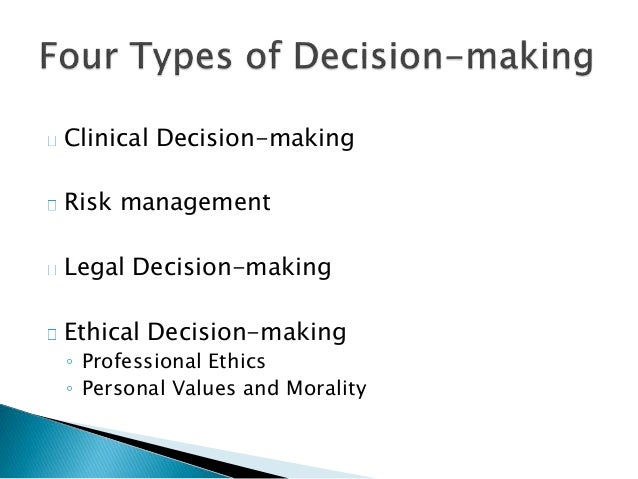


Bringing Device Makers into the Hospital: Good Business or Ethical Risk?

http://www.medpagetoday.com/hospitalbasedmedicine/generalhospitalpractice/64239

Image result for Ethical Risk?

Medical device powerhouse Medtronic is testing the waters of hospital management, having begun operating a cardiac catheterization lab within a major U.S. hospital earlier this year.

UH Cleveland is the first U.S. facility to outsource its cath lab to a device maker – a new business model that’s met with some success in Europe, reportedly saving hospitals money while expanding Medtronic’s business portfolio.

With hospitals facing pressure to cut costs without sacrificing quality of care, they may be enticed to turn to well-heeled device and drug manufacturers willing to take over certain operations, and perhaps give their own products a boost in the process.

But such arrangements raise questions about how much control hospitals can retain over the operations — which run in their facilities and under their names — and how much freedom physicians will have to use devices from rival manufacturers.

Medtronic as Management

Medtronic launched its Hospital Solutions business in 2013, and its first foray into cath lab management came in 2014, when it acquired the Italian firm NGC Medical. It took over several outsourced catheterization labs in Italy, with the expectation of expanding NGC’s business outside that country.

Ron ten Hoedt, a Medtronic senior vice president and president for Europe, the Middle East, Africa & Canada, once said in a company meeting that Medtronic “needs to switch from a medical device company to a healthcare company,” according to a 2013 PriceWaterhouseCoopers report.

“If we want to be a part of the solution of the delivery of healthcare, then we need to risk-share, and we need to go into this market in a completely different way and with a completely different model,” ten Hoedt said.

Physician Concerns

Can doctors really remain unswayed in the hospital while working side by side with device company employees? Interventionalists said that freedom from pressure to use certain devices will be key to an ethical arrangement.

An anonymous source reported initial fears from UH Cleveland’s catheterization and electrophysiology lab operators that Medtronic would force them to use its durable goods when the deal was first proposed. They said their fears were assuaged, however, when it was clear that UH Cleveland was not going to push them to use Medtronic devices.

Morton Kern, MD, an interventionist and Chief of Medicine at VA Long Beach Health Care System in California, said doctors who work under this new management “will have to use their best judgment for which equipment to select.”

“If the equipment is equivalent, then it shouldn’t make a difference,” he said. “There is the perception that it could be a conflict, but it depends on who’s doing the ordering and the contracting. If it’s Medtronic, it doesn’t sound so kosher.”

“If there is separation between church and state, then there shouldn’t be a conflict of interest,” he added. “I don’t care who runs my lab as long as it works well and the equipment is current. From the doctor’s point of view, it should be invisible.”

Medical device powerhouse Medtronic is testing the waters of hospital management, having begun operating a cardiac catheterization lab within a major U.S. hospital earlier this year.

UH Cleveland is the first U.S. facility to outsource its cath lab to a device maker – a new business model that’s met with some success in Europe, reportedly saving hospitals money while expanding Medtronic’s business portfolio.

With hospitals facing pressure to cut costs without sacrificing quality of care, they may be enticed to turn to well-heeled device and drug manufacturers willing to take over certain operations, and perhaps give their own products a boost in the process.

But such arrangements raise questions about how much control hospitals can retain over the operations — which run in their facilities and under their names — and how much freedom physicians will have to use devices from rival manufacturers.


High Drug Prices Remain a Conundrum, Analysts Say

http://www.medpagetoday.com/PublicHealthPolicy/HealthPolicy/64347?xid=nl_mpt_DHE_2017-04-07&eun=g1061559d0r&pos=11

Related image

The problem of high prescription drug costs has no easy solution, analysts said Tuesday at an event here sponsored by Johns Hopkins University.

“It’s a major problem … and there’s no light at end of tunnel,” said Joshua Sharfstein, MD, associate dean for practice and training at Johns Hopkins University’s Bloomberg School of Public Health in Baltimore.

Overall drug costs are growing 10%-12% a year, “far quicker than wages or medical cost growth,” he added. “And it inhibits our ability to address public health problems. When we have a challenge like hepatitis C, when people can’t get treatment because of the [high cost], we’re all at risk.”

Although many ideas for solving the problem are being discussed, none are moving forward, Sharfstein said. He noted that things could get worse if, for example, Congress were to pass something like the House Republicans’ American Health Care Act, which would have resulted in the loss of health insurance for an estimated 24 million people.

“If you take 24 million people off of insurance, that generates pressure to get as much out of every insured person for pharmaceuticals as possible,” meaning that drug prices could rise even higher, he said. “It’s entirely possible you’d see that shift continue, and it could really worsen all the different challenges we have.”

Why So Hard to Kill the Affordable Care Act?

https://www.medpagetoday.com/Washington-Watch/repeal-and-replace/64426?xid=nl_mpt_DHE_2017-04-07&eun=g1061559d0r&pos=0

Image result for Why So Hard to Kill the Affordable Care Act?

For years, Republicans vowed that if they ever got control of the White House and both houses of Congress, the Affordable Care Act would quickly end up in the trash heap. As of January 20, those pieces were firmly in place.

Yet nearly 3 months later, the GOP appears no closer to enacting a repeal-and-replace bill than they were when Barack Obama was sitting in the Oval Office.

House Republican leaders have been unable to forge a consensus among its conservative and moderate wings as to what should come after the ACA. One bill had to be pulled from a floor vote when it became clear that neither the GOP’s Freedom Caucus nor Democrats would support it. And, earlier this week, a push led by top administration officials to appease the Republican conservatives — by making certain ACA elements retained in the GOP plan optional for states — was quickly declared dead on arrival.

MedPage Today asked physicians and policy experts why President Obama’s signature legislation is so hard to kill and whether Republicans might give up trying.

“Advocacy against the AHCA [American Health Care Act, the GOP’s initial repeal-and-replace bill] was broad and intense, with health care and public health organizations repeatedly raising concerns about health insurance coverage, access, and costs, including proposed dramatic changes to Medicaid funding that would preferentially hurt low-income people (including children), and risks of coverage gaps for those with chronic and pre-existing conditions,” wrote Jan Carney, MD, MPH, associate dean for public health and professor of medicine at the University of Vermont in Burlington, Vt., in an email.

Carney underscored the importance of the Congressional Budget Office’s report projecting a dramatic increase in the number of uninsured Americans — 14 million more in 2018 and 24 million more in 2026.

She also highlighted an April 4 Kaiser Family Foundation poll, which found 75% of Americans felt that Congress should work on fixing the ACA instead of repealing it.


GOP Owns Health Care Dilemma Now, and Voter Skepticism

https://www.nytimes.com/aponline/2017/04/10/us/politics/ap-us-health-overhaul-shifting-focus.html


Image result for Health Care Dilemma


Move over, “Obamacare.” The health care debate has shifted to ideas from President Donald Trump and GOP lawmakers in Congress, and most people don’t like what they see.

With Republicans in command, their health care proposals as currently formulated have generated far more concern than enthusiasm.

Even among rank-and-file Republicans, there’s opposition to changes that would let insurers charge higher premiums to older adults, and many disapprove of cuts to Medicaid for low-income people, according to a recent poll by The Associated Press-NORC Center for Public Affairs Research. It also found more than half of Republicans at least somewhat worried about leaving more people uninsured, as the House plan is projected to do.

March polls by Fox News and Quinnipiac University showed overall margins of opposition to the GOP bill nearing or even exceeding those of the Obama-era Affordable Care Act, or ACA, at its lowest points — such as when the HealthCare.gov website went live in 2013 and promptly crashed.

“Republicans are taking ownership of the health care issue, and all the pleasure and pain of health reform,” said Drew Altman, president of the nonpartisan Kaiser Family Foundation, which tracks the health care system. “There has been a shift in focus from the ACA itself to the Republican plans, and who might lose benefits as a result.”

Highlighting the stakes, the uninsured rate among U.S. adults rose slightly in the first three months of this year, according to Monday’s update of a major ongoing survey. The Gallup-Healthways Well-Being Index found that 11.3 percent of adults were uninsured, an increase from 10.9 percent in the last two calendar quarters of 2016.

“Only time will tell” if the uptick means the U.S. is again losing ground on health insurance, said survey director Dan Witters.

“A lot of uncertainty has been introduced into the marketplace through efforts to repeal,” Witters added. “That will scare people off who have real reason to believe that the ACA won’t even exist in a year. Plus premiums are now realizing a big jump for the first time in the ACA era, so some folks may be priced out of the market even with income-based subsidies.”

Trump came into office with big, bold promises. In a Washington Post interview shortly before his inauguration he declared his goal was “insurance for everybody,” hand-in-hand with affordable coverage, “lower numbers, much lower deductibles.” Although Trump said he’d soon release a plan, none appeared.

Instead, after weeks of laboring behind closed doors, House Republican leaders rolled out a proposal March 6 that the president enthusiastically embraced. But all the efforts of the White House and congressional leadership haven’t convinced GOP lawmakers to pass it. Congress is on a two-week break with the bill in limbo.

Frustrated, Trump is seeing his promise slip away to quickly repeal “Obamacare” and replace it with something better. Instead he could get left as the caretaker of the ACA, a law he’s repeatedly called a “disaster” on account of rising premiums and insurer exits that diminish consumer choice in many communities.

Trump’s personal image has taken a blow, with the AP-NORC poll finding that he gets his worst rating on health care. About 6 in 10 people disapprove of how the president has handled the issue.

“It is a major failure that a high priority of President Trump and the congressional Republican leadership leads to no bill, and the bill as proposed becomes unpopular even among their own voters,” said Robert Blendon, a professor at the Harvard T.H. Chan School of Public Health, who follows opinion trends on health care. “It’s a real leadership crisis issue.”

Amid disapproval of the House GOP plan, some polls have shown improved ratings for the ACA. Gallup, for example, found “Obamacare” gained majority approval for the first time. But Republican voters remain overwhelmingly opposed to former President Barack Obama’s signature law and want it repealed.

Nonetheless, there’s recent evidence that Republicans differ among themselves about what “repeal” may mean.

A Quinnipiac poll last month found that 55 percent of Republicans said Trump and the Republican-led Congress should repeal “parts” of the ACA, while 42 percent said “all” of it should go. Only 2 percent of Republicans said the law should not be repealed.

Republican views compare with 50 percent of the general public who say parts of the ACA should be repealed, 20 percent who say all of it should be repealed, and 27 percent who say it should remain.

The divisions among rank-and-file Republicans appear to mirror those in the House, where disagreements among hardliners and moderates are keeping Speaker Paul Ryan, R-Wis., from taking the bill to the floor.

Tim Malloy, assistant director of the Quinnipiac poll, said, “You have to figure a lot of people who voted for Trump are on Obamacare.”

No ‘Death Spiral’: Insurers May Soon Profit From Obamacare Plans, Analysis Finds

In contrast to the dire pronouncements from President Trump and other Republicans, the demise of the individual insurance market seems greatly exaggerated, according to a new financial analysis released Friday.

The analysis, by Standard & Poor’s, looked at the performance of many Blue Cross plans in nearly three dozen states since President Barack Obama’s health care law took effect three years ago. It shows the insurers significantly reduced their losses last year, are likely to break even this year and that most could profit — albeit some in the single-digits — in 2018. The insurers cover more than five million people in the individual market.

After years in which many insurers lost money, then lost even more in 2015, “we are seeing the first signs in 2016 that this market could be manageable for most health insurers,” the Standard & Poor’s analysts said. The “market is not in a ‘death spiral,’ ” they said.

It is the latest evidence that the existing law has not crippled the market where individuals can buy health coverage, although several insurers have pulled out of some markets, including two in Iowa just this week. They and other industry specialists have cited the uncertainty surrounding the Congressional debate over the law, and the failed effort two weeks ago by House Republicans to bring a bill to the floor for a vote.

The House G.O.P. leadership went home for a two-week recess on Thursday, unable to reach a compromise between conservative and moderate members over the extent of coverage that should be required for the very sick.

If the markets were to falter without a resolution in Congress, the risk of eroding public opinion before the midterm elections next year is bound to increase. The latest monthly Kaiser Health Tracking Poll by the Kaiser Family Foundation showed that more than half of Americans now believe that the president and Republicans own the health care issue and may shoulder the blame for any failings. The survey reported that more than half now support the Obama health care law.

The S.&P. report also buttresses the analysis of the Republican bill by the Congressional Budget Office, which said the markets were relatively stable under the current law, contradicting some Republican assessments of volatility.

“Things are getting better,” Gary Claxton, a vice president at the Kaiser Family Foundation, said of the insurance markets. The foundation has been closely tracking the insurers’ progress.

Although it took longer than expected, the insurers appear to be starting to understand how the new individual market works, said Deep Banerjee, an S.&P. credit analyst who helped write the report. The companies have aggressively increased their prices, so they are now largely covering their medical costs, Mr. Banerjee said. They have also significantly narrowed their networks to include fewer doctors and hospitals as a way to lower those costs.


Death By 1,000 Cuts: How Republicans Can Still Alter Your Coverage

Death By 1,000 Cuts: How Republicans Can Still Alter Your Coverage

Image result for death by 1000 papercuts

The Affordable Care Act’s worst enemies are now in charge of the vast range of health coverage it created. They’re also discussing changes that could affect a wider net of employment-based policies and Medicare coverage for seniors.

Republicans failed last month in their first attempt to repeal and replace the ACA. But President Donald Trump vows the effort will continue. Even if Congress does nothing, Trump has suggested he might sit by and “let Obamacare explode.”

In California, which has extended coverage to more than 5 million residents under the ACA, fear of losing those gains is a big part of the reason why many of the state’s political leaders, consumer advocates and labor unions are pushing plans for universal health care.

Nationwide, health insurance for the 20 million people who benefited from the ACA’s expanded coverage is especially at risk. But they’re not the only ones potentially affected. Here’s how what’s going on in Washington might touch you.

A 3-year-old lawsuit threatens many plans.

A suit by the Republican-led House challenges some subsidies supporting private plans sold to individuals and families through the ACA’s online marketplaces, also called exchanges. It has already gained one court victory. By many accounts, it would wreck the market if successful, stranding up to 12 million without coverage.

“It’s the single-biggest problem facing the exchanges,” said Rachel Sachs, a health law professor at Washington University in St. Louis. “That would make insurers not only exit tomorrow but also not want to offer plans in 2018.”

The litigation involves lesser-known ACA subsidies that reduce out-of-pocket costs such as copayments and deductibles for lower-income consumers. These are different from the law’s income-linked tax credits, which help pay for premiums.

Filed in 2014, when Barack Obama was president, the suit could backfire by politically harming the Republicans now in charge. House leaders have delayed the litigation and said they won’t drop the lawsuit but will continue the subsidies while it gets considered. The administration has not said how it plans to handle the lawsuit.

Policy confusion undermines coverage.

Even if Congress doesn’t repeal the ACA, the continuing battle makes insurance companies think twice about offering marketplace policies for next year. The less clarity carriers have about subsidies and whether the administration will promote 2018 enrollment, the likelier they are to bail or jack up premiums to cover themselves.

Preserving the subsidies, which limit out-of-pocket costs for lower-income consumers, “is essential,” said Kevin Lewis, CEO of Community Health Options, a nonprofit Maine insurer. “Markets don’t like uncertainty. The ‘sword of Damocles’ hanging over our collective heads is unsettling, to say the least.”

Democrats say Republicans are sabotaging Obamacare.

Shortly after taking power, Trump officials yanked advertising designed to maximize enrollment in marketplace plans just before a Jan. 31 deadline. It was partly restored after an outcry.

Then the administration said it would scrap an Obama-regime plan of rejecting tax returnsfrom individuals who decline to say whether they had health insurance — weakening the requirement to be covered.

Trump aide Kellyanne Conway suggested in January the administration might entirely stop enforcing that requirement — the part of the law most hated by Republicans. If officials persist with that message, plans could attract even fewer of the young and healthy members whose premiums are needed to support the ill. That would cause more rising premiums and insurer exits.

Don’t expect Medicaid work requirements to make a big difference

https://www.axios.com/dont-expect-medicaid-work-requirements-to-make-a-big-difference-2338186318.htm

Image result for Don't expect Medicaid work requirements to make a big difference

Liberals and conservatives have irreconcilable differences of policy and principle over the issue of Medicaid “work requirements.” But their impact depends on how they are implemented and is likely to be very small — because most people on Medicaid who can work already are.

With Trumpcare dead for now, expect Republican governors to begin submitting waiver proposals to the Department of Health and Human Services to move their Medicaid programs in a more conservative direction. Medicaid “work requirements” are likely to be an element of many of those waiver requests, possibly from Republican-led states now looking to expand Medicaid under the Affordable Care Act.

During the Obama administration, HHS rejected mandatory work requirements as inconsistent with the purposes of the Medicaid statute, spurning requests from Arizona, Indiana, and Pennsylvania under a previous governor. Under the Trump presidency, HHS is expected to approve them.

Medicaid “work requirements” are not requirements to work in a literal sense. Generally, this is how states would define them:

  • Able-bodied beneficiaries — people who can work — would have to look for a job, participate in a job training program or go to school, or work full time or part time.
  • People who would be exempt: anyone who can document that they are too sick or disabled to work, have to take care of a sick child or family member, or do not have adequate child care.

Liberals find Medicaid work requirements repugnant because they believe that Medicaid beneficiaries want to work if they can, and that providing health coverage to people who cannot afford it is an obligation of any moral nation. Conservatives who favor work requirements see Medicaid coverage as another form of government welfare benefit, like cash assistance, requiring reciprocal obligations from beneficiaries, and a disincentive to work.

The reality, though, is that most Medicaid beneficiaries are working already, and the vast majority of those who are not working are likely to be exempted from all but the most draconian Medicaid work requirements when front-line caseworkers apply state rules.

As the chart shows:

  • 59% of all Medicaid beneficiaries who were not on Supplemental Security Income — the program for low-income people with disabilities — were working full time (41%) or part time (18%) in 2015.
  • That leaves 41% who were not working. Of those, the vast majority (89%) had reasons for not working, including that they were sick or had a disability (35%), were taking care of a family member (28%), or were in school (18%).
  • Another 8% said they could not find a job which, when documented, usually satisfies work requirements.
  • All told, just a tiny subset of Medicaid beneficiaries are-able bodied adults who do not have a reason for not working that would fail to pass muster with a state case worker.

Medicaid work requirements send signals conservatives like and liberals reject. As I learned a long time ago designing and implementing a leading welfare reform program as Commissioner of Human Services in New Jersey, the fight about policy and principle can get hot when it comes to work requirements, but their impact depends on how they are implemented.

With most beneficiaries working or with good reasons not to be, that impact will be small.

Reversal: Some Republicans now defending parts of ObamaCare

Reversal: Some Republicans now defending parts of ObamaCare

Image result for Reversal: Some Republicans now defending parts of ObamaCare

The House’s debate over repealing ObamaCare has had an unintended effect: Republicans are now defending key elements of President Obama’s health law.

Many House Republicans are now defending ObamaCare’s protections for people with pre-existing conditions, in the face of an effort by the conservative House Freedom Caucus to repeal them.

Some Republican lawmakers are also speaking out in favor of ObamaCare’s expansion of Medicaid and its mandates that insurance plans cover services such as mental health and prescription drugs.

Rep. Patrick McHenry (R-N.C.), the GOP’s chief deputy whip, said Wednesday that the Freedom Caucus’s calls for states to be able to apply for waivers to repeal pre-existing condition protections are “a bridge too far for our members.”

Those ObamaCare protections include what is known as community rating, which prevents insurers from charging higher premiums to people with pre-existing conditions, and guaranteed issue, which prevents insurers from outright denying coverage to them.

McHenry spoke in personal terms about the importance of keeping in place those Affordable Care Act (ACA) provisions, contained in Title I of the law.

“If you look at the key provisions of Title I, it affects a cross section of our conference based off of their experience and the stories they know from their constituents and their understanding of policy,” McHenry said.

“My family history is really bad, and so my understanding of the impact of insurance regs are real, and I believe I’m a conservative, so I look at this, understand the impact of regulation, but also the impact of really bad practices in the insurance marketplace prior to the ACA passing,” he continued. “There are a lot of provisions that I’ve campaigned on for four election cycles that are part of the law now that I want to preserve.”

McHenry’s defense of those ObamaCare pre-existing condition protections is striking because just last year, House Republicans touted a healthcare plan, called A Better Way, that would have repealed the protections and replaced them with a different system.

Rather than ObamaCare’s protections, the Better Way plan would have protected people with pre-existing conditions only if they maintained “continuous coverage,” meaning they had no gaps in coverage. Unlike under ObamaCare, the plan would not extend the protections to people who were uninsured and trying to enroll in coverage. For those people, Republicans proposed subsidizing coverage through separate high-risk pools.

During a town hall at Georgetown University last year, Speaker Paul Ryan(R-Wis.) called for repealing ObamaCare’s community rating protection and allowing insurers to return to the days of “underwriting,” when they could charge people with pre-existing conditions more. Instead, sick people could get coverage subsidized through high-risk pools, he said.

“Open up underwriting, have more insurance companies, have more competition, and just pay for the person with the pre-existing condition to make sure that they can get affordable coverage when that moment happens and make it much more competitive for everybody else,” Ryan said then. “I think it’s a smarter way to do it economically and it gives people more freedom, more choices.”

Now, though, many House Republicans are defending the ObamaCare protections.

How Pharma Companies Game the System to Keep Drugs Expensive

https://hbr.org/2017/04/how-pharma-companies-game-the-system-to-keep-drugs-expensive?utm_campaign=hbr&utm_source=facebook&utm_medium=social

apr17-06-567900167

I help the University of Utah hospital system manage its drug budgets and medication use policies, and in 2015 I got sticker shock. Our annual inpatient pharmacy cost for a single drug skyrocketed from $300,000 to $1.9 million. That’s because the drug maker Valeant suddenly increased the price of isoproterenol from $440 to roughly $2,700 a dose.

Isoproterenol is a heart drug. It helps with heart attacks and shock and works to keep up a patient’s blood pressure. With the sudden price increase, we were forced to remove isoproterenol from our 100 emergency crash carts. Instead, we stocked our pharmacy backup boxes, located on each floor of our hospitals, to have the vital drug on hand if needed. We had to minimize costs without impacting patient care.

This type of arbitrary and unpredictable inflation is not sustainable. And it’s not the way things are supposed to work in the United States. Isoproterenol is a drug that is no longer protected by a patent. Theoretically, any drug company should be able to make a generic version and sell it at a competitive cost. We should have had other options to buy a competitors’ copy for $440 or less. But that’s not happening like it should. The promise of generic medications is getting further from reality each day. As the U.S. Senate considers President Donald Trump’s choice to head the Food and Drug Administration, now is the time refocus efforts on generic drugs.