Koch-backed group details hopes for healthcare reform

http://thehill.com/policy/healthcare/316875-koch-backed-group-pushes-for-high-risk-pools-medicaid-freeze-in-obamacare

Koch-backed group details hopes for healthcare reform

A conservative group funded by the Koch brothers is pushing for high-risk pools and a freeze on Medicaid expansions as lawmakers try to coalesce around a replacement for ObamaCare.

Freedom Partners began circulating a memo on Capitol Hill Monday with specific reforms it thinks lawmakers should pass, including: the creation of high-risk pools at the state level to cover people with pre-existing conditions; the elimination of the ObamaCare mandate, which required everyone buy insurance or pay a penalty; and the expansion of access to health savings accounts, so people can save and pay for healthcare with pre-tax dollars.

The recommendations fall in line with what top Republicans in Congress have indicated they support.

High-risk pools offer coverage for sick people that otherwise could be denied coverage for having pre-existing conditions if ObamaCare is repealed.

California’s Uninsured: As Coverage Grows, Millions Go Without

Click to access PDF%20CaliforniaUninsuredDec2016.pdf

Image result for California’s Uninsured: As Coverage Grows, Millions Go Without

Since the implementation of the Affordable Care Act (ACA) in 2014, the uninsured rate in California dropped by nearly half, from 16% in 2013 to 9% in 2015. However, 2.9 million Californians remained uninsured.

California’s Uninsured: As Coverage Grows, Millions Go Without provides a look at the uninsured two years after full implementation of the ACA. There could be big changes in health insurance coverage ahead with the election of President Donald Trump.

Key findings include:

  • The drop in the uninsured rate was mainly due to a seven percentage point increase in individually purchased insurance coupled with a five percentage point increase in Medi-Cal enrollment.
  • One in three of California’s uninsured had annual incomes of less than $25,000. At this income level, people are potentially eligible for Medi-Cal.
  • Of the state’s remaining uninsured, one in four were age 25 to 34, one in three were noncitizens, and more than half were Latino.
  • 62% of the uninsured were employed. Of the 1.8 million uninsured workers, 44% worked in firms with fewer than 50 employees.
  • Fewer Californians cited “lack of affordability” as the main reason for going without health insurance in 2015 compared to 2014.

Price Urges Medicare Reforms, Breaking With Trump

https://morningconsult.com/2017/01/24/price-urges-medicare-reforms-breaking-trump-campaign-statements/

Image result for promises

Rep. Tom Price (R-Ga.), President Donald Trump’s nominee to lead the Department of Health and Human Services, said Tuesday he’d favor reforms to Medicare that would ensure the program’s viability.

“The Medicare trustees … have told all of us that Medicare, in a very short period of time, less than 10 years, is going to be out of the kind of resources that will allow us as a society to keep the promise to beneficiaries,” Price said Tuesday before the Senate Finance Committee. “We will not be able to provide the services to Medicare patients at that time — which is very, very close — if nothing is done.”

Price supports turning Medicare into a premium support system, giving eligible beneficiaries a set amount to buy coverage. GOP leaders such as House Speaker Paul Ryan have also backed this idea in the past.

Trump, on the other hand, vowed during his campaign not to cut Medicare and Social Security, pointing out that this position set him apart from other GOP candidates during the primary. Democrats are now trying to hold him to that promise.

Price Vows ‘Access to Coverage’ Under Health Executive Order

https://morningconsult.com/2017/01/24/hhs-nominee-vows-access-to-coverage-under-aca-executive-order/

Image result for health insurance access

President Donald Trump’s nominee to be the nation’s top health official would not promise every American would get to keep their coverage under an executive order signed last week.

“What I commit to the American people is to keep patients at the center of health care, and what that means to me is making certain that every single American has access to affordable health coverage,” Rep. Tom Price (R-Ga.) told Finance Committee ranking member Sen. Ron Wyden (D-Ore.) when asked if he would commit to no one losing coverage.

The distinction between “access” to health insurance and “health coverage” appears to be a growing division between members of Congress and Trump, who vowed insurance for everyone in interviews ahead of his inauguration.

Heritage VP: Obamacare Repeal Efforts Going in ‘Wrong Direction’

https://morningconsult.com/2017/01/26/heritage-vp-obamacare-repeal-efforts-going-wrong-direction/

Image result for wrong direction

The Heritage Foundation, an influential conservative think-tank, is pushing Republicans to repeal the Affordable Care Act as quickly as possible without waiting for a replacement.

The GOP’s self-imposed Jan. 27 deadline for legislation that would repeal Obamacare is slipping by and plans for repeal are “murkier than ever” and headed in the “wrong direction” wrote James Wallner, the Heritage Foundation’s vice president for research, in the Daily Signal, a website created by Heritage.

“Given this, President Donald Trump and congressional Republicans should reiterate their commitment to the full repeal of Obamacare,” Wallner wrote. “And they need to get to work by taking the first step in the process, which should be passing legislation to repeal Obamacare as soon as possible.”

CHS Chief Leads Discussion on Wall Street’s Healthcare Outlook

http://www.healthleadersmedia.com/leadership/chs-chief-leads-discussion-wall-streets-healthcare-outlook?spMailingID=10315063&spUserID=MTY3ODg4NTg1MzQ4S0&spJobID=1082253801&spReportId=MTA4MjI1MzgwMQS2

Image result for Wall Street's Healthcare Outlook

After a tough 2016, market analysts say that this year they expect a better investment climate in many healthcare sectors.


Sepsis Tops Conditions Tracked for Readmission Rates, but Triggers No Penalties

http://www.healthleadersmedia.com/quality/sepsis-tops-conditions-tracked-readmission-rates-triggers-no-penalties?spMailingID=10315063&spUserID=MTY3ODg4NTg1MzQ4S0&spJobID=1082253801&spReportId=MTA4MjI1MzgwMQS2#

Sepsis Tops Conditions Tracked for Readmission Rates, but Triggers No Penalties

Sepsis has a higher rate of readmission than heart failure, but the federal government does not penalize hospitals for excessive readmissions due to sepsis.

Why some KC-area hospitals are still throwing their hat into ACA payment model

http://www.bizjournals.com/kansascity/news/2017/01/26/prime-healthcare-aco.html
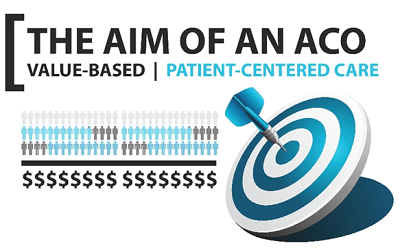
Image result for ACO

A Kansas City-area health network may benefit from its new designation through a pilot program created under the Affordable Care Act — if it isn’t repealed. As an accountable care organization (ACO), physicians affiliated with the Prime Healthcare ACO in Kansas and Missouri could benefit from cost-sharing incentives for Medicare patients.

Specifically, providers and the Centers for Medicare and Medicaid Services would split the savings from reducing costs for a patient through coordinated care, such as not ordering duplicate tests. Of course, ACO providers still must meet key quality metrics.

“It’s looking back at those procedures that have already occurred,” said Paula Ellis, chief nursing officer at Saint John Hospital, a Prime Healthcare affiliate in Leavenworth. “It’s really being a lot more mindful, and looking at all of the information that’s out there. It’s seeing where (the patient) is getting care that their primary care provider doesn’t know about.”

Prime Healthcare also owns Providence Medical Center in Kansas City, Kan., St. Joseph Medical Center in Kansas City, Mo., and St. Mary’s Medical Center in Blue Springs

While savings between different ACO providers have been mixed, Ellis said other markets under Prime Healthcare have found success. The California-based for-profit hospital operator launched its first ACO in California last year.

Its application for the Kansas City ACO model was granted on Jan. 1. It is serving about 10,000 Medicare patients who use Prime Healthcare physicians as their primary care provider.

“The model’s been out there for a few years,” Ellis said. “It has a track record.”

It’s worth noting that the future of ACOs, for the most part, is unknown. The model is part of the Medicare Shared Saving Program, established under the Affordable Care Act, to reduce costs and improve care. A substantial number of providers have adopted it; CMS reported 480 ACOs served a total of 9 million assigned beneficiaries as of January.

WEB BRIEFING FOR JOURNALISTS: REPEALING AND REPLACING OBAMACARE

Web Briefing for Journalists: Repealing and Replacing Obamacare

Image result for WEB BRIEFING FOR JOURNALISTS: REPEALING AND REPLACING OBAMACARE

With passage of budget resolutions in the House and Senate, Congressional efforts to repeal and replace the Affordable Care Act are underway. Key issues for Republicans in Congress and the Trump Administration have emerged around how quickly to move forward with partial repeal of the ACA through a budget reconciliation measure and whether replacement proposals should be considered simultaneous with a repeal debate. A variety of Congressional repeal proposals have been floated – including one by Rep. Tom Price, President Trump’s nominee for Secretary of Health and Human Services — but none have yet come up for a vote.

On Wednesday, January 25, the Kaiser Family Foundation hosted a web briefing for journalists to answer questions and sort through possible scenarios for repealing and replacing the ACA, including implications for coverage, the insurance market, the Medicaid program, and women’s health.

Panelists included Larry Levitt, senior vice president for special initiatives and co-executive director of the Foundation’s Program for the Study of Health Reform and Private Insurance; Usha Ranji, the Foundation’s associate director for women’s health policy; Diane Rowland, the Foundation’s executive vice president. Rakesh Singh, the Foundation’s vice president for communications, moderated.

Medicaid Financing: The Basics

Medicaid Financing: The Basics

Image result for Medicaid Financing: The Basics

Medicaid represents $1 out of every $6 spent on health care in the US and is the major source of financing for states to provide coverage to meet the health and long-term needs of their low-income residents. Medicaid is administered by states within broad federal rules and jointly funded by states and the federal government. President-elect Trump and other GOP proposals have put forth fundamental changes in Medicaid financing. This brief examines the following 3 key Medicaid financing questions:

  • How does Medicaid financing work now? States design their Medicaid programs within broad federal rules; in return, Medicaid provides a guarantee of federal matching payments with no pre-set limit.  There are special match rates for the ACA, administration and other services. Medicaid also provides “disproportionate share hospital” payments to hospitals serving many Medicaid and uninsured patients.
  • How much does Medicaid cost and how are funds spent? Payment to private managed care organizations (MCOs) account for 43% of Medicaid spending. Almost two-thirds of all Medicaid spending is for the elderly and persons with disabilities, who make up just one-quarter of all Medicaid enrollees. Medicaid enrollment and spending increases during recessions. Medicaid growth per enrollee has been lower than private health spending. The ACA has provided a significant amount of federal dollars to states.
  • What is the role of Medicaid in federal and state budgets? Medicaid is the third largest domestic program in the federal budget following Medicare and Social Security. Medicaid is a spending item but also the largest source of federal revenues for state budgets. In responding to two major recessions in the last 15 years, states have adopted an array of policies to control Medicaid spending growth. Research shows that the influx of federal dollars from Medicaid spending has positive effects for state economies.