Whose Lives Should Be Saved? Researchers Ask the Public

In a church basement in a poor East Baltimore neighborhood, a Johns Hopkins doctor enlisted residents to help answer one of the most fraught questions in public health: When a surge of patients — from a disaster, disease outbreak or terrorist attack — overwhelms hospitals, how should you ration care? Whose lives should be saved first?

For the past several years, Dr. Lee Daugherty Biddison, a critical care physician at Johns Hopkins, and colleagues have led an unusual public debate around Maryland, from Zion Baptist Church in East Baltimore to a wellness center in wealthy Howard County to a hospital on the rural Eastern Shore. Preparing to make recommendations for state officials that could serve as a national model, the researchers heard hundreds of citizens discuss whether a doctor could remove one patient from lifesaving equipment, like a ventilator, to make way for another who might have a better chance of recovering, or take age into consideration in setting priorities.

At that first public forum in 2012 in East Baltimore, Cierra Brown, a former Johns Hopkins Hospital custodian, said she favored a random approach like a lottery. “I don’t think any of us should choose whether a person should live or die,” she said.

Alex Brecht, a youth program developer sitting across from her, said he thought children should be favored over adults. “Just looking at them, seeing their smiles, they have so much potential,” he said.

“Who’s going to raise them?” asked Tiffany Jackson, another participant.

The effort is among the first times, Dr. Daugherty Biddison said, that a state has gathered informed public opinion on these questions before devising policy on them. “I don’t want to be in a position of making these decisions without knowing what you think,” she told the residents. “We as providers,” she said, “don’t want to make those decisions in isolation.”

Rationing already occurs in delivering medical care in the United States, though some practices are little acknowledged. Committees struggle regularly over policies for allocating scarce organs for transplant.

During widespread drug shortages in recent years, doctors have sometimes chosen among cancer patients for proven chemotherapy regimens and among surgical patients for the most effective anesthetics. And doctors sometimes have to choose among patients who need treatment in intensive care units, which are often filled to capacity.


EpiPen Manufacturer Says It Will Help With Out-Of-Pocket Costs

http://www.npr.org/sections/health-shots/2016/08/24/491232665/latest-target-in-the-drug-price-wars-the-ubiquitous-epipen?utm_campaign=KHN%3A+Daily+Health+Policy+Report&utm_source=hs_email&utm_medium=email&utm_content=33405785&_hsenc=p2ANqtz-8XZii4uOFohPHJzQb2tGya0B1V39hwW9G6vwptGGc5BvcM-YWZemfyDF8k4814h6RX0C21PHgcZ9Nz_LIAH_zmJW4gCw&_hsmi=33405785

The wholesale price of a single pen was about $47 in 2007, and it rose to $284 this summer, according to Richard Evans, a health care analyst at SSR. But consumers can no longer buy a single pen, so the retail price to fill a prescription today at Walgreens is about $633, according to GoodRX.

It’s the latest in a string of controversies over rising drug prices that have caught the attention of lawmakers on Capitol Hill.

The drug’s manufacturer, Mylan NV, responded to the criticism Thursday, announcing it will offer customers whose insurance doesn’t pay the full cost coupons for up to $300 off the injectors. But it’s unclear if that will be enough to tamp down the anger.

At least three senators have called for investigations into the price of the EpiPen, and Sens. Charles Grassley, R-Iowa, and Richard Blumenthal, D-Conn., have sent letters to Mylan demanding an explanation for the increase.


To Improve Medicaid, Measure Everywhere


http://altarum.org/health-policy-blog/to-improve-medicaid-measure-everywhere

Image result for data

“In God we trust. All others must bring data.”

So said W. Edwards Deming, a management consultant widely regarded as one of the most influential figures in quality management of the 20th century.

One would think that in the data-driven 21stcentury, we’d have come a long way in applying that dictum to health care. To some degree, we have—Medicaid and CHIP programs that contract with managed care entities include provisions around quality measurement and reporting in state contracts and make use of the Healthcare Effectiveness Data and Information Set. This reporting serves as the foundation of targeted quality improvement projects in states and helps inform consumer choice through products such as the state-published report cards and annual rankings of health insurance plans set out by the National Committee for Quality Assurance.

But this kind of systematic, comprehensive reporting is largely and notably absent from fee-for-service Medicaid and CHIP. We can’t afford to go without it. It’s imperative that we know what works well in Medicaid and CHIP and what areas of the program need attention or improvement. These programs combine to cover more than one in four Americans and command more than half a trillion dollars in federal and state spending per year.

With this in mind, Safety Net Health Plan members of the Association for Community Affiliated Plans (ACAP) have come together to support a suite of legislation on Capitol Hill. This legislation would extend the benefits of quality measurement and reporting to all Medicaid and CHIP delivery systems—including areas such as fee-for-service that have typically not provided regular, systematic quality data.

The good news is that lawmakers in Washington have taken the first steps toward bringing quality measurement forward into the 21st century by introducing two bills.

Italian lawmakers consider ban of veganism for kids — what are the pros and cons?

http://www.scpr.org/programs/airtalk/2016/08/24/51531/as-italian-lawmakers-consider-veganism-ban-looking/

138142 full

Restricting kids to a vegan diet could be considered child abuse punishable by jail time in Italy if a new proposal by a lawmaker in that country passes.

Eleven ways MACRA will impact your business

http://managedhealthcareexecutive.modernmedicine.com/managed-healthcare-executive/news/eleven-ways-macra-will-impact-your-business?GUID=A13E56ED-9529-4BD1-98E9-318F5373C18F&rememberme=1&ts=24082016

The Medicare Access and CHIP Reauthorization Act, known as MACRA, is one of the most significant payment changes since Medicare’s inception in 1965.

“Physicians and other clinicians payments will be at risk, beginning with a plus or minus swing of 4% in 2019, that increases to plus or minus 9% by 2023,” says Chester A. Speed, JD, LLM, vice president, public policy, AMGA.

To be successful under MACRA, providers will have to consider the clinical, financial and cultural changes they need to make to do well under risk, according to Speed.

“And while providers can rightfully say they’ve seen this before in the 1990s, risk, or value-based payments are now written into law and they are here to stay,” he says.

What impact will MACRA have on your organization? We asked experts to tell us.

Presidential election: 4 things managed care should watch

http://managedhealthcareexecutive.modernmedicine.com/managed-healthcare-executive/news/presidential-election-4-things-managed-care-should-watch?GUID=A13E56ED-9529-4BD1-98E9-318F5373C18F&rememberme=1&ts=24082016

As the 2016 presidential election approaches, analysts and experts are advising healthcare executives to watch and monitor certain issues, such as pharmaceutical spending and healthcare reform, which will surely impact the health insurance industry. Here’s a look at what they recommend keeping a close eye on in particular.

ACA Marketplaces: Stressed but Fixable

http://www.commonwealthfund.org/publications/blog/2016/aug/aca-marketplaces-stressed-but-fixable?omnicid=EALERT1087751&mid=henrykotula@yahoo.com

Negative headlines in the past few weeks seem to suggest deep trouble for the Affordable Care Act’s (ACA) marketplaces. Several insurance plans have requested double-digit premium increases for 2017—and Aetna is the third major insurer to announce it is pulling out of several state marketplaces next year. But how concerned should we be about these developments and are there policy options to consider?

This year, premium requests by carriers have been higher on average than last year. Part of the reason for the increase is the phase-out of the law’s reinsurance program, which reimbursed carriers for high claims costs. The program has lowered premiums by as much as 14 percent, and without it carriers are raising their premiums to compensate. But even if final premiums in many plans are higher, most people who will enroll in marketplace plans this year will not pay much more than they did in 2015. This is because more than 80 percent of marketplace enrollees receive tax credits to help pay their premiums, which means most of the increase will be absorbed by the credits. Marketplace customers are also highly price-sensitive and will likely shop for the best deal. Last year, people who received tax credits through the federal marketplace experienced an average premium increase of only 4 percent.

Why A Single-Payer Healthcare System Is Inevitable

http://www.huffingtonpost.com/entry/why-a-single-payer-healthcare-system-is-inevitable_us_57bb38d0e4b0b51733a4e665?&utm_campaign=KHN%3A+Daily+Health+Policy+Report&utm_source=hs_email&utm_medium=email&utm_content=33278487&_hsenc=p2ANqtz–pFhM1yVmgKE5kBJSkJqgzGm6EX86cVbU_jxP8glbnNrQH2CY9ktk8qbzIisOdLEgV0JX5fgsxqoDwrFym5ZxmTnCJOw&_hsmi=33278487

The best argument for a single-payer health plan is the recent decision by giant health insurer Aetna to bail out next year from 11 of the 15 states where it sells Obamacare plans.Aetna’s decision follows similar moves by UnitedHealth Group, the nation’s largest health insurer, and by Humana, another one of the giants.

All claim they’re not making enough money because too many people with serious health problems are using the Obamacare exchanges, and not enough healthy people are signing up.

The problem isn’t Obamacare per se. It lies in the structure of private markets for health insurance – which creates powerful incentives to avoid sick people and attract healthy ones. Obamacare is just making this structural problem more obvious.

In a nutshell, the more sick people and the fewer healthy people a private for-profit insurer attracts, the less competitive that insurer becomes relative to other insurers that don’t attract as high a percentage of the sick but a higher percentage of the healthy.

Eventually, insurers that take in too many sick and too few healthy people are driven out of business.

If insurers had no idea who’d be sick and who’d be healthy when they sign up for insurance (and keep them insured at the same price even after they become sick), this wouldn’t be a problem. But they do know – and they’re developing more and more sophisticated ways of finding out.

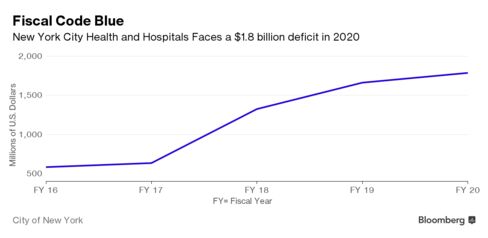
New York Hospitals Facing Fiscal Code Blue

http://www.bloomberg.com/politics/articles/2016-08-22/new-york-city-hospitals-seen-unwilling-to-take-stronger-medicine?utm_campaign=KHN%3A+Daily+Health+Policy+Report&utm_source=hs_email&utm_medium=email&utm_content=33278487&_hsenc=p2ANqtz–Ua5Q-PC5Hs3i1ni8bTaDNOfHhzF8R8meSEL9ZdWL6LejSQMUC3wLCDN9J_cuBB9IHRmZmF7BdmyqhMlNtFPa8KBOrzA&_hsmi=33278487

New York City’s public hospitals are in critical condition with rising costs and plummeting revenue. There’s no dispute about that diagnosis. The problem is with Mayor Bill de Blasio’s proposed cure, according to health policy makers, hospital administrators and budget watchdogs.

As NYC Health + Hospitals President Ram Raju describes it, the largest U.S. municipal-healthcare provider is an ailing system of 11 hospitals that’s losing revenue because of increased competition from non-profit hospitals for Medicaid patients and drastic cuts in federal and state aid for indigents.

His prescription: shift its 40,000-plus employees into a system of neighborhood clinics and transform campuses into affordable housing and long-term care, build enrollment of its MetroPlus insurance plan and persuade federal and state governments to spend more. That aid is projected to fall by almost $1 billion -– from $2.2 billion in FY16 to $1.4 billion in 2020.

How Zika could change the politics of late-term abortion

http://www.politico.com/story/2016/08/zika-abortion-politics-227285?utm_campaign=KHN%3A+Daily+Health+Policy+Report&utm_source=hs_email&utm_medium=email&utm_content=33278487&_hsenc=p2ANqtz-_oxvuB3q6E_-044MGqxHtZQvfsBmiNGjJ6fhDWinIz5SWjIXisl0VNUffuVw69iSsL03ukORkzNYUAORiNdKivUbCiKg&_hsmi=33278487

Barbara Betancourt holds her baby after being given a can of insect repellent by a City of Miami police officer on August 2.

The virus causes birth defects, a factor that might influence some views on abortion.