

http://hbswk.hbs.edu/item/world-health-organization-lacks-leadership-to-combat-pandemics


A bipartisan group of 51 senators sent a letter to CMS, calling for flexibility in the implementation of Medicare payment reductions for services provided in new off-campus hospital outpatient departments. The payment reduction is part of the Bipartisan Budget Act of 2015. Under the provision, off-campus outpatient facilities that started billing Medicare under the Outpatient Prospective Payment System on or after Nov. 2, 2015, will not be eligible for reimbursements under the OPPS.

An Obama administration proposal to reduce Medicare payments for many prescription drugs has run into sharp bipartisan criticism, suggesting that it is easier to diagnose the problem of high prices than to solve it.

Judges have largely dismissed the argument that hospitals need to merge to meet the demands of the Affordable Care Act, but a Pennsylvania judge recently accepted the “Obamacare-made-me-do-it” defense, according to the National Law Review. In defense to an antitrust challenge by the FTC, plenty of hospitals have argued mergers are necessary to meet ACA goals, such as moving away from the fee-for-service model and providing high quality care more efficiently.
Click to access may-2015-report-to-the-congress-overview-of-the-340b-drug-pricing-program.pdf
The 340B Drug Pricing Program allows certain hospitals and other health care providers (“covered entities”) to obtain discounted prices on “covered outpatient drugs” (prescription drugs and biologics other than vaccines) from drug manufacturers. Manufacturers must offer 340B discounts to covered entities to have their drugs covered under Medicaid. The discounts are substantial. The Health Resources and Services Administration (HRSA), which manages the program, estimates that covered entities saved $3.8 billion on outpatient drugs through the program in fiscal year 2013. The 340B program has grown substantially during the past decade. Covered entities and their affiliated sites spent over $7 billion to purchase 340B drugs in 2013, three times the amount spent in 2005. The number of hospital organizations (a single organization includes a hospital and all of its eligible affiliated sites) participating in 340B grew from 583 in 2005 to 1,365 in 2010 and to 2,140 in 2014. The increase from 2010 to 2014 was driven by growth in the number of CAHs and other types of hospitals that became eligible for 340B in 2010 through the Patient Protection and Affordable Care Act of 2010 (PPACA). In 2014, about 45 percent of all Medicare acute care hospitals—including CAHs—participated in the 340B program.

The American College of Emergency Physicians has filed suit against HHS over a provision in the Affordable Care Act health law they say lets insurers get away with underpayments for out-of-network emergency care, Modern Healthcare reported.
http://www.healthcaredive.com/news/will-medicaid-expansion-holdouts-finally-give-in/419439/

Legislators in some non-expansion states are currently under fire from state hospital associations, and in some cases state governors, to finally expand their Medicaid programs. Will the holdouts cave under the pressure? As of March 14, there were 19 non-expansion states, according to a Kaiser Family Foundation report. Hospitals in those states are not faring as well as their counterparts in states that have expanded their Medicaid programs.
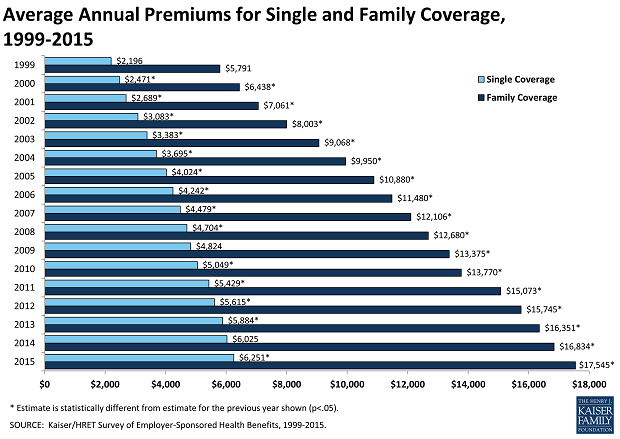
A new report from the American Academy of Actuaries outlines the trends that will impact health insurance premiums next year. “There are both upward and downward pressures on premiums for 2017, but for the individual and small group markets as a whole, the factors driving premium increases up dominate,” senior academy health fellow Cori Uccello said in a statement.

Exterior of the Federal Trade Commission (FTC) in Washington, D.C.


